

Portret fan in frou dy't pearels draacht (Portret fan in frou dy't pearels draacht)
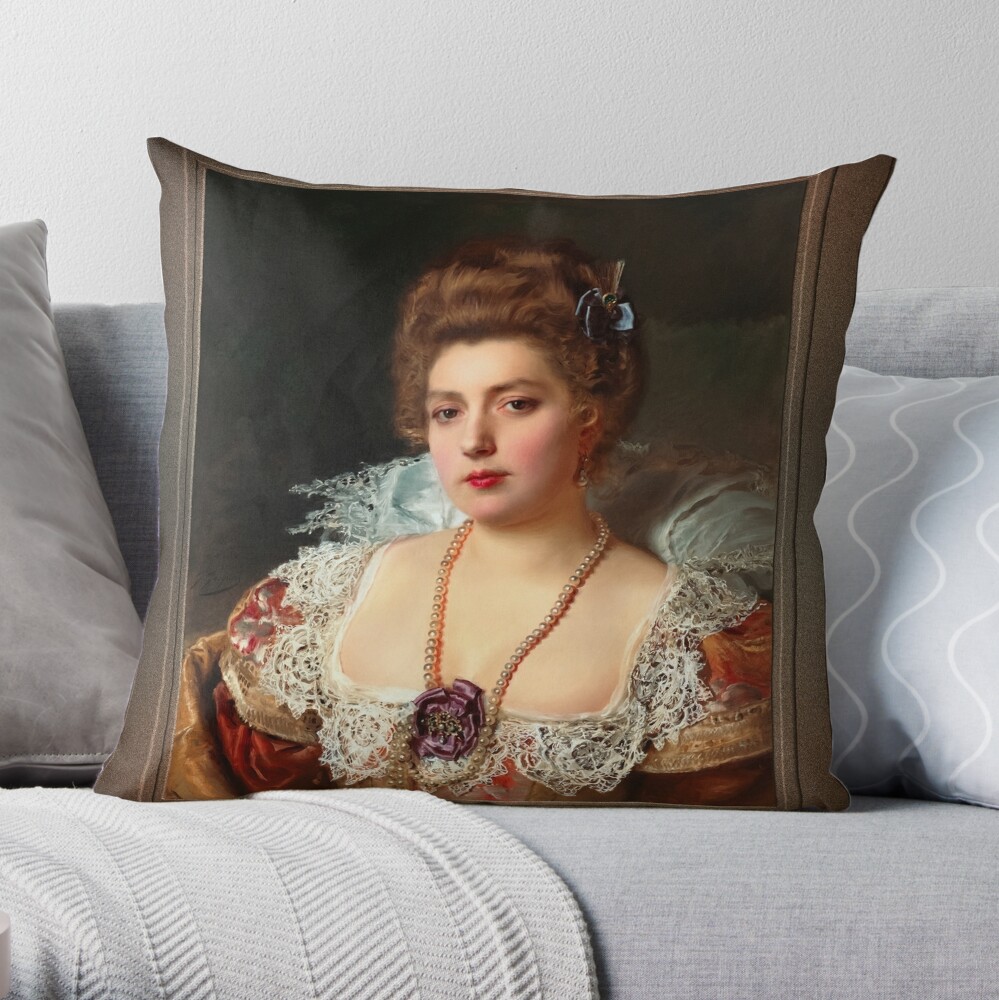
“Portret fan in frou dy't pearels draacht” (Portret fan in frou dy't pearels draacht) is in ferneamd wurk makke troch Frânske skilder Gustave Jean Jacquet, dy't wenne fan 1846 nei 1909. Dit prachtige portret, datearre oan de lette 19e iuw, ferbyldet de weelde en elegânsje fan har tiidrek. De keunstner, bekend om syn portretten en histoaryske sênes, fangt masterlik de teare skientme fan it froulike ûnderwerp yn dit skilderij, it mingjen fan syn akademyske oplieding mei in djip begryp fan 'e nuânses fan ljocht en tekstuer. It skilderij wjerspegelet de grandiositeit fan 'e perioade, wylst it ek in gefoel fan persoanlike yntimiteit jout.
Ynhâldsopjefte
It haadûnderwerp
The subject of the portrait is a poised woman dressed in luxurious attire. Har blik, slightly downward and soft, conveys an air of calm sophistication. She is adorned with a stunning necklace of large, lustrous pearls, which gives the painting its title. The pearls reflect light subtly, emphasizing the delicate textures of her skin and the grace with which she carries herself. Her expression is neutral yet profound, perhaps suggestive of the inner contemplation often associated with high society women of the time. Her full lips are delicately painted with a subtle rose hue, which contrasts against the ivory tones of her skin.
Her hairstyle, an elaborate updo, is a hallmark of the period’s fashion, with carefully arranged curls and twists that provide a sense of controlled, aristocratic elegance. A dark ribbon or hair accessory is placed in her hair, adding a touch of contrast to the lighter tones of her skin and gown. The setting does not detract from the subject; ynstee, it enhances her importance, offering a glimpse into a world of refinement and exclusivity.
De jurk en accessoires
The woman’s gown is lavishly designed, made from rich fabrics, likely silk or satin, which appear soft and flowing despite the stiffness of her regal posture. The color palette of her gown is primarily a rich blend of crimson and deep rose, highlighting the luxurious nature of her wardrobe. Lace detailing decorates the edges of her sleeves and neckline, adding intricate texture and reflecting the fashion preferences of the period. The gown is ornamented with a floral design on the bodice, perhaps symbolic of wealth and beauty.
In addition to the pearls, her necklace is a key feature of the composition. The necklace’s large pearls are perfectly round and well-polished, casting subtle reflections of light onto her chest and emphasizing the richness of the attire. The pearls are linked by delicate gold or silver clasps that seem to blend seamlessly with the overall form of the jewelry, harren glêd, round surfaces contrasting with the rough textures of the lace and fabric. This attention to detail is typical of Jacquet’s ability to bring realism to his works, showing an acute awareness of textures and surfaces.
De eftergrûn en komposysje
The background of the portrait is dark and subdued, in technyk dy't gewoanlik brûkt wurdt troch 19e-ieuske portretten om te soargjen dat it ûnderwerp it sintrale fokus fan it keunstwurk bliuwt. It is gearstald út djip, gedempte greens en brún, dy't net allinnich omtinken foar it ûnderwerp, mar ek in gefoel fan mystearje oerbringe. Dizze kar foar kleur soarget foar in skerpe kontrast tsjin de sêftens fan it gesicht fan 'e frou en de libbendige tinten fan har klean, har oanwêzigens yn it stik fersterkje.
De tsjustere eftergrûn is net al te drok of liedt ôf fan it ûnderwerp, wêrtroch de sjogger him allinnich rjochtsje kin op de frou foar har. De sêfte, diffuus ljocht dat fan links falt, ferljochtet it gesicht fan it ûnderwerp, beklamme har glêde funksjes, wylst de swakke skaden jouwe djipte en diminsje, it portret in libbene kwaliteit jaan. Dit spultsje fan ljocht en skaad foeget folume ta oan har gesicht, wêrtroch de skilder in gefoel fan sêftens en realisme fêstlizze kin.
De stimming en tema
De stimming fan it portret kin wurde omskreaun as serene noch wat melancholic. Der is in gefoel fan stille genede oer it ûnderwerp, as is se in figuer dy't yn 'e tiid ferivige is, foar altyd hâlden yn dit momint fan poised elegânsje. It byld fan 'e rêstige en gearstalde ekspresje fan' e frou sprekt ta de tema's fan froulikens, graasje, en de ynderlike krêft faak taskreaun oan froulju fan hege sosjale status yn de 19e ieu. It gebrûk fan rike tekstueren en lúkse stoffen fersterket de sfear fan rykdom en ferfine skientme dy't it skilderij trochkringt..
Der sit in ûnderlizzend tema fan tiidleazens yn it stik, which is highlighted by the woman’s delicate features and attire. Jacquet, known for his impeccable attention to detail, ensures that the painting not only reflects the fashion of the time but also evokes a deeper sense of permanence. The viewer is invited to contemplate the fleeting nature of beauty and wealth, as embodied by the subject. The careful preservation of her image suggests a wish to immortalize the fleeting moments of grace that come with youth and beauty.
Materiaal en technyk
The medium used in this artwork is oil on canvas, a common choice for portraits of this nature, allowing for rich, deep hues and fine detailing. Jacquet’s technique in the use of oil paint is evident in the smooth, almost velvety texture of the subject’s skin and the delicate interplay of light and shadow that makes the portrait come to life. The attention to texture—seen in the soft folds of the gown, the subtle sheen of the pearls, and the intricate lacework, demonstrates Jacquet’s technical mastery in capturing materials with realism and depth.
His brushstrokes are fine and precise, giving a detailed finish to the gown’s fabric and the contours of the woman’s face, while the background remains softer and more impressionistic, serving to focus the viewer’s attention on the subject. This balance between detail and subtlety speaks to Jacquet’s artistic sensibilities and his ability to convey both the surface and emotional depth of his subjects.
Dit is in remastered digitale keunst âlde masters reproduksje fan in byld yn it iepenbier domein dat is beskikber as in canvas print online.
Artist Bio is ôflaat fan 19thcenturypainings.com
Gustave waard berne yn Parys, Frankryk op 1846 en wie in learling fan de Frânske skilder William-Adolphe Bouguereau (1825 – 1905) fan it neoklassisisme, Realisme, Akademysk, Symbolisme, Moderne keunst tiidrek; en nea mentor mei in oare artyst en wurdt swier beynfloede troch him yn it iere diel fan syn karriêre.
Gustave debút keunstwurk wie La Reverie, in allegorystik presintearre oan de Salon yn 1865; dan yn 1866 presintearre lytse diminsje skilderijen dy't ôfbylde it libben fan 16e, 17th en 18e ieu libben, likegoed as skilderjen portretten fan ûnderwerpen yn perioade kostúms fan de 16e ieu.
Yn 1875 Gustave waard bekroane mei in medalje fan treflikens en 4 Jierren letter waard makke oan ridder fan 'e legioen fan eare (Legion of Honor, earder de Keninklike Oarder fan it Legioen fan Eare); is de heechste Frânske oarder fan fertsjinsten, sawol militêr as sivile. Oprjochte yn 1802 troch Napoleon Bonaparte.