

Porträt von Madame Badouin
Porträt von Madame Badouin, Die Tochter des Künstlers c1758-60 von französischem Maler Francois Boucher (1703 – 1770); auch als Zeichner bekannt, Kupferstecher und Dekorateur im französischen Rokoko-Stil, war bekannt für seine verschwenderische mythologische, allegorische und erotische Motive und war der Hofmaler Ludwigs XV. und ein Favorit der Marquise de Pompadour.
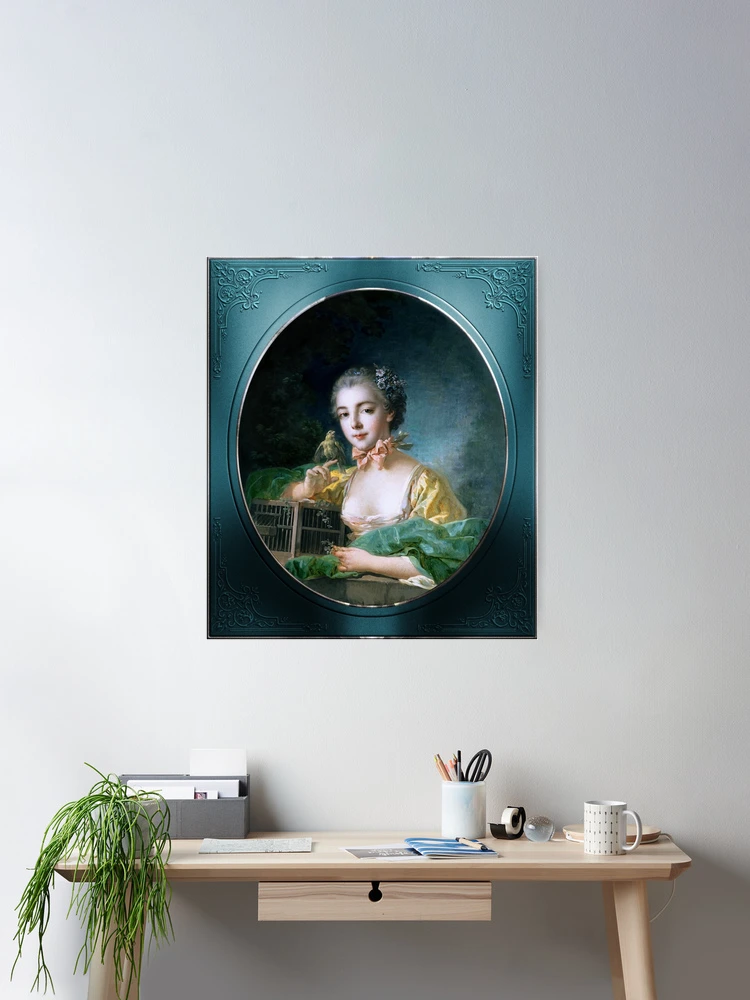
This artwork by the celebrated French Rococo painter François Boucher captures an exquisite moment of elegance and grace. This painting is a prime example of the Rococo style, which flourished in France during the early to mid-18th century, characterized by its lightness, Anmut, and use of soft, Pastellfarben.
The subject of the portrait is Madame Badouin, the artist’s daughter, who is depicted with remarkable sensitivity and beauty. Das Weiche, delicate nature of her features, her youthful countenance, and her serene expression all embody the grace and poise that were idealized in the Rococo period. The portrait has a gentle, intimate quality, inviting the viewer into the subject’s personal space.
Im Zentrum der Komposition, Madame Badouin is presented in a three-quarter view, her head slightly turned as if she is caught in a moment of quiet contemplation. Her gaze is directed slightly off to the side, creating an impression of introspection, yet there is a subtle connection with the viewer, as if she is aware of being observed.
Her facial features are rendered with delicate precision: her fair skin is soft and smooth, her lips slightly parted in a demure expression, and her large, expressive eyes reflect a sense of intelligence and calm. The artist has emphasized the softness of her features, using subtle transitions between light and shadow to create a lifelike, almost ethereal appearance.
Madame Badouin’s attire is a masterful representation of the Rococo fashion of the time. She is dressed in an opulent gown of pale yellow and soft green hues, with layers of sheer fabric that flow gracefully around her. The gown’s texture is depicted with meticulous detail, showing the fine, almost weightless nature of the materials.
The artist has captured the flow and drape of the fabric with a sense of fluidity, suggesting the movement of the fabric as the subject sits serenely. A large pink ribbon is tied loosely at her throat, adding a touch of playful color that contrasts with the softness of the gown and further enhances the light, airy quality of the portrait.
Her coiffed hair, which is styled in soft waves and adorned with delicate flowers, is another hallmark of the Rococo period. The careful attention to detail in her hairstyle not only highlights the fashion trends of the time but also adds a sense of natural beauty, as though her appearance is effortlessly graceful. The flowers in her hair seem to symbolize youth and femininity, enhancing the overall sense of delicacy and refinement.
One of the most striking aspects of this portrait is the bird perched on the artist’s daughter’s finger. This small detail plays an important symbolic role in the painting, contributing to the overall theme of innocence and natural beauty.

The bird, with its muted plumage, contrasts with the lushness of the surrounding landscape and the softness of Madame Badouin’s attire. It also suggests a connection to nature, a recurring theme in Rococo art, which often celebrated the beauty of the natural world, the pastoral, and the idealized version of life in harmony with nature.
The background of the painting is equally carefully constructed. Hinter der Figur, a dark, lush landscape unfolds, with trees and foliage softly blurring into the distance. The use of a rich, muted green palette creates an almost dreamlike effect, enhancing the ethereal mood of the portrait.
This natural setting not only contrasts with the softness of the figure but also symbolizes a connection between Madame Badouin and the world around her. The painter’s skillful rendering of light and shadow creates depth and atmosphere, giving the scene a tranquil, almost timeless quality.
The overall mood of the portrait is one of calm elegance. Die Farben sind weich und harmonisch, with pastel shades predominating in both the subject’s attire and the background. The figure is illuminated in such a way that the face and hands are gently highlighted, creating a subtle focal point that draws the viewer’s attention to the subject’s expression and demeanor. There is a serene quality to the painting, one that evokes the idealized virtues of youth, Schönheit, and grace that were central to the Rococo aesthetic.
François Boucher’s technique in this painting is exemplary of his mastery of the Rococo style. His brushwork is fluid and refined, creating a soft, luminous texture that enhances the delicate nature of the subject. His use of light and color is equally sophisticated, with the artist skillfully capturing the interplay of natural light and shadow on Madame Badouin’s face and clothing. The soft transitions between colors and the subtle blending of tones demonstrate Boucher’s expertise in creating a smooth, polished finish.
Abschließend, François Bouchers “Portrait of Madame Badouin, The Artist’s Daughter” is a stunning example of Rococo portraiture, where the subject’s beauty, Anmut, and connection to nature are captured with sensitivity and elegance. The soft palette, delicate detailing, and serene mood of the painting convey the idealized qualities of youth and femininity that were highly valued during the Rococo period. Through this portrait, Boucher not only immortalizes his daughter but also provides a glimpse into the Rococo vision of beauty and refinement.
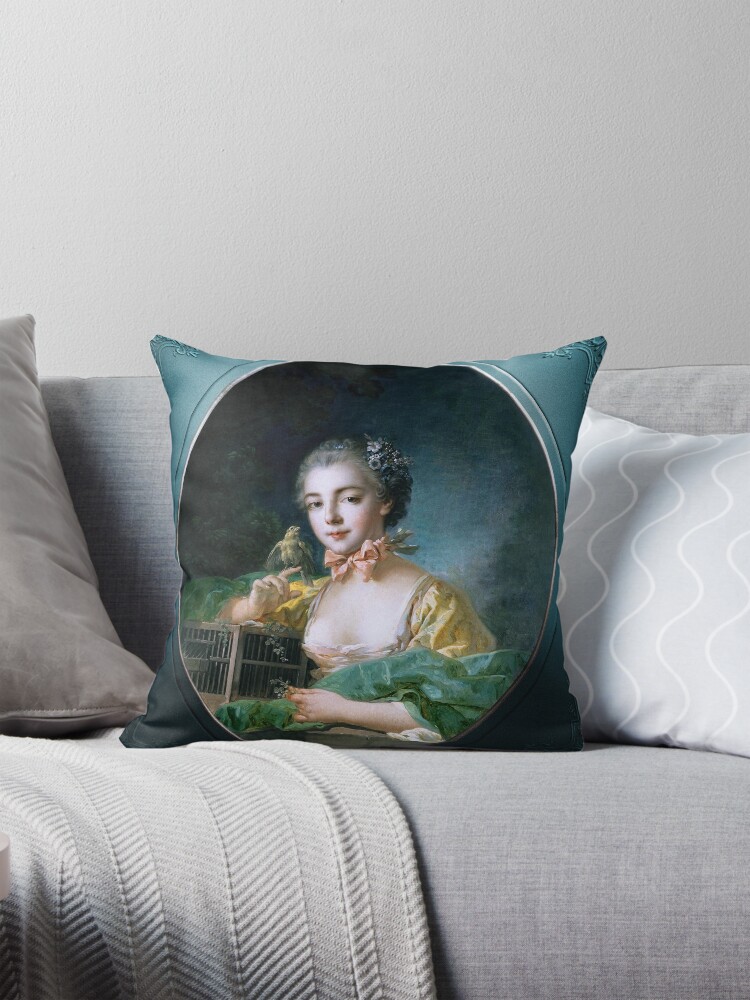
Porträt von Madame Badouin ist eine retuschierte Reproduktion der digitalen Kunst alter Meister eines gemeinfreien Bildes.
Info unten abgeleitet von Wikipedia.org
Ein gebürtiger Pariser, Boucher war der Sohn eines weniger bekannten Malers Nicolas Boucher, wer gab ihm seine erste künstlerische Ausbildung. Im Alter von siebzehn Jahren, Ein Gemälde von Boucher wurde vom Maler François Lemoyne bewundert. Lemoyne ernannte später Boucher zu seinem Lehrling, aber nach nur drei Monaten, Er arbeitete für den Kupferstecher Jean-François Cars.
Im 1720, Er gewann den Elite Grand Prix de Rome für Malerei, nutzte aber erst fünf Jahre später die Gelegenheit, in Italien zu studieren, aufgrund finanzieller Probleme an der Royal Academy of Painting and Sculpture.[1] Nach seiner Rückkehr vom Studium in Italien wurde er in die neu gegründete Académie de Peinture et de Sculpture am aufgenommen 24 November 1731. Sein Empfangsstück (Empfangsstück) war sein Rinaldo und Armida von 1734.
Boucher heiratete Marie-Jeanne Buzeau in 1733. Das Paar hatte drei Kinder zusammen. Boucher wurde Fakultätsmitglied in 1734 und seine Karriere beschleunigte sich von diesem Punkt an, als er zum Professor und dann zum Rektor der Akademie befördert wurde, Inspektor der Royal Gobelins Manufaktur und schließlich Premier Peintre du Roi (Erster Maler des Königs) im 1765. Porträt von Marie-Louise O’Murphy c. 1752
Boucher starb am 30 Kann 1770 in seiner Heimat Paris. Sein Name, zusammen mit dem seiner Patronin Madame de Pompadour, war zum Synonym für den französischen Rokoko-Stil geworden, die Goncourt-Brüder zum Schreiben führen: “Boucher ist einer jener Männer, die den Geschmack eines Jahrhunderts repräsentieren, die ausdrücken, personifizieren und verkörpern es.”
Boucher ist berühmt dafür, dass die Natur es ist “zu grün und schlecht beleuchtet” (zu grün und schlecht beleuchtet).
Boucher war mit dem Edelsteinstecher Jacques Guay verbunden, wen er lehrte zu zeichnen. Er betreute auch den mährisch-österreichischen Maler Martin Ferdinand Quadal sowie den neoklassizistischen Maler Jacques-Louis David in 1767.[4] Später, Boucher fertigte eine Reihe von Zeichnungen von Werken Guays an, die Madame de Pompadour dann gravierte und als hübsch gebundenen Band an bevorzugte Höflinge verteilte