

Madame Badouinin muotokuva
Madame Badouinin muotokuva, Taiteilijan tytär c1758-60, ranskalainen taidemaalari Francois Boucher (1703 – 1770); tunnetaan myös piirtäjänä, kaivertaja ja sisustaja Ranskan rokokoo -tyyliin, oli tunnettu ylellisestä mytologiastaan, allegorisia ja eroottisia motiiveja ja oli Louis XV: n hovimaalari ja markiisi de Pompadourin suosikki.
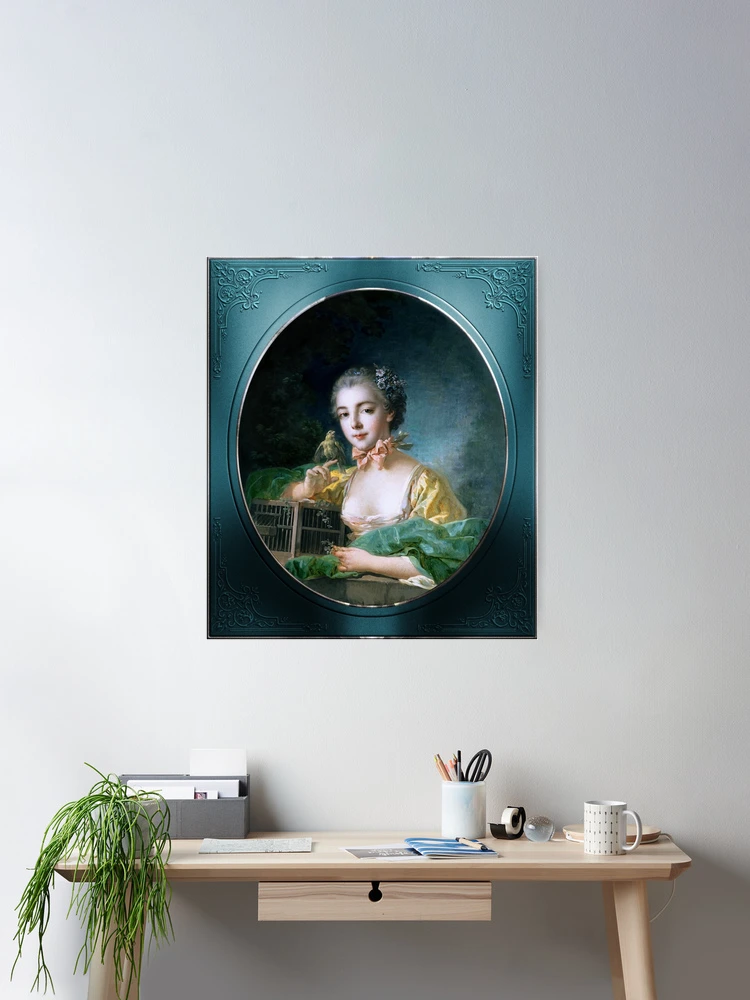
This artwork by the celebrated French Rococo painter François Boucher captures an exquisite moment of elegance and grace. This painting is a prime example of the Rococo style, which flourished in France during the early to mid-18th century, characterized by its lightness, armo, and use of soft, pastellivärit.
The subject of the portrait is Madame Badouin, the artist’s daughter, who is depicted with remarkable sensitivity and beauty. Pehmeä, delicate nature of her features, her youthful countenance, and her serene expression all embody the grace and poise that were idealized in the Rococo period. The portrait has a gentle, intimate quality, inviting the viewer into the subject’s personal space.
At the center of the composition, Madame Badouin is presented in a three-quarter view, her head slightly turned as if she is caught in a moment of quiet contemplation. Her gaze is directed slightly off to the side, creating an impression of introspection, yet there is a subtle connection with the viewer, as if she is aware of being observed.
Her facial features are rendered with delicate precision: her fair skin is soft and smooth, her lips slightly parted in a demure expression, and her large, expressive eyes reflect a sense of intelligence and calm. The artist has emphasized the softness of her features, using subtle transitions between light and shadow to create a lifelike, almost ethereal appearance.
Madame Badouin’s attire is a masterful representation of the Rococo fashion of the time. She is dressed in an opulent gown of pale yellow and soft green hues, with layers of sheer fabric that flow gracefully around her. The gown’s texture is depicted with meticulous detail, showing the fine, almost weightless nature of the materials.
The artist has captured the flow and drape of the fabric with a sense of fluidity, suggesting the movement of the fabric as the subject sits serenely. A large pink ribbon is tied loosely at her throat, adding a touch of playful color that contrasts with the softness of the gown and further enhances the light, airy quality of the portrait.
Her coiffed hair, which is styled in soft waves and adorned with delicate flowers, is another hallmark of the Rococo period. The careful attention to detail in her hairstyle not only highlights the fashion trends of the time but also adds a sense of natural beauty, as though her appearance is effortlessly graceful. The flowers in her hair seem to symbolize youth and femininity, enhancing the overall sense of delicacy and refinement.
One of the most striking aspects of this portrait is the bird perched on the artist’s daughter’s finger. This small detail plays an important symbolic role in the painting, contributing to the overall theme of innocence and natural beauty.

Lintu, with its muted plumage, contrasts with the lushness of the surrounding landscape and the softness of Madame Badouin’s attire. It also suggests a connection to nature, a recurring theme in Rococo art, which often celebrated the beauty of the natural world, the pastoral, and the idealized version of life in harmony with nature.
The background of the painting is equally carefully constructed. Figuurin takana, a dark, lush landscape unfolds, with trees and foliage softly blurring into the distance. The use of a rich, muted green palette creates an almost dreamlike effect, enhancing the ethereal mood of the portrait.
This natural setting not only contrasts with the softness of the figure but also symbolizes a connection between Madame Badouin and the world around her. The painter’s skillful rendering of light and shadow creates depth and atmosphere, giving the scene a tranquil, almost timeless quality.
The overall mood of the portrait is one of calm elegance. The colors are soft and harmonious, with pastel shades predominating in both the subject’s attire and the background. The figure is illuminated in such a way that the face and hands are gently highlighted, creating a subtle focal point that draws the viewer’s attention to the subject’s expression and demeanor. There is a serene quality to the painting, one that evokes the idealized virtues of youth, kauneus, and grace that were central to the Rococo aesthetic.
François Boucher’s technique in this painting is exemplary of his mastery of the Rococo style. His brushwork is fluid and refined, luomalla pehmeän, luminous texture that enhances the delicate nature of the subject. His use of light and color is equally sophisticated, with the artist skillfully capturing the interplay of natural light and shadow on Madame Badouin’s face and clothing. The soft transitions between colors and the subtle blending of tones demonstrate Boucher’s expertise in creating a smooth, polished finish.
Lopuksi, François Boucher’s “Portrait of Madame Badouin, The Artist’s Daughter” is a stunning example of Rococo portraiture, where the subject’s beauty, armo, and connection to nature are captured with sensitivity and elegance. The soft palette, delicate detailing, and serene mood of the painting convey the idealized qualities of youth and femininity that were highly valued during the Rococo period. Tämän muotokuvan kautta, Boucher not only immortalizes his daughter but also provides a glimpse into the Rococo vision of beauty and refinement.
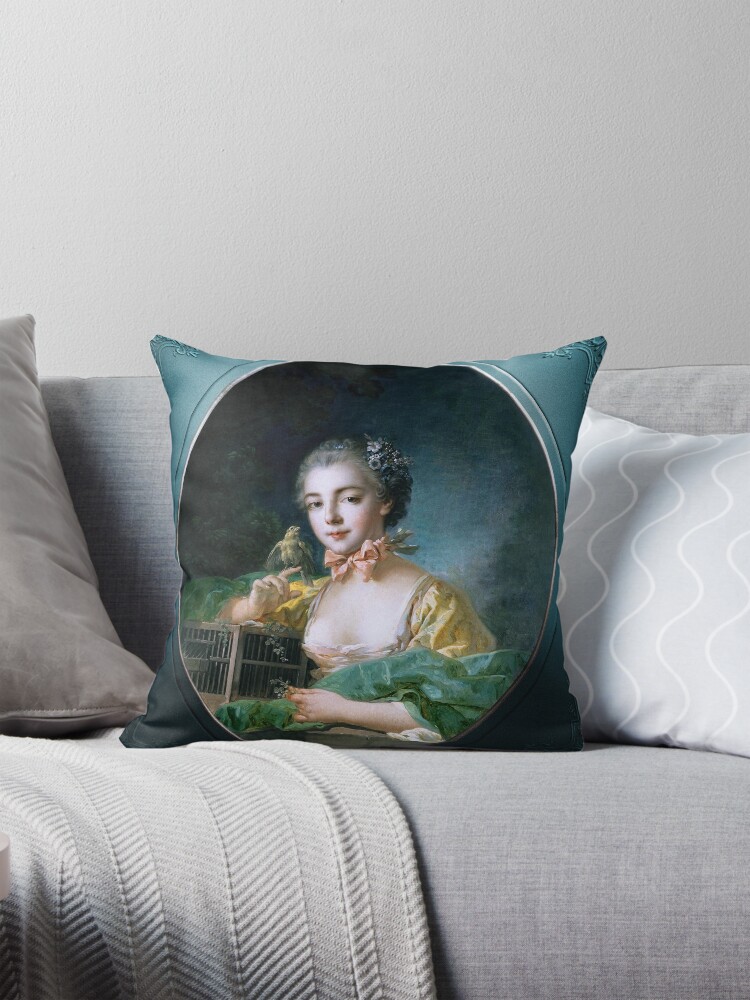
Madame Badouinin muotokuva on retusoitu digitaalisen taiteen vanhojen mestarien kopio julkisesta kuvasta.
Alla olevat tiedot ovat peräisin Wikipedia.org
Kotoisin Pariisista, Boucher oli vähemmän tunnettu taidemaalari Nicolas Boucherin poika, joka antoi hänelle ensimmäisen taiteellisen koulutuksen. Seitsemäntoistavuotiaana, Boucherin maalausta ihaili taidemaalari François Lemoyne. Lemoyne nimitti myöhemmin Boucherin oppipoikakseen, mutta vasta kolmen kuukauden jälkeen, hän meni töihin kaivertajalle Jean-François Carsille.
Sisään 1720, hän voitti eliitin Grand Prix de Rooman maalauksesta, mutta käytti seuraavaa tilaisuutta opiskella Italiassa vasta viisi vuotta myöhemmin, kuninkaallisten maalaus- ja kuvanveistoakatemian taloudellisten ongelmien vuoksi.[1] Palattuaan opiskelemaan Italiassa hänet hyväksyttiin uudelleen perustettuun Académie de peinture et de veistokseen 24 marraskuu 1731. Hänen vastaanottokappaleensa (vastaanottokappale) oli hänen Rinaldo ja Armida 1734.
Boucher meni naimisiin Marie-Jeanne Buzeaun kanssa vuonna 1733. Pariskunnalla oli kolme yhteistä lasta. Boucherista tuli tiedekunnan jäsen vuonna 1734 ja hänen uransa kiihtyi tästä lähtien, kun hänet ylennettiin professoriksi, sitten akatemian rehtoriksi, hänestä tuli tarkastaja Royal Gobelinsin manufaktuurissa ja lopulta pääministeri Peintre du Roi (Kuninkaan ensimmäinen maalari) sisään 1765. Muotokuva Marie-Louise O’Murphy c. 1752
Boucher kuoli 30 saattaa 1770 kotimaassaan Pariisissa. Hänen nimensä, yhdessä hänen suojelijansa Madame de Pompadourin kanssa, oli tullut synonyymi ranskalaiselle rokokoo -tyylille, johdattaa Goncourt -veljekset kirjoittamaan: “Boucher on yksi niistä miehistä, jotka edustavat vuosisadan makua, jotka ilmaisevat, personoida ja ilmentää sitä.”
Boucher on kuuluisa sanomalla, että luonto on “liian vihreä ja heikosti valaistu” (liian vihreä ja huonosti valaistu).
Boucher liittyi jalokivikaivertaja Jacques Guayhin, jonka hän opetti piirtämään. Hän opetti myös Moravian-itävaltalaisen taidemaalarin Martin Ferdinand Quadalin ja uusklassisen taidemaalarin Jacques-Louis Davidin. 1767.[4] Myöhemmin, Boucher teki sarjan piirroksia Guayn teoksista, jotka rouva de Pompadour kaiverrettiin ja jaettiin komeasti sidottuna teoksena suosituille hovimiehille