

Portrait vun der Madame Badouin
Portrait vun der Madame Badouin, The Artist's Daughter c1758-60 vum franséische Moler François Boucher (1703 – 1770); och bekannt als Zeechner, Graveur an Dekorateur am franséische Rokokostil, war bekannt fir seng iwwerflësseg mythologesch, allegoresch an erotesch Motiver a war den Haffmoler vum Louis XV an e Favorit vun der Marquise de Pompadour.
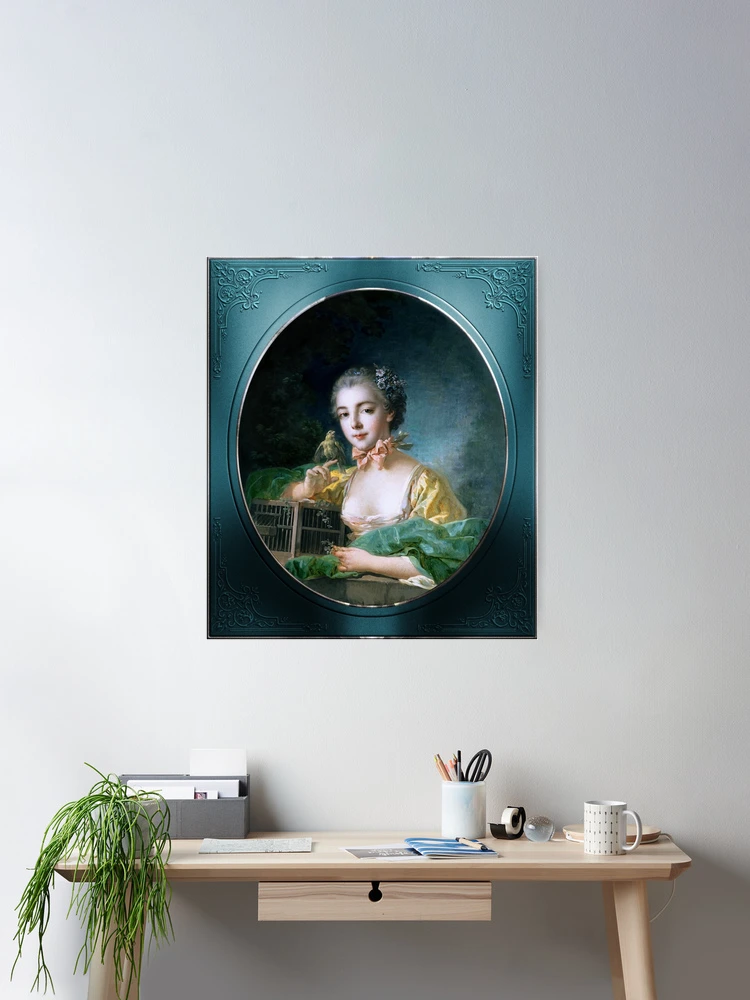
Dëst Konschtwierk vum gefeierte franséische Rokoko Moler François Boucher erfaasst en exquisite Moment vun Eleganz a Gnod. Dëst Bild ass e prime Beispill vum Rokoko-Stil, déi a Frankräich am Ufank bis Mëtt vum 18. Joerhonnert gebléit hunn, charakteriséiert duerch seng Liichtegkeet, Graf, a Gebrauch vun mëll, Pastellfarben.
D'Thema vum Portrait ass d'Madame Badouin, der Kënschtlerin senger Duechter, déi mat bemierkenswäerter Sensibilitéit a Schéinheet duergestallt gëtt. Der mëller, delikat Natur vun hire Fonctiounen, hiert jugendlecht Gesiicht, and her serene expression all embody the grace and poise that were idealized in the Rococo period. The portrait has a gentle, intimate quality, inviting the viewer into the subject’s personal space.
Am Zentrum vun der Zesummesetzung, Madame Badouin is presented in a three-quarter view, her head slightly turned as if she is caught in a moment of quiet contemplation. Her gaze is directed slightly off to the side, creating an impression of introspection, yet there is a subtle connection with the viewer, as if she is aware of being observed.
Her facial features are rendered with delicate precision: her fair skin is soft and smooth, her lips slightly parted in a demure expression, and her large, expressive eyes reflect a sense of intelligence and calm. The artist has emphasized the softness of her features, using subtle transitions between light and shadow to create a lifelike, almost ethereal appearance.
Madame Badouin’s attire is a masterful representation of the Rococo fashion of the time. She is dressed in an opulent gown of pale yellow and soft green hues, with layers of sheer fabric that flow gracefully around her. The gown’s texture is depicted with meticulous detail, showing the fine, almost weightless nature of the materials.
The artist has captured the flow and drape of the fabric with a sense of fluidity, suggesting the movement of the fabric as the subject sits serenely. A large pink ribbon is tied loosely at her throat, adding a touch of playful color that contrasts with the softness of the gown and further enhances the light, airy quality of the portrait.
Her coiffed hair, which is styled in soft waves and adorned with delicate flowers, is another hallmark of the Rococo period. The careful attention to detail in her hairstyle not only highlights the fashion trends of the time but also adds a sense of natural beauty, as though her appearance is effortlessly graceful. The flowers in her hair seem to symbolize youth and femininity, enhancing the overall sense of delicacy and refinement.
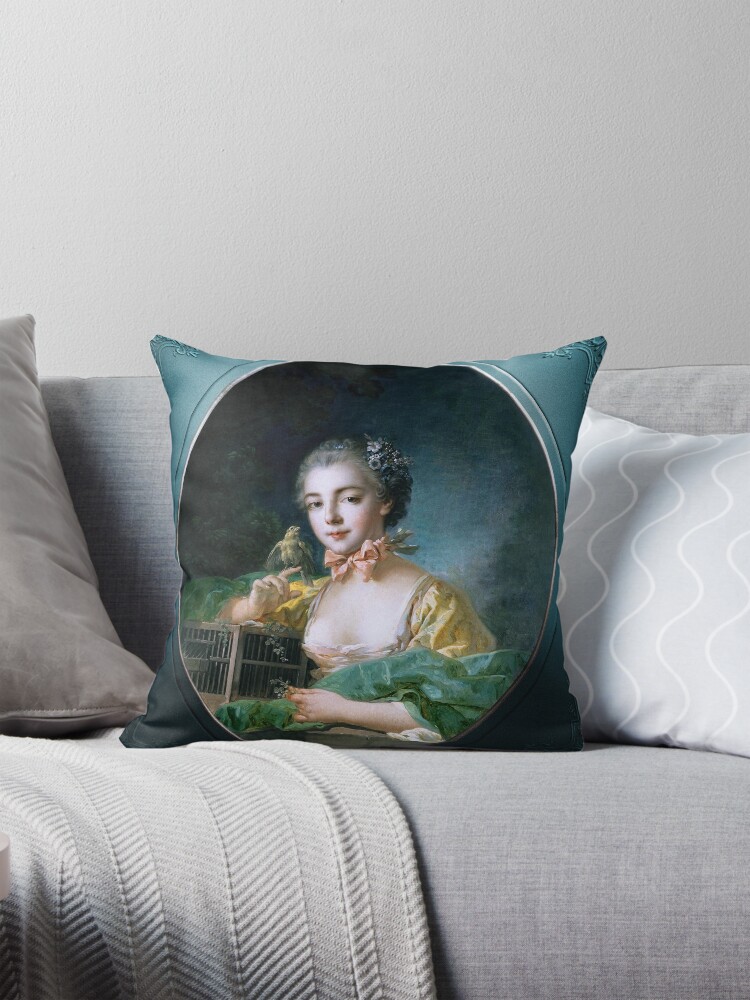
One of the most striking aspects of this portrait is the bird perched on the artist’s daughter’s finger. This small detail plays an important symbolic role in the painting, contributing to the overall theme of innocence and natural beauty.
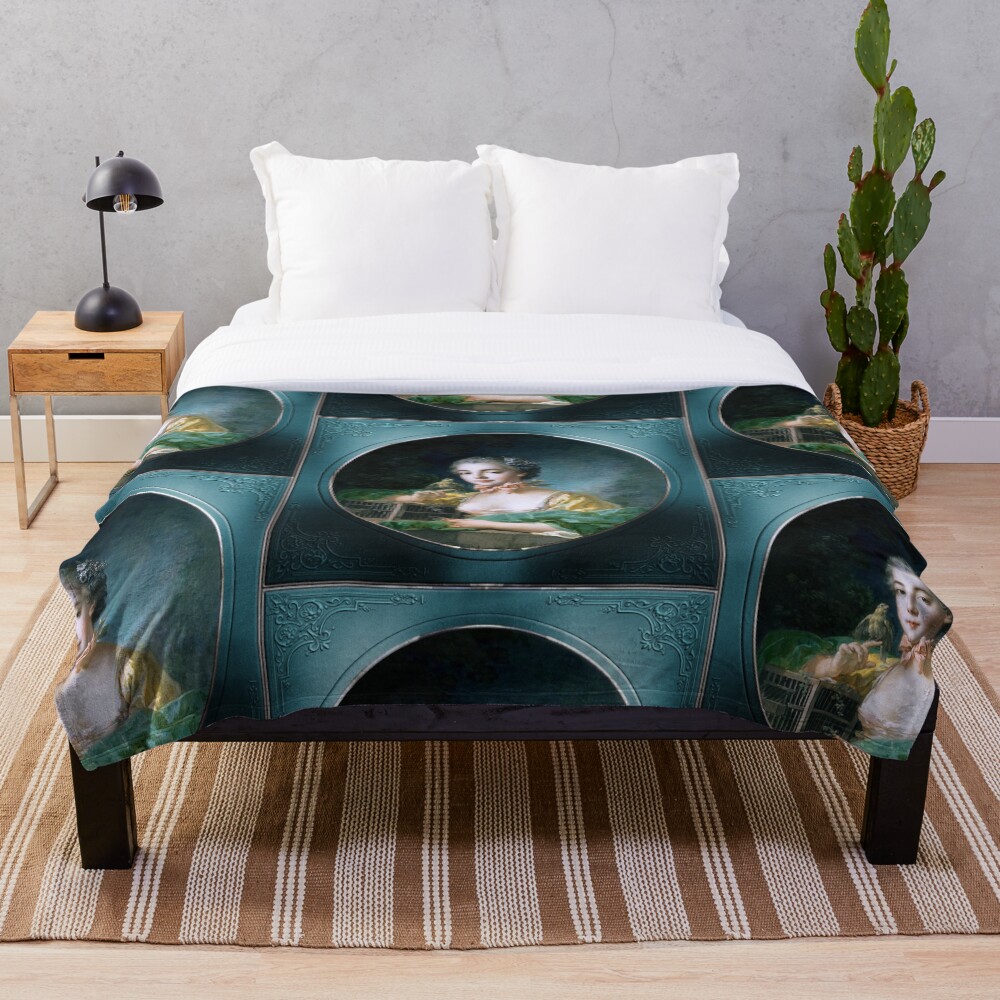
De Vugel, with its muted plumage, contrasts with the lushness of the surrounding landscape and the softness of Madame Badouin’s attire. It also suggests a connection to nature, a recurring theme in Rococo art, which often celebrated the beauty of the natural world, the pastoral, and the idealized version of life in harmony with nature.
The background of the painting is equally carefully constructed. Hannert der Figur, a dark, lush landscape unfolds, with trees and foliage softly blurring into the distance. The use of a rich, muted green palette creates an almost dreamlike effect, enhancing the ethereal mood of the portrait.
This natural setting not only contrasts with the softness of the figure but also symbolizes a connection between Madame Badouin and the world around her. The painter’s skillful rendering of light and shadow creates depth and atmosphere, giving the scene a tranquil, almost timeless quality.
The overall mood of the portrait is one of calm elegance. The colors are soft and harmonious, with pastel shades predominating in both the subject’s attire and the background. The figure is illuminated in such a way that the face and hands are gently highlighted, creating a subtle focal point that draws the viewer’s attention to the subject’s expression and demeanor. There is a serene quality to the painting, one that evokes the idealized virtues of youth, Schéinheet, a Gnod déi zentral an der Rokoko Ästhetik waren.
Dem François Boucher seng Technik an dësem Bild ass exemplaresch vu senger Meeschterschaft vum Rokoko-Stil. Seng Pinselwierk ass flësseg a raffinéiert, schafen eng mëll, hell Textur déi déi delikat Natur vum Thema verbessert. Seng Notzung vu Liicht a Faarf ass gläich sophistikéiert, mam Kënschtler deen d'Zesummespill vum natierleche Liicht a Schied op d'Madame Badouin hir Gesiicht a Kleeder erfaasst. Déi mëll Iwwergäng tëscht Faarwen an déi subtiler Vermëschung vun Téin weisen dem Boucher seng Expertise bei der Schafung vun enger glatter, ausgeräiften Finish.
A Conclusioun, François Boucher “Portrait vun der Madame Badouin, D'Kënschtler Duechter” ass e beandrockend Beispill vu Rokoko Porträt, wou d'Thema Schéinheet, Graf, a Verbindung mat der Natur gi mat Sensibilitéit an Eleganz ageholl. Déi mëll Palette, delikat Detailer, and serene mood of the painting convey the idealized qualities of youth and femininity that were highly valued during the Rococo period. Duerch dëse Portrait, Boucher not only immortalizes his daughter but also provides a glimpse into the Rococo vision of beauty and refinement.
Portrait Of Madame Badouin is a retouched digital art old masters reproduction of a public domain image.
Info drënner ofgeleet vun Wikipedia.org
Eng gebierteg vu Paräis, De Boucher war de Jong vun engem manner bekannte Moler Nicolas Boucher, deen him seng éischt artistesch Ausbildung ginn huet. Am Alter vu siwwenzéng, e Bild vum Boucher gouf vum Moler François Lemoyne bewonnert. De Lemoyne huet spéider de Boucher als seng Léierin ernannt, awer no nëmmen dräi Méint, hien ass fir de Gravure Jean-François Cars ze schaffen.
An 1720, hien huet den Elite Grand Prix de Rome fir Molerei gewonnen, awer huet déi konsequent Geleeënheet net geholl fir an Italien ze studéieren bis fënnef Joer méi spéit, wéinst finanzielle Problemer op der Royal Academy of Painting and Sculpture.[1] Beim Retour vum Studium an Italien gouf hien an d'Refounded Académie de peinture et de sculpture opgeholl 24 November 1731. Säi Empfangsstéck (Empfangstéck) war säi Rinaldo an den Armida vum 1734.
Boucher bestuet Marie-Jeanne Buzeau am 1733. D'Koppel hat dräi Kanner zesummen. Boucher gouf e Fakultéit Member an 1734 a seng Karriär huet vun dësem Punkt beschleunegt wéi hie Professer gefördert gouf dann de Rektor vun der Akademie, Inspekter bei der Royal Gobelins Fabrik ginn a schlussendlech Premier Peintre du Roi (Éischte Moler vum Kinnek) an 1765. Portrait vum Marie-Louise O'Murphy c. 1752
Boucher gestuerwen den 30 Mee 1770 a sengem Heemechtsland Paräis. Säin Numm, zesumme mat deem vu sengem Patréiner Madame de Pompadour, war synonym fir de franséische Rokokostil ginn, féiert de Goncourt Bridder ze schreiwen: “De Boucher ass ee vun deene Männer, déi de Goût vun engem Joerhonnert duerstellen, déi ausdrécken, personifizéieren a beliichten.”
De Boucher ass berühmt fir ze soen datt d'Natur ass “ze gréng a schlecht beliicht” (ze gréng a schlecht beliicht).
De Boucher war mam Edelsteengraver Jacques Guay verbonnen, deen hien geléiert huet ze molen. Hie mentoréiert och de moravesch-éisträichesche Moler Martin Ferdinand Quadal souwéi den neoklassesche Moler Jacques-Louis David am 1767.[4] Méi spéit, De Boucher huet eng Serie vun Zeechnunge vu Wierker vum Guay gemaach, déi d'Madame de Pompadour duerno gravéiert a verdeelt huet als e flott gebonnen Volumen un favoriséiert Haffbierger