

Portrait of Maria Alexeevna Matavtina
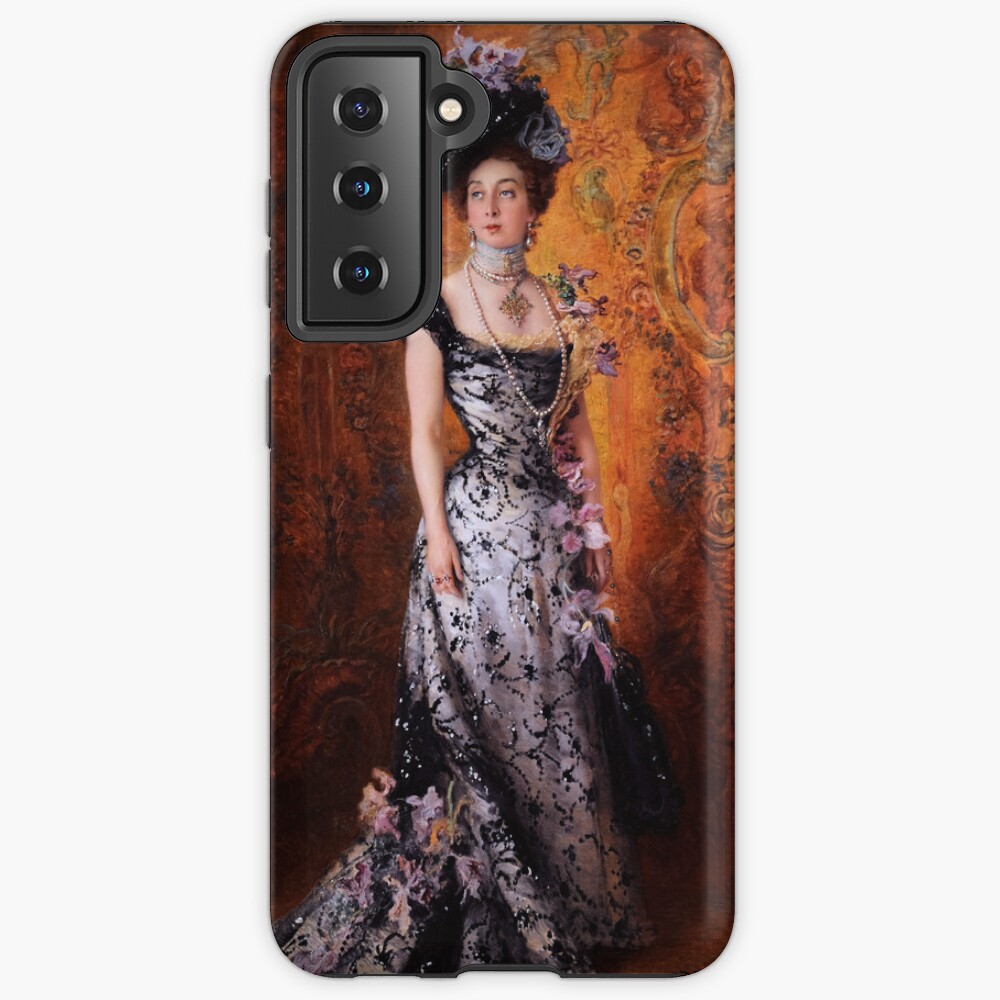
Portrait of Makovsky’s Third Wife Maria Alexeevna Matavtina (1869-1919) c1900 by Konstantin Makovskij (1839 – 1915); specialiĝanta pri rusaj Historiaj pentraĵoj montrantaj idealigitan vidon de rusa vivo en pasintaj jarcentoj.
Enkonduko
La “Portrait of Maria Alexeevna Matavtina” by Konstantin Makovsky is an exquisite example of late 19th-century Russian portraiture. Painted around the turn of the 20th century, this artwork portrays Makovsky’s third wife, Maria Alexeevna Matavtina, in a sumptuous gown against a backdrop of warm, opulent colors. The portrait reveals not only the refined beauty of the subject but also Makovsky’s exceptional skill in capturing the grace, Eleganteco, and grandeur of Russian aristocracy during the Imperial era.
Enhavtabelo
La Subjekto: Maria Alexeevna Matavtina
The portrait centers on Maria Alexeevna Matavtina, who was the third wife of renowned Russian artist Konstantin Makovsky. Naskita en 1869, Maria became an influential figure in the Russian artistic and cultural circles of the late 19th and early 20th centuries. Known for her poised and refined demeanor, she is depicted in the portrait as a symbol of aristocratic grace and beauty. Her gentle expression conveys a sense of serenity and dignity, offering the viewer a glimpse into the life of Russian nobility during this period. Maria’s attire and accessories, as well as her posture, exude the confidence and sophistication expected of women of her social standing.
The Style and Technique
Makovsky’s work is celebrated for its realistic portrayal of his subjects, blending academic tradition with the Russian fascination for opulence and grandeur. The artist’s technique is a fine example of Russian realism, focusing on intricate details and the creation of a lifelike representation of his subjects. The brushwork in the portrait is meticulous and refined, especially in the rendering of Maria’s luxurious gown, the pearls draped across her neck, and the fine details of her jewelry. The texture of her gown, which appears to be made from satin or silk, is rendered with remarkable precision, highlighting the rich fabrics and the skillful use of light and shadow to suggest depth.
The background of the portrait is painted in a warm palette of oranges, brunaj, kaj oroj, creating a sense of intimacy and luxury. The colors blend harmoniously, enhancing the subject’s presence in the painting. The warm tones of the backdrop serve to emphasize the elegance and poise of Maria, further highlighting her position within the elite class of Russian society.
The Attire and Accessories
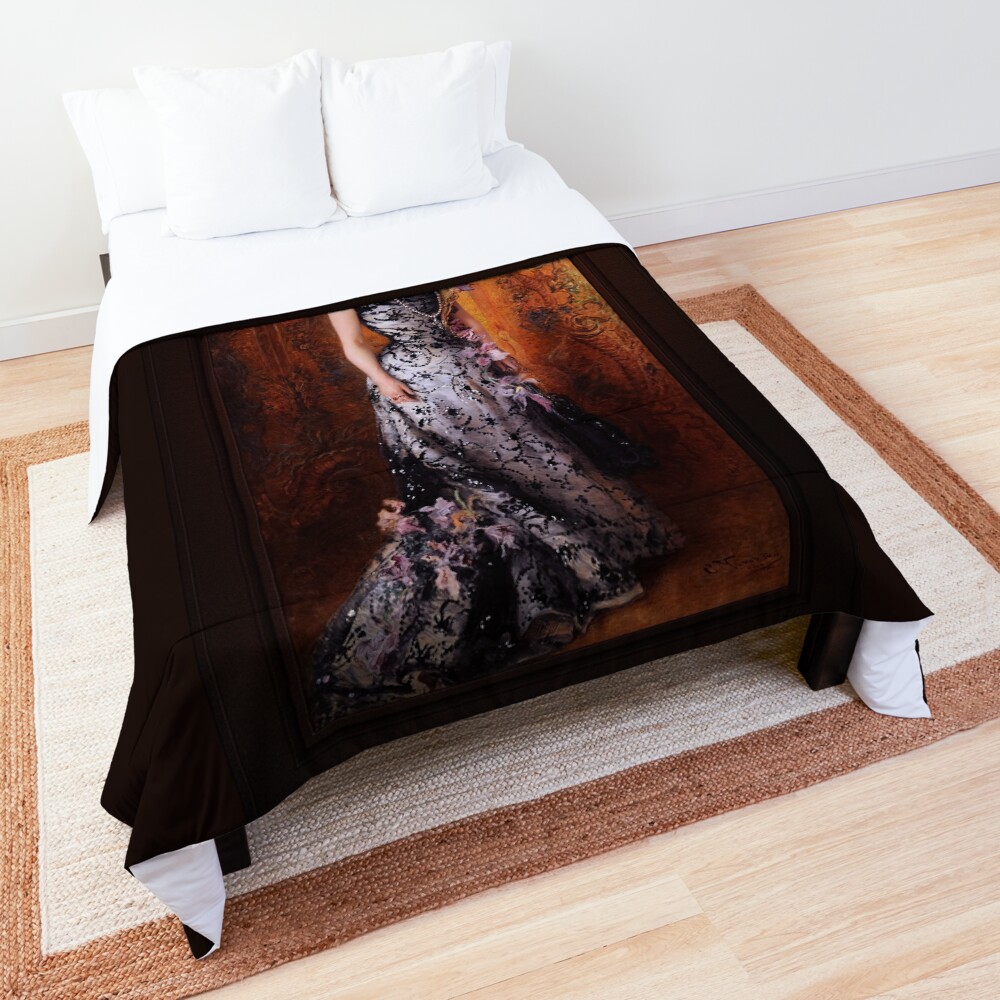
Maria’s gown is one of the most striking features of the portrait. La profunda, dark colors of the dress, accentuated with subtle light reflections, suggest a luxurious fabric like satin or velvet, offering a rich contrast to the lighter tones of her skin. The gown’s intricate black lace details, especially along the bodice and sleeves, are skillfully depicted, showcasing Makovsky’s attention to texture and his mastery of rendering fabric. The lace patterns evoke an air of formality and class, befitting a member of the Russian aristocracy.
Maria wears a lavish array of pearls and jewelry, including a pearl necklace that cascades elegantly around her neck. A large star-shaped brooch, likely of gold or silver, adorns her chest, drawing attention to her upper body and serving as a focal point in the composition. Ŝiaj haroj, styled in an intricate updo, is accessorized with a delicate floral arrangement, featuring shades of violet, adding a touch of softness to the overall look. These details not only speak to the high social status of the subject but also highlight the fashionable trends of the period.
The Setting and Background
The background of the portrait is a harmonious blend of warm, earthy tones. A subtle floral pattern emerges from the textured surface, creating a sense of richness without distracting from the central figure. The organic motifs in the background are reminiscent of the decorative arts of the time, possibly inspired by the Rococo or Neoclassical influences that were popular in Russian interiors. The golden hues give the painting a sense of warmth, making Maria the undeniable focal point of the composition.
The background’s richness contrasts beautifully with the subject’s refined and poised figure. La fikso, although not overly detailed, evokes the luxurious world of Russian nobility, providing a fitting context for the subject’s elegant attire and aristocratic presence. The overall mood of the piece is one of intimate grandeur, where the viewer is invited to witness the opulence of Russian society through the lens of a poised and sophisticated aristocrat.
The Mood and Tone
The mood of the portrait is serene and contemplative, with an air of aristocratic dignity. Maria’s expression is calm and composed, her posture exuding grace and confidence. La mola, almost wistful look in her eyes suggests a deeper introspection, lending the portrait an emotional depth that contrasts with the grandeur of her attire. This emotional resonance adds complexity to the piece, offering more than just a visual portrayal of wealth and status.
The painting evokes a sense of nostalgia for the opulence and refinement of the Russian Imperial era. It serves as a historical artifact that captures not only the fashion and style of the time but also the societal values and norms that governed the lives of the Russian aristocracy. The combination of the subject’s regal bearing, the lush textures of her gown, kaj la varma, inviting background creates an atmosphere of refinement and sophistication.
Konkludo
Makovsky’s “Portrait of Maria Alexeevna Matavtina” is a stunning example of Russian portraiture at the turn of the 20th century. It showcases the artist’s ability to blend realism with a sense of grandeur, capturing the subject’s beauty and the luxurious lifestyle of Russian nobility. The detailed depiction of Maria’s attire, akcesoraĵoj, and the background of the painting invites the viewer into a world of opulence and aristocratic grace. Per ĉi tiu portreto, Makovsky immortalizes not only his beloved wife but also the rich cultural and artistic heritage of late Imperial Russia.
Portrait of Maria Alexeevna Matavtina is a remastered digital art old masters reproduction of a public domain image that is available as a tolo presaĵo rete.
Pri La Artisto
Informoj Malsupre Derivita De Vikipedio.org
Konstantin Makovsky estis influa rusa farbisto, aligita kun la “Peredvizhniki (Vagantoj)”. Multaj el liaj historiaj pentraĵoj, kiel ekzemple Sub la Krono (1889) ankaŭ konata kiel La Rusa Novedzino Vesto kaj Antaŭ la Geedziĝo, montris idealigitan vidon de rusa vivo de antaŭaj jarcentoj. Li ofte estas konsiderita reprezentanto de Akademia arto.
Konstantin Makovsky naskiĝis en Moskvo. Lia patro estis la rusa artfiguro kaj amatora farbisto, Jegor Ivanoviĉ Makovskij. Lia patrino estis komponisto, kaj ŝi esperis, ke ŝia filo iam sekvos ŝiajn paŝojn. Liaj pli junaj fratoj Vladimir kaj Nikolay kaj lia fratino Alexandra ankaŭ daŭriĝis por iĝi farbistoj.
En 1851 Makovsky eniris la Moskvan Lernejon de Pentraĵo, Skulptaĵo kaj Arkitekturo kie li iĝis la ĉefa studento, facile ricevi ĉiujn disponeblajn premiojn. Liaj instruistoj estis Karl Bryullov kaj Vasilij Tropinin. La inklinoj de Makovsky al Romantikismo kaj dekoraciaj efikoj povas esti klarigitaj per la influo de Bryullov.
Kvankam arto estis lia pasio, li ankaŭ pripensis kion lia patrino volis ke li faru. Li ekiris serĉi komponistojn, kiujn li povus rilati, kaj unue iris al Francio. Antaŭe, li ĉiam estis klasika muzikamanto, kaj aŭskultis multajn pecojn. Li ofte deziris ke li povu ŝanĝi la melodion, aŭ stilo de kelkaj el ili por igi ilin pli ĝuaj. Poste en lia vivo ĝi realiĝis.
En 1858 Makovsky membrigis la Imperian Akademion de Arto en Sankt-Peterburgo. De 1860 li partoprenis la ekspoziciojn de la Akademio kun pentraĵoj kiel Curing of the Blind (1860) kaj Agentoj de la Falsa Dmitry mortigas la filon de Boris Godunov (1862). En 1863 Makovsky kaj dek tri aliaj studentoj okazigis proteston kontraŭ la fikso de la Akademio de temoj de skandinava mitologio en la konkurso por la Granda Ora Medalo de Akademio.; ĉiuj forlasis la akademion sen formala diplomo.
Makovskij iĝis membro de kooperativo (artel) de artistoj gvidataj de Ivan Kramskoi, tipe produktante Wanderers-pentraĵojn pri ĉiutageco (Vidvino 1865, Haringo-vendisto 1867, ktp.). De 1870 li estis fondmembro de la Society for Traveling Art Exhibitions kaj daŭre laboris pri pentraĵoj dediĉitaj al ĉiutaga vivo.. Li ekspoziciis siajn verkojn ĉe kaj la Academia-ekspozicioj kaj la Vojaĝantaj Artekspozicioj de la Vagantoj.
Signifa ŝanĝo en lia stilo okazis post vojaĝado al Egiptujo kaj Serbio en la mez-1870-aj jaroj. Liaj interesoj ŝanĝiĝis de sociaj kaj psikologiaj problemoj al la artaj problemoj de koloroj kaj formo.
En la 1880-aj jaroj li iĝis moda aŭtoro de portretoj kaj historiaj pentraĵoj. En la Monda Ekspozicio de 1889 en Parizo li ricevis la Grandan Oran Medalon pro siaj pentraĵoj Morto de Ivano la Terura, La Juĝo de Parizo, kaj Demono kaj Tamara. Li estis unu el la plej alte aprezitaj kaj tre pagitaj rusaj artistoj de la tempo. Multaj demokrataj kritikistoj konsideris lin renegato de la Vagantoj’ idealoj, produktante (kiel Henryk Siemiradzki) frapantaj sed malprofundaj verkoj, dum aliaj vidas lin kiel antaŭulo de rusa impresionismo.
Makovskij estis mortigita en 1915 kiam lia kaleŝo estis trafita per elektra tramo en Sankt-Peterburgo.