

Retrato de María Alexeevna Matavtina
Retrato de la tercera esposa de Makovsky, Maria Alexeevna Matavtina (1869-1919) c1900 por Konstantin Makovsky (1839 – 1915); especializado en pinturas históricas rusas que muestran una visión idealizada de la vida rusa en los siglos pasados.
Introducción
La “Retrato de María Alexeevna Matavtina” by Konstantin Makovsky is an exquisite example of late 19th-century Russian portraiture. Painted around the turn of the 20th century, this artwork portrays Makovsky’s third wife, Maria Alexeevna Matavtina, in a sumptuous gown against a backdrop of warm, opulent colors. The portrait reveals not only the refined beauty of the subject but also Makovsky’s exceptional skill in capturing the grace, elegancia, and grandeur of Russian aristocracy during the Imperial era.
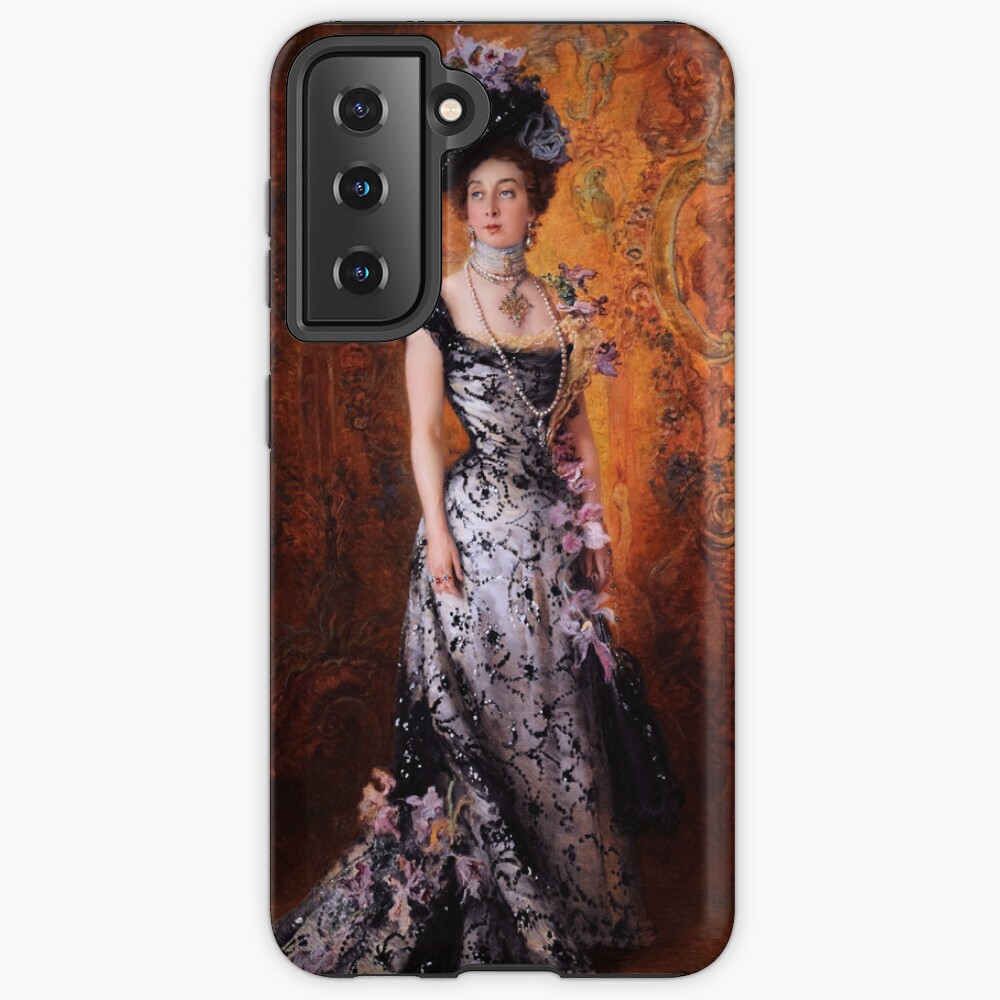
Tabla de contenido
El sujeto: Maria Alexeevna Matavtina
The portrait centers on Maria Alexeevna Matavtina, who was the third wife of renowned Russian artist Konstantin Makovsky. Nacido en 1869, Maria became an influential figure in the Russian artistic and cultural circles of the late 19th and early 20th centuries. Known for her poised and refined demeanor, she is depicted in the portrait as a symbol of aristocratic grace and beauty. Her gentle expression conveys a sense of serenity and dignity, offering the viewer a glimpse into the life of Russian nobility during this period. Maria’s attire and accessories, as well as her posture, exude the confidence and sophistication expected of women of her social standing.
El estilo y la técnica
Makovsky’s work is celebrated for its realistic portrayal of his subjects, blending academic tradition with the Russian fascination for opulence and grandeur. The artist’s technique is a fine example of Russian realism, focusing on intricate details and the creation of a lifelike representation of his subjects. The brushwork in the portrait is meticulous and refined, especially in the rendering of Maria’s luxurious gown, the pearls draped across her neck, and the fine details of her jewelry. The texture of her gown, which appears to be made from satin or silk, is rendered with remarkable precision, highlighting the rich fabrics and the skillful use of light and shadow to suggest depth.
The background of the portrait is painted in a warm palette of oranges, marrones, y oro, creating a sense of intimacy and luxury. The colors blend harmoniously, enhancing the subject’s presence in the painting. The warm tones of the backdrop serve to emphasize the elegance and poise of Maria, further highlighting her position within the elite class of Russian society.
The Attire and Accessories
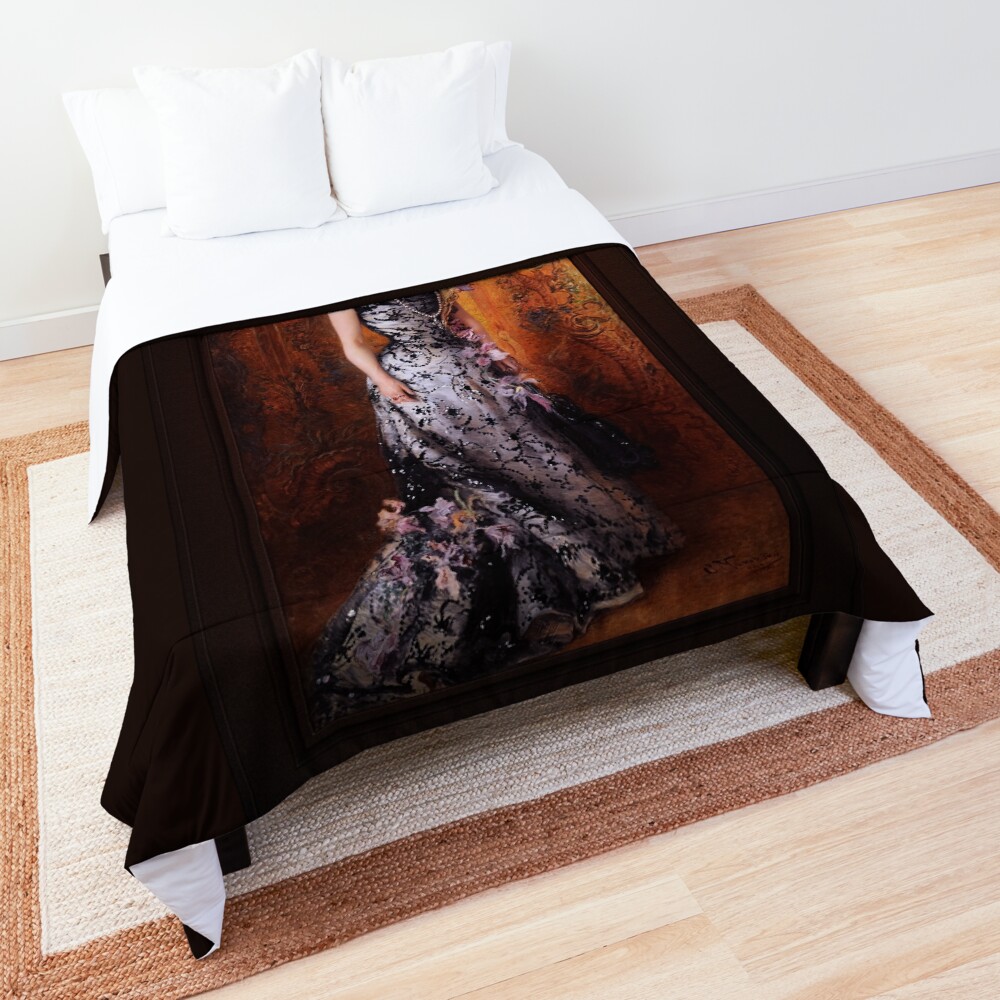
Maria’s gown is one of the most striking features of the portrait. Mar, dark colors of the dress, accentuated with subtle light reflections, suggest a luxurious fabric like satin or velvet, offering a rich contrast to the lighter tones of her skin. The gown’s intricate black lace details, especially along the bodice and sleeves, are skillfully depicted, showcasing Makovsky’s attention to texture and his mastery of rendering fabric. The lace patterns evoke an air of formality and class, befitting a member of the Russian aristocracy.
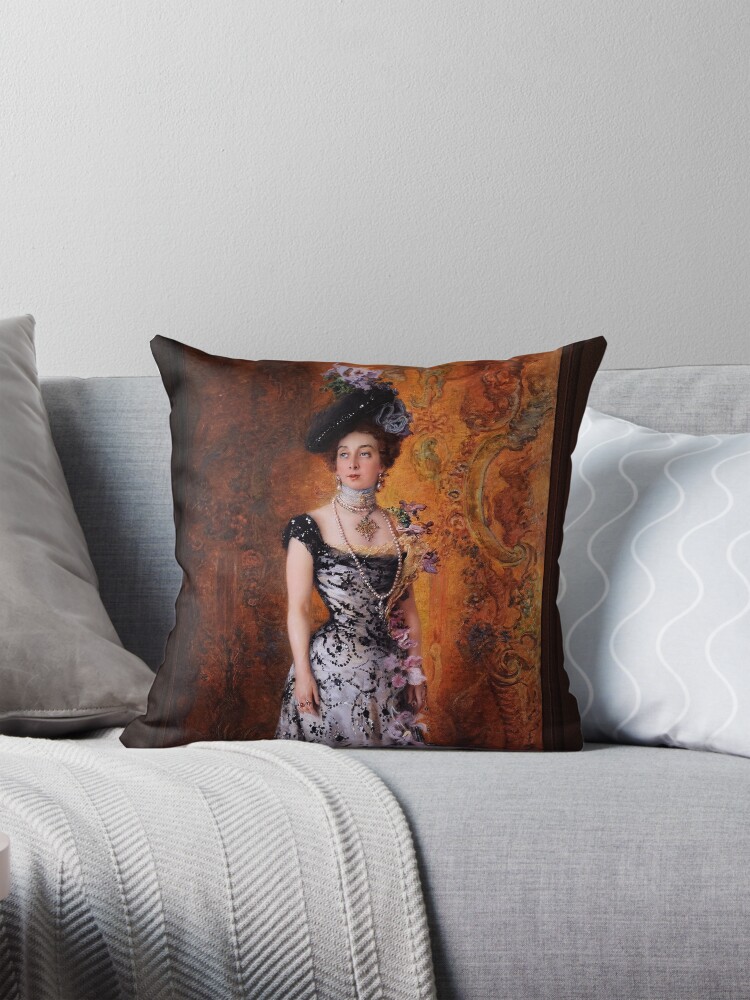
Maria wears a lavish array of pearls and jewelry, including a pearl necklace that cascades elegantly around her neck. A large star-shaped brooch, likely of gold or silver, adorns her chest, drawing attention to her upper body and serving as a focal point in the composition. Su pelo, styled in an intricate updo, is accessorized with a delicate floral arrangement, featuring shades of violet, adding a touch of softness to the overall look. These details not only speak to the high social status of the subject but also highlight the fashionable trends of the period.
La configuración y el fondo
The background of the portrait is a harmonious blend of warm, tonos terrosos. A subtle floral pattern emerges from the textured surface, creating a sense of richness without distracting from the central figure. The organic motifs in the background are reminiscent of the decorative arts of the time, possibly inspired by the Rococo or Neoclassical influences that were popular in Russian interiors. The golden hues give the painting a sense of warmth, making Maria the undeniable focal point of the composition.
The background’s richness contrasts beautifully with the subject’s refined and poised figure. La configuración, aunque no demasiado detallado, evokes the luxurious world of Russian nobility, providing a fitting context for the subject’s elegant attire and aristocratic presence. The overall mood of the piece is one of intimate grandeur, where the viewer is invited to witness the opulence of Russian society through the lens of a poised and sophisticated aristocrat.
The Mood and Tone
The mood of the portrait is serene and contemplative, with an air of aristocratic dignity. Maria’s expression is calm and composed, her posture exuding grace and confidence. Lo suave, almost wistful look in her eyes suggests a deeper introspection, lending the portrait an emotional depth that contrasts with the grandeur of her attire. This emotional resonance adds complexity to the piece, offering more than just a visual portrayal of wealth and status.
The painting evokes a sense of nostalgia for the opulence and refinement of the Russian Imperial era. It serves as a historical artifact that captures not only the fashion and style of the time but also the societal values and norms that governed the lives of the Russian aristocracy. The combination of the subject’s regal bearing, the lush textures of her gown, y el cálido, inviting background creates an atmosphere of refinement and sophistication.
Conclusión
Makovsky’s “Retrato de María Alexeevna Matavtina” is a stunning example of Russian portraiture at the turn of the 20th century. It showcases the artist’s ability to blend realism with a sense of grandeur, capturing the subject’s beauty and the luxurious lifestyle of Russian nobility. The detailed depiction of Maria’s attire, accesorios, and the background of the painting invites the viewer into a world of opulence and aristocratic grace. Through this portrait, Makovsky immortalizes not only his beloved wife but also the rich cultural and artistic heritage of late Imperial Russia.
Portrait of Maria Alexeevna Matavtina is a remastered digital art old masters reproduction of a public domain image that is available as a Esta es una elegante chica de glamour art deco vintage..
Sobre el artista
Información a continuación derivada de Wikipedia.org
Konstantin Makovsky fue un pintor ruso influyente, afiliado a la “Peredvízhniki (vagabundos)”. Muchas de sus pinturas históricas, como Debajo de la corona (1889) también conocido como El atuendo de la novia rusa y Antes de la boda, mostró una visión idealizada de la vida rusa de siglos anteriores. A menudo se le considera un representante del arte académico..
Konstantin Makovsky nació en Moscú. Su padre era la figura del arte ruso y pintor aficionado., Yegor Ivánovich Makovsky. Su madre era compositora., y esperaba que su hijo algún día siguiera sus pasos. Sus hermanos menores Vladimir y Nikolay y su hermana Alexandra también se convirtieron en pintores..
En 1851 Makovsky ingresó a la Escuela de Pintura de Moscú., Escultura y Arquitectura donde se convirtió en el mejor alumno, conseguir fácilmente todos los premios disponibles. Sus maestros fueron Karl Bryullov y Vasily Tropinin.. Las inclinaciones de Makovsky por el romanticismo y los efectos decorativos pueden explicarse por la influencia de Bryullov..
Aunque el arte era su pasión, también consideró lo que su madre había querido que hiciera. Partió a buscar compositores a los que pudiera referirse., y primero fue a Francia. Antes, él siempre había sido un amante de la música clásica, y escuché muchas piezas. A menudo deseaba poder cambiar la melodía, o el estilo de algunos de ellos para hacerlos más agradables. Más tarde en su vida se hizo realidad..
En 1858 Makovsky ingresó a la Academia Imperial de las Artes en San Petersburgo. Desde 1860 participó en las exposiciones de la Academia con pinturas como Curing of the Blind (1860) y Agentes del Falso Dmitry matan al hijo de Boris Godunov (1862). En 1863 Makovsky y otros trece estudiantes realizaron una protesta contra el escenario de la Academia de temas de la mitología escandinava en la competencia por la Gran Medalla de Oro de la Academia; todos salieron de la academia sin un diploma formal.
Makovsky se convirtió en miembro de una cooperativa (artel) de artistas liderados por Ivan Kramskoi, normalmente produce pinturas de Wanderers sobre la vida cotidiana (Viuda 1865, vendedor de arenque 1867, etc.). Desde 1870 fue miembro fundador de la Society for Traveling Art Exhibitions y continuó trabajando en pinturas dedicadas a la vida cotidiana.. Expuso sus obras tanto en las exposiciones de la Academia como en las exposiciones itinerantes de arte de los Wanderers..
Se produjo un cambio significativo en su estilo después de viajar a Egipto y Serbia a mediados de la década de 1870.. Sus intereses cambiaron de los problemas sociales y psicológicos a los problemas artísticos de los colores y la forma..
En la década de 1880 se convirtió en un autor de moda de retratos y pinturas históricas.. En la Feria Mundial de 1889 en París recibió la Gran Medalla de Oro por sus cuadros Muerte de Iván el Terrible, El juicio de París, y Demonio y Tamara. Fue uno de los artistas rusos más apreciados y mejor pagados de la época.. Muchos críticos democráticos lo consideraron un renegado de los Wanderers.’ ideales, productor (como henryk siemiradzki) obras llamativas pero superficiales, mientras que otros lo ven como un precursor del impresionismo ruso.
Makovsky fue asesinado en 1915 cuando su carruaje tirado por caballos fue atropellado por un tranvía eléctrico en San Petersburgo.