

Portrait of Maria Alexeevna Matavtina
Portrait of Makovsky’s Third Wife Maria Alexeevna Matavtina (1869-1919) c1900 by Konstantin Makovsky (1839 – 1915); especializado em pinturas históricas russas mostrando uma visão idealizada da vida russa nos séculos passados.
Introdução
O “Portrait of Maria Alexeevna Matavtina” by Konstantin Makovsky is an exquisite example of late 19th-century Russian portraiture. Painted around the turn of the 20th century, this artwork portrays Makovsky’s third wife, Maria Alexeevna Matavtina, in a sumptuous gown against a backdrop of warm, opulent colors. The portrait reveals not only the refined beauty of the subject but also Makovsky’s exceptional skill in capturing the grace, elegância, and grandeur of Russian aristocracy during the Imperial era.
Índice
O assunto: Maria Alexeevna Matavtina
The portrait centers on Maria Alexeevna Matavtina, who was the third wife of renowned Russian artist Konstantin Makovsky. Nasceu em 1869, Maria became an influential figure in the Russian artistic and cultural circles of the late 19th and early 20th centuries. Known for her poised and refined demeanor, she is depicted in the portrait as a symbol of aristocratic grace and beauty. Her gentle expression conveys a sense of serenity and dignity, offering the viewer a glimpse into the life of Russian nobility during this period. Maria’s attire and accessories, as well as her posture, exude the confidence and sophistication expected of women of her social standing.
O estilo e a técnica
Makovsky’s work is celebrated for its realistic portrayal of his subjects, blending academic tradition with the Russian fascination for opulence and grandeur. The artist’s technique is a fine example of Russian realism, focusing on intricate details and the creation of a lifelike representation of his subjects. The brushwork in the portrait is meticulous and refined, especially in the rendering of Maria’s luxurious gown, the pearls draped across her neck, and the fine details of her jewelry. The texture of her gown, which appears to be made from satin or silk, is rendered with remarkable precision, highlighting the rich fabrics and the skillful use of light and shadow to suggest depth.
The background of the portrait is painted in a warm palette of oranges, marrons, e ouro, creating a sense of intimacy and luxury. The colors blend harmoniously, enhancing the subject’s presence in the painting. The warm tones of the backdrop serve to emphasize the elegance and poise of Maria, further highlighting her position within the elite class of Russian society.
The Attire and Accessories
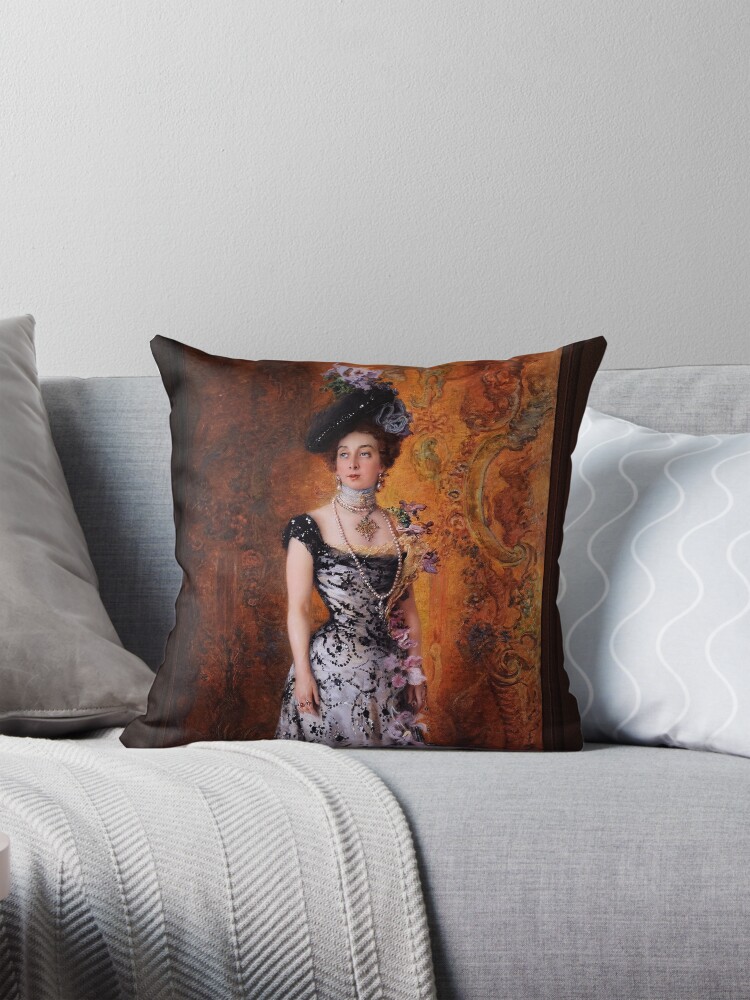
Maria’s gown is one of the most striking features of the portrait. O profundo, dark colors of the dress, accentuated with subtle light reflections, suggest a luxurious fabric like satin or velvet, offering a rich contrast to the lighter tones of her skin. The gown’s intricate black lace details, especially along the bodice and sleeves, are skillfully depicted, showcasing Makovsky’s attention to texture and his mastery of rendering fabric. The lace patterns evoke an air of formality and class, befitting a member of the Russian aristocracy.
Maria wears a lavish array of pearls and jewelry, including a pearl necklace that cascades elegantly around her neck. A large star-shaped brooch, likely of gold or silver, adorns her chest, drawing attention to her upper body and serving as a focal point in the composition. O cabelo dela, styled in an intricate updo, is accessorized with a delicate floral arrangement, featuring shades of violet, adding a touch of softness to the overall look. These details not only speak to the high social status of the subject but also highlight the fashionable trends of the period.
The Setting and Background
The background of the portrait is a harmonious blend of warm, Tons terrosos. A subtle floral pattern emerges from the textured surface, creating a sense of richness without distracting from the central figure. The organic motifs in the background are reminiscent of the decorative arts of the time, possibly inspired by the Rococo or Neoclassical influences that were popular in Russian interiors. The golden hues give the painting a sense of warmth, making Maria the undeniable focal point of the composition.
The background’s richness contrasts beautifully with the subject’s refined and poised figure. A configuração, although not overly detailed, evokes the luxurious world of Russian nobility, providing a fitting context for the subject’s elegant attire and aristocratic presence. The overall mood of the piece is one of intimate grandeur, where the viewer is invited to witness the opulence of Russian society through the lens of a poised and sophisticated aristocrat.
The Mood and Tone
The mood of the portrait is serene and contemplative, with an air of aristocratic dignity. Maria’s expression is calm and composed, her posture exuding grace and confidence. O macio, almost wistful look in her eyes suggests a deeper introspection, lending the portrait an emotional depth that contrasts with the grandeur of her attire. This emotional resonance adds complexity to the piece, offering more than just a visual portrayal of wealth and status.
The painting evokes a sense of nostalgia for the opulence and refinement of the Russian Imperial era. It serves as a historical artifact that captures not only the fashion and style of the time but also the societal values and norms that governed the lives of the Russian aristocracy. The combination of the subject’s regal bearing, the lush textures of her gown, and the warm, inviting background creates an atmosphere of refinement and sophistication.
Conclusão
Makovsky’s “Portrait of Maria Alexeevna Matavtina” is a stunning example of Russian portraiture at the turn of the 20th century. It showcases the artist’s ability to blend realism with a sense of grandeur, capturing the subject’s beauty and the luxurious lifestyle of Russian nobility. The detailed depiction of Maria’s attire, acessórios, and the background of the painting invites the viewer into a world of opulence and aristocratic grace. Através deste retrato, Makovsky immortalizes not only his beloved wife but also the rich cultural and artistic heritage of late Imperial Russia.
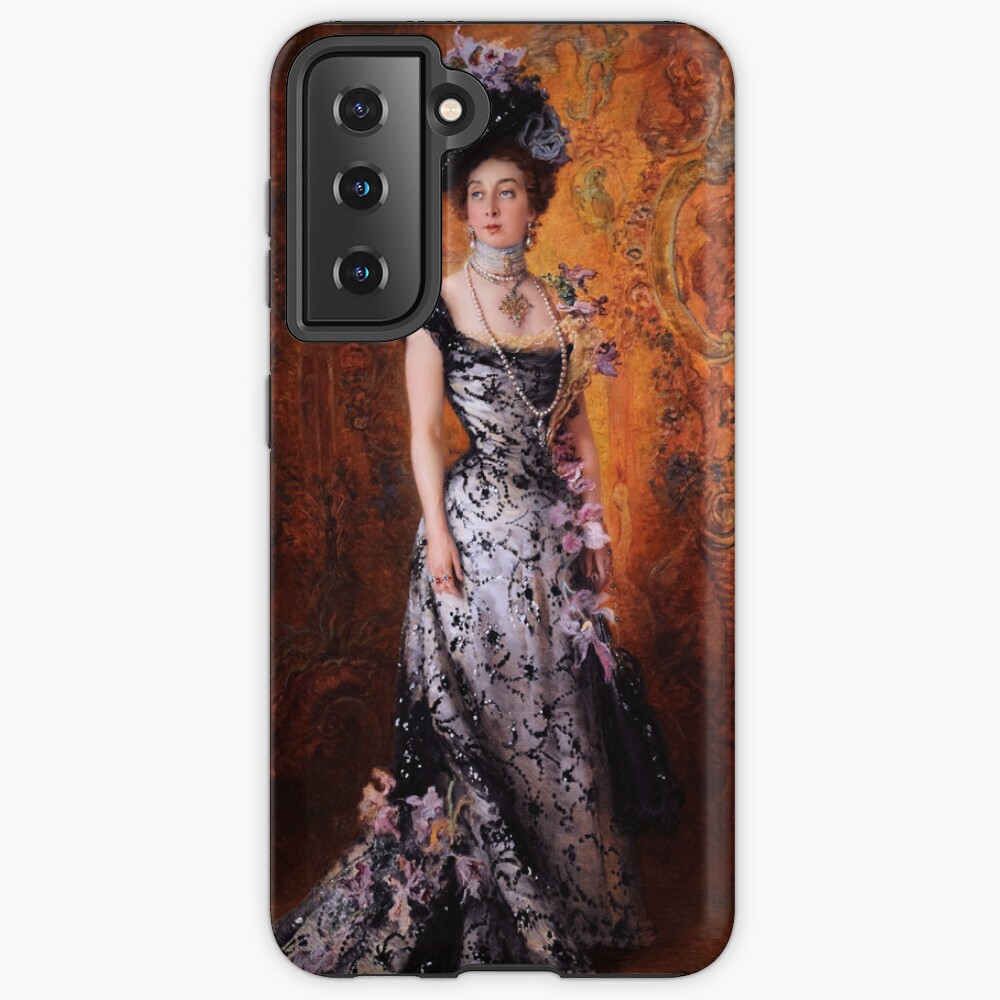
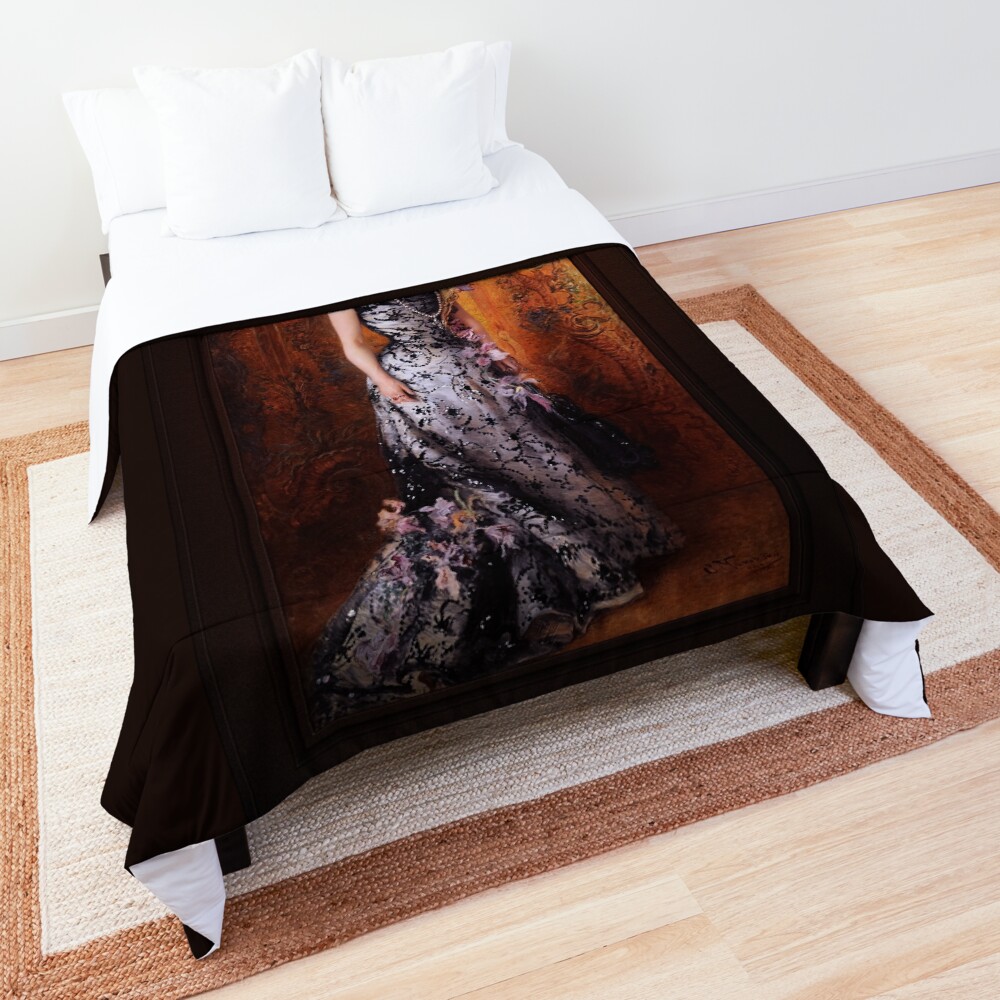
Portrait of Maria Alexeevna Matavtina is a remastered digital art old masters reproduction of a public domain image that is available as a impressão em tela.
Sobre o Artista
Informações abaixo derivadas de Wikipedia.org
Konstantin Makovsky foi um influente pintor russo, afiliado com o “Peredvizhniki (Andarilhos)”. Muitas de suas pinturas históricas, como Abaixo da Coroa (1889) também conhecido como O Traje da Noiva Russa e Antes do Casamento, mostrou uma visão idealizada da vida russa dos séculos anteriores. Ele é frequentemente considerado um representante da arte acadêmica.
Konstantin Makovsky nasceu em Moscou. Seu pai era a figura da arte russa e pintor amador, Yegor Ivanovich Makovsky. Sua mãe era compositora, e ela esperava que seu filho um dia seguisse seus passos. Seus irmãos mais novos Vladimir e Nikolay e sua irmã Alexandra também se tornaram pintores.
Dentro 1851 Makovsky entrou na Escola de Pintura de Moscou, Escultura e Arquitetura onde se tornou o melhor aluno, obtendo facilmente todos os prêmios disponíveis. Seus professores foram Karl Bryullov e Vasily Tropinin. As inclinações de Makovsky para o romantismo e efeitos decorativos podem ser explicadas pela influência de Bryullov.
Embora a arte fosse sua paixão, ele também considerou o que sua mãe queria que ele fizesse. Ele partiu em busca de compositores aos quais pudesse se referir, e primeiro foi para a França. Antes, ele sempre foi um amante da música clássica, e ouvi muitas peças. Muitas vezes ele desejou poder mudar a melodia, ou estilo de alguns deles para torná-los mais agradáveis. Mais tarde em sua vida, isso se tornou realidade.
Dentro 1858 Makovsky ingressou na Academia Imperial de Artes de São Petersburgo. A partir de 1860 participou das exposições da Academia com pinturas como Curing of the Blind (1860) e Agentes do Falso Dmitry matam o filho de Boris Godunov (1862). Dentro 1863 Makovsky e treze outros alunos protestaram contra a definição de tópicos da mitologia escandinava pela Academia na competição pela Grande Medalha de Ouro da Academia; todos deixaram a academia sem um diploma formal.
Makovsky tornou-se membro de uma cooperativa (artel) de artistas liderados por Ivan Kramskoi, tipicamente produzindo pinturas de Wanderers na vida cotidiana (Viúva 1865, vendedor de arenque 1867, etc.). A partir de 1870 foi membro fundador da Society for Traveling Art Exhibitions e continuou a trabalhar em pinturas dedicadas à vida quotidiana. Expôs seus trabalhos tanto nas exposições da Academia quanto nas exposições de arte itinerantes dos Wanderers.
Uma mudança significativa em seu estilo ocorreu depois de viajar para o Egito e a Sérvia em meados da década de 1870.. Seus interesses mudaram de problemas sociais e psicológicos para os problemas artísticos de cores e formas.
Na década de 1880, ele se tornou um autor da moda de retratos e pinturas históricas.. Na Feira Mundial de 1889 em Paris, ele recebeu a Grande Medalha de Ouro por suas pinturas Morte de Ivan, o Terrível, O Julgamento de Paris, e Demônio e Tamara. Ele foi um dos artistas russos mais apreciados e bem pagos da época.. Muitos críticos democráticos o consideravam um renegado dos Wanderers’ ideais, produzindo (como Henryk Siemiradzki) obras impressionantes, mas rasas, enquanto outros o veem como um precursor do impressionismo russo.
Makovsky foi morto em 1915 quando sua carruagem foi atropelada por um bonde elétrico em São Petersburgo.