

Porträt der jungen Schönheit mit einem Vogel
In this exquisite portrait titled Porträt der jungen Schönheit mit einem Vogel, created by the renowned French painter Theodore Fantin-Latour (1805 – 1872), we are introduced to a captivating subject that embodies the elegance and refinement of French Rococo style. The painting is a testament to Fantin-Latour’s mastery in capturing delicate emotions and the grace of feminine beauty. Das Kunstwerk, crafted in the mid-19th century, showcases a young woman in a serene and intimate pose, holding a bird gently on her hand. This combination of delicate elements creates a timeless, ethereal representation of the female form.
Inhaltsverzeichnis
Subjekt und Komposition
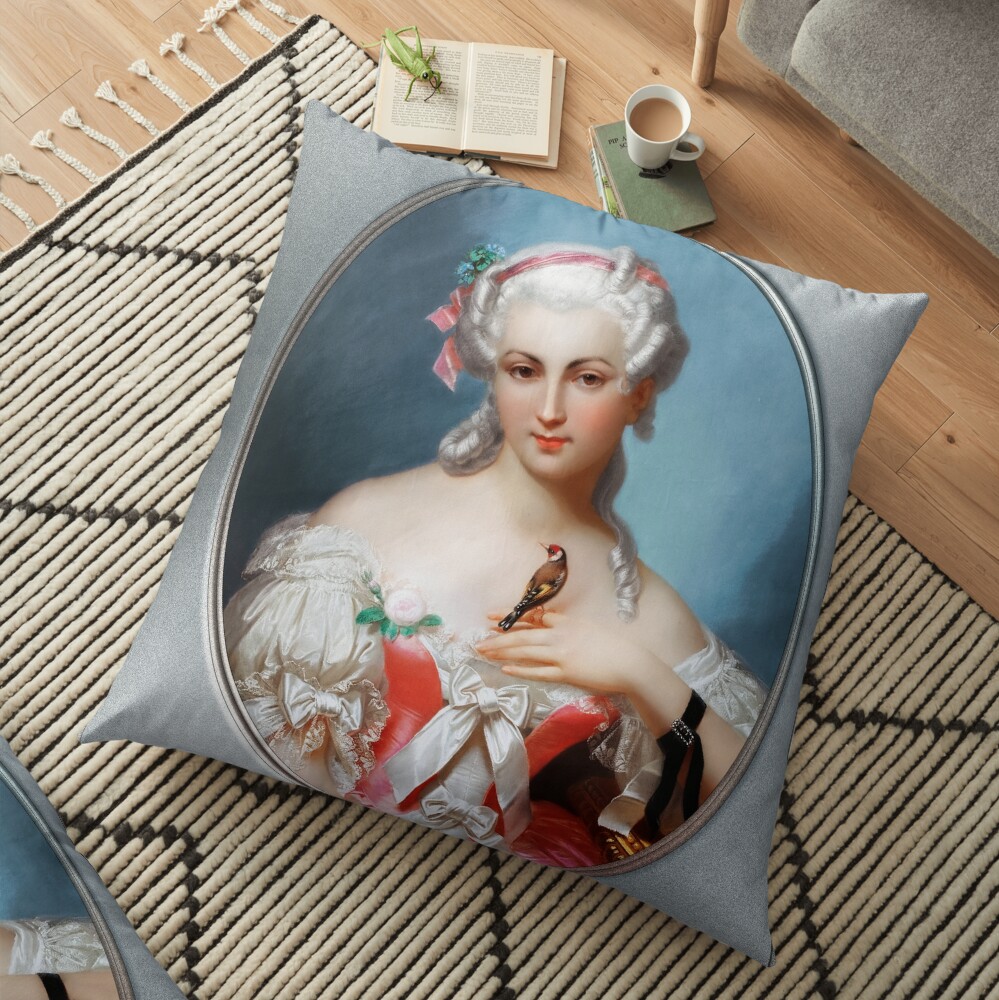
Der Schwerpunkt der Porträt is the young woman herself, a figure imbued with youthful beauty and grace. Her soft expression suggests a moment of quiet contemplation, her delicate features framed by voluminous, powdered white hair styled in the elaborate fashion of the period. The woman is adorned in an ornate gown of light, Seidenstoff, featuring intricate lacework and pastel-colored ribbons that accentuate the fragility of her appearance. The placement of the bird perched gently on her hand enhances the sense of harmony between the subject and the natural world.
Die Komposition ist sorgfältig ausbalanciert. The background features a pale blue sky that subtly contrasts with the vibrant colors of the subject’s attire and the bird. The woman is positioned slightly off-center, creating an air of naturalness and fluidity in her posture. Her right hand delicately supports the bird, an exquisite finch, which in itself serves as a symbol of lightness and grace. The gentle hand of the woman and the bird’s attentive gaze invite a sense of intimacy and peace.
Materialien und Technik
Fantin-Latour’s technical prowess is evident in his treatment of light and texture. The softness of the skin, the subtle glow of the woman’s face, and the smoothness of her satin gown are all rendered with exceptional precision, showcasing the artist’s skill in capturing the tactile qualities of fabric and flesh. The painting’s use of oil on canvas allows for a depth of color that brings to life the soft blush on the woman’s cheeks, the sheen of the ribbons, and the intricate folds of her dress.
The lace on her gown is finely detailed, providing contrast with the smoothness of her skin and the gentle texture of her hair. Fantin-Latour utilizes a palette of soft pinks, Weiße, and pastels that bring a luminous quality to the overall piece. The carefully chosen background color—a muted blue—serves to emphasize the purity and softness of the subject’s figure while providing a sense of space and tranquility.
The bird, rendered with careful attention to detail, is painted in a naturalistic manner, highlighting the contrast between its tiny, delicate form and the larger, more imposing presence of the woman. This juxtaposition enhances the mood of delicacy and calm, while also symbolizing the theme of nature’s harmony with human beauty.
Stil, Thema, und Stimmung
Das Porträt der jungen Schönheit mit einem Vogel passt perfekt zur Rokoko-Tradition, a movement known for its emphasis on lightness, Eleganz, and playful subject matter. Fantin-Latour, though working in the 19th century, captured the spirit of Rococo with an air of refinement and grace. Die Verwendung von Soft durch den Künstler, muted colors and delicate brushwork conveys a sense of opulence without the heaviness often associated with earlier Baroque styles.
The theme of the portrait seems to be one of purity, Jugend, und die Flüchtigkeit der Schönheit. The bird is often a symbol of freedom and innocence, and its presence on the woman’s hand may suggest the fragility of life and the transient nature of beauty and youth. Die Ruhe, almost serene mood of the piece evokes feelings of nostalgia and tenderness, transporting the viewer to a world of elegance and grace where the natural world and human beauty are in perfect harmony.
The gentle expression of the woman, coupled with the soft portrayal of her surroundings, also suggests a mood of introspection and quiet contemplation. She does not engage directly with the viewer but rather appears to be in a moment of private reflection, adding a layer of depth to the work. The overall effect is one of peacefulness, where beauty and nature exist in a timeless, harmonious state.
Influence of the Artist
Theodore Fantin-Latour was influenced by the Romantic movement, which sought to capture the emotional essence of the subject rather than a purely realistic representation. His ability to create works filled with emotion and quiet intensity is evident in this portrait. Fantin-Latour’s precise use of color and form allows the viewer to feel a connection with the subject, despite the passage of time that separates us from the world depicted in the painting. This ability to evoke emotion through visual means is one of the defining traits of his work and sets this piece apart as a delicate exploration of feminine beauty.
While this work might be characterized by its Rococo influences, it also bears the hallmark of the artist’s unique approach to portraiture. His understanding of light, Textur, and human form allows him to imbue his subjects with a sense of realism that feels alive and personal, even in the context of historical tradition.
Abschluss
Das Porträt der jungen Schönheit mit einem Vogel by Theodore Fantin-Latour is a stunning example of 19th-century French portraiture, combining technical mastery with a deep emotional resonance. The subject’s delicate features, heiterer Ausdruck, und das Weiche, harmonious colors of the composition create a timeless image of feminine beauty. The painting speaks to the viewer’s sense of nostalgia and appreciation for a more innocent and graceful era, where beauty and nature coexisted in perfect balance. Fantin-Latour’s ability to capture these fleeting moments, along with his attention to minute details, ensures that this artwork remains an enduring testament to his skill and artistry.
Porträt der jungen Schönheit mit einem Vogel des französischen Malers Theodore Fantin-Latour (1805 – 1872); ein Pastellporträtmaler.
Artwork Notes
This portrait is assumed to be that of Princess Anne Henriette de France(1727 – 1752) the second daughter of King Louis XV of France and Maria Leszczyńska and the younger twin of Louise Élisabeth of France; aber im Vergleich zu all den anderen Gemälden, die von diesen Schwestern gemacht wurden, this does not seem possible possible.
Dies ist eine remasterte digitale Kunst-Reproduktion alter Meister eines gemeinfreien Bildes, das als verfügbar ist Leinwanddruck online.
Biografie des Künstlers
Theodore war ein Pastellmaler von Porträts und studierte in der Werkstatt des französischen Porträtmalers Benjamin Rolland (1777 – 1855), Er war ein Schüler des berühmten neoklassizistischen französischen Malers Jacques-Louis David (1748 – 1825) und gilt als der herausragende Maler seiner Zeit.
Unter dem Einfluss von Rolland, Theodore beherrschte die Fähigkeiten der Malerei, Zeichnen und Formen-Rendering; und stellte seine Kunstwerke regelmäßig im Salon aus 1842 zu 1866.
Sein Sohn Henri Fantin-Latour wurde in geboren 1836 war auch ein bekannter und angesehener Maler von Stilllebenbildern und Porträts; und sein Vater gab ihm im Alter von zehn Jahren seinen ersten Kunstunterricht, nachdem er sein Talent für Kunst erkannt hatte.