

Porträt der jungen Schönheit mit Perlen
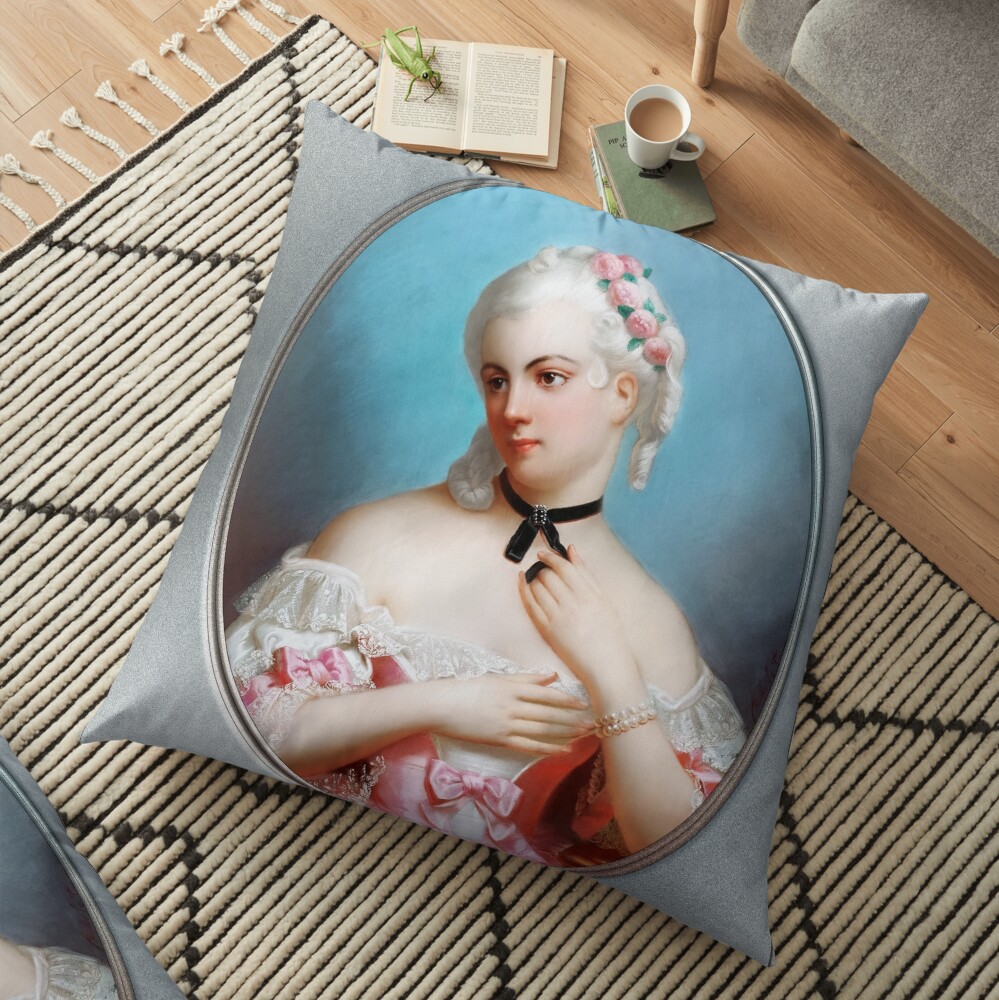
Das Kunstwerk mit dem Titel Porträt der jungen Schönheit mit Perlen wurde vom französischen Maler geschaffen Théodore Fantin-Latour (1805 – 1872), ein Künstler, der für seine Fähigkeit bekannt ist, die Essenz von Eleganz und zarter Schönheit in seinen Porträts einzufangen. Das Gemälde zeigt eine junge Frau, ausgeglichen und gelassen, verziert mit Perlen und sanften Rosatönen, die den Reichtum dieser Zeit widerspiegeln. Es spricht die neoklassischen Schönheitsideale an, Einfangen der Anmut der Weiblichkeit im frühen 19. Jahrhundert. Fantin-Latours Meisterschaft in der Darstellung von Textilien, Gesichtsausdruck, und Lichtkontraste machen dieses Stück zu einem, das über die Zeit hinausgeht, bietet einen Einblick in den luxuriösen und raffinierten Lebensstil der damaligen Zeit.
Inhaltsverzeichnis
Hauptthema: Eine junge Schönheit
Die zentrale Figur des Gemäldes ist eine junge Frau, dargestellt in einem weichen, dennoch gelassene Pose. Sie blickt nachdenklich zur Seite, Ihr Gesichtsausdruck war sanft und doch fesselnd. Ihre Gesichtszüge sind fein wiedergegeben, mit glatter Haut, hohe Wangenknochen, und Lippen, die sowohl Unschuld als auch stille Stärke suggerieren. Ihr jugendlicher Teint wird von einem sanften Licht beleuchtet, das auf ihr Gesicht fällt, unterstreicht ihre zarte Schönheit.
Ihr Haar ist zu einer eleganten Hochsteckfrisur gestylt, mit Locken und Locken, die ihr Gesicht umrahmen, akzentuiert durch rosa Rosen, die in ihren Locken verstreut sind. Dieser subtile florale Touch unterstreicht ihre Weiblichkeit und Anmut. Die weichen Locken ihrer Haare, zusammen mit der sanften Beleuchtung ihres Gesichts, tragen zur insgesamt zarten und ätherischen Qualität des Porträts bei. Die von Fantin-Latour gewählte Farbpalette besteht hauptsächlich aus sanften Rosatönen, Weiße, und blasse Blautöne – tragen dazu bei, ein Gefühl von Reinheit und Raffinesse hervorzurufen.
Kleidung und Accessoires
The young woman is dressed in a lavish gown of pale pink, with lace accents around the neckline and sleeves. The gown’s fabric appears light and soft, almost as if it is billowing gently in the breeze, creating a sense of movement within the otherwise still portrait. The use of lace detailing around her shoulders and neckline not only adds depth to the texture of the gown but also contributes to the overall luxurious tone of the painting. A black ribbon tied around her neck, possibly indicating a choker, adds contrast to the soft hues of the gown, grounding the figure with a more subtle, almost somber touch.
Her accessories include a string of pearls that rests gracefully around her neck. The pearls shine with a soft iridescence, their lustrous sheen playing against the muted background and the soft pink tones of her gown. The pearls symbolize wealth, Verfeinerung, and social status, reflecting the high-class society of the era in which this portrait was created. The inclusion of the pearls adds to the overall feeling of elegance, reinforcing the notion that the woman in the portrait is not only beautiful but also a person of stature within her society.
Hintergrund und Zusammensetzung
The background of the portrait is painted in a soft gradient of pale blue, providing a serene and almost dreamlike atmosphere that emphasizes the central subject. The faintness of the background directs the viewer’s attention solely to the figure, allowing her delicate features and attire to take center stage. The subtle play of light and shadow adds depth to the portrait, giving it a sense of dimensionality while maintaining the focus on the young beauty.
The oval-shaped frame surrounding the painting is a typical choice for portraiture of this period. The frame is ornate but not overly elaborate, complementing the simplicity and grace of the subject. Die Verwendung von Soft, muted colors in the background allows the woman’s dress and accessories to stand out, making her the undivided focal point of the composition.
Stil und Technik
Fantin-Latour’s style is rooted in the neoclassical tradition, which sought to emulate the virtues of ancient Greek and Roman art. The painting reflects this in its idealization of the female form and the emphasis on harmony and proportion. His technique is characterized by meticulous attention to detail, particularly in the rendering of textures such as the lace of the gown, the pearls, and the softness of the skin. The artist’s ability to capture the texture of fabric and the softness of the woman’s skin creates a tangible, almost lifelike quality to the portrait.
The smoothness of the brushwork and the subtle blending of colors indicate a high level of technical skill. The painter uses light and shadow effectively, giving the figure a sense of volume and creating a contrast that highlights the soft contours of the woman’s face and body. Fantin-Latour’s ability to balance the detailed rendering of the subject with a more subtle, atmospheric background results in a portrait that is both refined and intimate.
Stimmung und Thema
Die Gesamtstimmung des Gemäldes ist von Eleganz und Gelassenheit geprägt. Der gelassene Ausdruck und die zarten Gesichtszüge des Motivs erzeugen ein Gefühl der Ruhe, während die sanfte Farbpalette und die raffinierten Details ihrer Kleidung ein Gefühl von Opulenz und Anmut hervorrufen. Die Verwendung von Perlen als wichtiges Accessoire knüpft an das Thema Reichtum und sozialen Status an, Dies unterstreicht die Vorstellung, dass die dargestellte Frau nicht nur eine Schönheit, sondern eine wichtige Person in ihrer Gesellschaft ist.
Das Thema Schönheit, sowohl extern als auch intern, wird durch die sorgfältige Darstellung der Gesichtszüge der Frau erkundet. Ihr nachdenklicher Gesichtsausdruck lässt vermuten, dass in ihr mehr steckt als nur körperliche Anziehungskraft; sie trägt sich mit Würde, Verkörperung der Tugenden dieser Zeit. Die allgemeine Eleganz der Komposition lässt darauf schließen, dass es sich bei ihr um eine Frau mit hohem gesellschaftlichem Ansehen handelt, Leben in der raffinierten Welt der französischen Aristokratie.
Einige Informationen zum Kunstwerk
Es wird angenommen, dass es sich bei diesem Porträt um das der Prinzessin Louise Élisabeth von Frankreich handelt (1727 – 1759) die älteste Tochter von König Ludwig XV. von Frankreich und Maria Leszczyńska und der ältere Zwilling von Anne Henriette de France; aber im Vergleich zu all den anderen Gemälden, die von diesen Schwestern gemacht wurden, Ich sehe nicht ein, wie das möglich ist.
„Portrait of Young Beauty with Pearls“ ist eine überarbeitete digitale Kunstreproduktion alter Meister eines gemeinfreien Bildes, das als verfügbar ist Leinwanddruck online.
Biografie des Künstlers
Theodore war ein Pastellmaler von Porträts und studierte in der Werkstatt des französischen Porträtmalers Benjamin Rolland (1777 – 1855), Er war ein Schüler des berühmten neoklassizistischen französischen Malers Jacques-Louis David (1748 – 1825) und gilt als der herausragende Maler seiner Zeit.
Unter dem Einfluss von Rolland, Theodore beherrschte die Fähigkeiten der Malerei, Zeichnen und Formen-Rendering; und stellte seine Kunstwerke regelmäßig im Salon aus 1842 zu 1866.
Sein Sohn Henri Fantin-Latour wurde in geboren 1836 war auch ein bekannter und angesehener Maler von Stilllebenbildern und Porträts; und sein Vater gab ihm im Alter von zehn Jahren seinen ersten Kunstunterricht, nachdem er sein Talent für Kunst erkannt hatte.