

פיגמליון Adoring His Statue: A Rococo Vision of Artistic Love
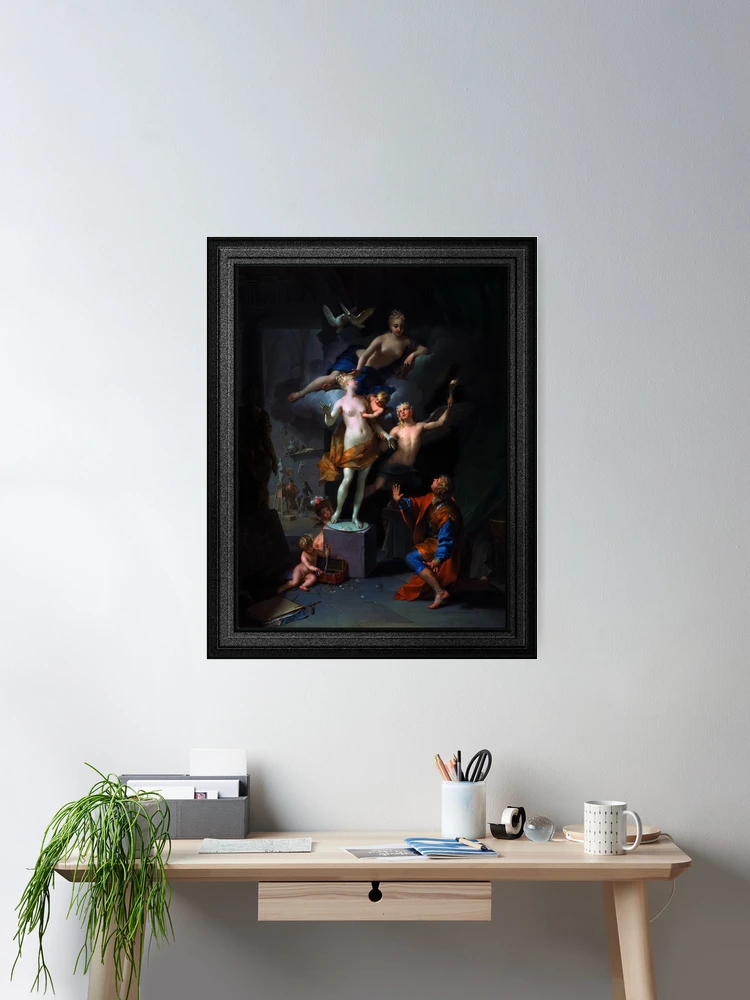
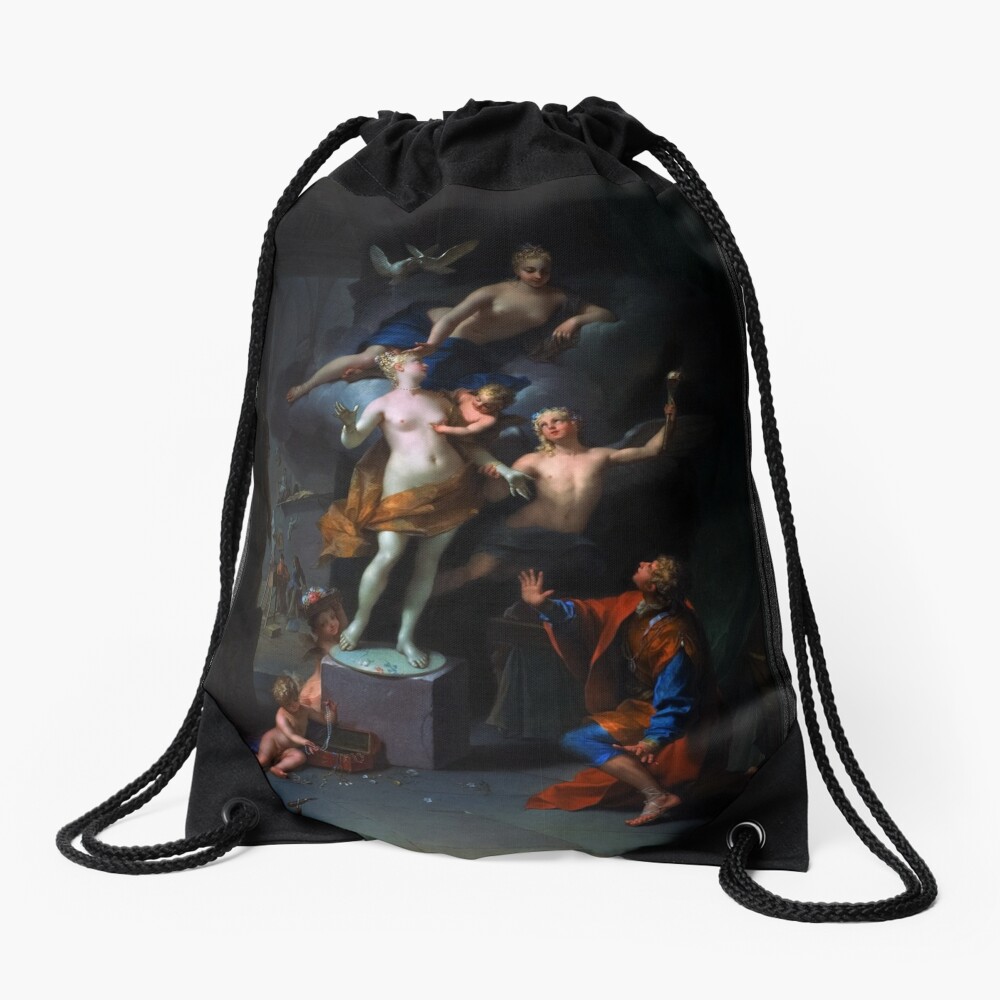
פיגמליון מעריץ את הפסל שלו c1717 מאת הצייר הצרפתי ז'אן רו (1677 – 1734), is a captivating work embodying the spirit of the Rococo period. The painting depicts the mythological tale of Pygmalion, a Cypriot sculptor who falls in love with a statue he has carved. This scene isn’t merely an illustration of a myth; it’s a carefully constructed tableau exploring themes of artistic creation, רצון עז, והתערבות אלוהית, rendered through Raoux’s characteristic blend of theatricality and delicate detail. The work is currently housed within the collection of the Musée des Beaux-Arts de Strasbourg.
תוכן העניינים
מבנה קומפוזיציוני & זרימה עלילתית
The composition unfolds with a dynamic energy that draws the viewer into the scene. פיגמליון, positioned centrally, kneels before his statue, his gaze fixed upon her with an expression of profound adoration. The statue itself is presented as a young woman, partially draped in fabric, revealing a graceful form. She appears to be awakening, her eyes closed and a gentle smile playing on her lips. Above them both, וֵנוּס, אלת האהבה, descends from the clouds, accompanied by doves – symbols of affection and divine blessing. The arrangement isn’t static; it suggests a moment of transition, a pivotal point in Pygmalion’s story where his creation is imbued with life.
The lower portion of the painting features a bustling workshop setting. Several putti (cherubic figures) are engaged in various activities: one examines a toolbox, another holds a hammer and chisel, while others scatter coins – perhaps representing payment for artistic labor or symbolic offerings to the gods. This detail provides context, grounding the mythological narrative within the tangible world of an artist’s studio. The inclusion of these smaller figures adds depth and visual interest, preventing the scene from feeling overly solemn or detached.
סגנון אמנותי & טֶכנִיקָה
Raoux’s style is firmly rooted in Rococo aesthetics. Characterized by its lightness, אֵלֶגַנטִיוּת, and playful sensuality, this artistic movement prioritized decorative beauty over strict realism. The painting showcases these qualities through its soft color palette dominated by warm tones of ochre, rose, and cream, contrasted with the deeper blues and browns of the background. Raoux’s brushwork is fluid and delicate, creating a sense of shimmering light and texture. He skillfully employs אוֹרְצֵל, using dramatic contrasts between light and shadow to highlight key figures and create a theatrical atmosphere. The overall effect is one of refined beauty and graceful movement.
תשומת הלב של האמן לפרטים ניכרת בעיבוד הבדים, גווני עור, and architectural elements. The folds of Pygmalion’s robe and the statue’s drapery are meticulously depicted, adding realism and visual interest. באופן דומה, the expressions on the faces of the figures – from Pygmalion’s rapturous gaze to Venus’ benevolent smile – convey a range of emotions that enhance the narrative impact.
סִמלִיוּת & פֵּשֶׁר
מעבר ליופי שלו, “פיגמליון מעריץ את הפסל שלו” is rich in symbolic meaning. The statue represents not only physical beauty but also artistic perfection and the power of human creativity. Pygmalion’s adoration symbolizes the artist’s deep connection to his work, a passionate devotion that transcends mere craftsmanship. Venus’ descent signifies divine intervention – the goddess bestowing life upon the inanimate creation, fulfilling Pygmalion’s desire. The doves represent love and fertility, further reinforcing the theme of transformation and renewal.
The putti in the workshop serve as allegorical figures representing artistic labor and inspiration. Their presence underscores the idea that creativity is a collaborative process, requiring skill, dedication, and perhaps even divine guidance. The scattered coins could symbolize both the financial rewards of art and the offerings made to the muses – the goddesses who inspire artists.
הֶקשֵׁר & מוֹרֶשֶׁת
Jean Raoux was a prominent French painter known for his mythological scenes, פורטרטים, and decorative works. He was influenced by earlier masters like Rubens and Van Dyck, but he developed his own distinctive style characterized by its elegance, theatricality, and Rococo sensibility. “פיגמליון מעריץ את הפסל שלו” is considered one of Raoux’s most significant works, exemplifying his ability to blend mythological narratives with the aesthetic ideals of the Rococo period. The painting reflects a broader cultural fascination with classical mythology during the 18th century, as well as an appreciation for artistic creation and beauty. It remains a testament to Raoux’s skill as a painter and his contribution to the development of French art.
אמן ביו שמקורו Wikipedia.org
לאחר קורס ההכשרה הרגיל ז'אן ראוק הפך לחבר באקדמיה 1717 כצייר היסטורי.
המוניטין שלו התבסס בעבר על ידי העיטורים המוערכים שהוצאו להורג במהלך שלוש שנותיו באיטליה בארמון ג'וסטיניאני סוליני בוונציה, ועל ידי כמה ציורי כן ציור, ארבע העידנים של האדם (הגלריה הלאומית), בהזמנת הפריור הגדול של ונדום.
למחלקה האחרונה של הנושא התמסר ראוקס, מסרב לצייר דיוקנאות למעט באופי.
רשימת יצירותיו היא סדרה ארוכה של סטים של העונות, של השעות, של האלמנטים, או של סצנות השעשועים והגאווה שבייצוג שלהן עלה לאין שיעור על ידי יריבו הצעיר וואטו.
לאחר שהותו באנגליה (1720) הוא חי הרבה בבית המקדש, שם עיצב מספר חדרים. הוא מת בפריז בשנת 1734. תלמידיו הטובים ביותר היו שבלייה ומונטדידיה. עבודותיו נחקקו רבות על ידי פוילי, מוירו, דופואיס,ואחרים.
זהו רפרודוקציה של אמנות דיגיטלית משוחזרת של תדמית ברשות הרבים הזמינה לרכישה בתור הדפסת קנבס לעיצוב קיר באינטרנט.