

אישה בעלת ראש אדום
Created in the 1930s, אישה בעלת ראש אדום עַל יְדֵי פרל אליס פרוש ברודון (1907 – 1986) is a striking example of the artist’s delicate use of soft tones and detailed rendering of feminine beauty. Known for her sensitive portrayals of women in serene and almost ethereal settings, Brudon captures a moment of grace in the life of a young woman, likely inspired by the artistic traditions of the early 20th century. היצירה, executed with smooth brushstrokes and a light color palette, is a tribute to the realism and beauty of American portraiture during the era.
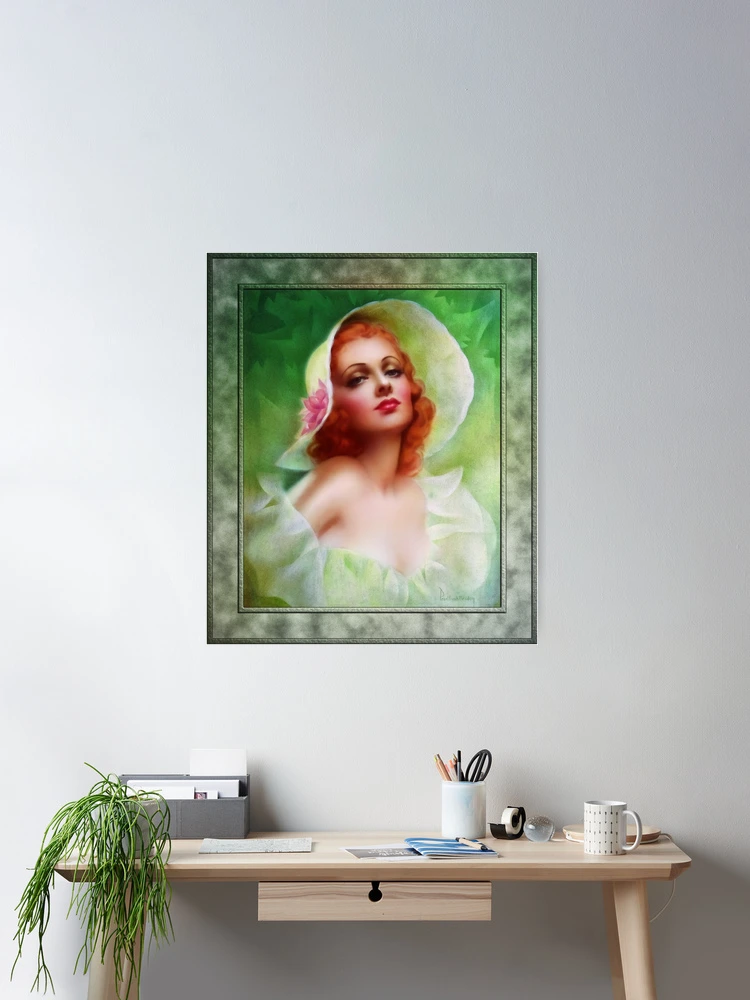
At the forefront of this portrait is the woman herself, her soft red curls cascading elegantly around her face, framed by a large, pale hat adorned with a pink flower. This hat, a defining feature of the subject, gives her an air of sophistication and youthful vitality. Her facial expression is serene yet enigmatic, with a hint of a smile that evokes a sense of quiet confidence.
The soft pink of her lips contrasts subtly with the gentle tones of her complexion, accentuating the softness of her features. The eyes are a focal point of the portrait; they are wide, שׁוֹבֵה לֵב, and appear to be gazing directly at the viewer with a gaze that feels both distant and intimate.
הרקע של הציור, consisting of lush, blurry greens and soft washes of color, suggests an outdoor setting, perhaps a garden or a meadow. The hazy greens surrounding her lend a sense of tranquility and isolation from the world, suggesting that the subject exists in a peaceful moment of solitude. The leaves and blurred foliage contribute to a sense of dreamlike beauty, as if the woman is part of the landscape itself.
תוכן העניינים
סגנון וטכניקה אומנותית
Frush Brudon’s work in אישה בעלת ראש אדום is rooted in the fine art traditions of realism, though her approach veers towards a slightly more romantic and idealized depiction of the female form. The artist uses soft, almost pastel-like colors, particularly in the skin tones, creating a smooth and luminous effect that gives the subject a timeless quality. The rendering of the woman’s features is highly detailed, from the delicate structure of her face to the intricate texture of her hair, yet the overall tone of the painting remains soft and smooth, avoiding any harsh lines or sharp contrasts.
הכובע, with its wide brim and gentle curves, is another notable feature of the painting, contributing to the sense of softness and grace. Its white color provides a stark contrast to the warmth of the woman’s complexion and the gentle greens of the background. The flower at the side of the hat further adds to the softness of the subject, enhancing the delicacy of the image and the mood of the painting.
מבחינת טכניקה, Frush Brudon employed a careful application of color and light, giving the portrait a sense of depth despite its simplicity. הרקע, though blurry, creates a natural environment that enhances the subject’s ethereal presence. השימוש באור, particularly on the woman’s face and the flower in her hair, draws the viewer’s attention to her delicate features while also allowing the viewer to appreciate the full, soft rendering of the painting.
הנושא ומצב הרוח של היצירה
הנושא של אישה בעלת ראש אדום is one of timeless femininity and quiet beauty. The woman depicted is not in the midst of any grand activity; במקום זאת, she is captured in a moment of calm repose, inviting the viewer to appreciate her in a more contemplative and intimate manner.
הרך, hazy background enhances the sense of isolation, almost as if the viewer is witnessing an intimate glimpse into a private moment of the subject’s life. There is a sense of serenity in the painting, and the way in which the subject interacts with the natural surroundings emphasizes a deep connection between the woman and the world around her.
The choice of a red-headed woman is significant, as it highlights an unusual beauty that was not as frequently celebrated in art at the time. שערה, rich in color and volume, contrasts beautifully with the soft tones of the rest of her features and the setting, further emphasizing her individuality and uniqueness. This red hair, along with the softness of the colors, suggests both warmth and delicacy, key qualities of femininity that are captured in this portrait.
The mood of the artwork is peaceful and reflective, evoking feelings of calm and admiration for the quiet beauty of the subject. It presents the viewer with a sense of tranquility, as if the moment captured in time is one of pure contentment. There is no rush or hurry in the portrait; the subject exists in a perfect, untroubled moment of grace.
חומרים ובינוני
While the exact materials used by Frush Brudon in אישה בעלת ראש אדום are not definitively documented, it is likely that the artist employed oil paints, as was common during this period for portraiture. Oil paints allow for the fine blending of colors and the smooth transitions between shades that are seen in the soft rendering of the skin tones and the gentle transitions in the background. The luminous quality of the portrait, along with the delicate brushstrokes seen in the details of the woman’s face and hair, suggest that oil was the medium of choice for this piece.
זהו רפרודוקציה של אמנות דיגיטלית משופרת ותיקים של תמונה של נחלת הכלל.
ביו האמן נגזר מ Wikipedia.org
פרל אליס פרוש נולדה בסיו סיטי, וודברי, איווה על 1907; כשהייתה צעירה משפחתה עברה לחוף הזהב של מיסיסיפי והחלה את לימודיה האמנותיים בניו אורלינס, פילדלפיה וניו יורק סיטי ולאחר מכן בבית הספר לאמנות של שיקגו המשויך למכון האמנות של שיקגו.
במהלך שנות ה-30 המאוחרות ותחילת שנות ה-40 פרל עשתה עבודת פרסום עצמאית בשיקגו, כולל אולפני ווג-רייט, סאנדבלום, ג'ונסון & לבן, ו-Gerlach Barklow Co.
חברות אלה פרסמו חלק גדול מאמנות לוח השנה המצליחה שלה לילדות פינאפ, כולל ליברטי בלס, בנות זוהר, וזוהר מסביב לשעון.
פרלס הייתה אחת משלושת אמנית הזוהר הפינאפיסטית המובילה שכללה את ג'ויס באלנטין (1918 – 2006), וזואי מוכרט (1907 – 1993) שזכו להצלחה רבה ביצירת אמנות האיור של נערת פינ-אפ שנשלטה על ידי אלברטו ורגאס (1896 – 1982), ג'ורג' פטי (1894 – 1975), גיל אלבגרן (1914 – 1980), ביל מדקלף (1920 – 2005), רולף ארמסטרונג (1889 – 1960) ועוד כמה אחרים.