

Ripplin Rythm
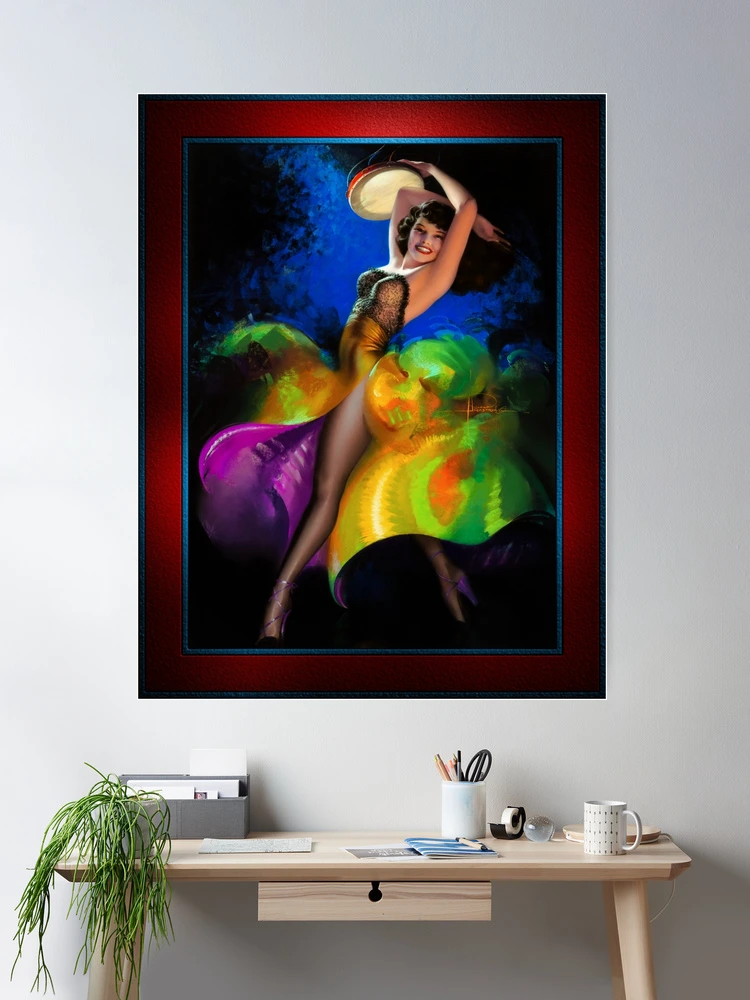
“Ripplin Rhythm,” created by the renowned American artist רולף ארמסטרונג (1889 – 1960), stands as a testament to the vibrant beauty of pin-up art during the mid-20th century. ארמסטרונג, a prominent figure in the golden era of American commercial art, expertly merges movement, צֶבַע, and emotion within this piece, offering a glimpse into the glamour and sensuality that defined the era.
נוֹלָד בְּ 1889, Armstrong’s work was marked by a mastery of light and color, making his images highly sought after in advertisements, illustrations, ואמנות יפה. He utilized a unique blend of techniques that brought dynamism to his subjects, ו “Ripplin Rhythm” encapsulates this with its fluid and energetic portrayal of a woman in motion.
תוכן העניינים
הנושא העיקרי: The Vibrant Dancer
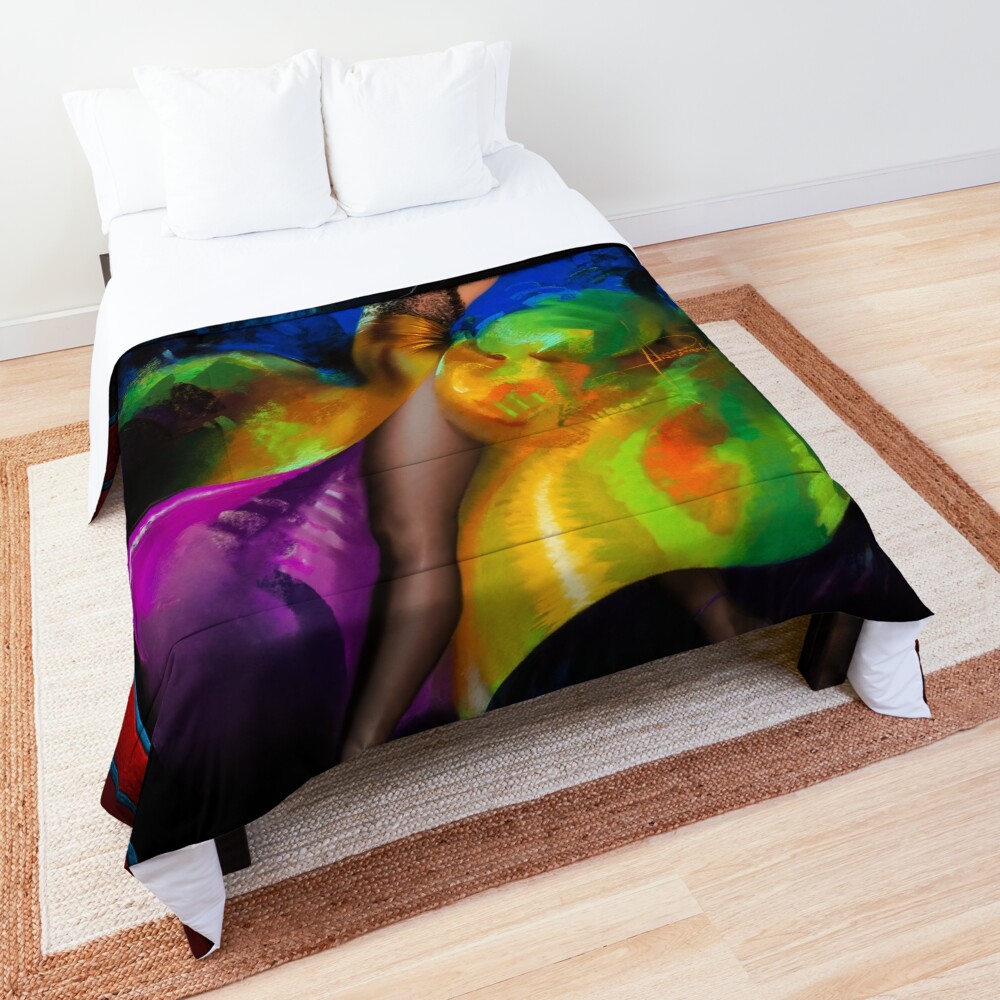
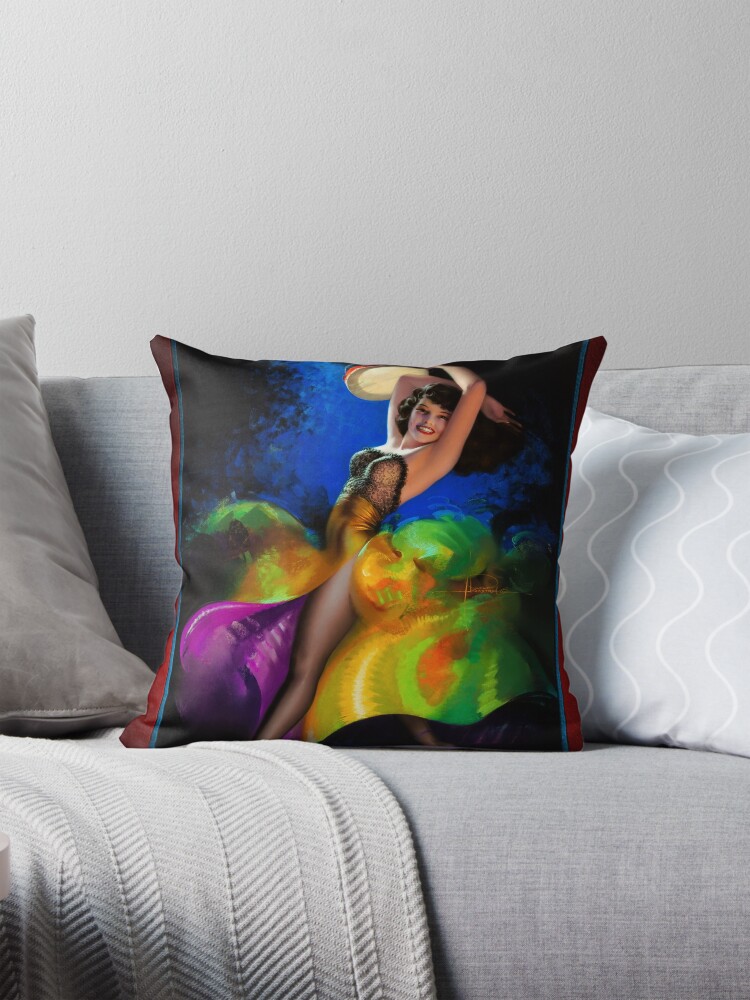
בְּבוֹעַסִים “Ripplin Rhythm” is a captivating depiction of a dancer in mid-performance. הנושא, a woman, exudes confidence and joy as she spins gracefully, her flowing dress rippling around her body like the waves of an ocean. The dancer’s attire is a burst of color, with swirling shades of green, צהוב, and purple creating a striking contrast against the deep blue background.
The woman’s posture is elegant yet exuberant, her arms raised in a celebratory gesture as she holds a tambourine above her head. Her face radiates happiness, a wide smile revealing her playful spirit. Armstrong has captured not only her motion but also her essence, making her appear as though she is alive with energy and rhythm.
The woman’s vibrant costume, designed to reflect the rhythm of her movements, is a fusion of bold colors. The soft metallic sheen of her golden bodice catches the light, enhancing the dynamic flow of her skirt. Armstrong’s use of color in this piece is masterful, with each hue seemingly chosen to emphasize the woman’s graceful spinning and the lively atmosphere of her performance. החצאית, which flares out around her like an explosive flower, ripples with energy, suggesting the dancer’s movement and the pulse of the music she is engaged with.
החפצים: Tambourine and Flowing Garments
The tambourine held by the dancer is a key object in the painting, not only because it symbolizes the musical rhythm she embodies but also because it ties the composition together. The tambourine’s small yet intricate form contrasts the large, swirling mass of the dancer’s gown, yet it maintains a presence that complements the overall movement within the scene.
The circular shape of the tambourine subtly mirrors the curves and flow of her garments, creating a visual harmony between the two. This object, while seemingly simple, amplifies the sense of rhythm and dance in the composition.
The cascading layers of the dancer’s gown are another vital aspect of the work. Armstrong’s skillful handling of fabric and texture brings the dress to life, with each fold and curve appearing as if it is caught mid-movement. השמלה, with its vibrant, rippling folds, seems to echo the fluidity of the dancer’s form. The luxurious colors and glossy textures of the skirt create a feeling of both elegance and freedom, enhancing the theme of lively celebration.
פְּנֵי הַשֵׁטַח: The Colorful Background
הרקע של “Ripplin Rhythm” is one of the key elements that contribute to the piece’s overall mood. A deep blue hue forms the backdrop, providing a striking contrast to the warm colors of the dancer’s attire. This color choice highlights the subject and makes her appear as if she is emerging from a dreamlike or fantastical environment.
Armstrong uses the swirling shapes and dark tones in the background to evoke movement and rhythm, as if the air itself is alive with the same energy that drives the dancer. The fluidity of the colors in the background suggests motion, blending with the dancer’s own movements, creating a seamless connection between subject and environment.
סִגְנוֹן: Art Deco and Glamour
“Ripplin Rhythm” is a quintessential example of Armstrong’s signature style, which draws heavily from Art Deco influences. The streamlined elegance of the figure, the dynamic compositions, and the use of bold, contrasting colors all reflect the Art Deco movement, which was characterized by its celebration of modernity, מוּתָרוּת, and glamour.
החלק, graceful lines of the dancer’s body and the geometric shapes within the composition convey a sense of sophistication and energy that are central to the Art Deco aesthetic. במקביל, the work also embodies the exuberance and glamour of the pin-up style, which Armstrong helped define. His portrayal of women was not only sensual but celebratory, ו “Ripplin Rhythm” is a perfect example of this, as it captures a moment of joyous self-expression.
The dancer’s radiant smile and energetic pose speak to the optimistic and carefree mood of the era. Armstrong’s work is imbued with a sense of youthful vitality, and this painting exemplifies the vibrant energy of American culture during the 1940s. It reflects a time of confidence and joy, set against the backdrop of a world on the cusp of dramatic change.
נושא ומצב רוח: Celebration of Movement and Music
הנושא של “Ripplin Rhythm” is centered around the celebration of movement, מוּסִיקָה, ונשיות. Armstrong captures the essence of dance as an expression of joy and liberation, highlighting the dynamism and beauty of the human form in motion.
The artist has skillfully conveyed the idea that rhythm is not just a sound but a force that can be seen and felt in the movements of the body. The dancer’s bright smile and the lively swirl of her dress communicate a sense of freedom, playfulness, and enthusiasm, making the painting feel like an invitation to partake in the celebration.
The overall mood of the artwork is one of joy and excitement. Armstrong’s use of color and form conveys a sense of lightness and exuberance, and the dancer herself appears to be in the midst of a joyous performance, lost in the music and her own movement. The piece encapsulates a spirit of happiness, optimism, and youthful vitality, evoking a time when life seemed to be filled with endless possibilities.
מַסְקָנָה
“Ripplin Rhythm” by Rolf Armstrong is more than just a beautiful portrait of a woman in motion; it is a vibrant celebration of life, צֶבַע, ומוזיקה. The dynamic composition, bold use of color, and joyful expression of the dancer all contribute to a sense of energy and rhythm that makes the painting come alive. Armstrong’s mastery of movement and his ability to capture the spirit of an era make this work a timeless example of American art. Through the use of elegant forms, flowing garments, and vibrant hues, Armstrong successfully conveys the joy of dance, the celebration of femininity, and the power of music to inspire movement and expression.
The Enchantress is a retouched digital art old masters reproduction of a public domain image.
ביו אמן מ Wikipedia.org
רולף ארמסטרונג נולד בג'ון סקוט ארמסטרונג בעיר ביי, מישיגן באפריל 21, 1889, לריצ'רד והרייט (סקוט) ארמסטרונג. אביו היה הבעלים של חברת בוי-ליין כיבוי סירות, שכלל שורה של ספינות נוסעים. חלקם נפרסו בשיקגו לשימוש ביריד העולמי של שיקגו שם 1893.
למרות זאת, העסק והמשפחה של האב נאבקו, ונחלת המשפחה אבדה לעיקול. ב 1899, המשפחה עברה לדטרויט, מישיגן. אביו של רולף מת ב 1903, ושנה לאחר מכן הוא ואמו עברו לסיאטל, וושינגטון, בעקבות אחיו הבכור, ויליאם, שעבר לשם שנה קודם לכן. כעת האינטרסים האמנותיים של רולף התגלגלו להנאה חלקית יותר.
הוא עבר לשיקגו ב 1908, שם למד מאוחר יותר במכון לאמנות. לאחר מכן המשיך לניו יורק, שם למד אצל רוברט אנרי. לאחר טיול בפריז ב 1919 ללמוד באקדמיה ג'וליאן, הוא חזר לניו יורק והקים סטודיו. ב 1921 הוא נסע למיניאפוליס כדי ללמוד הפקת לוח שנה בבראון & ביגלו.
במהלך שנות העשרים והשלושים, יצירתו הופיעה על קטעי מוזיקה רבים, כמו גם על שערים של מגזינים רבים, המפורסם ביותר במגזינים של מעריצי סרטים כמו פוטופליי וסקרינלנד. עבודתו מורכבת בעיקר מנשים; מרי פיקפורד, בי דניאלס, וגרטה גרבו הם רק כמה מתוך רבים שצייר.
עבודתו של ארמסטרונג עבור ה- Pictorial Review הייתה אחראית במידה רבה לכך שמגזין זה השיג תפוצה של יותר משני מיליון 1926. שנה אחרי, הוא היה אמן לוח השנה הנמכר ביותר בבראון & ביגלו. ב 1930, חברת RCA שכרה אותו לצייר פינ-אפים כדי לפרסם את המוצרים שלהם, ובתוך 1933 תומאס ד. חברת לוח השנה של מרפי חתמה עליו להפיק סדרת ציורים לקו שלהם.
במרץ 1940, פרחי תכשיט, ילדה מלומברטון, צפון קרוליינה, שלח תמונה שלה לארמסטרונג בתגובה לפרסומת שהציב בניו יורק טיימס. ארמסטרונג, 50 בזמן, התבסס מאז ב- Hotel des Artistes ברחוב ווסט 67 במנהטן 1939, וחיפשתי דגמים חדשים.
הוא הזמין את פרחים לראיון. במרץ 25, 1940, פרחים החלו לדגמן עבור ארמסטרונג. שיתוף הפעולה והידידות המקצועי שלהם נמשך שני עשורים. הציור הראשון, כותרת “מה שלומי?”, לפי הדיווחים כי פרחים, ללא שימוש בדוגמנות, שאל שוב ושוב את ארמסטרונג “מה שלומי?” במהלך מפגש הדוגמנות, פורסם לראשונה לאחר תחילת מלחמת העולם השנייה.
זה היה בראון & לוח השנה הנמכר ביותר של ביגלו עבור 1942 בתקופה בה החברה מכרה מיליוני לוחות שנה באמריקה, והיא הפכה לאחת התמונות המשוכפלות ביותר של ארמסטרונג. פרחים היה פופולרי בקרב אנשי שירות אמריקאים במהלך מלחמת העולם השנייה, חלקם שלחו לה מכתבים המציעים נישואין. לוחות השנה וצלליות הפרחים של ארמסטרונג הועתקו למפציצים ומטוסים אחרים כציור האף וציירו על צריחי טנקים.
היא התפרסמה כל כך במהלך המלחמה, אם כי יותר כפנים מפורסמות מאשר בשם, שמכתב של איש שירות פנה בפשטות כ “פרחי תכשיט, העיר ניו יורק” נמסר כמו שצריך. עבור אנשי שירות אמריקאים רבים בחו"ל, היא ייצגה את “למה אנחנו נלחמים” רוּחַ. לָנוּ. הנשיא פרנקלין ד. ממשלתו של רוזוולט גייסה אותה לסייע בקידום קשרי מלחמה.
ינואר 1, 1945 המהדורה של מגזין TIME כללה את זה של ארמסטרונג “טוסט של העיר” ציור של פרחים במאמר על אמנות לוח שנה. המאמר ציין כי לוחות שנה עם “ציורי ילדות” היו “נקנה בכבדות על ידי מפעלי יציקה, חנויות מכונות, סוחרי אספקת רכב.”
פרחים התחתנו ב 1946. היא ובעלה גרו במספר מקומות בזמן שניסה מספר מיזמים עסקיים, כולל חוף לגונה, קליפורניה, גרינוויל, דרום קרוליינה, רינו, נבאדה, שם עבדה על פי הדיווחים כסוחרת כרטיסים במשך זמן מה, וניו יורק. לדברי מייקל ווולדרידג ', מחבר שותף של Pin up Dreams: אמנות הזוהר של רולף ארמסטרונג, ארמסטרונג התקשר אליה מספר פעמים במהלך התקופה שבה עקבה אחר בעלה ממקום למקום, לנסות לשכנע אותה לחזור לניו יורק ולדגמן עבורו.
קריירת הדוגמנות שלה הסתיימה עם מותו של ארמסטרונג בשנת 1960. הוא השאיר חלק גדול מעושרו האישי לפרחים. בסך הכל, ארמסטרונג יצר כחמישים עד שישים יצירות תוך שימוש בפרחים כמודל.
רולף ארמסטרונג מת ב 1960 באי אוהו, הוואי כאחת הטובות ביותר “לתלות” אמנים במחצית הראשונה של המאה העשרים.