

Romantic Encounter
Trobada romàntica C1864 de la pintora hongaresa Mihaly von Zichy (1827 – 1906), was a significant Romantic Hungarian painter, Il·lustrador i artista gràfic.
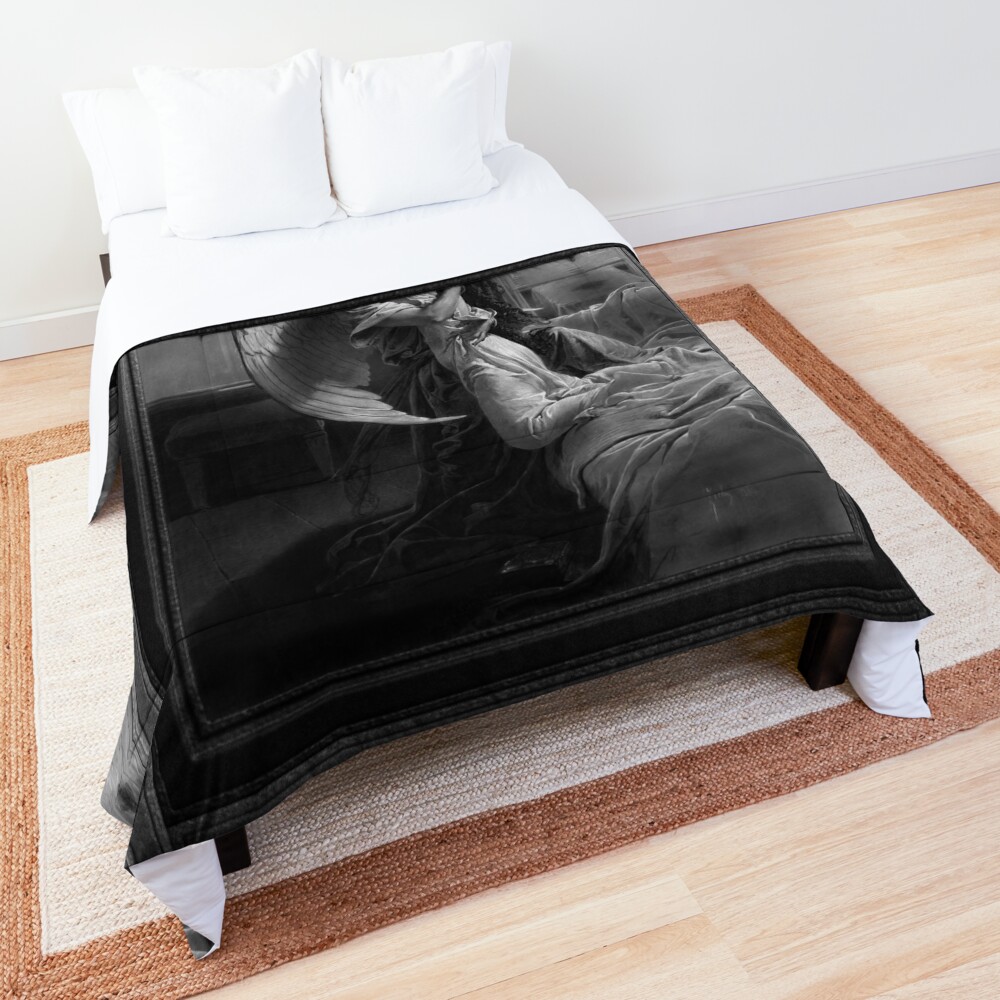
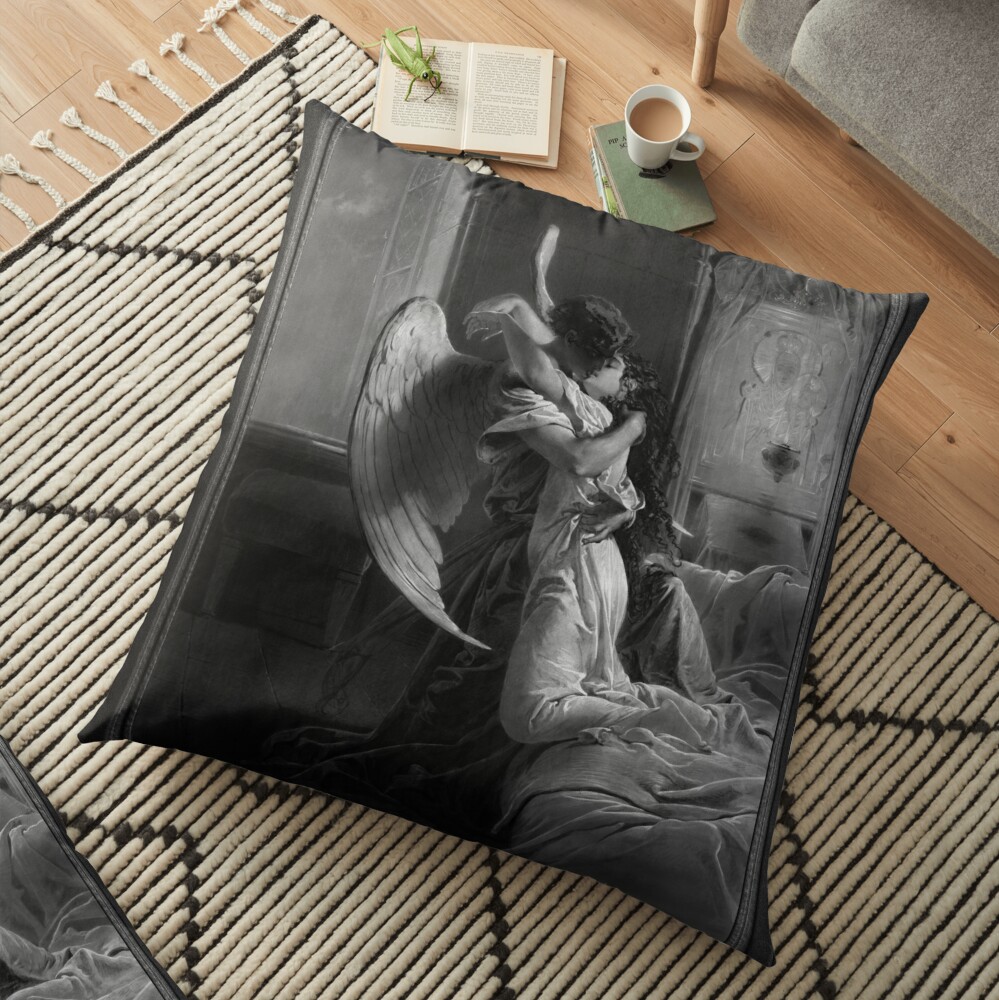
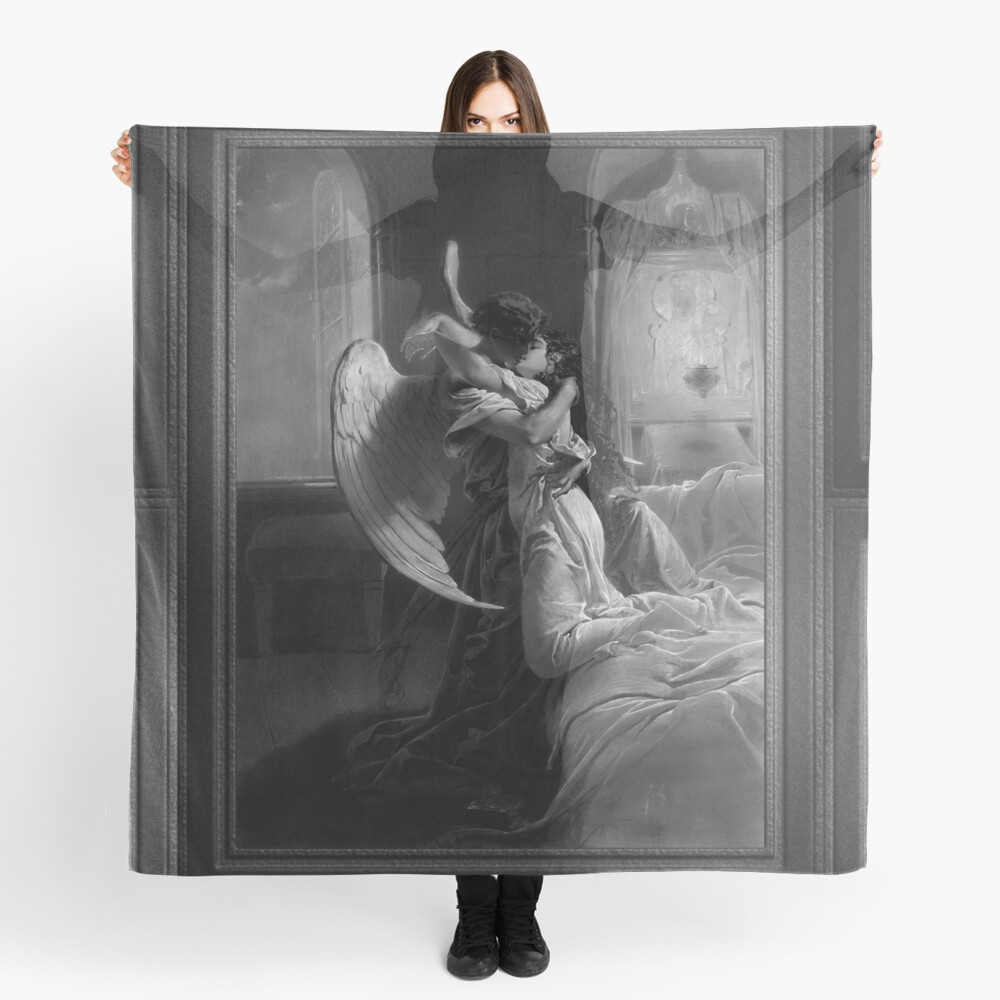
La pintura “Romantic Encounter” presents an evocative scene of emotional intensity and romantic passion. En aquesta obra d'art, Zichy captures a moment of profound tenderness and longing between two figures, a male angel and a female subject, embraced in a passionate kiss. The figures are framed within a dark, atmospheric interior, which enhances the ethereal and almost otherworldly quality of the encounter.
Taula de continguts
Principals temes i composició:
At the heart of the composition are the two figures: the angel, whose soft, delicate wings stretch outward, and the woman in an intimate embrace. Their connection is immediately the focal point, as their bodies intertwine in a sensual and tender moment. The male figure, with his strong physique, està vestit simplement amb túnices fluides que suggereixen una sensació de puresa i divinitat. La seva forma muscular contrasta amb la gràcil, línies fluides de la figura de la dona. Ella, en canvi, es representa amb més fluïdesa, els seus cabells foscos caient en cascada sobre les seves espatlles mentre els seus braços descansen al voltant del coll de l'àngel, plenament compromesa amb el petó.
Zichy ha posicionat hàbilment aquestes figures d'una manera molt emotiva i dramàtica, la poderosa abraçada de l'àngel que traspua tendresa i força protectora. La mirada de les figures, ja sigui dirigida una cap a l'altra o perduda en l'acte mateix, transmet una connexió profunda, suggerint una naturalesa espiritual o transcendent al seu amor. La proximitat de la parella, destacats pels seus cossos entrellaçats, subratlla el sentit d'unitat, while the blurred background enhances the dreamlike quality of their embrace.
Entorn i Entorn:
The surrounding space is equally significant, as it plays a crucial role in amplifying the emotional tone of the piece. The background features a solemn, somewhat imposing structure that is clearly not meant to represent a domestic space, but rather a grand, spiritual, or mystical setting. A stone-like texture is suggested in the architecture, evoking a sense of timelessness and permanence. The openness of the space contrasts with the intimacy of the subjects, allowing the viewer to feel the emotional weight of the moment while maintaining a sense of grandeur.
A l'esquerra de l'escena, a window reveals an expanse of light, which introduces a subtle contrast between the dark interior and the natural light beyond. This serves to emphasize the sense of otherworldliness present in the piece, as if the lovers are suspended between earthly existence and a celestial plane. This play between light and shadow is a key element in the painting’s composition, creating an aura of mystery and emphasizing the divine and ephemeral quality of the love shared between the angel and the woman.
Material i tècnica:
The artist’s use of chiaroscuro, a technique of strong contrasts between light and dark is masterful. The interplay of light on the figures’ cares, particularly on the angel’s torso and the woman’s skin, enhances the texture and dimensionality of the forms, making them appear almost sculptural.
Les ombres són profundes i envoltants, heightening the sense of drama and intimacy, while the light sources, whether natural or mystical, seem to emanate from within the scene itself. Zichy’s brushwork is delicate, adding a softness to the figures that contrasts with the strength suggested in their embrace.
The texture of the materials and the way Zichy portrays the fabric of the angel’s robes and the woman’s gown is noteworthy. Both garments flow with an almost liquid quality, further emphasizing the graceful and otherworldly nature of the characters. The white robes of the woman, en particular, suggest purity and innocence, a common theme in romantic and religious iconography, yet the way they cling to her body adds a sensual and intimate undertone to the scene.
Tema i estat d’ànim:
The theme of the painting revolves around the concept of divine or eternal love. L'àngel, a symbol of spiritual and supernatural forces, is often associated with purity, direcció, and protection. His embrace of the woman, who appears to be of earthly origin, can be interpreted as the union of the celestial and the mortal. This blending of the divine and the human suggests that their love transcends time and space, existing beyond the limitations of the physical world.
The overall mood of the piece is one of quiet intensity, as the figures are deeply absorbed in their embrace. The painting evokes feelings of longing, devoció, and passion, yet there is a sense of restraint. The soft color palette of whites, grisos, and soft browns, combined with the muted tones of the background, creates a somber atmosphere, further amplifying the emotional depth of the scene. There is a subtle melancholy to the moment, as if the lovers are caught in a fleeting instant of time, knowing that their connection is both eternal and temporary.
Simbolisme:
The angelic figure is rich with symbolic meaning. Angels are often seen as messengers, intermediaries between the human and divine realms. En aquesta obra d'art, the angel’s role may be interpreted as a guardian of the woman’s soul, offering her protection in this transcendent moment. El suau, sweeping wings can be seen as symbols of both freedom and confinement, as they seem to envelope the figures, creating a space that is simultaneously a sanctuary and a place of surrender.
La dona, per altra banda, could symbolize the mortal soul, longing for union with the divine. Her vulnerable yet passionate engagement in the kiss suggests a deep yearning for something greater than earthly existence. The subtle religious undertones are evident, with the suggestion of sacredness in their interaction, yet the scene remains sensual, making it not purely religious but rather an exploration of love in all its forms—human, divine, and spiritual.
Conclusió:
“Romantic Encounter” by Mihály von Zichy is a poignant and evocative painting that captures a moment of ethereal love between two figures, an angel and a woman. A través del seu ús magistral de la llum, textura, i forma, Zichy creates a timeless portrayal of love that transcends the physical realm. The painting speaks to the deep emotional connection between the figures, inviting the viewer to reflect on the nature of love, devoció, i el diví. The juxtaposition of the intimate moment within the grand, mysterious setting further enhances the sense of otherworldly beauty and timeless passion that resonates throughout the piece.
Romantic Encounter Painting Meaning / Story
Aquesta il·lustració està basada en el poema del dimoni del poeta rus Mikhail Lermontov (1814 – 1841), en què un poderós dimoni que es pregunta pel món sol es troba amb la princesa georgiana Tamara ballant a les seves noces.
En veure-la, el dimoni s'enamora d'ella; i mata el seu marit, llavors comença a cortejar-la fins que ella es lliura a ell; com ella no pot veure ni un dimoni ni un àngel. sinó una ànima solitària torturada.
Però quan els dos es besen, el petó és fatal per a la Tamara, i mentre puja al cel, el dimoni torna a quedar sol, per meravellar el món i l'univers, sense amor ni esperança.
Romantic Encounter és una reproducció retocada d'antics mestres d'art digital d'una imatge de domini públic que es pot comprar en línia com a impressió de tela enrotllada.
Informació a continuació de Wikipedia.org
Mihaly von Zichy is considered a notable representative of Hungarian romantic painting. He lived and worked primarily in St. Petersburg and Paris during his career.
He is known for illustrating the Georgian epic poem The Knight in the Panther’s Skin on an 1881 commission by the intelligentsia. By the time he had completed 35 pictures, he was so moved by the poem that he gave his works to the Georgian people as a gift.
During his law studies in Pest from 1842, Zichy attended Jakab Marastoni’s art school as well. He went to Vienna to study under Ferdinand Georg Waldmüller in 1844. Lifeboat, his first major work, was painted during this period.
On Waldmüller’s recommendation, Zichy was hired as an art teacher in St. Petersburg. He swore allegiance to freedom in 1849 by painting the portrait of Lajos Batthyány, the first Hungarian prime minister.
Des de 1850 onwards, he worked primarily as a retoucher. He also made pencil drawings, water colours, and portraits in oil.
His erotic drawings are noted for having a warm intensity, as both members of the couple seem equal partners. The series on the Gatchina hunting, ordered by the Russian Tsar, gained Zichy standing as a court artist.
He founded a society to support painters in need. He painted Autodafé (1868) to express the horrors of the Spanish inquisition in earlier centuries. En 1871 he traveled through Europe, settling in Paris in 1874.
He painted Queen Elisabeth Laying Flowers by the Coffin of Ferenc Deák as a commission from Treffort. Drinking Bout of Henry III his next large-scale picture, came in 1875.
The Victory of the Genius of Destruction, painted for the Paris Exhibition, was banned by French authorities because of its daring anti-militarist message.
Zichy left Paris in 1881 and returned to St. Petersburg, after short stays in Nice, Vienna and his native Zala.
That year he also visited Tbilisi, Caucasus Viceroyalty (today Georgia). He was commissioned to illustrate the Georgian epic poem, The Knight in the Panther’s Skin, at the request of intelligentsia of the country. He painted 35 pictures in total.
The publishing commission of the work of The Knight in the Panther’s Skin chose 27 pictures to be included in the publication. The painter refused to take payment for the works, because he was so moved by the original poem. En canvi, he gave his works to the Georgian people.
From this time onward, Zichy mostly engaged in illustration work. Examples of works he illustrated include The Tragedy of Man by Imre Madách, dins 1887, and twenty-four ballads of János Arany, 1894–98.