

Romantisk møte
Romantisk møte c1864 av den ungarske maleren Mihaly von Zichy (1827 – 1906), var en betydelig romantisk ungarsk maler, Illustratør og grafiker.
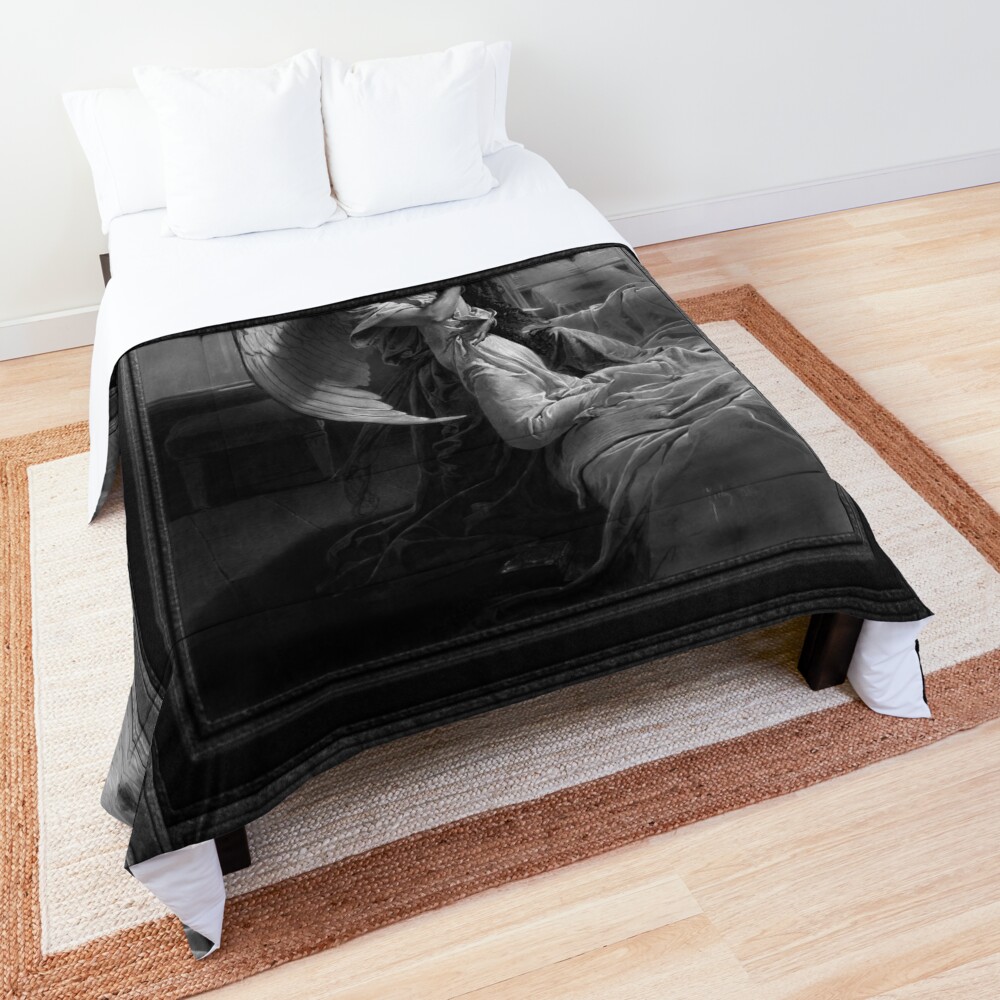
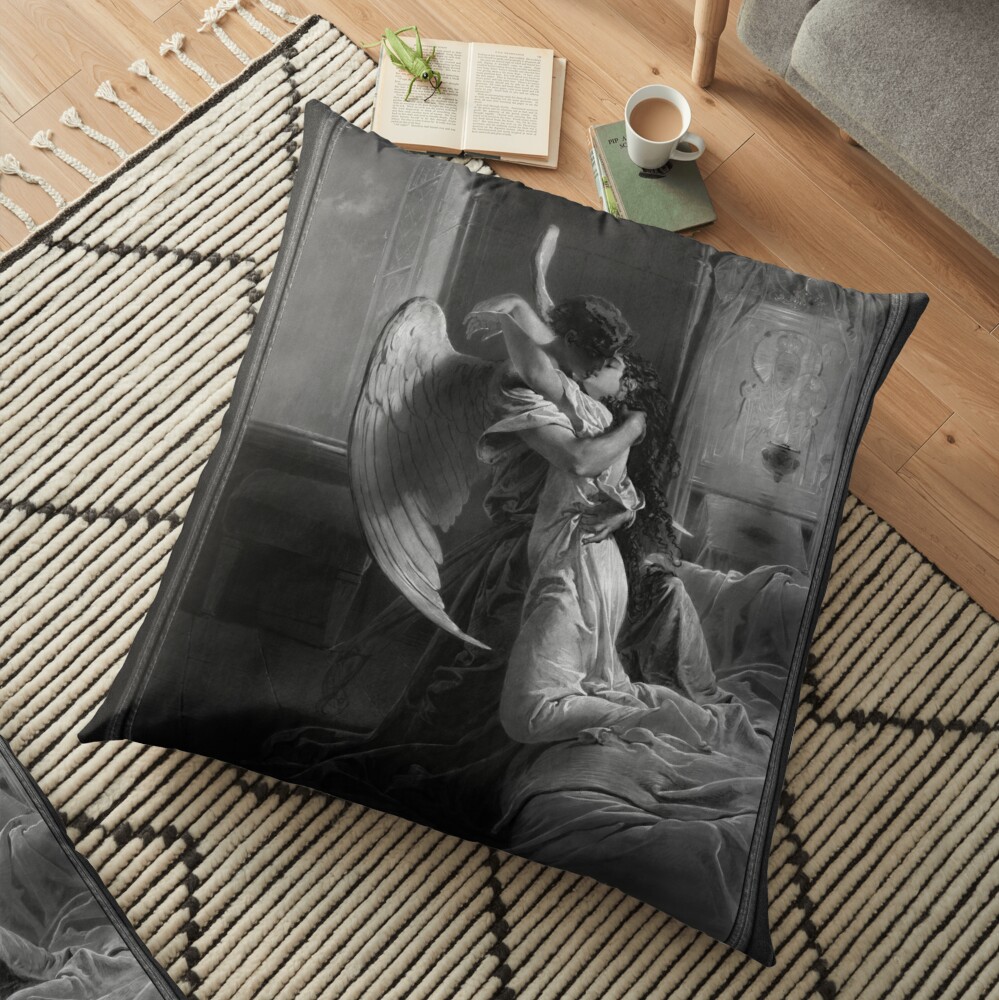
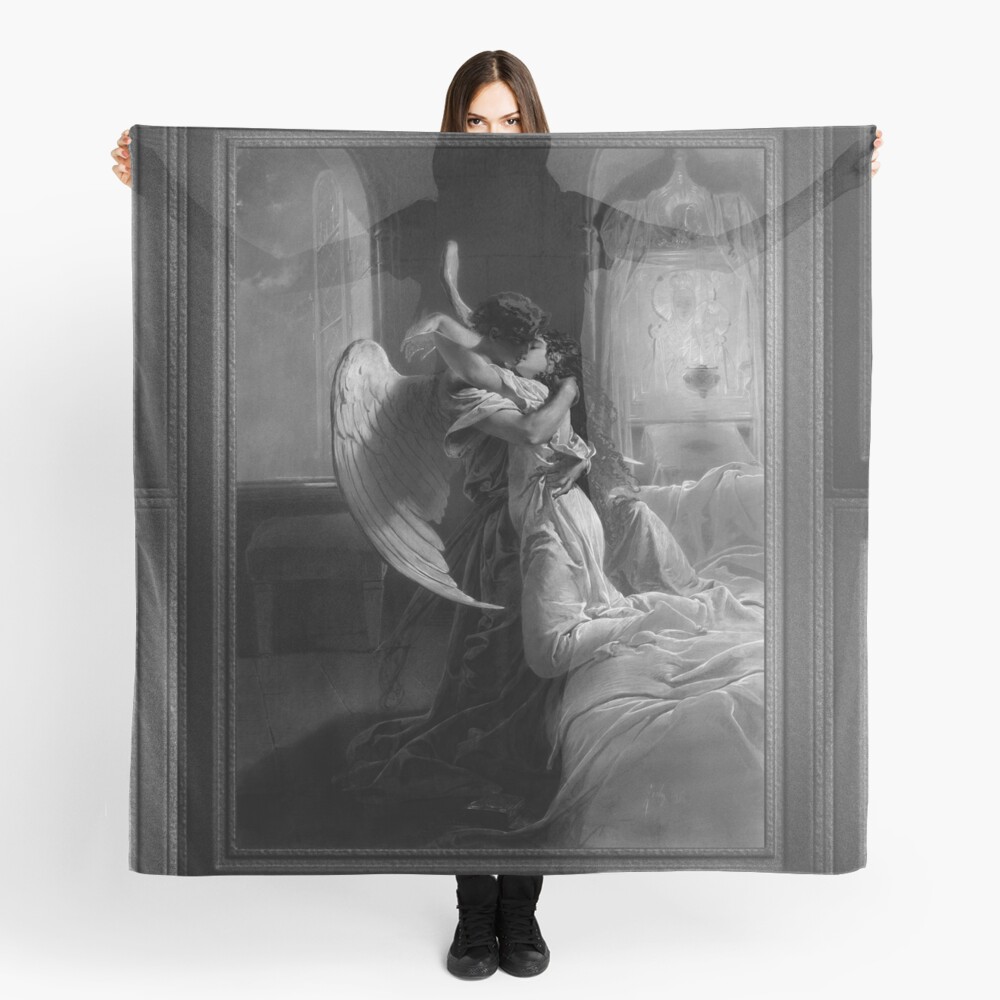
Maleriet “Romantisk møte” presents an evocative scene of emotional intensity and romantic passion. I dette kunstverket, Zichy captures a moment of profound tenderness and longing between two figures, a male angel and a female subject, embraced in a passionate kiss. The figures are framed within a dark, atmospheric interior, which enhances the ethereal and almost otherworldly quality of the encounter.
Innholdsfortegnelse
Main Subjects and Composition:
At the heart of the composition are the two figures: the angel, whose soft, delicate wings stretch outward, and the woman in an intimate embrace. Their connection is immediately the focal point, as their bodies intertwine in a sensual and tender moment. The male figure, with his strong physique, is dressed simply in flowing robes that suggest a sense of purity and divinity. His muscular form is in contrast to the graceful, flowing lines of the woman’s figure. She, i kontrast, is depicted with more fluidity, her dark hair cascading over her shoulders as her arms rest around the angel’s neck, fully engaged in the kiss.
Zichy has skillfully positioned these figures in a highly emotive and dramatic manner, the angel’s powerful embrace exuding both tenderness and protective strength. The figures’ gaze—whether directed toward one another or lost in the act itself—conveys a deep connection, suggesting a spiritual or transcendent nature to their love. The couple’s proximity, highlighted by their interlocked bodies, underscores a sense of unity, while the blurred background enhances the dreamlike quality of their embrace.
Setting and Environment:
The surrounding space is equally significant, as it plays a crucial role in amplifying the emotional tone of the piece. The background features a solemn, somewhat imposing structure that is clearly not meant to represent a domestic space, but rather a grand, spiritual, or mystical setting. A stone-like texture is suggested in the architecture, evoking a sense of timelessness and permanence. The openness of the space contrasts with the intimacy of the subjects, allowing the viewer to feel the emotional weight of the moment while maintaining a sense of grandeur.
To the left of the scene, a window reveals an expanse of light, which introduces a subtle contrast between the dark interior and the natural light beyond. This serves to emphasize the sense of otherworldliness present in the piece, as if the lovers are suspended between earthly existence and a celestial plane. This play between light and shadow is a key element in the painting’s composition, creating an aura of mystery and emphasizing the divine and ephemeral quality of the love shared between the angel and the woman.
Materiale og teknikk:
Kunstnerens bruk av chiaroscuro, a technique of strong contrasts between light and dark is masterful. The interplay of light on the figures’ ansikter, particularly on the angel’s torso and the woman’s skin, enhances the texture and dimensionality of the forms, making them appear almost sculptural.
The shadows are deep and enveloping, heightening the sense of drama and intimacy, while the light sources, whether natural or mystical, seem to emanate from within the scene itself. Zichy’s brushwork is delicate, adding a softness to the figures that contrasts with the strength suggested in their embrace.
The texture of the materials and the way Zichy portrays the fabric of the angel’s robes and the woman’s gown is noteworthy. Both garments flow with an almost liquid quality, further emphasizing the graceful and otherworldly nature of the characters. The white robes of the woman, spesielt, suggest purity and innocence, a common theme in romantic and religious iconography, yet the way they cling to her body adds a sensual and intimate undertone to the scene.
Tema og stemning:
The theme of the painting revolves around the concept of divine or eternal love. The angel, a symbol of spiritual and supernatural forces, is often associated with purity, guidance, and protection. His embrace of the woman, who appears to be of earthly origin, can be interpreted as the union of the celestial and the mortal. This blending of the divine and the human suggests that their love transcends time and space, existing beyond the limitations of the physical world.
The overall mood of the piece is one of quiet intensity, as the figures are deeply absorbed in their embrace. The painting evokes feelings of longing, devotion, and passion, yet there is a sense of restraint. The soft color palette of whites, grå, and soft browns, combined with the muted tones of the background, creates a somber atmosphere, further amplifying the emotional depth of the scene. There is a subtle melancholy to the moment, as if the lovers are caught in a fleeting instant of time, knowing that their connection is both eternal and temporary.
Symbolikk:
The angelic figure is rich with symbolic meaning. Angels are often seen as messengers, intermediaries between the human and divine realms. I dette kunstverket, the angel’s role may be interpreted as a guardian of the woman’s soul, offering her protection in this transcendent moment. Den myke, sweeping wings can be seen as symbols of both freedom and confinement, as they seem to envelope the figures, creating a space that is simultaneously a sanctuary and a place of surrender.
Kvinnen, på den andre siden, could symbolize the mortal soul, longing for union with the divine. Her vulnerable yet passionate engagement in the kiss suggests a deep yearning for something greater than earthly existence. The subtle religious undertones are evident, with the suggestion of sacredness in their interaction, yet the scene remains sensual, making it not purely religious but rather an exploration of love in all its forms—human, divine, and spiritual.
Konklusjon:
“Romantisk møte” by Mihály von Zichy is a poignant and evocative painting that captures a moment of ethereal love between two figures, an angel and a woman. Through his masterful use of light, tekstur, og form, Zichy creates a timeless portrayal of love that transcends the physical realm. The painting speaks to the deep emotional connection between the figures, inviting the viewer to reflect on the nature of love, devotion, og det guddommelige. The juxtaposition of the intimate moment within the grand, mysterious setting further enhances the sense of otherworldly beauty and timeless passion that resonates throughout the piece.
Romantisk møte Maleri betydning / Historie
Denne illustrasjonen er basert på Demon-diktet av den russiske poeten Mikhail Lermontov (1814 – 1841), hvor en mektig demon som lurer på verden alene kommer over den georgiske prinsessen Tamara dansende i bryllupet hennes.
Ved å se henne blir demonen forelsket i henne; og dreper mannen hennes, begynner så å fri til henne til hun gir seg til ham; da hun verken kan se en demon eller en engel. men en torturert ensom sjel.
Men når de to kysser, kysset er fatalt for Tamara, og når hun reiser seg til himmelen, demonen blir igjen alene, å undre seg over verden og universet, uten kjærlighet eller håp.
Romantic Encounter er en retusjert digital kunst, gamle mesters reproduksjon av et offentlig domenebilde som er tilgjengelig for kjøp online som en rullet lerretstrykk.
Info nedenfor fra Wikipedia.org
Mihaly von Zichy regnes som en bemerkelsesverdig representant for ungarsk romantisk maleri. Han bodde og jobbet først og fremst i St. Petersburg og Paris i løpet av karrieren.
Han er kjent for å illustrere det georgiske episke diktet The Knight in the Panther's Skin på en 1881 oppdrag fra intelligentsiaen. Innen han hadde fullført 35 bilder, han ble så rørt av diktet at han ga verkene sine til det georgiske folket i gave.
Under jusstudiene i Pest fra 1842, Zichy gikk også på Jakab Marastonis kunstskole. Han dro til Wien for å studere under Ferdinand Georg Waldmüller i 1844. Livbåt, hans første store verk, ble malt i denne perioden.
Etter Waldmüllers anbefaling, Zichy ble ansatt som kunstlærer i St. Petersburg. Han sverget troskap til friheten 1849 ved å male portrettet av Lajos Batthyány, den første ungarske statsministeren.
Fra 1850 videre, han jobbet først og fremst som retusjerer. Han laget også blyanttegninger, vannfarger, og portretter i olje.
Hans erotiske tegninger er kjent for å ha en varm intensitet, som begge medlemmene av paret virker likeverdige partnere. Serien om Gatchina-jakten, bestilt av den russiske tsaren, fikk Zichy anseelse som hoffkunstner.
Han grunnla et samfunn for å støtte malere i nød. Han malte Autodafé (1868) for å uttrykke grusomhetene til den spanske inkvisisjonen i tidligere århundrer. I 1871 han reiste gjennom Europa, bosette seg i Paris i 1874.
Han malte dronning Elisabeth legger blomster av kisten til Ferenc Deák som et oppdrag fra Treffort. Drikker Bout of Henry III hans neste storstilte bilde, kom inn 1875.
Seieren til ødeleggelsens geni, malt til Paris-utstillingen, ble forbudt av franske myndigheter på grunn av det vågale antimilitaristiske budskapet.
Zichy forlot Paris 1881 og returnerte til St. Petersburg, etter korte opphold i Nice, Wien og hans hjemland Zala.
Det året besøkte han også Tbilisi, Kaukasus visekongedømme (i dag Georgia). Han fikk i oppdrag å illustrere det georgiske episke diktet, Ridderen i panterens hud, etter anmodning fra landets intelligentsia. Han malte 35 bilder totalt.
Publiseringskommisjonen for arbeidet til The Knight in the Panther's Skin valgte 27 bilder som skal inkluderes i publikasjonen. Maleren nektet å ta betaling for arbeidene, fordi han ble så rørt av det originale diktet. I stedet, han ga verkene sine til det georgiske folket.
Fra denne tiden av, Zichy drev for det meste med illustrasjonsarbeid. Eksempler på verk han illustrerte inkluderer The Tragedy of Man av Imre Madách, i 1887, og tjuefire ballader av János Arany, 1894–98.