

Saint Veronica With The Veil
“Saint Veronica With The Veil,” created by Italian Baroque painter Mattia Preti (1613 – 1699) between 1652 and 1653, exemplifies the religious and emotional intensity of the era, reflecting the artist’s mastery in capturing both the human form and divine subjects. Mattia Preti, known for his dramatic use of light and shadow, and his depiction of religious and historical scenes.
The religious portrait painting presented here, is the figure of Saint Veronica in a manner that is both poignant and reflective of her iconic moment in Christian tradition. Veronica is shown holding the veil that famously bears the image of Christ’s face, an image said to have been miraculously imprinted upon the cloth when she wiped the face of Jesus during His journey to Golgotha.
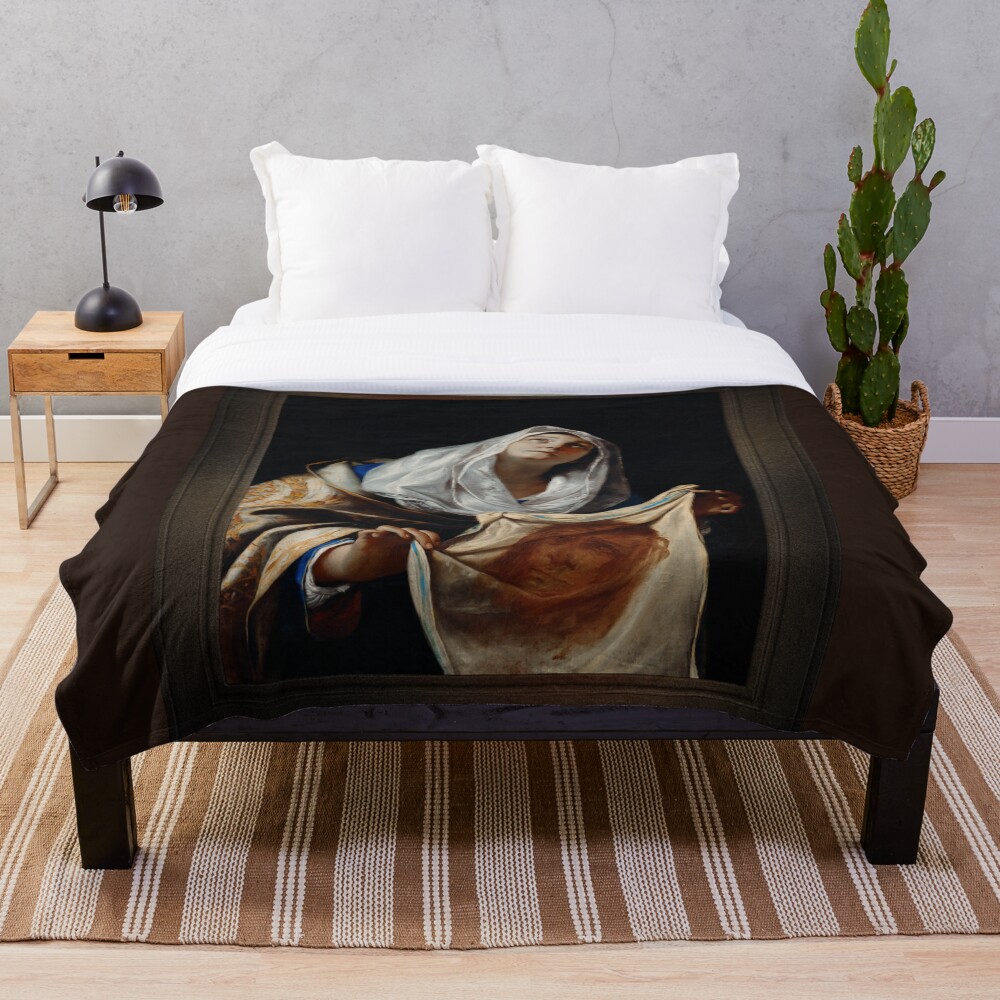
Table of Contents
The Main Subject: Saint Veronica
The central subject of the painting is Saint Veronica herself, portrayed in a moment of reverence and quiet devotion. She is depicted with an expression that reflects both piety and awe as she gazes upward, likely towards a divine revelation or in silent prayer. Her figure is illuminated dramatically, a hallmark of Preti’s Baroque style, where the play of light and shadow creates a sense of depth and spiritual elevation.
Veronica’s face is characterized by soft, idealized features, with a serene, almost ethereal quality that contrasts with the somber, dark background. Her clothing, a robe of deep blues and vibrant golds, adds to her holy stature, combining both opulence and modesty in a way that emphasizes her importance in the biblical narrative.
The veil in her hands is intricately rendered, with delicate folds that reveal the texture of the fabric, as well as the face of Christ imprinted upon it. This face, subtly yet clearly presented, is an ethereal reflection of Christ’s suffering, adding a layer of deep emotional weight to the work. The veil is not just a physical object in the painting but a symbol of divine intervention and mercy, carrying the miraculous imprint of Christ’s face, which was said to have been preserved as a relic for the faithful.
The Background and Setting
The background of the painting is characterized by its dark, almost indistinguishable elements that serve to draw the viewer’s attention entirely to Veronica. This deep, muted tone emphasizes the figure of the saint, isolating her in a space that feels sacred and contemplative. The lack of a detailed setting serves to focus on the spiritual rather than the worldly, reinforcing the devotional nature of the subject.
There is a minimalistic approach to the surrounding environment, which contrasts with the emotional intensity of Veronica’s expression. The lack of visual distractions helps maintain the spiritual focus of the work, allowing the viewer to connect directly with the saint’s act of devotion and the miraculous nature of the veil she holds. The light that falls upon Veronica’s face, her hands, and the veil seems to suggest a divine presence or grace, subtly illuminating the holy relic and enhancing the overall spiritual message.
Style and Technique
Mattia Preti’s Baroque style is evident throughout the piece. Known for his skill in the use of chiaroscuro (the contrast between light and dark), Preti employs this technique to dramatize the composition and imbue the scene with a sense of divine illumination. The light source appears to come from above, perhaps symbolizing the intervention of God, and it bathes Veronica and the veil in a soft, golden glow, intensifying the emotional impact of the piece.
The artist’s meticulous attention to detail, particularly in the rendering of Veronica’s garments, highlights the sumptuousness of her clothing, with rich textures and vivid colors that contrast with the simplicity of the background. This combination of light, texture, and fabric serves to elevate Veronica’s figure to a divine status, while also grounding the viewer in the material world through the realistic depiction of her robe and the veil.
Preti’s technical skill in depicting the veil itself is exceptional, with the folds of the cloth appearing almost lifelike, and the image of Christ subtly imprinted upon it in a manner that feels both miraculous and mysterious. The face of Christ is neither overly detailed nor obscured, allowing the viewer to perceive it as an imprint of divine presence, yet not overpowering the central figure of Veronica.
Theme and Mood
The theme of “Saint Veronica With The Veil” revolves around sacrifice, devotion, and divine grace. Veronica’s act of compassion in wiping Jesus’s face during His Passion is elevated in Preti’s depiction, transforming a simple act of charity into an iconic moment of spiritual significance. The mood of the painting is one of reverence and solemnity, inviting the viewer to reflect on the sacrificial nature of Christ’s suffering and the miraculous gift of the imprint on the veil.
The interplay of light and shadow, the emotional intensity of Veronica’s expression, and the presence of the holy relic imbue the scene with a sense of awe and wonder. The viewer is drawn into this moment of divine revelation, feeling the sacredness of the encounter between Veronica, the veil, and the image of Christ. The composition does not just depict a historical or religious event but serves as a meditation on the themes of faith, grace, and the mystery of the divine.
Conclusion
“Saint Veronica With The Veil” by Mattia Preti is a stunning example of Baroque religious art, filled with spiritual depth and technical mastery. The painting captures a moment of great emotional significance and reverence, showcasing the miraculous nature of the veil and the profound act of devotion by Saint Veronica. Through his use of light, shadow, and texture, Preti elevates the scene to one of spiritual transcendence, inviting the viewer to witness not just a historical event but an encounter with the divine. This work remains a powerful testament to the artistic and religious ideals of the Baroque period, resonating with viewers through its emotional intensity and timeless beauty.
This is a remastered digital art old masters reproduction of a public domain image that is available as a canvas print online.