

Satinrose
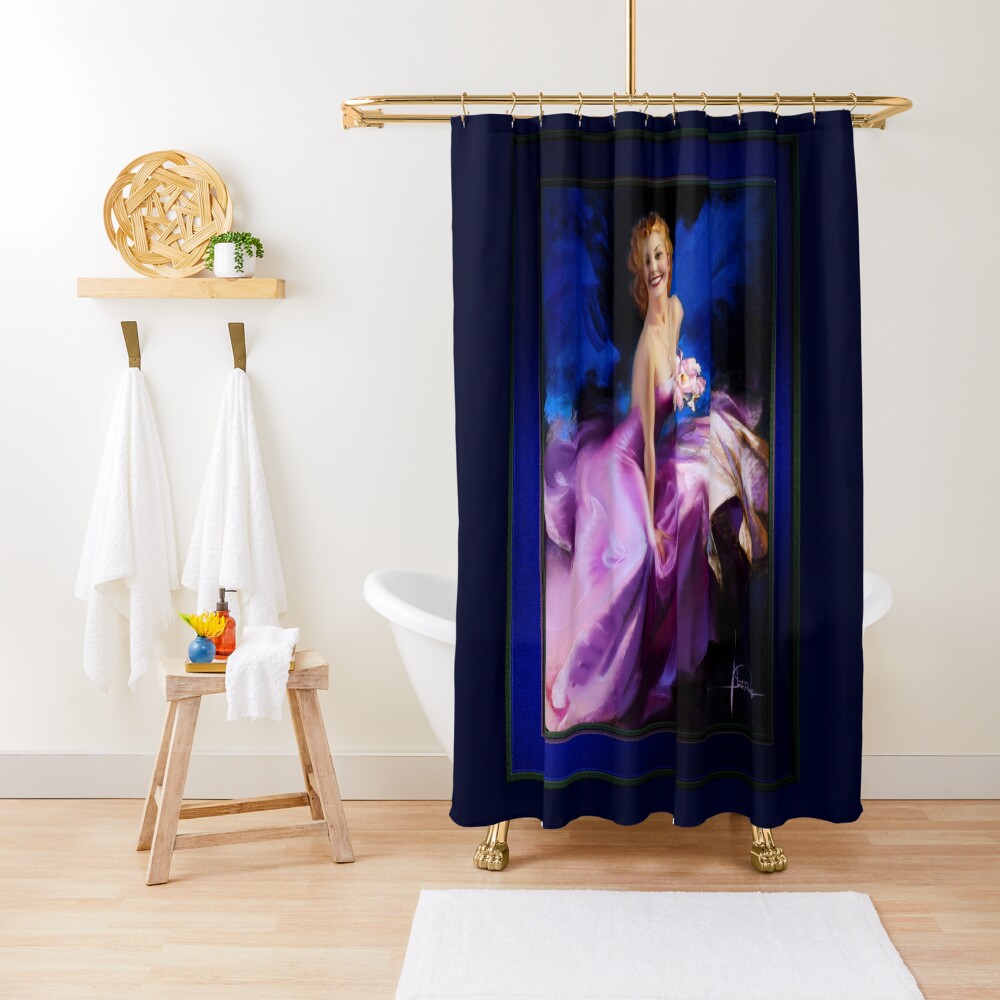
“Satinrose” (1930), gemalt von dem renommierten amerikanischen Künstler Rolf Armstrong (1889-1960), ist ein beispielhaftes Stück amerikanischer Porträtmalerei des frühen 20. Jahrhunderts. Bekannt für seine leuchtenden Darstellungen von Frauen in modischer Kleidung, Armstrongs Werk fängt einen Sinn für Schönheit und Eleganz ein, der den Geist des Jazz-Zeitalters und der Art-Déco-Zeit widerspiegelt. In diesem besonderen Stück, Armstrong präsentiert ein Bild von Weiblichkeit und Anmut, illustriert die komplizierten Details einer Frau in einem weichen Kleid, Satinkleid.
Inhaltsverzeichnis
Das Hauptthema
“Satinrose” ist eine junge Frau mit anmutiger Haltung, Ihre Figur wird mit einem zarten Gleichgewicht aus Licht und Schatten wiedergegeben. Sie ist die Verkörperung jugendlicher Schönheit, trägt ein Kleid, das in sanften Wellen um sie herumfließt und kräuselt. Das Kleid, hauptsächlich ein lavendelfarbener Satin, glänzt im Licht, Sein glatter Stoff wird durch Falten und Knicke betont, die ihm ein reiches Aussehen verleihen, fast fühlbare Qualität. Armstrongs Beherrschung der Textur zeigt sich in seiner Behandlung des Satinstoffs, das mit dem sanften Glanz schimmert, der für dieses luxuriöse Material charakteristisch ist.
Stil, Technik, und Mittel
Das Gesicht der Frau ist voller Vitalität, strahlt Freude und Wärme aus. Ihr Lächeln ist subtil, aber selbstbewusst, und ihr Blick ist auf den Betrachter gerichtet, ein Gefühl des direkten Engagements zu schaffen. Ihr weich, welliges blondes Haar umrahmt ihr Gesicht mühelos, dennoch elegante Art. Die Rosen hält sie in ihrer rechten Hand, zart gefasst, Fügen Sie der Komposition einen Hauch von Romantik und Sanftheit hinzu, Ihre blassrosa Blütenblätter spiegeln die zarten Farbtöne des Kleides wider. Armstrongs Verwendung von Blumen dient nicht nur der Zierde; sie symbolisieren Schönheit, Weiblichkeit, und Gnade, was das Gesamtthema des Gemäldes weiter betont.
Der Hintergrund des Stücks ist reich gefärbt mit abstrakten Pinselstrichen, die einen verträumten Eindruck erwecken, Fast ätherische Qualität. Die tiefen Blautöne des Hintergrunds kontrastieren mit dem weichen, hellere Farbtöne des Damenkleides, hilft ihrer Figur, im Mittelpunkt zu stehen. Dieser Kontrast zwischen den warmen Lavendeltönen der Figur und den kühlen Blautönen des Hintergrunds erzeugt ein Gefühl von Tiefe und Dimension, was den Realismus des Porträts verstärkt. Die sanften Farbabstufungen tragen zur insgesamt ruhigen Atmosphäre des Werkes bei, wo das Licht die Oberfläche des Satinstoffs zu streicheln scheint, was die Stimmung der Eleganz noch verstärkt.
Objekte und Komposition
Die Komposition konzentriert sich stark auf die Figur, Sie in einem Moment heiterer Freude einzufangen. Armstrongs Entscheidung, den Hintergrund etwas abstrakt und unscharf zu lassen, lenkt die Aufmerksamkeit des Betrachters ganz auf das Motiv. Diese Betonung der Figur gegenüber der Umgebung ist ein charakteristisches Merkmal vieler Werke von Armstrong, wo die menschliche Form in ihrer natürlichen Schönheit gefeiert wird.
Armstrongs Stil in “Satinrose” veranschaulicht seine charakteristische Technik, Realismus mit einer gewissen idealisierten Qualität zu verbinden. Das Porträt ist nicht nur eine Darstellung einer Frau, sondern vielmehr eine Erkundung der Schönheit, Eleganz, und Gnade. Der Einsatz von Licht und Schatten durch den Künstler ist subtil und dennoch wirkungsvoll, highlighting the contours of the woman’s face and the folds of her gown in a way that gives the painting a sense of dimensionality. Armstrong’s skill in capturing fabric, insbesondere, is unparalleled, and the way the satin gown appears to catch and reflect the light gives it a fluid, almost living quality.
Thema und Stimmung
Das Thema von “Satinrose” is deeply rooted in the early 20th century’s appreciation for beauty and fashion, reflecting the cultural preoccupations of the time. The 1930s was an era that celebrated glamour, Raffinesse, and modern femininity, and Armstrong’s work is an embodiment of these ideals. The use of satin fabric, the emphasis on luxurious textures, und die zarte Darstellung der strahlenden Schönheit einer jungen Frau zeugen von der hohen Wertschätzung für Eleganz, die die sozialen und künstlerischen Landschaften dieser Zeit durchdrang.
Die Stimmung des Gemäldes ist von Wärme und Gelassenheit geprägt. Das sanfte Lächeln der Frau, die weichen Falten ihres Kleides, und der heitere blaue Hintergrund schaffen eine Atmosphäre ruhiger Eleganz. In der Arbeit herrscht ein Gefühl der Intimität, als ob der Betrachter in einen privaten Moment mit dem Thema eingeladen würde, der souverän und dennoch nahbar vor uns steht. Der Künstler stellt sie nicht als unerreichbares Ideal dar, sondern als eine Frau voller Anmut und Würde, der eine innere Schönheit ebenso ausstrahlt wie die äußeren Qualitäten, die das Gemälde darstellt.
Abschluss
In Bezug auf Materialien, Armstrong verwendete traditionelle Ölfarben, Verwenden Sie das Medium, um Farbschichten aufzubauen, die der Szene Tiefe und Textur verleihen. Die Oberfläche des Gemäldes, reich an Farbe und Form, unterstreicht Armstrongs Fähigkeit, Glätte zu schaffen, fast leuchtende Texturen, insbesondere in der Darstellung von Stoff und Haut. Das Stück ist im klassischen Stil gerahmt, mit einem satten blauen Rand, der die Farbtöne des Hintergrunds ergänzt und die visuelle Wirkung des Werks noch verstärkt.
Satin Rose ist eine remasterte digitale Kunstreproduktion alter Meister eines gemeinfreien Bildes, die als Leinwand verfügbar ist, Acryl und Metalldruck online.
Künstler Bio abgeleitet von Wikipedia.org
Rolf Armstrong wurde als John Scott Armstrong in Bay City geboren, Michigan im April 21, 1889, an Richard und Harriet (Scott) Armstrong. Sein Vater besaß die Boy-Line Fire Boat Company, darunter eine Reihe von Passagierschiffen. Einige wurden in Chicago für den Einsatz auf der dortigen Weltausstellung in Chicago eingesetzt 1893.
jedoch, das Geschäft des Vaters und die Familie hatten zu kämpfen, und das Gehöft der Familie ging durch Zwangsvollstreckung verloren. Im 1899, die Familie zog nach Detroit, Michigan. Rolfs Vater starb in 1903, und ein Jahr später zogen er und seine Mutter nach Seattle, Washington, auf den Spuren seines ältesten Bruders, Wilhelm, der ein Jahr zuvor dorthin gezogen war. Rolfs künstlerisches Interesse entwickelte sich mittlerweile zu mehr als einem Nebenvergnügen.
Er zog nach Chicago in 1908, wo er später am Art Institute studierte. Dann ging es weiter nach New York, wo er bei Robert Henri . studierte. Nach einer Reise nach Paris in 1919 an der Académie Julian . studieren, er kehrte nach New York zurück und gründete ein Studio. Im 1921 er ging nach Minneapolis, um an der Brown Kalenderproduktion zu studieren & Bigelow.
In den 1920er und 1930er Jahren, seine Arbeit erschien auf vielen Musiknoten, sowie auf den Titelseiten vieler Zeitschriften, am bekanntesten für Filmfanmagazine wie Photoplay und Screenland. Seine Arbeit besteht hauptsächlich aus Frauen; Mary Pickford, Bebe Daniels, und Greta Garbo sind nur einige der zahlreichen, die er gemalt hat.
Armstrongs Arbeit für die Pictorial Review war maßgeblich dafür verantwortlich, dass diese Zeitschrift eine Auflage von mehr als zwei Millionen erreichte 1926. Ein Jahr später, er war der meistverkaufte Kalenderkünstler bei Brown & Bigelow. Im 1930, RCA hat ihn angeheuert, um Pin-ups zu malen, um für ihre Produkte zu werben, und in 1933 der Thomas D. Murphy Calendar Company verpflichtete ihn, eine Reihe von Gemälden für ihre Linie zu produzieren.
März 1940, Juwel Blumen, ein Mädchen aus Lumberton, North Carolina, schickte Armstrong ein Bild von sich als Reaktion auf eine Anzeige, die er in der New York Times geschaltet hatte. Armstrong, 50 damals, war seither im Hotel des Artistes in der West 67th Street in Manhattan ansässig 1939, und war auf der suche nach neuen modellen.
Er hat Flowers zu einem Interview eingeladen. Im März 25, 1940, Flowers begann für Armstrong zu modeln. Ihre professionelle Zusammenarbeit und Freundschaft dauerte zwei Jahrzehnte. Das erste Gemälde, betitelt “Wie mache ich mich?”, angeblich weil Blumen, ungewohnt zu modeln, fragte Armstrong immer wieder “Wie mache ich mich?” während der Modellierungssitzung, wurde erstmals nach Beginn des Zweiten Weltkriegs veröffentlicht.
Es war Braun & Bigelows meistverkaufter Kalender für 1942 zu einer Zeit, als das Unternehmen in Amerika Millionen von Kalendern verkaufte, und es wurde eines der am häufigsten reproduzierten Bilder von Armstrong. Flowers war während des Zweiten Weltkriegs bei amerikanischen Soldaten beliebt, einige von ihnen schickten ihr Briefe mit Heiratsanträgen. Armstrongs Kalender und Silhouetten von Blumen wurden als Nasenkunst auf Bomber und andere Flugzeuge kopiert und auf Panzertürme gemalt.
Sie wurde während des Krieges so bekannt, allerdings eher als berühmtes gesicht denn namentlich, dass ein Brief eines Soldaten einfach adressiert als “Juwel Blumen, New York City” wurde korrekt geliefert. Für viele amerikanische Soldaten im Ausland, sie repräsentierte die “Warum wir kämpfen” Geist. UNS. Präsident Franklin D. Roosevelts Regierung hat sie angeworben, um bei der Förderung von Kriegsanleihen zu helfen.
Der Januar 1, 1945 Ausgabe des TIME-Magazins enthalten Armstrongs “Toast der Stadt” Blumenmalerei in einem Artikel über Kalenderkunst. Der Artikel stellte fest, dass Kalender mit “Mädchenbilder” war “stark gekauft von Gießereien, Maschinenwerkstätten, Auto-Versorgungshändler.”
Blumen verheiratet in 1946. Sie und ihr Mann lebten an mehreren Orten, während er eine Reihe von geschäftlichen Unternehmungen versuchte, einschließlich Laguna Beach, Kalifornien, Greenville, South Carolina, Reno, Nevada, wo sie angeblich eine Zeit lang als Kartenhändlerin gearbeitet hat, und New York City. Laut Michael Wooldridge, Co-Autor von Pin up Dreams: Die Glamour-Kunst von Rolf Armstrong, Armstrong rief sie während der Zeit, in der sie ihrem Mann von Ort zu Ort folgte, mehrmals an, um sie zu überreden, nach New York zurückzukehren und für ihn zu modeln.
Ihre Modelkarriere endete mit Armstrongs Tod in 1960. Einen großen Teil seines persönlichen Vermögens hinterließ er Flowers. Insgesamt, Armstrong schuf etwa fünfzig bis sechzig Werke nach dem Vorbild von Flowers.
Rolf Armstrong ist gestorben 1960 auf der Insel Oahu, Hawaii als eines der besten “Aufstecken” Künstler der ersten Hälfte des 20. Jahrhunderts.