

Die Rote Hotline
Die Rote Hotline: A Celebration of Glamour and Playfulness
Die Rote Hotline von Peter Driben (1903 – 1968), an esteemed American pin-up artist of the mid-20th century, was celebrated for his ability to infuse vitality and charm into his works; and this piece is a quintessential example of his artistry, epitomizing the flirtatious yet wholesome essence of pin-up culture. Driben‘s vibrant palette, mastery of form, and knack for storytelling through visual art are on full display in this piece.
Inhaltsverzeichnis
Hauptthema: The Radiant Blonde in Blue
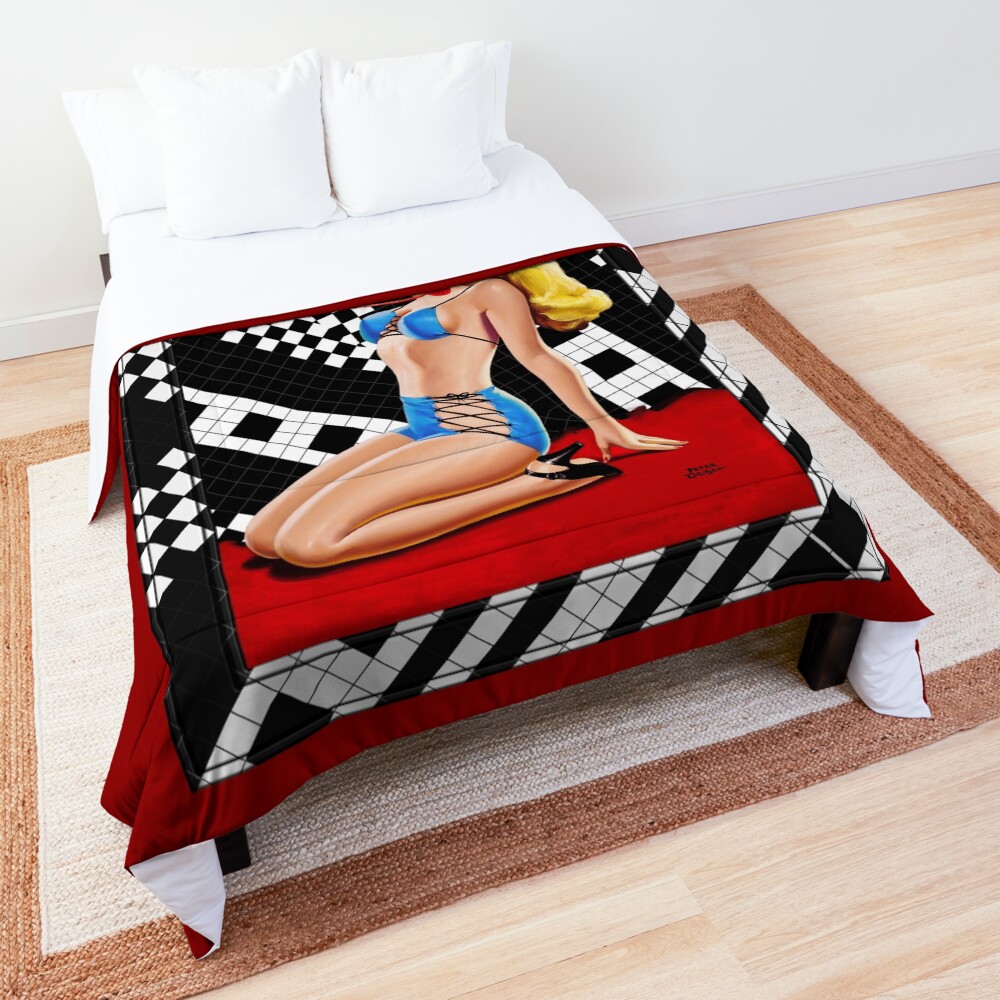
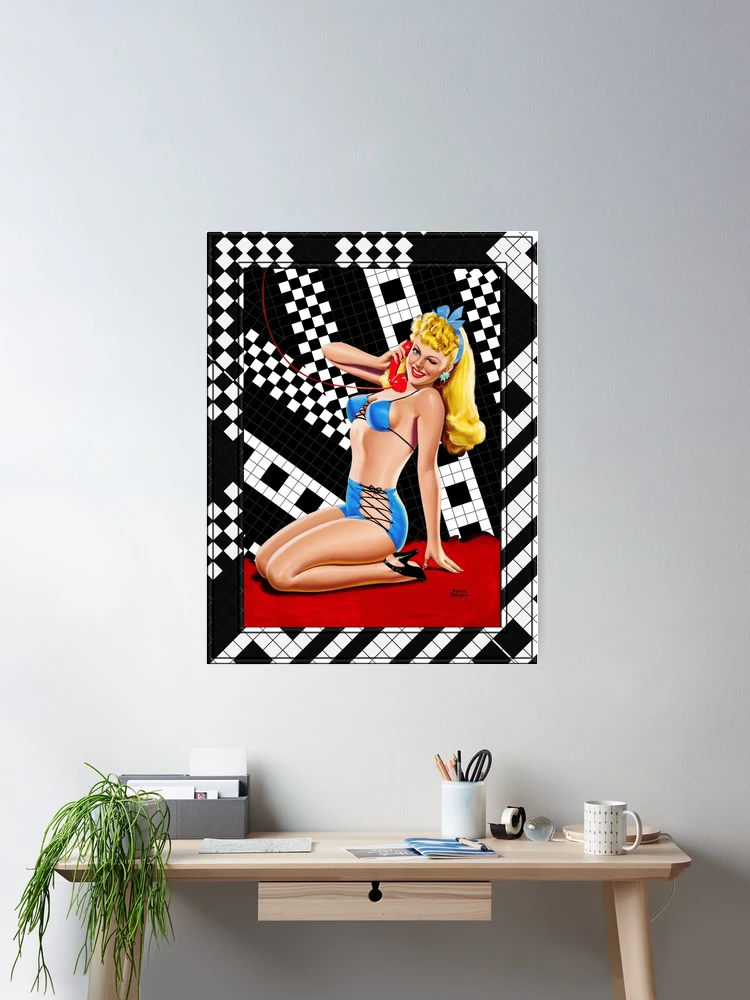
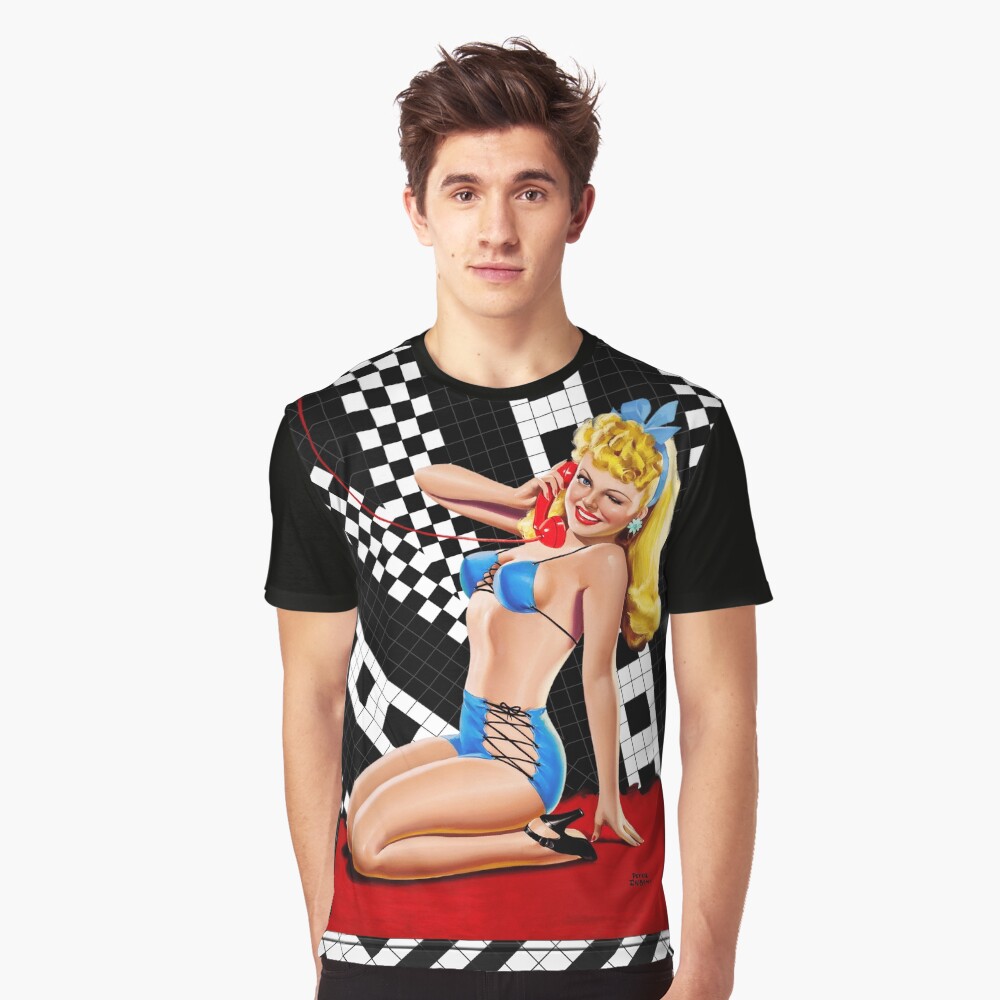
Im Herzen von “Die Rote Hotline” lies a playful and coquettish depiction of a young blonde woman. Her golden hair cascades in carefully stylized waves, adorned with a large, cheerful blue bow that complements her swimsuit. The bright smile on her face, coupled with her winking eye, exudes an inviting charm, drawing viewers into the narrative. She holds a bright red telephone receiver, which lends the artwork its name and serves as a pivotal object within the composition.
The subject is dressed in a light blue bikini with black lace detailing. The high-waisted bottoms, characteristic of 1940s and 1950s fashion, are secured with crisscrossed laces, adding a touch of suggestive allure without compromising the overall playfulness of the scene. Her slender figure, accented by the pose, kneeling on a red carpet with one hand on the ground and the other holding the phone, demonstrates Driben’s skillful portrayal of anatomy and movement.
Background and Surrounding Objects
Der Hintergrund von “Die Rote Hotline” is a dazzling geometric checkerboard pattern, executed in stark black and white. This graphic, almost optical illusion-like design provides a modernist contrast to the soft, feminine figure in the foreground. The abstract background evokes a sense of energy and boldness, reinforcing the dynamic quality of the composition.
The red telephone cord playfully winds across the frame, connecting the subject to an unseen caller and injecting a sense of narrative intrigue. The phone itself, a vibrant red, stands out sharply against the monochrome and blue elements, acting as both a visual and thematic anchor.
The red carpet beneath the woman serves a dual purpose. It frames her pose while adding a warm, inviting tone to the composition. This patch of red balances the cooler tones of her attire and ties back to the telephone, creating a cohesive color scheme.
Stil und Technik
Driben’s work embodies the Golden Age of pin-up art, an era when illustrators captured an idealized, often cheeky depiction of femininity. His style is defined by bold colors, klare Linien, and a high level of polish that recalls the glossy advertisements and magazine covers of his time.
Im “Die Rote Hotline,” Driben’s use of light and shadow is subtle but effective. The glossy sheen on the telephone and the laces of the swimsuit adds a sense of texture and realism, while the soft shadows along the figure’s curves enhance her three-dimensionality. The artist’s attention to detail—such as the precise rendering of her glossy black heels or the subtle highlights in her hair—showcases his technical prowess.
Thema und Stimmung
Das Thema von “Die Rote Hotline” is lighthearted and playful, rooted in the optimism and cheeky humor that characterized mid-century pin-up art. The telephone introduces an element of storytelling, inviting viewers to imagine the conversation taking place. Is she flirting with a suitor? Sharing a laugh with a friend? The ambiguity allows for a range of interpretations, adding depth to the seemingly simple scene.
The mood is undeniably fun and flirtatious, yet it remains within the realm of innocent escapism. Driben’s pin-ups often walked the line between suggestiveness and wholesomeness, a balance that made them widely popular and accessible during their time. “Die Rote Hotline” ist keine Ausnahme, offering a playful fantasy that never veers into vulgarity.
Materialien und mittel
While the specific medium of this piece isn’t detailed here, Driben was known for his work in gouache and oil paints. These mediums allowed him to achieve the vibrant colors and smooth finishes seen in “The Red Hotline.” The level of precision in the lines and shading suggests that this artwork was originally created as an illustration, likely intended for print in a magazine, calendar, or poster.
Cultural Context and Legacy
“Die Rote Hotline” reflects the cultural zeitgeist of its era. Created during a time when pin-up art was at its peak, it embodies the idealized femininity and playful sensuality that appealed to audiences in the mid-20th century. Driben’s works were part of a broader movement that celebrated beauty, Glanz, and the allure of the everyday woman.
As a piece of pin-up art, “Die Rote Hotline” carries with it the legacy of a genre that influenced fashion, Werbung, and popular culture. Heute, it stands as a nostalgic reminder of a bygone era, appreciated both for its aesthetic qualities and its historical significance.
Abschluss
“Die Rote Hotline” by Peter Driben is a masterful example of mid-century pin-up art. Its captivating subject, bold design, and vibrant execution showcase the artist’s talent and creativity. Driben’s ability to combine playfulness with technical precision ensures that this artwork remains an enduring icon of its genre. It captures a moment in time when glamour and charm were celebrated, offering viewers a delightful glimpse into the world of vintage illustration.
Dies ist eine remasterte digitale Kunst-Reproduktion alter Meister eines gemeinfreien Bildes, das als verfügbar ist Metalldruck online.
Über den Künstler
Info unten von Wikipedia.org
Peter Driben wurde in Boston geboren, und er studierte an der Vesper George Art School, bevor er nach Paris zog 1925. Während des Unterrichts an der Sorbonne in 1925, er begann eine Reihe von sehr beliebten Federzeichnungen der Showgirls der Stadt.
Im März von 1934 Driben schuf sein erstes bekanntes Pin-up, das das Cover von La Paree Stories war; und von 1935, er produzierte Cover für Snappy, Pep, New Yorker Nächte, Französisches Nachtleben und Caprice.
Als Dribens Popularität in den späten dreißiger Jahren weiter zunahm, schuf er weitere Cover für andere Zeitschriften, darunter Silk Stocking Stories, Filmkarussell und echter Bildschirmspaß.
Dribens Karriere weitete sich auf die Werbung aus, als er Ende des Jahres nach New York zog 1936. Hier schuf er originale dreidimensionale gestanzte Schaufensterauslagen für Philco Radios, Cannon Badetücher, und die Bäckerei Weber.
Sein vielleicht berühmtestes Werk sind die Originalplakate und Werbegrafiken für The Maltese Falcon. Peter Driben war auch ein enger Freund des Verlegers Robert Harrison, und in 1941 er wurde beauftragt, Cover für Harrisons neues Magazin Beauty Parade zu produzieren.
Von da an malte Peter Hunderte von Covern für diese Veröffentlichung und für die anderen sieben Titel, die Harrison herausbringen sollte – Flirt, Flüstern, Spähen, Zwinkern, Augenfällig, Kichert, und Joker.
Driben veröffentlichte oft bis zu sechs oder sieben seiner Cover jeden Monat. Dribens Arbeit für Harrison machte ihn zu einem der bekanntesten und erfolgreichsten Pin-up- und Glamour-Künstler Amerikas. Kurz bevor er anfing für Harrison zu arbeiten, Driben hat den Künstler geheiratet, Schauspielerin und Dichterin, Louise Kirby.
Im 1944 ihm wurde die ungewöhnliche Gelegenheit geboten, für einen Pin-up-Künstler; das war der Art Director der New York Sun, ein Posten, den er behielt, bis 1946. Während des Krieges, Sein beliebtes Gemälde von amerikanischen Soldaten, die in Iwo Jima die Flagge hissen, löste eine beträchtliche Medienaufmerksamkeit aus.
Im 1956, Driben und Louise sind nach Miami Beach gezogen, wo er seine Ruhestandsjahre verbrachte, um Porträts zu malen (einschließlich eines von Dwight D. Eisenhower) und andere Kunstwerke, die von seiner Frau zu erfolgreichen Ausstellungen organisiert wurden. Driben starb in 1968, Louise in 1984.