

Sharing The News c1904
“Sharing The News,” creado en 1904 del reconocido pintor italiano Eugen von Blaas (1843 – 1931), is a captivating scene that masterfully combines realism with an emotional narrative. The painting is an exquisite example of Blaas’ skill in portraying everyday life, particularly the lives of women in the early 20th century. Through his meticulous attention to detail, vivid color palette, and masterful brushwork, he creates a scene full of life and warmth, filled with vibrant storytelling.
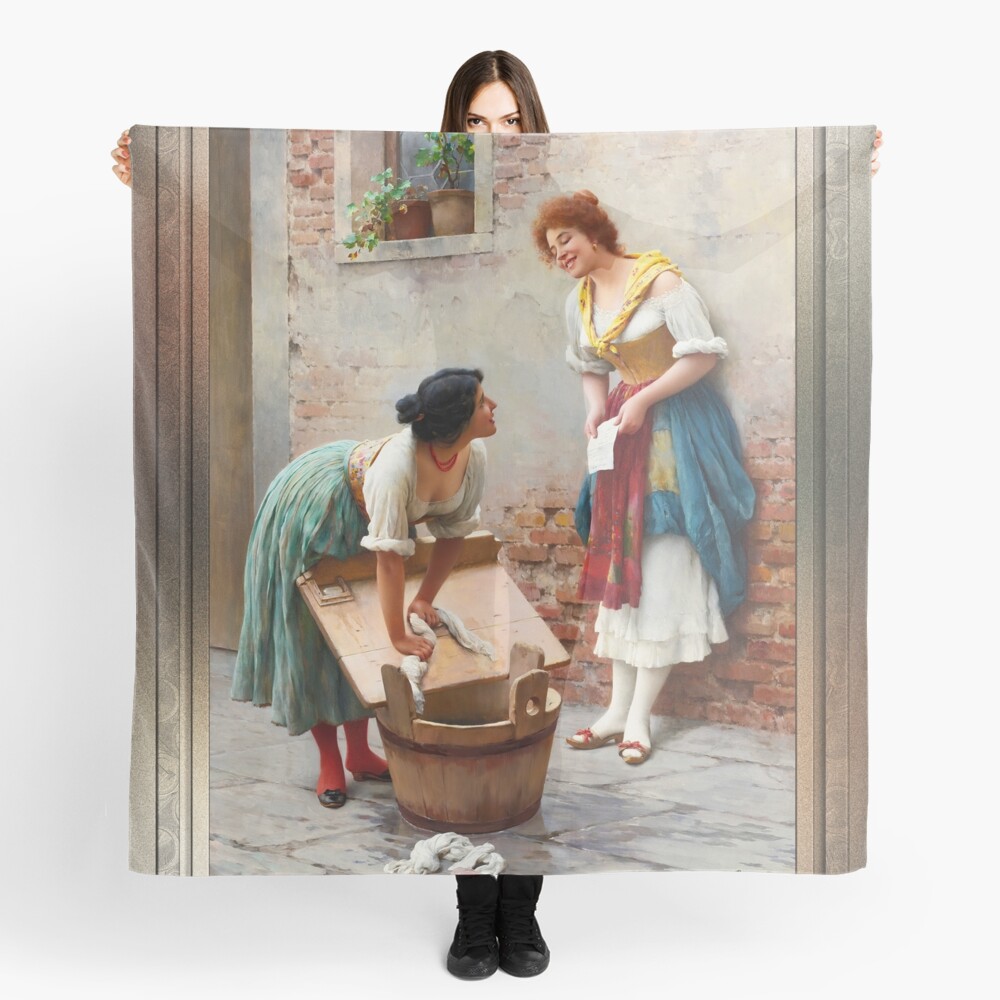
Tabla de contenido
Main Subject and Figures
The central theme of the artwork revolves around two women in an intimate moment of conversation. One woman is bending over a large wooden tub, presumiblemente para tender la ropa, mientras el otro está a su lado con una expresión de diversión o deleite.. La mujer de la izquierda, ocupado en una tarea doméstica, Se la representa con un vestido modesto pero vibrante con una blusa holgada., tipico de la epoca. Su cabello oscuro está recogido, y su postura sugiere una sensación de modestia o quizás humildad en el acto de hacer las tareas del hogar.. Sus pies descalzos están plantados firmemente sobre el suelo adoquinado., añadiendo realismo a su interpretación.
la segunda mujer, quien esta a la derecha, es retratado con una conducta vivaz y enérgica. Está vestida con un traje igualmente colorido que refleja la vitalidad y el dinamismo de la época.. El atuendo de la mujer consiste en un chal amarillo sobre sus hombros., combinado con una falda fluida que combina varios colores, incluido un rojo intenso, azul, y blanco. Su expresión animada, resaltada por su cabeza ligeramente inclinada y una amplia sonrisa., sugiere que está compartiendo una buena noticia con la otra mujer. en sus manos, ella sostiene un pedazo de papel, probablemente una carta o mensaje, indicando que la noticia se comparte por escrito, añadiendo un elemento de anticipación y curiosidad.
La interacción entre las dos mujeres es fundamental para la composición., con el lenguaje corporal y las expresiones faciales enfatizando la calidez y familiaridad entre ellos.. La figura inclinada, quien parece estar en el acto de escuchar, Se relaciona con el narrador de una manera que transmite atención y alegría.. La escena captura los matices de las emociones humanas., offering a glimpse into the personal world of these women during this period.
Objetos y materiales
The scene is set in a quaint outdoor courtyard, with rustic architectural elements that reinforce the sense of domestic life. A simple wooden tub, with laundry spilling out, occupies the foreground of the image. The tub is made from rough-hewn wood, suggesting the utilitarian nature of the objects involved. Cercano, laundry is scattered across the stone floor, including long lengths of rope and a few garments. The women’s task is clearly connected to their domestic responsibilities, yet the inclusion of the letter and the casual atmosphere gives a sense of lightness and joy to the scene.
En el fondo, a brick wall with small windows and a few scattered potted plants further grounds the setting in a traditional, rustic environment. The potted plants add a touch of life to the otherwise earthy and practical surroundings, helping to contrast with the more serious undertones of the labor-intensive task at hand. These potted plants, which are lush and green, further enhance the feeling of warmth and natural beauty, softening the more mundane aspects of the domestic chore.
Terreno y fondo
The terrain in the artwork features a cobbled stone path, weathered and worn by use. The stones appear smooth, rounded, and uneven, creating a rustic charm that is typical of many rural or traditional European settings. The stone path is likely part of an open-air courtyard or alley that leads toward a larger structure, possibly a home or a communal area. The light filtering through the surrounding plants and the diffuse sunlight suggest a bright, clear day, which adds an overall feeling of positivity to the scene.
The background is dominated by the aged brick wall of the building, where a single window with a simple pot of green plants is framed neatly in the composition. The window provides a hint of depth to the scene, creating a sense of an enclosed space while also allowing the viewer to perceive the broader world outside. The bricks are rendered with a realistic touch, their textures and subtle color variations showing Blaas’ skill in capturing light and shadow, lending the wall a sense of history and weathering.
Estilo y técnica artística
Eugen von Blaas’ painting style is deeply rooted in academic realism, Y esta pieza no es la excepción. The precise rendering of figures and objects, combined with his use of light and shadow, demonstrates his technical skill. Blaas was known for his ability to create lifelike textures, and here, he employs his mastery in the depiction of fabric, tonos de piel, y elementos naturales. The folds of the women’s garments are beautifully executed, capturing both the movement of the fabric and its tactile quality. Similarmente, the laundry in the wooden tub is painted with great attention to detail, its white fabric contrasting against the rich colors of the women’s attire.
The warm palette used in the piece enhances its lighthearted, joyful atmosphere. The bright colors of the women’s dresses—yellow, rojo, blue—serve as a visual focal point that draws the viewer’s eye. These vivid colors are contrasted with the earthy tones of the stone ground and brick wall, grounding the composition in a more rustic, everyday setting. The background’s muted tones and the women’s dynamic, vibrant costumes contribute to a balanced composition.
The mood of the artwork is one of shared happiness, domestic intimacy, and camaraderie. It speaks to the close relationships women formed during the early 20th century, particularly in domestic settings where the act of sharing news—be it joyous or trivial—was an important part of social life. Blaas captures this moment of connection between the two figures, transforming an everyday chore into a narrative of friendship and community.
Conclusión
“Sharing The News” by Eugen von Blaas stands as a testament to the artist’s ability to portray the subtleties of human interaction and domestic life. The scene is full of warmth, alegría, and a sense of shared experience. Through his skilled technique, Blaas gives the viewer an intimate glimpse into a world of vibrant color, emotional connection, and traditional tasks, all while masterfully capturing the essence of early 20th-century life.
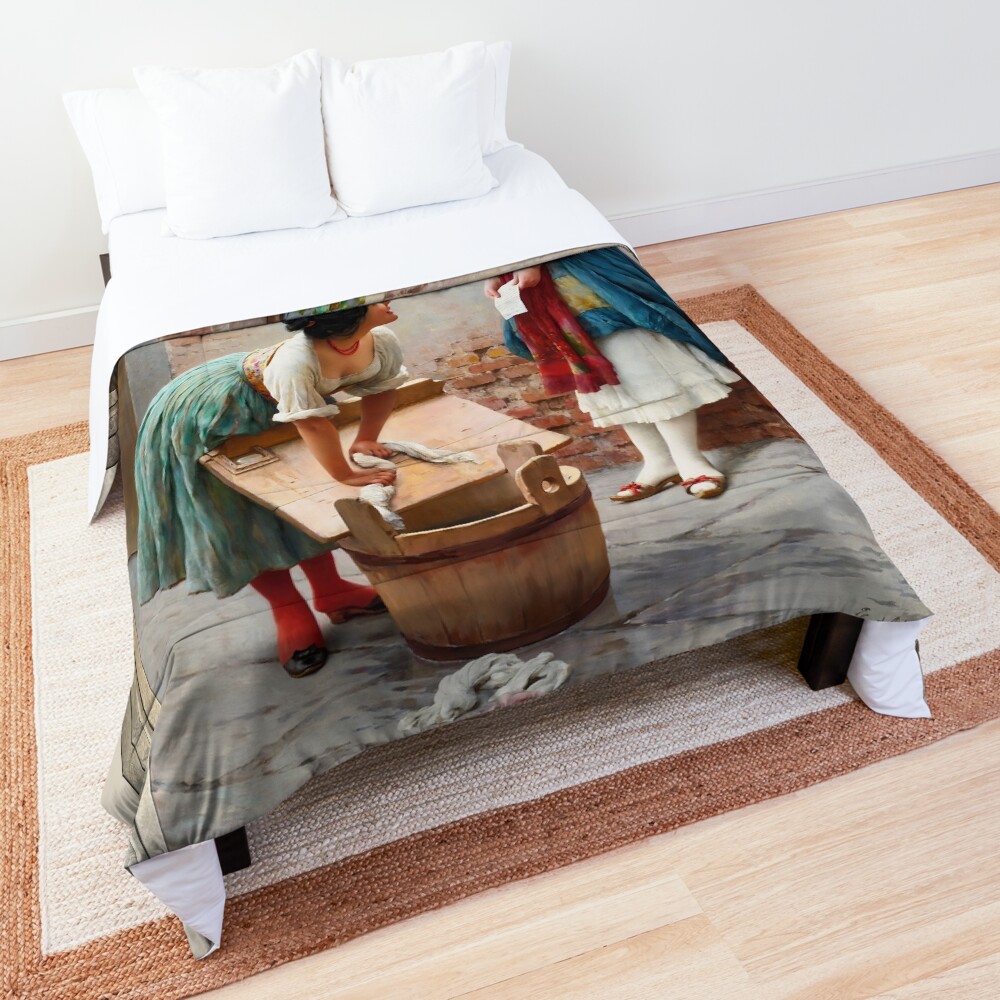
Esta es una reproducción de maestros de arte digital remasterizado de una imagen de dominio público que está disponible para la compra en línea en una variedad de formatos de materiales, incluidas las impresiones de lona, impresiones acrílicas, impresiones de metal, impresiones de madera, láminas enmarcadas, carteles, y como arrollado lienzos en una variedad de tamaño de 12 pulgadas a 72 pulgadas según el tamaño de la obra de arte real y la tienda de impresión bajo demanda en la que elija comprar la obra de arte.
Biografía del artista
Información a continuación derivada de Wikipedia.org
Eugen von Blaas nació en Albano, cerca de Roma, de padre tirolés y madre italiana. su padre carlos, también pintor, fue su maestro. Su madre, agnesina auda, era una mujer romana acomodada. La familia se mudó a Venecia cuando Karl se convirtió en profesor en la Academia de Venecia.. A menudo pintaba escenas en Venecia., pero también retratos y pinturas religiosas.
Entre sus obras se encuentran La forma nupcial en la sacristía.; Bingo en Campielo en Venecia; Una escena de títeres en una escuela.; y la nineta. El crítico de arte Luigi Chirtani, cuando la pintura se exhibió en la Mostra Nazionale di Venezia, lo describió como hermoso, halagador, bonito, acariciado, limpiado, pulido, lavandera en un cuadro del Sr.. Vejiga, el retratista favorito de los grandes aristócratas venecianos, vestido con rasos de gala, joyas brillantes, peinados de los ricos.
Sus imágenes de época coloridas y bastante teatrales de la sociedad veneciana, p.ej. En el balcón (1877; Colección privada), eran bastante diferentes en comparación con los delicados pasteles y grabados de los patios, Balcón y canales de la Venecia moderna..
Eugenio de Blaas’ Las pinturas fueron expuestas en la Royal Academy., Sociedad de Bellas Artes, New Gallery y Arthur Tooth and Sons Gallery en Londres, y también en la Walker Art Gallery de Liverpool