

Dos malas conciencias (Dos conciencias culpables) c1918
Creado en 1918 del pintor austriaco Karl Reichert, “Dos malas conciencias” (traducido como “Dos conciencias culpables”) Se erige como una obra cautivadora que resume la esencia del retrato de finales del siglo XIX y principios del XX., demostrando la habilidad de Reichert para retratar la inocencia y la introspección moral.
Nacido en 1836 y pasando 1918, Reichert era conocido por su meticuloso enfoque del realismo., lo cual es evidente en esta pieza. La pintura representa a una joven sentada en un taburete de madera., acompañado de un perro, en un íntimo, Escena doméstica tranquila que evoca un sentimiento de inocencia y culpa., insinuado por el título.
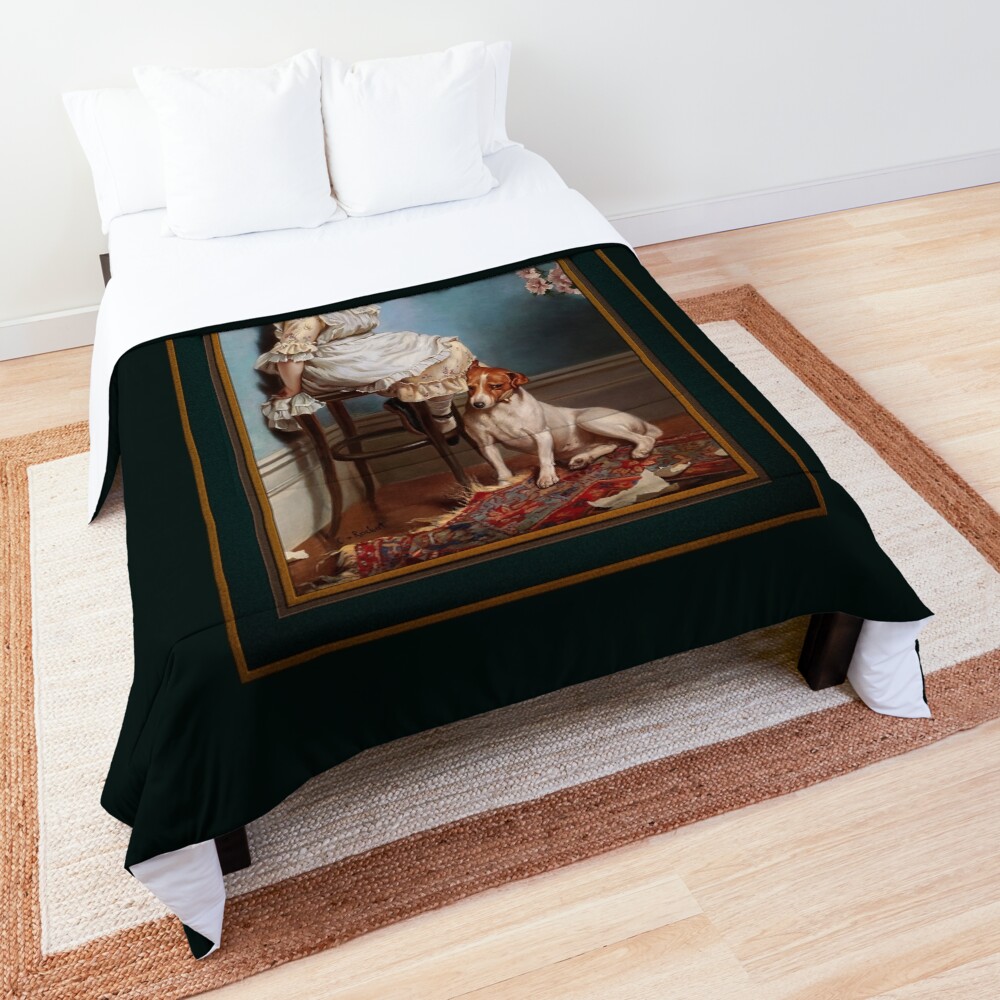
Tabla de contenido
El tema principal: Una niña y su perro
The central subject of this painting is a young girl, appearing no older than six or seven years, draped in a simple yet delicate white dress. The dress is adorned with soft embroidered floral patterns along the sleeves, highlighting the craftsmanship of the time. The girl’s hair is a chestnut brown, softly curled around her face, and she sits with a slight stoop, her posture suggesting a moment of quiet contemplation.
Her expression is distant, her gaze turned slightly away from the viewer, Como si hubiera perdido en el pensamiento. This subtle expression of introspection invites the viewer to question her thoughts. The gentle ruffles of her dress and the soft folds of the fabric are meticulously rendered, showcasing Reichert’s keen attention to detail in fabric textures, a hallmark of his realist style.
Sitting at her feet, a dog lies calmly beside her. The dog is painted with remarkable lifelike precision, its fur soft and almost tangible, contributing to the painting’s realistic portrayal of the domestic scene. The dog’s posture and its gaze directed at the girl enhance the sense of companionship and trust between the two, underlining the girl’s youthful innocence. sin emabargo, the dog’s subtle positioning, resting at her feet while she sits in apparent guilt, also hints at a shared experience or secret between them.
Objetos y detalles: Simbolismo de la culpa y la inocencia
The background of the painting is minimalist but evocative. A soft blue wall frames the scene, imbuing the piece with a calm and serene atmosphere. sin emabargo, the colors are not entirely tranquil; the soft pastel tones of the background contrast with the unsettling mood suggested by the girl’s body language and the title of the piece.
The light falls gently on the girl’s face and body, accentuating the innocence conveyed through her youthful form and delicate features, while the shadows along the edges suggest an underlying tension in the scene.
A small rug is partially visible beneath the dog, lying in a slightly disheveled state. The rug is richly patterned, with intricate designs that hint at opulence, but it appears slightly crumpled, as though it had been disturbed, adding a layer of disorder to an otherwise neat and orderly setting.
This detail adds to the narrative of the painting, suggesting that something has happened, perhaps the child ha estado involucrado en alguna travesura o error, y la alfombra desordenada simboliza una alteración de la paz.. En la esquina inferior derecha de la imagen., También se puede notar un pequeño trozo de papel rasgado., insinuando además la posibilidad de que la niña esté involucrada en un acto que ha causado angustia.
Adicionalmente, hay un leve rastro de flores rosadas en la parte superior derecha de la composición. Estas delicadas flores aportan un toque de naturaleza a la habitación., su suave, Cualidad efímera que acentúa la inocencia de la escena.. sin emabargo, como los demás elementos de la composición, parecen silenciados, casi como si se estuvieran desvaneciendo o marchitando, reflejando la posible pérdida de inocencia o la carga de culpa que la niña puede estar experimentando.
El terreno y los materiales: Un entorno doméstico
El escenario del cuadro es sin duda doméstico., with a simple interior that provides an intimate glimpse into the private world of the subject. The floor is made of hardwood, polished to a soft shine, and the visible portion of the room, though not overwhelming in detail, speaks to the middle-class environment in which the girl lives. The simplicity of the room’s design, paired with the soft, muted palette of the background, evokes a quiet, unassuming space where the domestic life of the girl unfolds.
The materials used in the painting, óleo sobre lienzo, are traditionally employed by Reichert in his portraits and genre scenes. The oil medium allows for the blending of light and shadow with exceptional precision, creating a three-dimensional effect that brings the figures and textures to life.
This technique is particularly effective in the rendering of the girl’s skin, the softness of her face, and the realistic quality of the dog’s fur. The way Reichert has captured these textures, along with the luminous glow of the lighting, suggests the artist’s deep understanding of both human and animal forms, as well as his ability to imbue each with emotional depth.
El tema: Inocencia y culpa
The title of the painting, “Dos malas conciencias,” que se traduce en “Dos conciencias culpables,” serves as the key to unlocking the deeper meaning behind the scene. A primera vista, the girl appears innocent, lost in her thoughts, but the inclusion of the torn rug, the disturbed space, and the melancholic expression on her face all suggest a sense of guilt.
The girl may be reflecting on an action she has taken or a consequence of a decision she made, possibly in connection with the dog or the disruption of the tidy space. The juxtaposition of the dog, calm yet at her feet, further hints at a shared awareness between the two characters, strengthening the idea of an unspoken bond and mutual understanding of the mistake or wrongdoing.
The emotional complexity of the piece is heightened by the subtle, almost imperceptible nature of the guilt the girl feels. Reichert does not make her guilt obvious or overt. En lugar de, it is suggested through the quiet posture, the disordered room, and the pensive expression. This emotional undercurrent of the piece draws the viewer into a moment of silent reflection, where guilt and innocence exist in a fragile balance.
Conclusión: A Portrait of Moral Reflection
“Dos malas conciencias” is a striking portrayal of innocence intertwined with guilt, captured in a quiet, domestic moment. A través de su dominio del detalle y la luz., Karl Reichert invita al espectador a explorar temas de introspección moral y las tranquilas complejidades de la infancia.. La postura contemplativa de la niña., su relación con el perro, y la ligera perturbación en su entorno sirven para enfatizar la profundidad emocional de la escena.. En este trabajo, Reichert ejemplifica el poder del retrato para capturar no sólo la semejanza física de un sujeto sino también el peso emocional y psicológico que conlleva..
Esta es una reproducción de maestros antiguos de arte digital remasterizada de una imagen de dominio público que está disponible como lienzo enrollado en línea.