

Se sil String tegearre mei dy
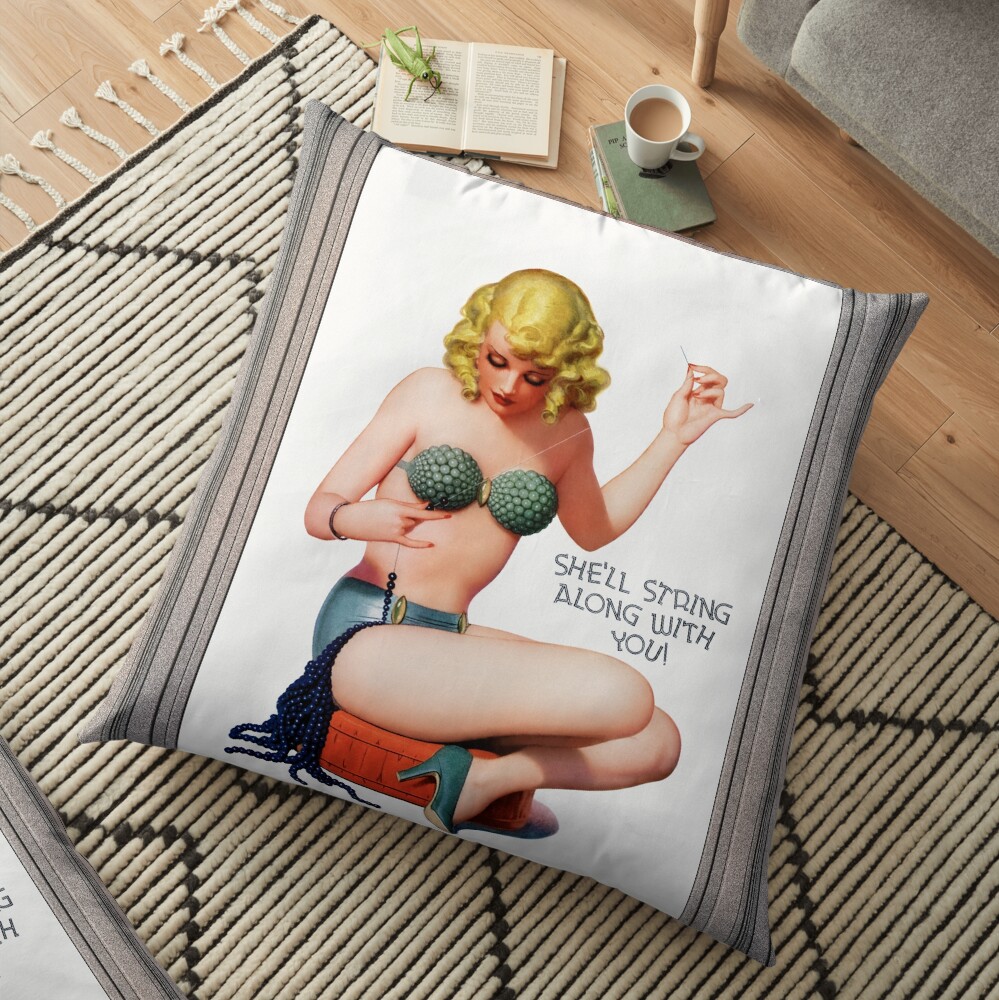
Enoch Bolles, in ynfloedrike Amerikaanske keunstner (1883–1976), makke it skilderij Se sil String tegearre mei dy yn 'e iere oant mids 20e ieu. It wurk vangt in momint fan boartlike flirtaasje en lichtsinnige sensualiteit, it ynkapseljen fan de geast fan 'e Jazz Age en de glamour fan 1920-reklamekunst. Dit skilderij wjerspegelet Bolles’ affiniteit foar pin-up art, dy't faak ôfbylde alluring froulju yn oerdreaun, soms komysk, poses bedoeld om in gefoel fan sjarme en ûnskuld op te roppen, tinted mei suggestiveness. It algemiene gefoel fan it byld is ien fan sawol humor as ferlieding, it oanbieden fan in yntime, mar grillige blik yn 'e fisuele kultuer fan it tiidrek.
Ynhâldsopjefte
Haadûnderwerp en komposysje
Yn it hert fan it skilderij is in frou sittend op in pluche, reade cushion, sjocht nei de string fan kralen dy't se troch in naald stekt. Har ekspresje is ien fan rjochte konsintraasje, dochs is der in ûnderstream fan boartlike belutsenens, as is se bewust fan de oandacht fan de sjogger. It ûnderwerp wurdt werjûn yn sêft, waarme toanen dy't har skientme aksintuearje - har blonde krullen falle om har skouders, framing in gesicht dat is sawol serene en útnoegjend. Har posysje, wylst sierlik, is tafallich, jout in gefoel fan natuerlikens oan har lykwicht.
Se is klaaid yn in reveal outfit makke fan grutte, sferyske kralen dy't har boarsten bedekke en in bypassende riem makke fan kralen dy't har taille omsingele. Dit ûntwerp fersterket de sensualiteit fan 'e figuer sûnder it ûnderwerp te eksposearjen, behâld fan in boartlike noch smaakfol aura.
De komposysje balansearret knap de frijmoedigens fan har klean mei de sêftens fan har hâlding, suggerearret in njonkelytsen tusken allure en ûnskuld. De heldere kleuren brûkt yn 'e kralen meitsje in libbendich kontrast tsjin har ljochte hûd en de sêfte wyt en crèmes fan' e eftergrûn. De string fan kralen, it objekt fan har oandacht wêze, ferbynt sawol de direkte aksjes fan it ûnderwerp as it oerkoepeljende tema fan it skilderij - belutsenens, allure, en miskien sels in subtile útnoeging foar ynteraksje.
Foarwerpen en symbolisme
De kralen, sintraal yn de komposysje, binne sawol in letterlik as metafoarysk middel yn it keunstwurk. As de frou triuwt de kralen op in string, de hanneling wurdt symboalysk fan ferbining en kontinuïteit. Beads, faak ferbûn mei fersiering en froulikens, nim hjir de rol op om wat nijs te meitsjen - in tekenrige dy't úteinlik foltôge wurde sil. Dizze hanneling fan skepping spegelet de konstruksje fan betsjutting fan 'e sjogger, it each fan 'e sjogger te keppeljen mei de sensuele beweging fan it ûnderwerp en har útnoegje om diel te wêzen fan it proses.
De eftergrûn is in ûnreplik wyt, wat helpt om it ûnderwerp op 'e foargrûn te isolearjen, jout de sjogger gjin ôflieding oars as har, de kralen, en de stille aktiviteit fan naaien. Dizze skjinne romte om har hinne bringt in gefoel fan suverens en beljochtet de ienfâld fan it toaniel. De sêfte, almost ethereal quality of the background contrasts with the tactile, almost tangible texture of the beads, emphasizing the juxtaposition of material versus immaterial.
Tematyske ferkenning
It tema fan Se sil String tegearre mei dy can be interpreted as a playful yet suggestive invitation. The use of the phrase “She’ll String Along With You,” displayed in bold lettering across the bottom of the frame, is a direct engagement with the viewer. De term “string along” can refer both to the literal activity of threading beads and to the colloquial expression of leading someone on in a flirtatious manner. Bolles masterfully plays on this double meaning, enhancing the work’s flirtatious and teasing nature.
The artwork’s flirtation is understated yet undeniable. The figure’s semi-nude posture is not overtly sexual but instead rendered in a manner that suggests allure through subtlety. The woman’s modesty in her pose and attire invites curiosity without being crude, echoing the sophisticated yet liberated sexuality of the 1920s. This period, which was marked by significant social change, embraced a new form of womanhood, one that was confident, independent, and playful, as reflected in Bolles’ artwork.
Artistike styl en ynfloed
Bolles’ style in Se sil String tegearre mei dy is grounded in the Art Deco movement, a popular visual style of the 1920s and 1930s. His use of clean lines, libbene kleuren, and stylized forms aligns with the elegance and modernity of the period.
The smoothness of the figure’s curves and the minimalistic backdrop are reminiscent of the streamlined aesthetic associated with Art Deco, dy't sawol skientme as effisjinsje priizge yn ûntwerp. De sêfte, platte kleuren en de fokus op de frou syn figuer foarbyld Bolles’ mooglikheid om kommersjele keunst te kombinearjen mei prinsipes fan moaie keunst.
Bolles stie bekend om syn pin-up keunst, in sjenre dat faak kombinearre kommersjele reklame mei artistike technyk. Yn dit wurk, der is in dúdlik sin fan beide, as de frou ferskynt klear foar in produkt reklame, dochs wurdt se werjûn mei de graasje fan in moaie keunstfiguerstúdzje. Dizze krusing fan kommersjele en artistike ynfloed wjerspegelet Bolles’ bydrage oan sawol keunst as reklame, dêr't de wrâlden fan keunst, ûntwerp, en populêre kultuer botsten faak.
Stimming en sfear
De algemiene stimming fan Se sil String tegearre mei dy is boartlik en útnoegjend. De rjochte ekspresje fan 'e frou yn kombinaasje mei de humor dy't yn' e titel ymplisearre is, soarget foar in ljochtsinnich, hast mislike sfear. De ynteraksje tusken de figuer en de sjogger is yntime, mar net konfrontearjend.
Der is in gefoel fan wille yn 'e manier wêrop de frou presintearre wurdt, se is net gewoan in ûnderwerp om nei te sjen, mar in aktive dielnimmer oan de skepping fan it toaniel. It wurk ropt in gefoel fan tafallige allure op, omjûn troch it begryp fan útnoeging en flirtaasje, set tsjin de gruttere kulturele ferskowing fan 'e jierren 1920 dy't mear befrijde en iepenere útdrukkingen fan froulikens fierde.
Konklúzje
Yn Se sil String tegearre mei dy, Enoch Bolles vangt in momint fan delikate sensualiteit en boartlike sjarme. Troch it brûken fan libbene kleuren, glêde linen, en in ienfâldige, mar suggestive komposysje, hy noeget de sjogger út yn in wrâld dêr't skientme en humor tegearre bestean. De frou yn it sintrum fan it skilderij, dwaande mei de stille died fan it trienjen fan kralen, represents the fusion of art and advertisement, femininity and power, all wrapped in the glamorous aesthetic of the 1920s. Bolles’ ability to capture both innocence and allure within the same frame speaks to the dual nature of the period itself, one marked by both a sense of freedom and the tensions inherent in modern life.
Dit is in remastered digitale keunst âlde masters reproduksje fan in byld yn it iepenbier domein dat is beskikber as in canvas print online.
Artist Bio
Info hjirûnder ôflaat fan Wikipedia.org
Enoch waard berne ta parfumchemist Enoch Bolles, Jr en Catherine Keep yn Marion County, Florida op maart 3, 1883.
Hy studearre oan 'e New York National Academy of Design (is. 1825), en publisearre syn earste yllustraasje op 'e omslach fan humortydskriften; Rjochter en Puck yn 1914; bekend wurden troch it yllustrearjen fan it pulptydskrift Film Fun.
Dan yn 1923 hy waard de eksklusive cover artyst foar Film Magazine en soe bliuwe yn dy posysje oant 1943, doe't it tydskrift it slachtoffer waard fan de kampanje fan de doetiidske postmaster-generaal tsjin sljochtsinnich materiaal.
Yn 'e tiid fan Enoch mei Film Fun Magazine makke hy 200 stikken cover art, en op syn minst 300 ekstra covers foar oare pittige pulp tydskriften, ynklusyf Breezy Stories, Pep en New York Nights.
Enoch's moanlikse opstelling fan 'e All-American Beauty presys posearre yn ferbyldingryk kostúm is ferantwurdlik foar it definiearjen fan' e keunst fan 'e Amerikaanske Pin Up Illustration. Hy wie ek in alsidige yllustrator dy't advertinsjekeunst makke foar in protte produkten fan 'e tiid, lykas Sun-Maid Raisins en Zippo Lighters.
Yn de âldens fan 60, yn 1943 Enoch moast syn profesjonele karriêre beëinigje fanwegen psychologyske problemen, en waard him foar it grutste part fan syn libben beheind ta Greystone Park Psychiatric Hospital yn New Jersey; mar hy bleau te skilderjen yn opdracht portretten en foar persoanlik genot.
Hy waard úteinlik frijlitten út it Greystone Park Psychiatrysk Sikehûs yn 1969 en hy stoar sân jier letter fan hertfalen yn 'e âldens fan 93.