

Skizzieren der Ruinen der Abtei Tintern
Skizze der Ruinen der Tintern Abbey vom britischen Maler Samuel Colman (1780 – 1845); Porträtmaler, Zeichenmeister und Maler der Romantik, Biblische und Genre-Szenen, in denen sein Glaube im Mittelpunkt seiner Kunstwerke stand.
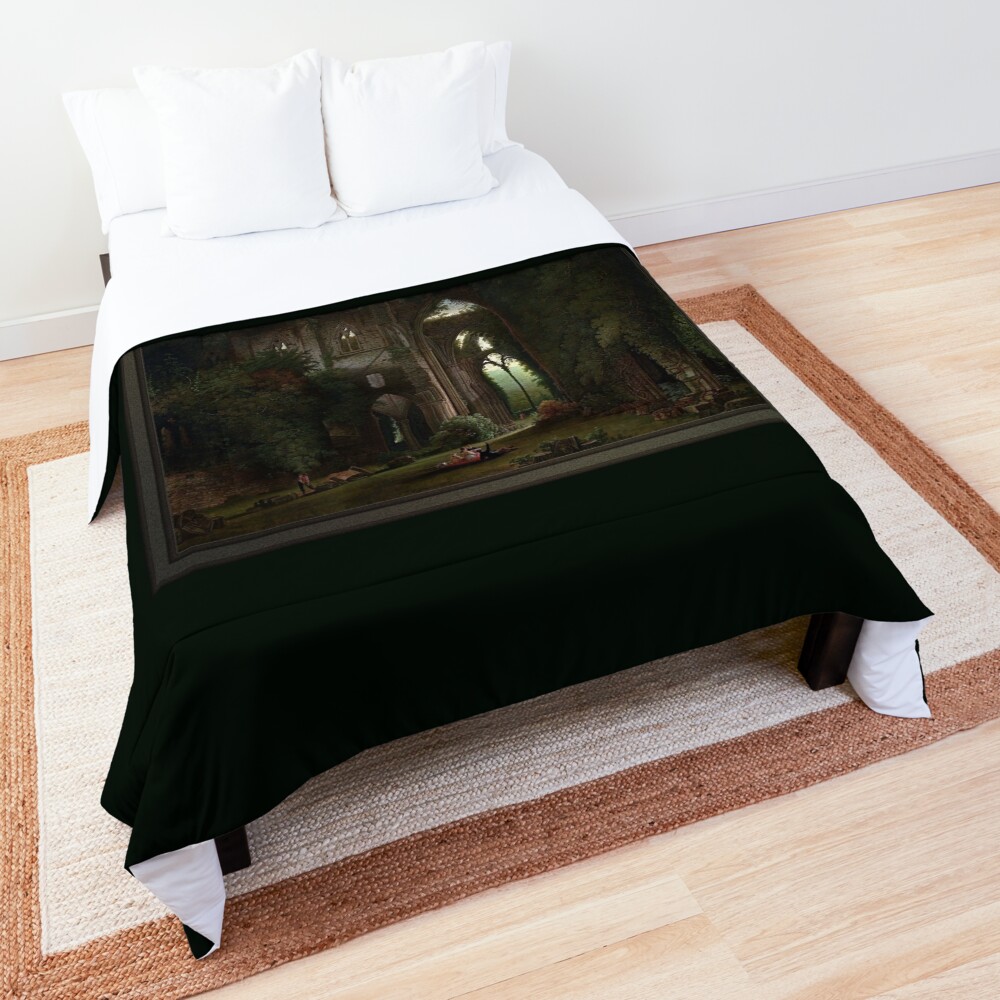
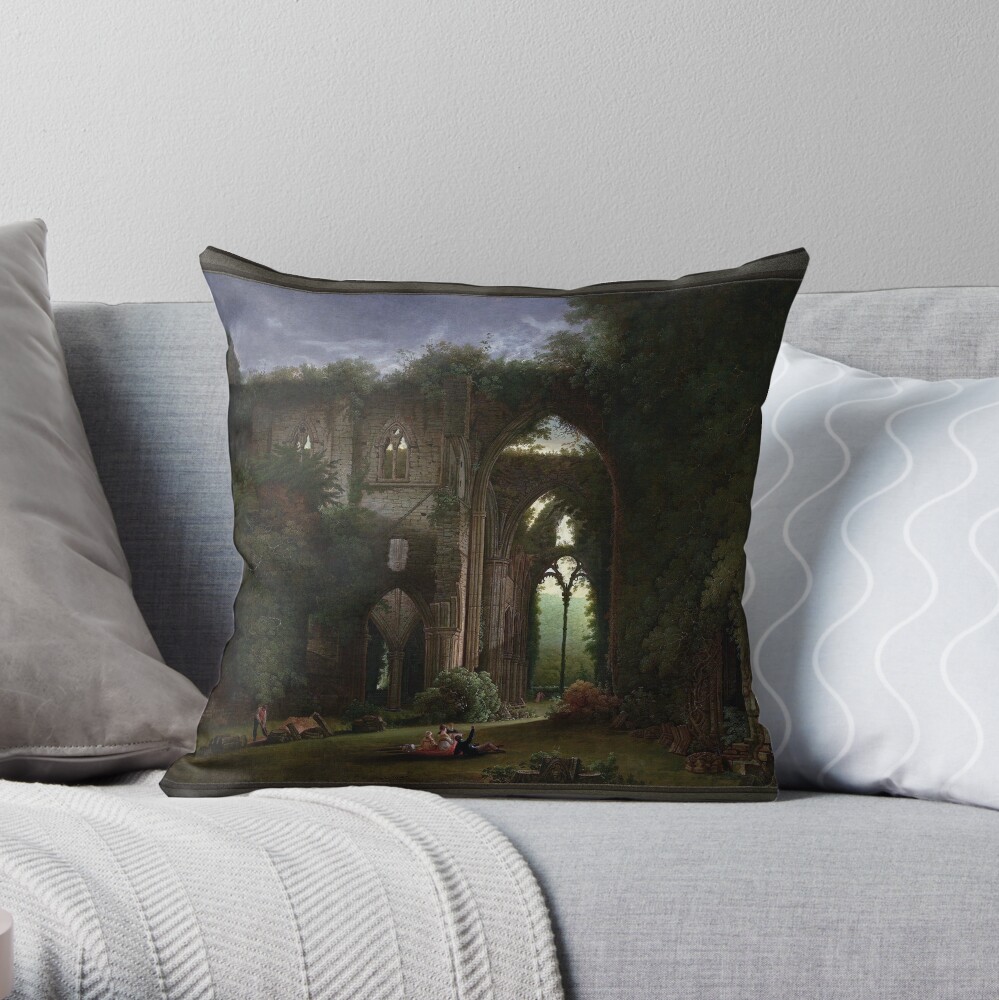
Ein wunderschönes Landschaftsgemälde der Ruinen von Tintern Abbey, während eine Familie im Gras des Geländes sitzt und ein Picknick macht, während ein Arbeiter sich mit der Instandhaltung des Geländes abmüht, und wir können auch zwei weitere Menschen in der Ferne sehen, die an einem Torbogen vorbeischlendern.
Das Bild ist üppig mit viel Grün und Bäumen, die die Ruinen bedecken, und die Verwendung von Licht und Schatten sorgen für ein ideales malerisches Bild.
Dies ist eine retuschierte digitale Kunst-Reproduktion alter Meister eines gemeinfreien Bildes, das als erworben werden kann gerollter Druck.
Info unten von Wikipedia.org
Geboren in Portland, Maine, Als Kind zog Colman mit seiner Familie nach New York City. Sein Vater eröffnete eine Buchhandlung, Anziehung einer gebildeten Kundschaft, die möglicherweise Colmans künstlerische Entwicklung beeinflusst hat
Es wird angenommen, dass er kurzzeitig bei dem Maler der Hudson River School, Asher Durand, studiert hat, und er stellte seine erste Arbeit an der National Academy of Design in aus 1850.
Von 1854 he had opened his own New York City studio. The following year he was elected an associate member of the National Academy, with full membership bestowed in 1862.
His landscape paintings in the 1850s and 1860s were influenced by the Hudson River School, an example being Meadows and Wildflowers at Conway (1856) now in the collection of the Frances Lehman Loeb Art Center at Vassar College.
He was also able to paint in a romantic style, which had become more fashionable after the Civil War. One of his best-known works, and one of the iconic images of Hudson River School art, is his Storm King on the Hudson (1866), now in the collection of the Smithsonian American Art Museum in Washington, DC.
Colman was an inveterate traveler, and many of his works depict scenes from foreign cities and ports. He made his first trip abroad to France and Spain in 1860–1861, and returned for a more extensive four-year European tour in the early 1870s in which he spent much time in Mediterranean locales.
Colman often depicted the architectural features he encountered on his travels: cityscapes, castles, Brücken, Bögen, and aqueducts feature prominently in his paintings of foreign scenes. Im 1870 and again in the 1880s he journeyed to the western United States, painting western landscapes comparable in scope and style to those of Thomas Moran.
Colman’s artistic activities became even more diverse late in life. By the 1880s he worked extensively as an interior designer, collaborating with his friend Louis Comfort Tiffany on the design of Samuel Clemens’ Hartford home, and later on the Fifth Avenue home of Henry and Louisine Havemeyer.
He also became a major collector of Asian decorative objects, and wrote two books on geometry and art, eine davon trug den Titel Nature's Harmonic Unity, die andere mit dem Titel Proportionalform. Colman starb in New York City in 1920.