

St. Sebastian
St. Sebastian Paulus Pontius grabatzaile flandriarrarena (1603 – 1658) Gerard Seghers margolari flandriarraren margolan baten ondoren (1591 – 1651); baita kartografo ospetsu bat ere.
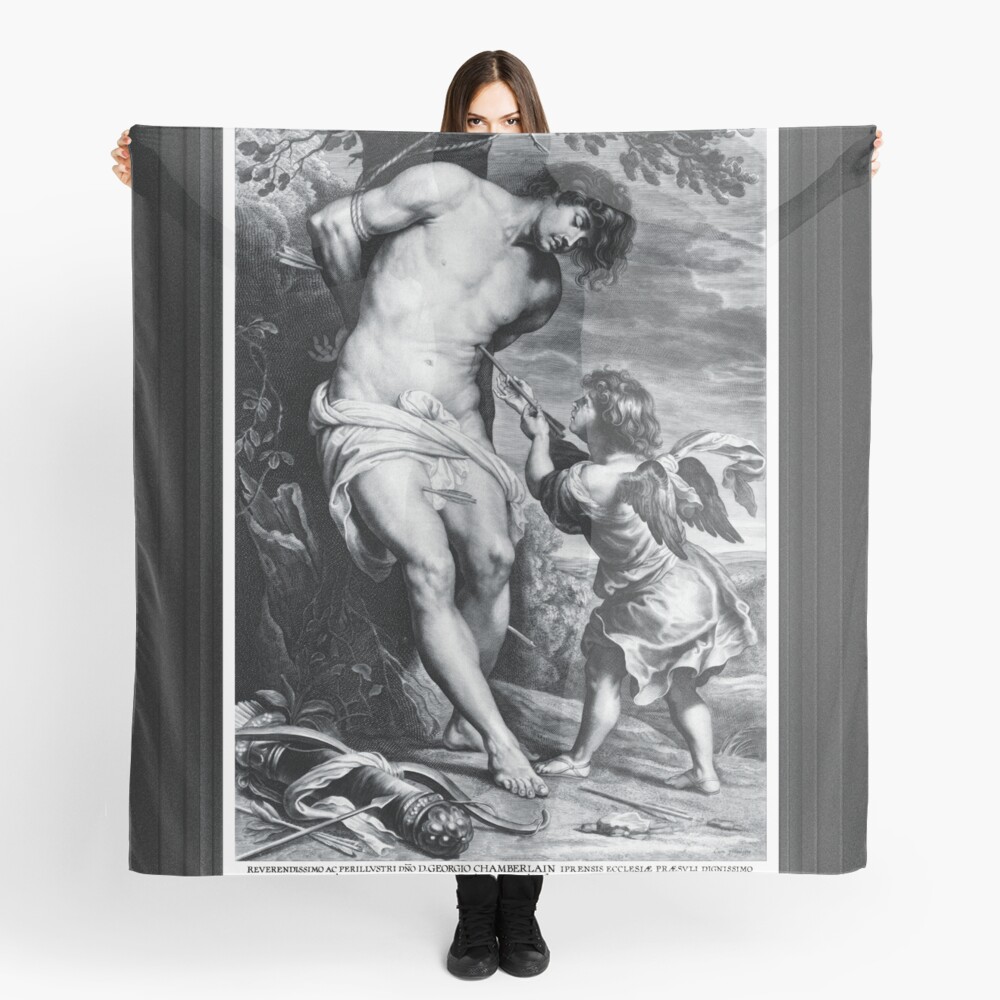
Eszena honek martiria erakusten du St. Sebastian; Erromatar Pretorioko Guardia bat izan zen, kristaua zela aurkitu zena, beste soldadu erromatarrak kristautasunera bihurtzen ari zena., exekuzioa egin eta hiltzat utzi zuten.
Eskuak bizkarrean lotuta eta goiko besoen inguruan soka batekin lotuta eta buru gainean dagoen zuhaitz-adarrarekin ageri da..
Geziak ditu beheko bularretik ateratzen, bere eskuineko goiko izterrean, bere ezkerreko shin (this arrow is partly broken off and part of hit is on the ground in front of him), and his right upper forearm; when a child angel appears before him and begins pulling out the arrow that is lodge in his lower chest.
On the ground is a fancy quiver with a cloth draped across it, as well as a bow with an arrow on leaning on the bottom portion of the quiver that is filled with arrows.
Behind him are some additional bushes and plants and a vast terrain makes up the background with large clouds above the land.
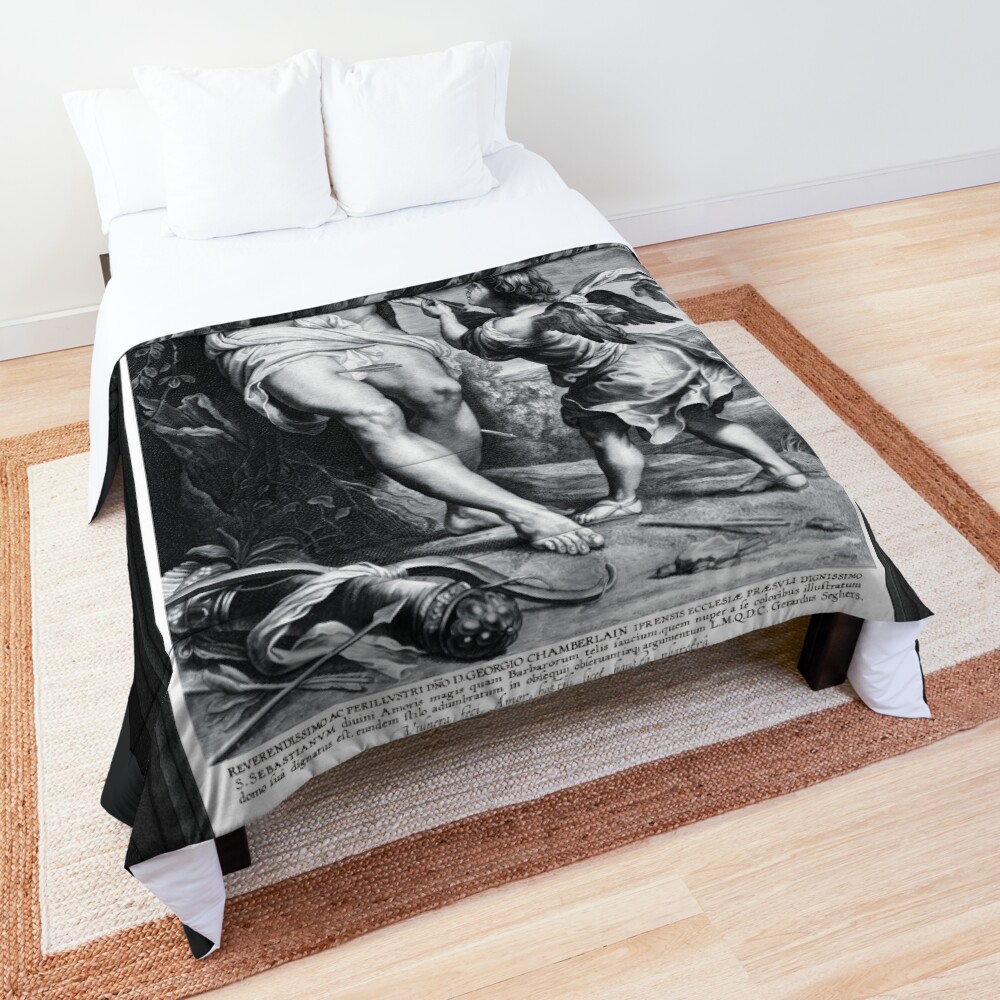
There is also Latin writing on the bottom of the engraving that is about the scene we are viewing.
Domeinu publikoko irudi baten erreprodukzioa da ijetzitako mihise inprimatua sarean.
Artistari buruz
Paulus Pontius kartografo eta grabatzaile flandriarra izan zen XVI. mendearen amaieran eta XVII., Behe Herrialdeetako mapa eta estanpa zehatzengatik ezaguna egin zena, Europako ipar-mendebaldeko kostaldeko eskualdeak zirenak, hori Belgikak osatzen zuen, Herbehereak, eta Luxenburgo; bereziki Anterwp hiriarena, hori da Belgikako Flandria eskualdeko probintzia bereko hiriburua; baita Abraham Ortelius Holandako Brabantiar kartografoarekin izandako lankidetzagatik ere (1527 – 1598), geografoa eta kosmografoa ere izan zena.
Holandako kartografiaren garapenean pertsonaia esanguratsua izan zen eta Europa osoan ezagutza geografikoa hedatzeko paper nabarmena izan zuen Esplorazio Aroan., 1400ean hasi eta 1600ean zehar jarraitu zuen, during the time when European nations began exploring the world.
Besides being a prominent cartographer, Paulus was also an accomplished engraver that created many religious and allegorical engravings in various style, including Mannerist, Baroque and Renaissance; producing works for illustrated books such as Bibles, prayer books, print scenes of religious and allegorical themes.
His work was well known for his skill in creating complex compositions filled with intricate details and vivid expressions; and he engraved many works after the works of the renowned painters of his time; esaterako: Flemish Painter Peter Paul Rubens (1577 – 1640), Belgian Painter Frans Floris (1517 – 1570), Belgian Painter Antoon van Dyck (1599 – 1641), Flemish Painter Jan Brueghel the Elder (1568 – 1625), and German Painter Hendrick Goltzius (1558 – 1617), batzuk aipatzearren.