

San Martirioa. Sebastian
San Martirioa. Sebastian c1600-1604 by Dutch Engraver Jan Muller (1571 – 1628); as well as a painter of the Dutch Golden Age.
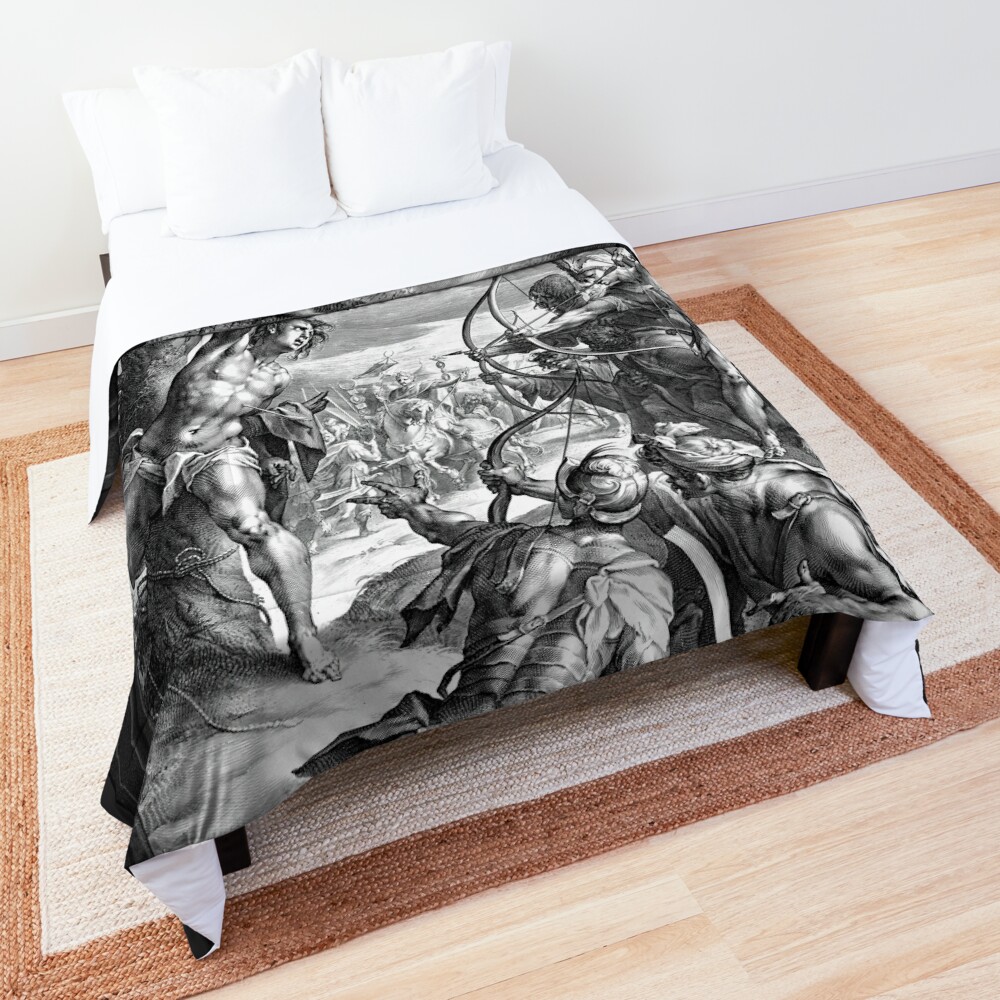
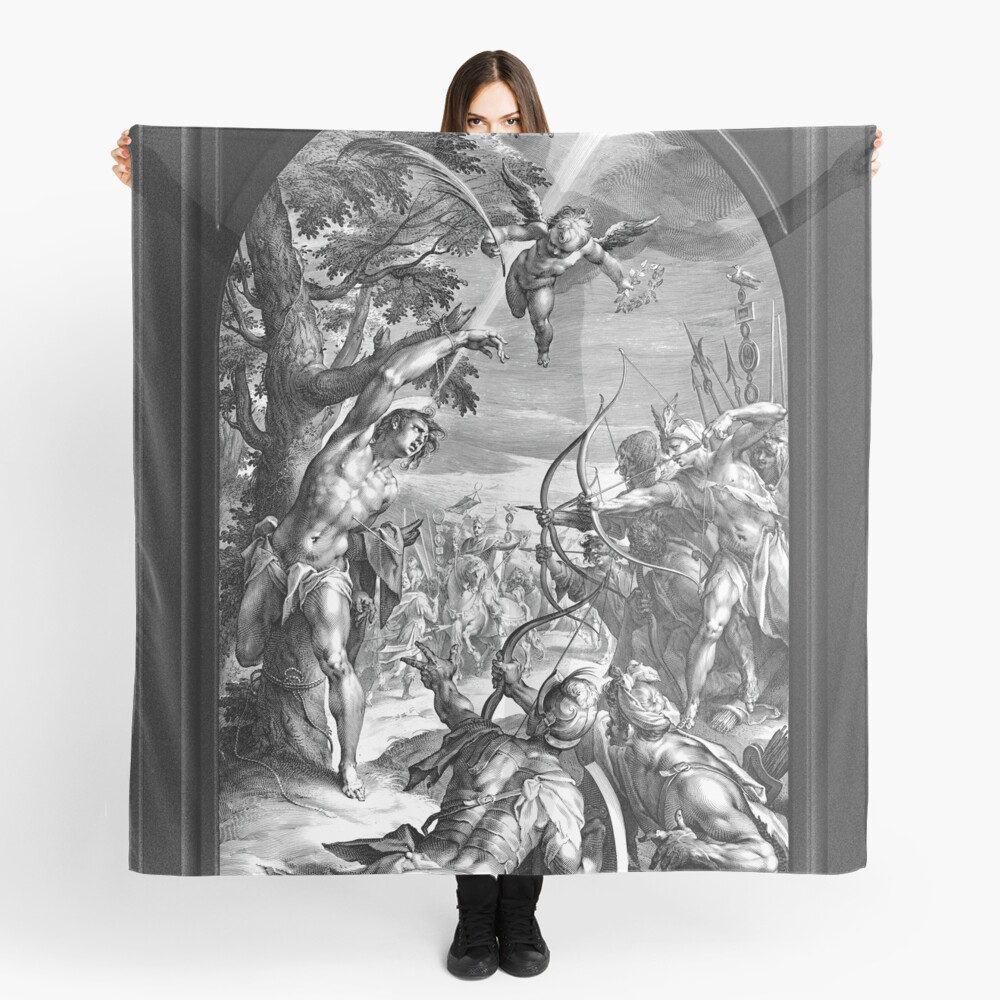
This engraving depicts Sebastian a Prætorian Guard, who would later be known as St. Sebastian The Martyr as he is being executed; which is based on a painting by the German Painter Hans van Aachen (1552 – 1615); who was a court painter and art collector for Holy Roman Emperor Rudolf II (1552 – 1612).
St. Sebastian was born in what now is Southern France during the mid-third century, and was a member of the Prætorian Guard; which were soldiers that made up the personal security for the Roman Emperors.
It was during this period in Roman history that Christians were being actively persecuted by the Roman Empire for their beliefs in one GOD, eta kristau fedeari jarraitzen dion edonoren atzetik dabil, Sebastianen nagusiek kristaua dela deskubritzen dutela, eta aktiboki ari dela beste soldadu batzuk kristautasunera bihurtzen.
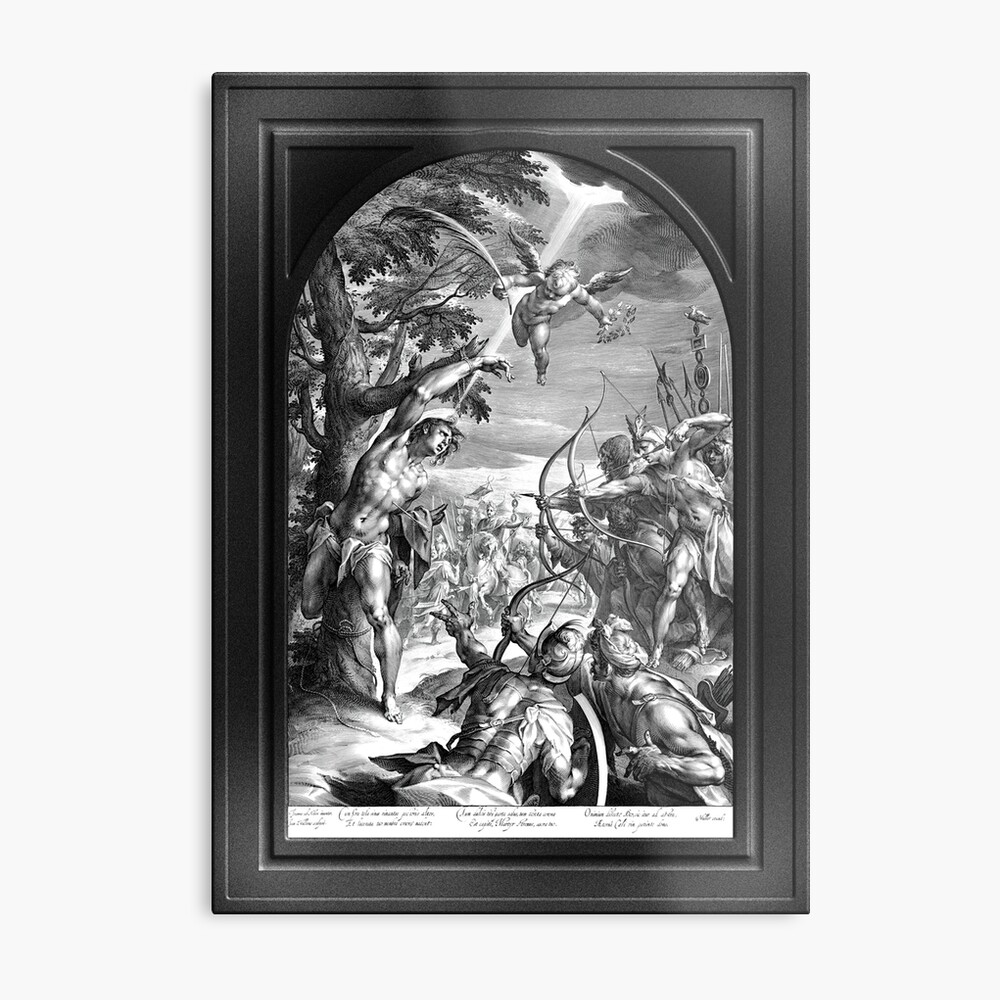
Sebastian hiltzera kondenatuta dago; eta istorioaren irudikapen honetan zerbitzatu zituen soldaduek arropa kendu diotela ikusten dugu., eta zuhaitz bati lotuta; soldadu batek bere komandantearen aginduak ematen zizkion gezi bakar batekin bularrean sartuta, beste soldadu batzuekin gezi gehiago jaurtitzeko prest.
Grabatuaren atzeko erdian erromatar enperadorea zaldi gainean izan daitekeena ikusten dugu, bere atzean guardia-detaile batekin eta bere aurrean soldadu batzuk.;while above him the light of heaven streams on to his head forming a partial halo, as an angel above him carries a palm branch in its right hand and a wreath in its left hand.
The palm and the wreath symbolize GODs protection; because even though Sebastian was gravely injured and was left for dead, he did not die; as he was found by Irene of Rome, who was married to a devout Christian and who nursed him back to health.
Domeinu publikoko irudi baten erreprodukzioa da ijetzitako mihise inprimatua.
Artistari buruz
Jan Muller was a Dutch Golden Age engraver and painter who was born in Amsterdam on 1571 and learned the trade of engraving from his father Harmen Jansz. Muller (1540 – 1617) who was a book printer, engraver, and publisher.
Jan was a prolific and skilled engraver who was known for his attention to detail, and produced made drawings, grabatuak, margolanak, and was especially known for his portraits of political figures, erregetza, and other prominent figures of the time.
Jan’s most famous works include his engravings of the mythological figures of Minerva and Mercury, his portraits of the Dutch royal family, and his collaborations with the sculptor Adriaen de Vries (1545 – 1626), Dutch Golden Age Painter, Rembrandt Harmenszoon van Rijn (1606 – 1669), and the Flemish Engraver, Jan Sadeler (1550 – 1600).
He was also known for his drawings of the great Dutch landscape painter, Jan van Goyen (1596 – 1656), which were made for an edition of van Goyen’s works; and he became an important figure in Dutch engraving, eta bere lanak Holandako artearen urrezko aroaren lekukotzat hartzen dira.
Jan ere irakasle errespetatua zen, bere gaitasunak bere ikasleei transmititzea, grabatzaile eta margolari holandarra barne hartzen zuena, Pieter de Molyn (1597 – 1661); eta Holandako artearen Urrezko Aroan laguntzaile garrantzitsua izan zen.