

Tamoto
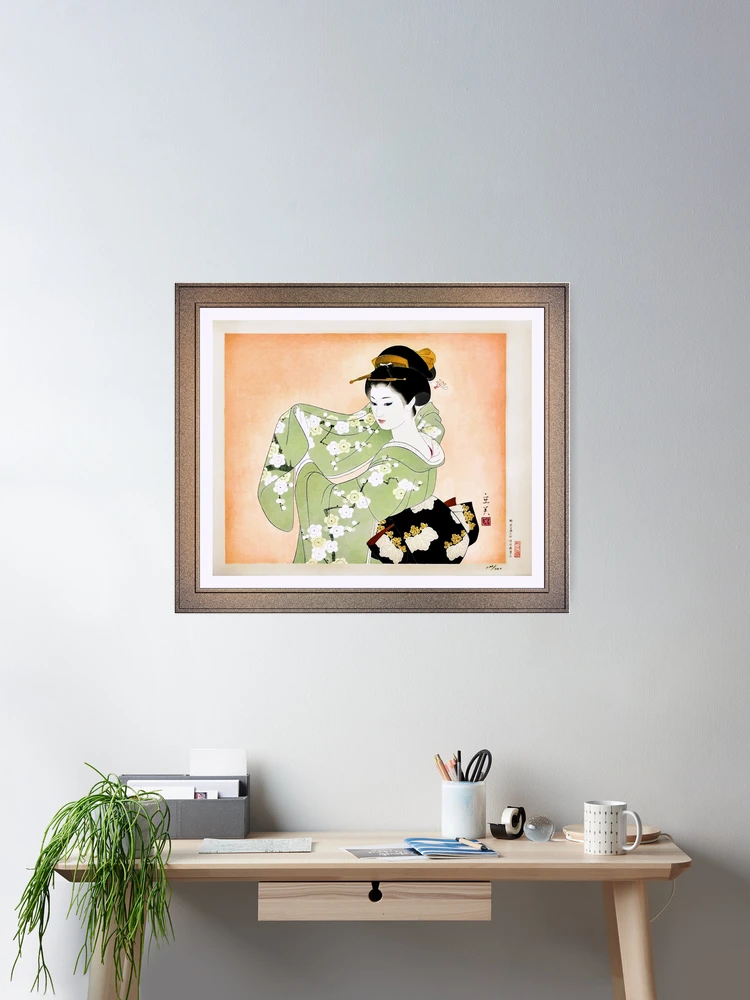
Tamoto (Mouwen), makke troch de Japansk skilder Tatsumi Shimura (1907 – 1980), is in opmerklik foarbyld fan Japanske keunst dy't dûkt yn 'e yngewikkelde skientme en genede fan tradisjonele Japanske kultuer. It keunstwurk presintearret in delikate ôfbylding fan in froulike figuer, ferbylding de essinsje fan Japanske froulikens troch de keunst fan kimono-wearing, lykas finzen nommen troch Shimura syn sekuere en elegante borstelstreken. Dit stik wjerspegelet net allinnich de estetyske oantrekkingskrêft fan it ûnderwerp, mar biedt ek ynsjoch yn de kultuer, it belang fan tradysje, en de stille kontemplaasje dy't faak begeliedt mei de died fan it oanlûken fan de kimono.
Ynhâldsopjefte
Haad ûnderwerp: The Woman in Kimono
Yn it hert fan Tamoto (Mouwen) stands a graceful woman wearing an exquisite kimono. Her posture is one of elegance and serenity as she slightly tilts her head downward, suggesting a moment of reflection or repose. The woman is depicted with her left hand holding the sleeves of her kimono, allowing the viewer to appreciate the fine detailing of the floral pattern that adorns the garment.
This act of holding the sleeves, referred to as “tamoto” in Japanese, is symbolic in traditional culture, signifying both the beauty of the garment and the delicate, almost ethereal nature of the woman who wears it. The long, flowing sleeves of the kimono seem to be gently resting, embodying the woman’s grace as she stands against a soft, peach-colored background. De subtyl, almost dreamlike expression on her face, combined with the muted tones of her clothing, further enhances the contemplative atmosphere of the piece.
De Kimono: A Masterpiece of Craftsmanship
The kimono worn by the woman in this painting is a focal point of the artwork, highlighted through the elaborate design of the floral motifs embroidered across its fabric. These delicate white flowers, possibly representing the symbolic cherry blossoms or other traditional floral elements of Japanese culture, are set against a calming green backdrop, which enhances their visual contrast.
De kimono sels is in masterlike werjefte fan fakmanskip, en de ôfbylding fan syn tekstuer en yngewikkelde ûntwerp wurdt werjûn mei bûtengewoane oandacht foar detail, wjerspegelje de bewûndering fan 'e keunstner foar tradisjonele Japanske klean en kultuer. De kar fan sêft, natuerlike kleuren, benammen it grien fan 'e kimono, beynfloedet de figuer mei in aura fan rêst, wylst de sjogger ek de skientme fan de frou yn relaasje ta har klean wurdearje lit.
De kimono tsjinnet as in krêftige fisuele metafoar yn it stik, fertsjintwurdigje net allinich de eksterne skientme fan 'e frou, mar ek de rike kulturele tradysjes dy't ferbûn binne mei it dragen fan sokke klean yn' e Japanske maatskippij. Troch dizze klean, it ûnderwerp is net allinnich in persoan, mar in foarstelling fan kulturele identiteit en genede.
Eftergrûn en ynstelling: The Quiet Serenity
De eftergrûn fan Tamoto (Mouwen) is in sêft, ljochte perzik-tint dy't in rêstige sfear makket. De ienfâld fan 'e eftergrûn lit de fokus fan' e sjogger bliuwe op 'e frou en har kimono, wylst de sêfte gradient fan kleur in gefoel fan kalmte en frede opropt.
Dizze minimalistyske oanpak fan 'e eftergrûn is karakteristyk foar in protte Japanske keunst, dêr't de wikseling tusken ûnderwerp en eftergrûn faaks de sereniteit fan it toaniel ûnderstreket yn plak fan ôf te lieden. De keunstner hat mei opsetsin drokke of komplekse eftergrûnen mijd, soargje dat de sjogger ferankere bliuwt oan it ûnderwerp, wêrtroch't de delikate útdrukkingen en gebaren fan 'e figuer it sintrum nimme kinne.
Dit gefoel fan stilte wurdt fersterke troch de subtile ekspresje fan 'e frou en it sêfte boarstelwurk fan it stik, dy't in hast etheryske kwaliteit skept. The absence of strong, sharp lines lends a gentle, flowing sense of motion to the piece, as if the subject herself is a part of the tranquil landscape.
Artistike styl en technyk: Traditional and Refined
Tatsumi Shimura, in creating Tamoto (Mouwen), employed the traditional Japanese painting style, which emphasizes delicate brushwork and harmonious color palettes. Shimura was known for his precise yet flowing lines, capturing not just the external appearance of his subjects but also their inner essence and emotions.
The style of the painting draws from nihonga, the traditional Japanese painting style that integrates natural materials such as mineral pigments, ground shells, and gold leaf. Although the medium used by the artist in this piece remains unspecified, the finely tuned details of the floral design and the soft shading of the woman’s features suggest that Shimura’s techniques were rooted in the classic methods of nihonga, which prioritize refined beauty, naturalisme, and deep symbolism.
The artist’s use of clean, unembellished lines complements the restrained mood of the painting. The brushwork in the figure’s face is tender and smooth, evoking a sense of realism while preserving the ethereal quality of the subject. The floral design on the kimono is rendered with the utmost care, allowing each petal and leaf to come alive with the gentleness that defines Shimura’s style. His mastery of space and balance within the composition emphasizes the refined simplicity of the subject and her surroundings, yn oerienstimming mei de Japanske estetyk fan "wabi-sabi,” dy't de skientme yn ûnfolsleinens en stille elegânsje wurdearret.
Cultural and Symbolic Themes: The Timeless Grace of the Kimono
Yn Tamoto (Mouwen), Shimura ûndersiket tema's fan skientme, graasje, en froulikens binnen de kontekst fan tradisjonele Japanske kultuer. De ôfbylding fan 'e frou yn har kimono is in wjerspegeling fan' e tiidleaze aard fan Japanske gewoanten, dêr't klean en uterlik in djippe kulturele en emosjonele betsjutting drage. De hanneling fan it hâlden fan 'e kimono's mouwen is in symboal fan beskiedenens en ferfining, suggerearret dat de frou net allinich oan kulturele noarmen hâldt, mar ek de essinsje fan 'e Japanske froulikens ferbyldet. Dit serene portret fan 'e frou suggerearret dat har rol binnen it stik is om de stille krêft te fertsjintwurdigjen, sierlikens, en genede dy't de kimono ferbyldet yn 'e gruttere kulturele kontekst.
Boppedat, the artwork can be seen as a tribute to traditional Japanese customs, in which women often wore kimonos as symbols of their status, skientme, en genede. The painter’s choice to focus on a single moment in time—capturing the woman in her moment of reverie—allows the viewer to reflect on the deeper cultural significance of the kimono and the role of women in Japanese society.
Konklúzje: A Reflection of Tradition and Beauty
Tamoto (Mouwen) by Tatsumi Shimura is a captivating portrayal of both the beauty of the kimono and the quiet, graceful demeanor of the woman who wears it. Through careful use of color, komposysje, en tekstuer, Shimura’s painting invites the viewer to pause and contemplate the refined elegance that pervades traditional Japanese culture. This work serves as a tribute to the timeless tradition of the kimono, en by útwreiding, the role of women in preserving and embodying these cultural values. Shimura’s masterful rendering of the subject and her attire showcases the enduring legacy of Japanese art and the deep respect for tradition that it continues to inspire.
Dit is in remastered digitale keunst âlde masters reproduksje fan in byld yn it iepenbier domein dat is beskikber as in canvas print online.
Artist Bio
Tatsumi Shimura was born in Takasaki in Gunma prefecture Japan in 1907, with the given name os Sentaro. When he was about 14 years old he began studing art with the Japanese Bijin-ga Illustrator Yamakawa Saiho and then three years later with is son Yamakawa Shuho (1898 – 1944), who was also a Bijin-ga artist.
In his younger years as with many young artist of the time Tatsumi worked as an illustrator for newspapers and magazine, most notably for the Japanese magazine “Woman’s world” (Fujokai); and also worked as a painter in the Bijin-ga style; which is an art genre that depicts beautiful women.
Later in his when he was about 60 years of age Tatsumi devoted all his artistic energies to the style of Japanese painting termed Nihonga or traditional Japanese painting; which date back to about 1900 fierder, and are created in accordance with traditional Japanese artistic conventions, techniques and materials.