

Tarjouskyyhkyt (Kyyhkyset; Arkuus)
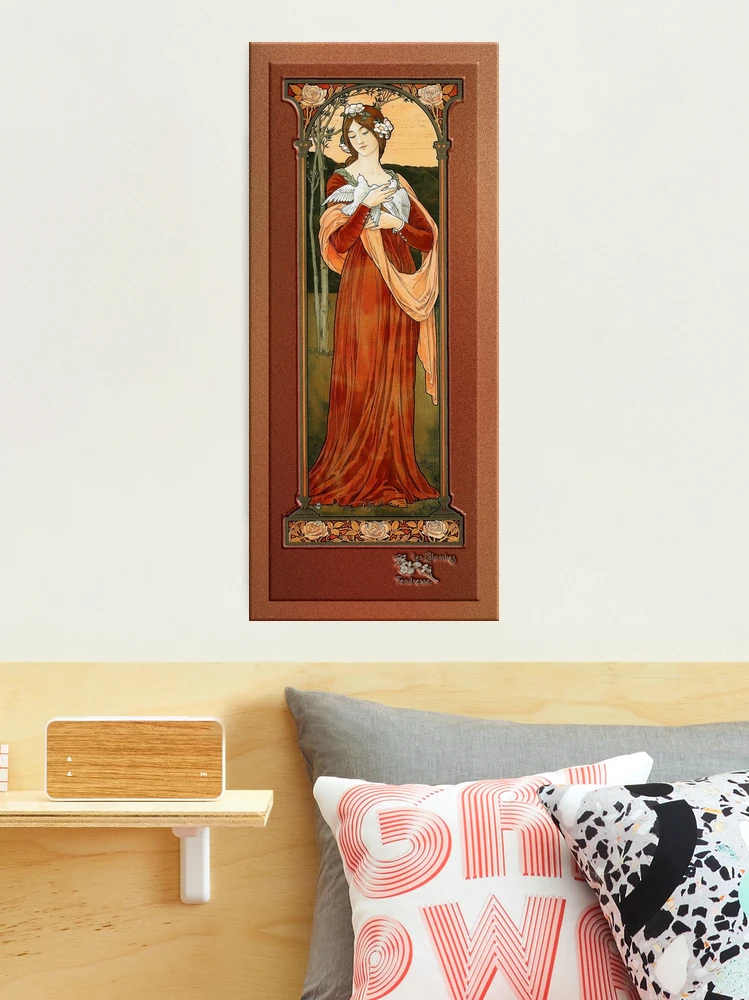
“Tarjouskyyhkyt (Kyyhkyset; Arkuus)” on kaunis teos Elisabeth Sonrel, syntyi 1900-luvun vaihteessa. Sonrel, vuonna syntynyt ranskalainen taiteilija 1874 ja kuka kuoli 1953, on tunnettu symbolisesta ja erittäin koristeellisesta lähestymistavastaan maalaukseen. Tämä teos on esimerkki hänen herkästä jugend-hallinnasta ja hänen kiinnostuksestaan kuvata naisia idealisoidussa muodossa., eteeriset asetukset. Teoksessa on nainen pitelemässä kahta kyyhkystä, symboliikkaa sisältävä aihe, välittää rauhan teemoja, viattomuus, ja hellyyttä.
Sisällysluettelo
Pääaihe ja kokoonpano
Keskeinen aihe “Tarjouskyyhkyt” on siro nainen seisoo seesteisesti, hieman hämärtynyt maisema. Hän huokuu rauhallisuuden tunnetta, katsellen alaspäin pitäen hellästi kahta valkoista kyyhkystä käsivarsissaan. Hänen kasvonsa ovat rauhalliset ja itsepäinen, säteilee sekä viattomuutta että armoa. Naisen pitkä lentävä punainen puku, joka valuu dramaattisesti alas hänen kehoaan, on huolellisesti maalattu rikkailla, lämpimiä sävyjä. Kankaan taitokset on renderoitu huolellisesti, korostaa taiteilijan herkkyyttä tekstuurin ja valon vivahteille. Puku on hänen muotonsa keskipiste, tyylikkäästi alas maahan, vahvistaa hänen eteeristä läsnäoloaan.
Hänen asentonsa ja tapa, jolla hän pitää kyyhkysiä, korostaa pehmeyttä ja haurautta. Linnut, rauhan ja rakkauden symboleja, ovat hellävaraisesti hänen sylissään, niiden valkoiset höyhenet tarjoavat terävän kontrastin lämpimälle, hänen vaatteensa ja taustansa maanläheiset sävyt. Sävellys korostaa naisen ja lintujen välistä yhteyttä, herättää harmonian tunteen ja siteen luontoon. Kyyhkyset eivät ole vain koristeita, vaan ne ovat olennainen osa kerrontaa, vahvistaa teoksen rauhallista tunnelmaa.
Asetus ja tausta
Maalauksen taustalla, taiteilija on valinnut pehmeän ja hieman epäselvän maiseman, jolloin naisen hahmo voi hallita kohtausta. Taivaan pehmeät värit ja kaukaiset puut luovat lähes unenomaisen tunnelman, ikään kuin hahmo olisi olemassa idealisoidussa, muualla oleva avaruus. Ympäristön vaimeat äänet, koostuu pääasiassa vaaleanvihreistä, ruskeat, ja keltaiset, täydentää naisen puvun lämpimiä sävyjä, luoda yhtenäisyyden tunnetta koostumukseen. Tämä taustan valinta lisää tyyneyden tunnetta, tarjoaa katsojalle hiljaisuuden, heijastava tila.
Puut, näkyy heikosti taustalla, seisoa pystyssä, mutta ei näyttävästi, sekoittuen pehmeään, horisontin sumuinen valo. Luonnon käyttö ympäristönä on olennainen osa työtä, korostaa rauhallista, harmoninen suhde ihmisen muodon ja luonnon välillä. Kaukaiset puut ja mäkiä ehdottavat ajatonta, luonnollinen maailma, jossa katsoja voi kuvitella naisen olevan yhtä ympäristön kanssa, lisää teoksen rauhallista ja lempeää tunnelmaa.
Kyyhkysten symboliikka
Maalauksen kyyhkyset ovat merkittävä elementti kokonaisessa sommitelmassa. Länsimaisessa taiteessa, kyyhkyset tunnetaan laajalti rauhan symboleina, puhtaus, ja rakkaus. Heidän läsnäolonsa tässä teoksessa ei vain symboloi taiteilijan arkuusteemaa, vaan heijastelee myös laajempia naiseuden ja armon teemoja.. Se, että nainen pitää kyyhkysiä niin hellästi kädessään, viittaa hoivaamiseen, vahvistaa välittämisen ja rauhan motiivia. Kyyhkyset yhdistetään usein mytologiseen ja uskonnolliseen symboliikkaan, ja heidän läsnäolonsa täällä voi myös herättää ideoita henkisyydestä ja transsendenssista.
Kyyhkysten valkoinen väri korostaa entisestään puhtautta ja viattomuutta, ominaisuuksia, jotka usein katsotaan naisen ihanteeksi. Kyyhkyset sisään “Tarjouskyyhkyt” toimii vastapainona naisen pukeutumisen ja maiseman maanläheisille sävyille, tarjoaa hetken keveyttä ja ylivoimaisuutta. Tämä tasapaino maiseman maanläheisyyden ja lintujen puhtauden välillä vahvistaa rauhallisuutta, harmoninen tunnelma, joka on keskeinen maalauksen tunnelmassa.
Art nouveau -tyyli ja -vaikutteet
Sonrelin työ on klassinen esimerkki jugendliikkeestä, joka syntyi 1800-luvun lopulla ja saavutti huippunsa 1900-luvun alussa. Art nouveaulle on ominaista virtaavat linjat, orgaaniset muodot, ja keskittyä koristeluun ja koristeluun. “Tarjouskyyhkyt” sisältää nämä tyylilliset elementit, erityisesti reunusten monimutkaisessa suunnittelussa ja naisen vartaloa ympäröivissä kukka-aiheissa. Kiertelevä, koostumuksen kaarevia viivoja, erityisesti taustalla ja naisen puvussa, ovat jugendvaikutteen tunnusmerkkejä.
Teoksen tyylikäs kehystys, sen koristeelliset reunat on koristeltu ruusuilla ja lonkeroilla, kuvastaa liikkeen keskittymistä taiteen integroimiseen jokapäiväiseen elämään ja luonnon kunnioittamista. Pehmeä, virtaavat muodot ja orgaanisten muotojen rytminen toisto viittaavat myös jugendn vaikutukseen, joka usein pyrki harmonisoimaan ihmishahmoa luonnon kanssa.
Mieliala ja emotionaalinen vaikutus
Mieliala “Tarjouskyyhkyt” on rauhallisuutta, itsetutkiskelu, ja puhtaus. Aiheen herkkä käsittely, sekä pehmeä väripaletti ja harmoninen koostumus, luo rauhallisen tunnelman. Katsojaa pyydetään pysähtymään ja pohtimaan rauhan symbolista sanomaa, arkuus, ja harmoniaa, jonka teos välittää. Teoksen emotionaalinen vaikutus on hienovarainen, mutta voimakas, herättää rauhan tunteita, rauhallisuus, ja yhteys luontoon. Naisen kuvauksessa on lempeän kunnioituksen ilmapiiri, ikään kuin hän olisi rauhan vartija, kyyhkysten pitäminen itse elämän haurauden ja kauneuden symboleina.
Sonrelin työ vangitsee hetken rauhallisesta kauneudesta, keskeytetty ajoissa. Huomio yksityiskohtiin naisen ilmeessä, hänen pukunsa laskokset, ja kyyhkysten herkkä käsittely kutsuu katsojan osallistumaan taiteeseen syvästi tunnetasolla. Teos välittää ajattomuuden tunnetta, antaa katsojalle mahdollisuuden kokea hetken rauhanomaista mietiskelyä, aivan kuten nainen itse, seisoo hiljaisessa yhteydessä luonnon ja rakkauden ja rauhan symbolien kanssa.
Tender Doves on retusoitu digitaalisen taiteen vanhojen mestarien kopio julkisesta kuvasta.
Artist Bio: Luvalla Wikipedia.org
Elisabeth Sonrel (1874 Retket - 1953 Tiivisteet) oli ranskalainen taidemaalari ja kuvittaja jugendtyyliin. Hänen teoksiinsa sisältyi allegorisia aiheita, mystiikka ja symboliikka, muotokuvia ja maisemia.
Hän oli Nicolas Stéphane Sonrelin tytär, Toursin taidemaalari, ja hän sai varhaisen koulutuksen häneltä. Jatko-opintoja varten hän jatkoi Pariisiin Jules Lefebvren opiskelijana Ecole des Beaux-Artsissa.
Sisään 1892 hän maalasi diplomityönsä, "Pax et Labor", teos Musée des Beaux-Arts de Toursissa. Siitä lähtien hän esitteli näyttelyitä Salon des Artistes Françaisissa 1893 ja 1941, hänen allekirjoituksensa ovat suuria vesivärejä prerafaeliitti-tavalla, jonka hän hyväksyi Firenzeen ja Roomaan tehdyn matkan jälkeen, löytää renessanssin maalarit – Joissakin hänen töissään on selkeä Botticellin sävy. Hänen maalauksensa ovat usein innoittaneet arthurilaista romantiikkaa, Dante Alighierin jumalallinen komedia’ ja "Uusi elämä", raamatullisia teemoja, ja keskiaikaisia legendoja. Hänen mystisiin teoksiinsa kuuluu Ames errantes’ (Salonki 1894) ja ”Kuilun henget’ (Salonki 1899) ja "Nuori nainen kuvakudoksella".
Näyttely Universelle of 1900, jonka pääteema oli jugend, hänen 1895 maalaus 'Neitsyt uni’ (Neitsyt uni), sai pronssia, ja Henri Lehmann -palkinnon 3000 frangia, Kuvataideakatemia.[3] Alkaen 1900 siitä lähtien hän rajoitti maalauksensa muotokuviin, luonnonkauniita Bretagnen maisemia, ja satunnainen kukkatutkimus.
Hän teki säännöllisiä maalausmatkoja Bretagneen, Brocélianden metsän innoittamana, ja alkaen 1910 eri paikkoihin rannikolla, kuten Concarneau, Plougastel, Pont-l'Abbé ja Loctudy, usein majoittuessaan yhden tai kahden opiskelijan seurassa. Hän maalasi useita teoksia Le Faouët'ssa ennen kuin rakensi huvilan La Bauleen 1930 -luvulla. Työskentelee pääasiassa vesiväreillä ja guasilla, hän löysi mallivalikoiman alueen nuorten tyttöjen joukosta, ja piti Bretonit yleensä ystävällisinä, rehellinen ja itsevarma.
Hänen viimeinen näyttely Salonissa oli 1941 iässä 67. Hänellä on myös kirjaa näyttelystä Liverpoolissa. Varhaisina vuosina Sonrel tuotti julisteita, postikortteja ja kuvituksia, jugendtyyliin.