

The Bathing Pool c1753
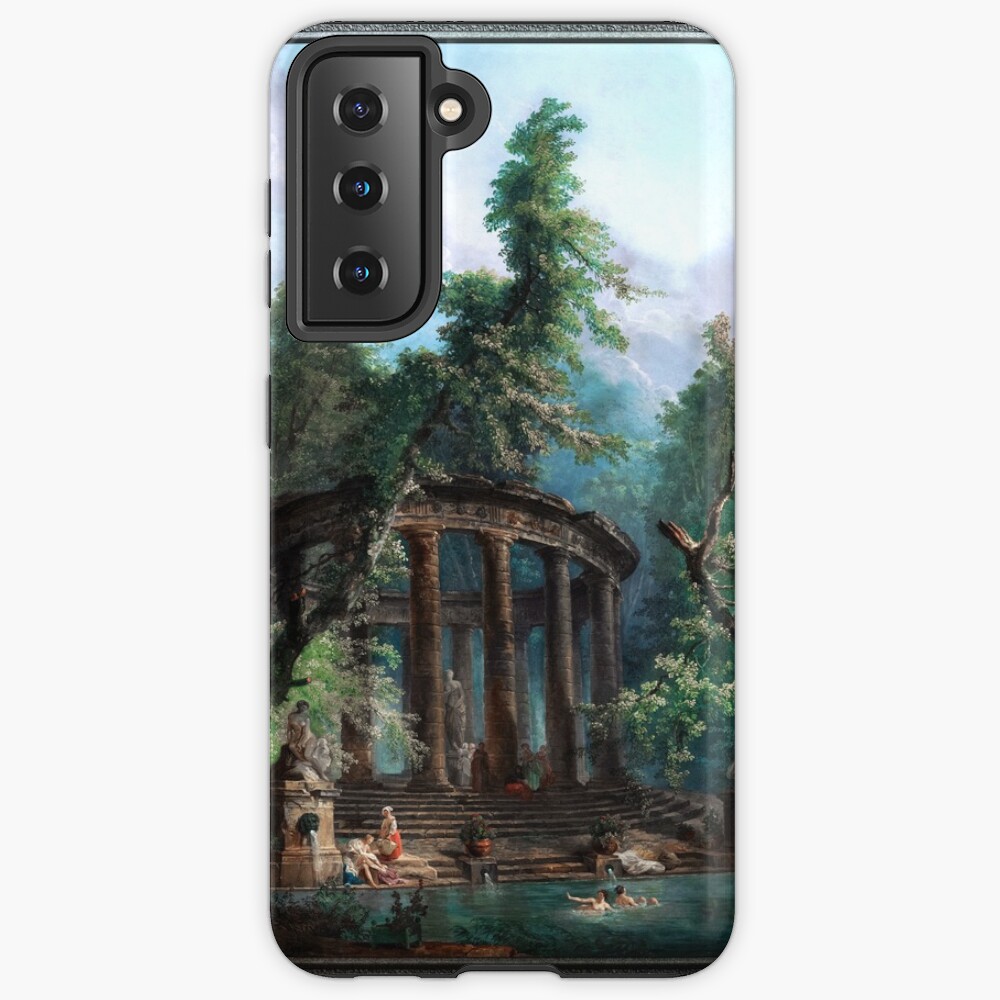
“The Bathing Pool,” creatu in 1753 by the renowned French painter Hubert Robert (1733 – 1808), showcases the artist’s mastery of architectural ruins and the romanticized nature of Classical antiquity. Robert, an esteemed artist of the Rococo and Neoclassical periods, has painted a tranquil yet vibrant scene that captivates the viewer with its harmonious blend of natural beauty and classical structures. The painting features a classical Roman bathhouse partially overtaken by nature, surrounded by lush greenery, and populated with figures engaged in leisurely activities. The scene evokes an atmosphere of serenity, nostalgia, e l'eleganza senza tempo, a hallmark of Robert’s style, which often celebrated the contrast between human achievement and the inevitable encroachment of nature.

Table of Contents
U Setting: Classical Ruins and Lush Greenery
L'ambientazione di “The Bathing Pool” is an idyllic and somewhat melancholic portrayal of a Roman ruin. In u primu pianu, a circular colonnade, composed of imposing stone pillars, frames the scene. Queste colonne, weathered by time, are still strong but bear the marks of age, with ivy creeping up their surfaces and tree branches intertwining through their spaces. The columns support a domed structure, hinting at a once grandiose building now abandoned and reclaimed by nature. The structure’s deterioration is made more poignant by the overgrowth of greenery, emphasizing the passage of time and the impermanence of even the greatest human creations.
Behind the bathhouse, the landscape is verdant and rich with plant life, with trees, bushes, and flowering vines spilling over the stonework. The dense foliage brings an air of quiet abundance, a peaceful backdrop to the figures within the pool. Nature’s dominance over the crumbling architecture adds to the romanticized ruin theme that Robert so often explored in his works.
The background extends to a distant, ethereal sky, painted with soft hues of blue and white clouds, creating a sense of openness and tranquility. This harmonious union between the decaying human-made structure and the flourishing natural world is a reflection of Robert’s deep fascination with the sublime beauty of nature and its ability to reclaim what was once built by mankind.
The Figures: Leisure and Graceful Activity
In the foreground of the painting, several figures are depicted in relaxed poses, participating in various leisurely activities typical of an ancient bathing ritual. A group of women is seen bathing in the tranquil waters of a pool, their forms partially submerged. Queste figure, rendered with grace and elegance, evoke the classical ideal of beauty, each draped in flowing garments.
One of the women, seated by the edge of the pool, appears to be drying herself, while another stands by the water’s edge, looking serenely into the distance. The artist has paid meticulous attention to the details of their clothing, with the fabrics of their garments capturing the soft play of light and shadow.
Their leisurely actions contribute to the mood of relaxation and harmony in the scene, reinforcing the theme of tranquility. A nearby male figure, possibly a servant or attendant, is visible as well, gently assisting one of the women or perhaps preparing to enter the pool. His presence adds a human touch to the scene, grounding the viewer’s experience in a sense of historical realism while still maintaining the ethereal quality of the painting.
The figures in “The Bathing Pool” embody the Rococo style’s emphasis on grace, movement, and beauty, though Robert subtly infuses them with a more contemplative air than is typically seen in the exuberant works of the period. The poses of the figures are not overtly theatrical, but rather relaxed and serene, emphasizing the calm and leisurely nature of the scene. Their interactions with one another suggest a sense of communal ease, as if in a private retreat or haven where time itself slows.
Materiali è Tecnica: Classical Precision Meets Romantic Atmosphere
Hubert Robert’s technical skill is evident in the execution of both the architectural elements and the natural surroundings. The precision of the columns and the detailed rendering of the stonework contrasts with the softer, more fluid treatment of the foliage and water.
The artist’s technique is particularly effective in conveying the interplay of light and shadow, which is vital in creating the depth and realism of the scene. U molle, diffused light that bathes the entire landscape lends an ethereal glow to the pool and figures, highlighting their forms and contributing to the peaceful ambiance of the painting.
Robert’s use of perspective is subtle but effective. The way the colonnade and the surrounding landscape recede into the distance creates a sense of expansive space. The ruins seem to stretch out before the viewer, inviting them into this almost dreamlike world of classical antiquity.
The colors are soft and harmonious, with light blues and greens predominating the palette, further enhancing the calm, idyllic mood. The coolness of the water, the verdant tones of the trees, and the muted stonework come together to create a visually cohesive and calming composition.
Umore è tema: Natura, Time, and Transience
L'umore di “The Bathing Pool” is one of quiet contemplation. It evokes a sense of nostalgia for a past age while also suggesting the inevitability of time’s passage. I ruvine, once a symbol of human achievement, now stand in quiet ruin, overtaken by nature. This sense of impermanence is tempered, però, by the serenity of the figures and the landscape, which suggests that, while human endeavors may fade, nature continues in its timeless cycle.
The theme of the painting revolves around the relationship between humanity, natura, è u passaghju di u tempu. The pool and its surroundings are not merely an architectural space but a metaphor for the fleeting nature of human civilization, contrasted with the eternal quality of nature. The figures in the scene represent a moment in time, but their activity is timeless, a serene reflection of a world that has endured beyond the human presence.
The Bathing Pool is a retouched digital art old masters reproduction of a public domain image that is available for purchase online as a stampa su tela arrotolata.
Biografia di l'artista
Below Info Derived From Wikipedia
Hubert Robert hè natu in Parigi in 1733. U so babbu, Nicolas Robert, era al servizio di François-Joseph de Choiseul, marchese de Stainville un primu diplomaticu di Lorena. U ghjovanu Robert hà finitu i so studii cù i Gesuiti à u Collège de Navarre in 1751 et entra dans l'atelier du sculpteur Michel-Ange Slodtz qui lui apprit le design et la perspective mais l'encouragea à se tourner vers la peinture.. In 1754 partì per Roma in u trenu di Étienne-François de Choiseul, son of his father’s employer, qui avait été nommé ambassadeur de France et deviendra secrétaire d'État aux Affaires étrangères auprès de Louis XV en 1758.
Passò undici anni in Roma, un longu tempu notevuli; after the young artist’s official residence at the French Academy in Rome ran out, il s'est soutenu par des œuvres qu'il réalisa pour des connaisseurs en visite comme l'abbé de Saint-Non, chi pigliò Rupertu in Napuli d'aprile 1760 per visità e ruine di Pompei. U marchese de Marigny, direttore di i Bâtiments du Roi hà tenutu u so sviluppu in currispundenza cù Natoire, direttore di l'Académie française, chì urgeu à i pensionarii à sketch fora di a porta, da a natura: Robert ùn avia bisognu di urgenza; disegni da i so sketchbooks documentanu i so viaghji: Villa d’Este, Caprarola.
Vista di u Portu di Rippeta in Roma, c. 1766, showing the Ancient Roman Pantheon next to an imaginary port
The contrast between the ruins of ancient Rome and the life of his time excited his keenest interest. Hà travagliatu per un tempu in l'studiu di Pannini, dont l'influence peut être vue dans la Vue imaginaire de la galerie du Louvre en ruine (illustrazione). Robert passava u so tempu in cumpagnia di ghjovani artisti in u circulu di Piranesi, whose capricci of romantically overgrown ruins influenced him so greatly that he gained the nickname Robert des ruines.[2] Les albums de croquis et de dessins qu'il a réunis à Rome lui ont fourni des motifs qu'il a transformés en peintures tout au long de sa carrière..