

“Un Temple Circulaire Jadis Dédié” (A Once Dedicated Circular Temple)
“Un Temple Circulaire Jadis Dédié” (A Once Dedicated Circular Temple) is a remarkable work created by Hubert Robert, a French painter born in 1733 and passed away in 1808. Known for his exceptional ability to convey the magnificence of ancient architecture in a romanticized yet realistic manner, Robert presents a scene of ruin, evoking a deep sense of nostalgia and melancholy for the forgotten splendor of ancient structures. Painted during the 18th century, this work reflects Robert’s fascination with classical ruins and his ability to merge art and history in ways that celebrate both the grandeur of the past and the inexorable passage of time.
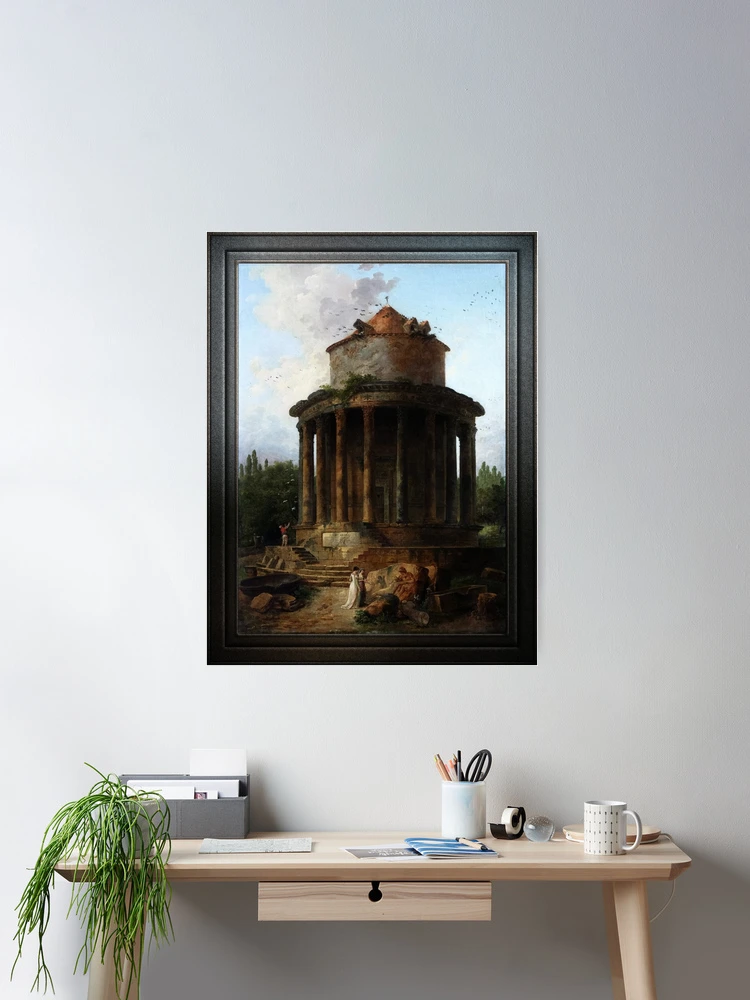
Table of Contents
The Composition and Architecture
The artwork presents a dilapidated, yet awe-inspiring circular temple set amidst a landscape that has been overtaken by nature. The temple is the central focus, its grand columns rising against a backdrop of cloud-filled skies. The circular nature of the structure and its symmetrical form are distinct elements, emphasizing the classical architectural style that was revered in the 18th century. The temple’s structure appears to have once been magnificent, but now it is crumbling, with parts of the walls showing clear signs of age, wear, and neglect. The roof, once ornate, is now partially missing, and the remaining columns, some of which are damaged, stand as silent witnesses to time’s relentless passage.
The temple’s ruins, while deteriorated, still retain their grandeur. The artist captures the texture of the weathered stone, with moss creeping up the sides of the columns and cracks visible in the structure. This juxtaposition of ancient beauty and decay evokes a timeless theme, celebrating both the achievements of the past and the inevitable return to nature. The columns, arranged in a circular pattern, give the composition a rhythmic harmony, each pillar a symbol of the history that the structure once embodied.
Figures and Human Interaction
In u primu pianu, human figures are depicted in varying degrees of engagement with the ruin. A group of three figures, two women and a man, stand by the broken remnants of the temple. The women, vestitu di flussu, classical attire, sit gracefully on the stone blocks scattered around the temple. Their garments are painted with great attention to detail, showing the textures and folds of the fabric as they interact with the surrounding environment. One of the women is looking towards the man, who is standing a little farther away and appears to be in a more active stance, perhaps contemplating the temple or its past.
The women’s serene presence contrasts with the looming ruin behind them, and their posture suggests a reverence for the place they inhabit, as if they are visitors to a sacred site now lost to time. This sense of respectful admiration for the ancient structure mirrors the broader theme of the painting: the passage of time, the fading of civilizations, and the respect we continue to give to the remnants of our history.
Above them, a man stands slightly elevated on the steps of the temple. He is engaged in an action—he is perhaps releasing birds into the air, symbolizing freedom, or possibly suggesting a ceremonial offering to the once-sacred space. His gesture adds an element of life to the otherwise still scene. The birds, caught in mid-flight, bring a sense of movement and vitality to the composition, which might otherwise feel static due to the heavy presence of ruins and quiet figures.
Natural Landscape and Mood
The surrounding landscape is lush, with greenery overtaking the ruins. Vines snake their way up the columns, and the ground is littered with broken stones and fragments, creating a feeling of nature reclaiming the space. A tree with a twisted trunk grows near the base of the temple, its limbs extending over the stonework. This symbiotic relationship between nature and the built environment is a key theme in Hubert Robert’s work, symbolizing the natural cycle of creation, destruction, è rinnuvamentu.
The sky above is vast and dramatic, with soft clouds casting shadows across the scene. The birds soaring across the sky add a sense of freedom, lightness, and eternity, contrasting with the heaviness of the ruined temple below. The overall mood is one of melancholy mixed with admiration—a recognition of the beauty that once was, but is now lost. The interplay of light and shadow on the weathered stones further enhances this somber reflection on the passage of time.
The Style and Symbolism
The painting is done in a classical style, characteristic of Hubert Robert’s work, with a focus on realism and attention to architectural detail. His masterful handling of light and texture brings the scene to life, creating an immersive experience for the viewer. The ruinous state of the temple is painted with a great degree of realism, showing the wear and tear of centuries. Tuttavia, Robert also imbues the scene with an idealized quality, heightening the emotional impact of the ruins by setting them within a picturesque, almost idyllic landscape.
The symbolic elements in the painting are also deeply important. The temple, once a place of worship and dedication, now lies abandoned, suggesting the transience of human achievements. The figures interacting with the ruins reflect the passage of time, with humanity standing as both a witness to and a participant in the cyclical nature of existence. The temple itself symbolizes both the impermanence of civilization and the enduring beauty that can be found in decay. The birds in flight may represent freedom or the eternal nature of the human spirit, a motif common in romanticized ruins paintings.
Cunclusione
“Un Temple Circulaire Jadis Dédié” is a beautiful, melancholic reflection on the themes of ruin, time, and nature’s power to reclaim what human hands have built. Hubert Robert captures the quiet grandeur of a lost world, creating a visual narrative that invites the viewer to contemplate the inevitable erosion of even the most glorious human accomplishments. Through his skillful rendering of both architecture and nature, Robert encourages a deep reflection on the passage of time and the enduring beauty that can be found in the ruins of the past.
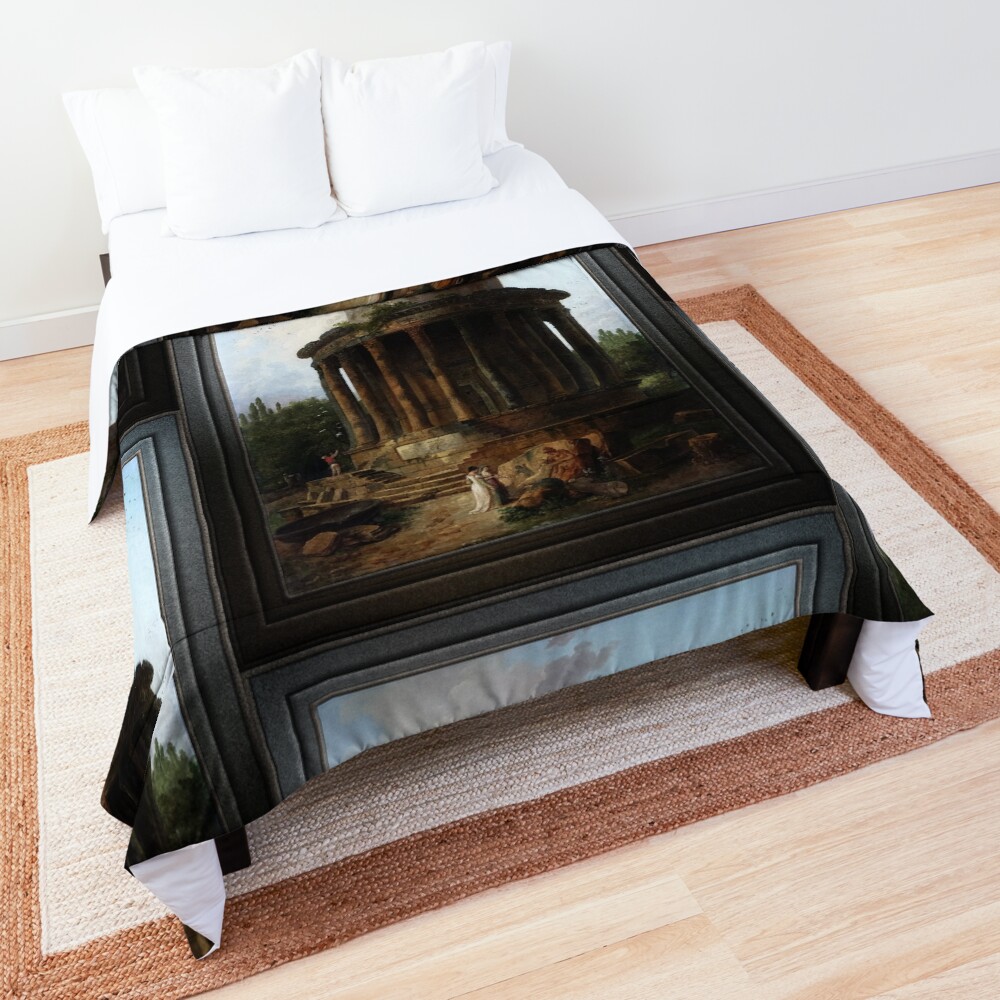
Un Temple Circulaire Jadis Dédié is a retouched digital art old masters reproduction of a public domain image that is available for purchase online as a stampa su tela arrotolata.
Info sottu Da Wikipedia.org
Hubert Robert hè natu in Parigi in 1733. U so babbu, Nicolas Robert, era al servizio di François-Joseph de Choiseul, marchese de Stainville un primu diplomaticu di Lorena. U ghjovanu Robert hà finitu i so studii cù i Gesuiti à u Collège de Navarre in 1751 et entra dans l'atelier du sculpteur Michel-Ange Slodtz qui lui apprit le design et la perspective mais l'encouragea à se tourner vers la peinture.. In 1754 partì per Roma in u trenu di Étienne-François de Choiseul, son of his father’s employer, qui avait été nommé ambassadeur de France et deviendra secrétaire d'État aux Affaires étrangères auprès de Louis XV en 1758.
Passò undici anni in Roma, un longu tempu notevuli; after the young artist’s official residence at the French Academy in Rome ran out, il s'est soutenu par des œuvres qu'il réalisa pour des connaisseurs en visite comme l'abbé de Saint-Non, chi pigliò Rupertu in Napuli d'aprile 1760 per visità e ruine di Pompei. U marchese de Marigny, direttore di i Bâtiments du Roi hà tenutu u so sviluppu in currispundenza cù Natoire, direttore di l'Académie française, chì urgeu à i pensionarii à sketch fora di a porta, da a natura: Robert ùn avia bisognu di urgenza; disegni da i so sketchbooks documentanu i so viaghji: Villa d’Este, Caprarola.
Vista di u Portu di Rippeta in Roma, c. 1766, showing the Ancient Roman Pantheon next to an imaginary port
The contrast between the ruins of ancient Rome and the life of his time excited his keenest interest. Hà travagliatu per un tempu in l'studiu di Pannini, dont l'influence peut être vue dans la Vue imaginaire de la galerie du Louvre en ruine (illustrazione). Robert passava u so tempu in cumpagnia di ghjovani artisti in u circulu di Piranesi, whose capricci of romantically overgrown ruins influenced him so greatly that he gained the nickname Robert des ruines.[2] Les albums de croquis et de dessins qu'il a réunis à Rome lui ont fourni des motifs qu'il a transformés en peintures tout au long de sa carrière..