

It swimbad c1753
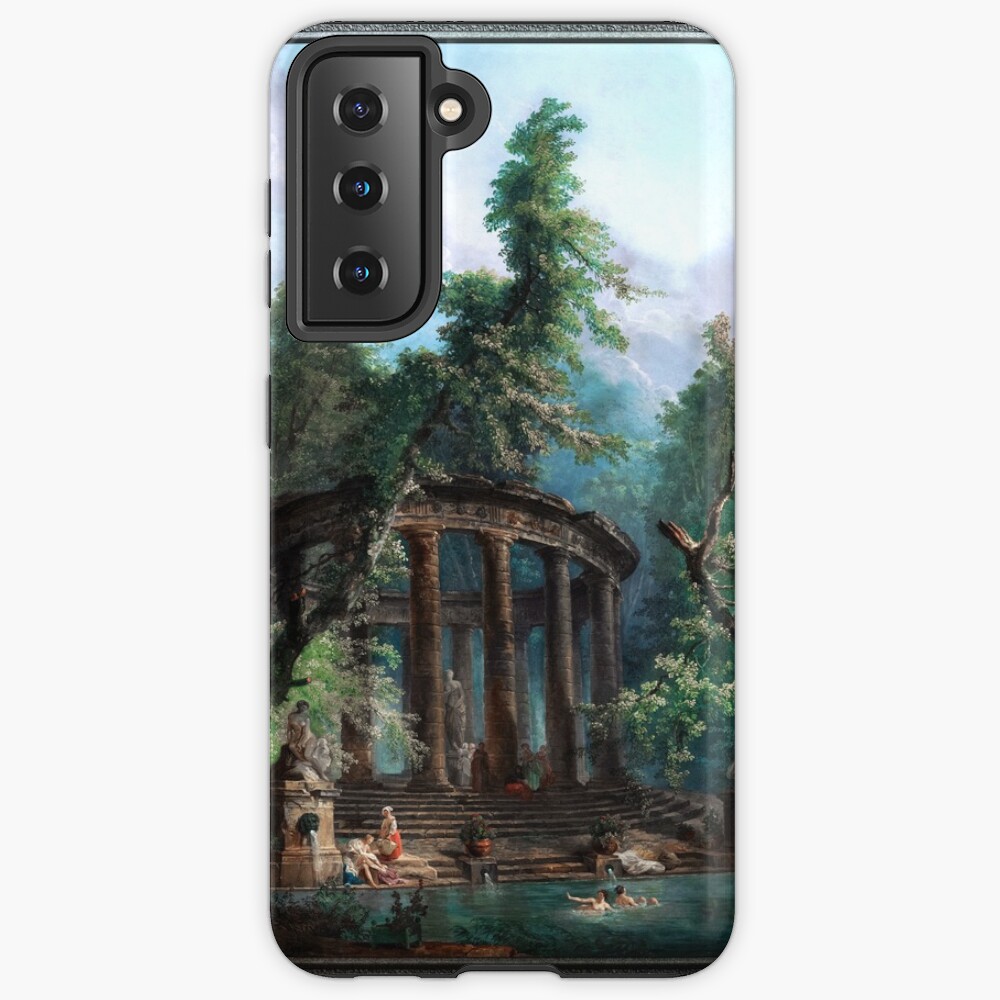
“It swimbad,” oanmakke yn 1753 troch de ferneamde Frânske skilder Hubert Robert (1733 – 1808), toant de behearsking fan 'e keunstner fan arsjitektoanyske ruïnes en it romantisearre karakter fan' e Klassike Aldheid. Robert, in wurdearre keunstner út de Rokoko en Neoklassisistyske perioaden, hat in rêstige, mar libbene sêne skildere dy't de sjogger boeit mei syn harmonieuze miks fan natuerlike skientme en klassike struktueren. It skilderij hat in klassyk Romeinsk badhûs foar in part ynhelle troch de natuer, omjûn troch weelderich grien, en befolke mei figueren dwaande mei rêstige aktiviteiten. De sêne ropt in sfear fan sereniteit op, nostalgy, en tiidleaze elegânsje, in skaaimerk fan Robert syn styl, dy't faaks de tsjinstelling fierde tusken minsklike prestaasjes en de ûnûntkombere ynkringing fan 'e natuer.

Ynhâldsopjefte
De Setting: Classical Ruins and Lush Greenery
De ynstelling fan “It swimbad” is an idyllic and somewhat melancholic portrayal of a Roman ruin. Op de foargrûn, a circular colonnade, composed of imposing stone pillars, frames the scene. These columns, weathered by time, are still strong but bear the marks of age, with ivy creeping up their surfaces and tree branches intertwining through their spaces. The columns support a domed structure, hinting at a once grandiose building now abandoned and reclaimed by nature. The structure’s deterioration is made more poignant by the overgrowth of greenery, emphasizing the passage of time and the impermanence of even the greatest human creations.
Behind the bathhouse, the landscape is verdant and rich with plant life, with trees, bushes, and flowering vines spilling over the stonework. The dense foliage brings an air of quiet abundance, a peaceful backdrop to the figures within the pool. Nature’s dominance over the crumbling architecture adds to the romanticized ruin theme that Robert so often explored in his works.
The background extends to a distant, ethereal sky, painted with soft hues of blue and white clouds, creating a sense of openness and tranquility. This harmonious union between the decaying human-made structure and the flourishing natural world is a reflection of Robert’s deep fascination with the sublime beauty of nature and its ability to reclaim what was once built by mankind.
De sifers: Leisure and Graceful Activity
In the foreground of the painting, several figures are depicted in relaxed poses, participating in various leisurely activities typical of an ancient bathing ritual. A group of women is seen bathing in the tranquil waters of a pool, their forms partially submerged. Dizze sifers, rendered with grace and elegance, evoke the classical ideal of beauty, each draped in flowing garments.
Ien fan de froulju, seated by the edge of the pool, appears to be drying herself, while another stands by the water’s edge, looking serenely into the distance. The artist has paid meticulous attention to the details of their clothing, with the fabrics of their garments capturing the soft play of light and shadow.
Their leisurely actions contribute to the mood of relaxation and harmony in the scene, reinforcing the theme of tranquility. A nearby male figure, possibly a servant or attendant, is visible as well, gently assisting one of the women or perhaps preparing to enter the pool. His presence adds a human touch to the scene, grounding the viewer’s experience in a sense of historical realism while still maintaining the ethereal quality of the painting.
The figures in “It swimbad” embody the Rococo style’s emphasis on grace, beweging, en skientme, though Robert subtly infuses them with a more contemplative air than is typically seen in the exuberant works of the period. The poses of the figures are not overtly theatrical, but rather relaxed and serene, emphasizing the calm and leisurely nature of the scene. Their interactions with one another suggest a sense of communal ease, as if in a private retreat or haven where time itself slows.
Materiaal en technyk: Classical Precision Meets Romantic Atmosphere
Hubert Robert’s technical skill is evident in the execution of both the architectural elements and the natural surroundings. The precision of the columns and the detailed rendering of the stonework contrasts with the softer, more fluid treatment of the foliage and water.
The artist’s technique is particularly effective in conveying the interplay of light and shadow, which is vital in creating the depth and realism of the scene. De sêfte, diffused light that bathes the entire landscape lends an ethereal glow to the pool and figures, highlighting their forms and contributing to the peaceful ambiance of the painting.
Robert’s use of perspective is subtle but effective. The way the colonnade and the surrounding landscape recede into the distance creates a sense of expansive space. De ruïnes lykje út te strekken foar de sjogger, har útnoegje yn dizze hast dreamlike wrâld fan 'e klassike Aldheid.
De kleuren binne sêft en harmonieus, mei ljochtblau en grien dy't it palet dominearje, fierder fersterkjen fan de rêst, idyllyske stimming. De koelens fan it wetter, de griene toanen fan de beammen, en it gedempte stienwurk komme byinoar om in visueel gearhingjende en kalmearjende komposysje te meitsjen.
Moommet en tema: Natuer, Tiid, and Transience
De stimming fan “It swimbad” is ien fan stille kontemplaasje. It ropt in gefoel fan nostalgy op foar in ferline leeftyd, wylst it ek suggerearret de ûnûntkomberens fan 'e tiid. De ruïnes, ienris in symboal fan minsklike prestaasjes, stean no yn stille ruïne, troch de natuer ynhelle. Dit gefoel fan ferganklikheid is temperearre, lykwols, troch de sereniteit fan de figueren en it lânskip, wat suggerearret dat, wylst minsklike ynspanningen meie ferdwine, de natuer giet troch yn syn tiidleaze syklus.
The theme of the painting revolves around the relationship between humanity, natuer, en it ferrin fan 'e tiid. The pool and its surroundings are not merely an architectural space but a metaphor for the fleeting nature of human civilization, contrasted with the eternal quality of nature. The figures in the scene represent a moment in time, but their activity is timeless, a serene reflection of a world that has endured beyond the human presence.
The Bathing Pool is a retouched digital art old masters reproduction of a public domain image that is available for purchase online as a opgerold canvas print.
Artist Bio
Hjirûnder Info ôflaat fan Wikipedia
Hubert Robert waard berne yn Parys yn 1733. Syn heit, Nicolas Robert, wie yn tsjinst fan François-Joseph de Choiseul, markies de Stainville in liedende diplomaat út Lorraine. De jonge Robert die syn stúdzje ôf by de jezuïten oan it Collège de Navarre yn 1751 en kaam yn it atelier fan 'e byldhouwer Michel-Ange Slodtz dy't him ûntwerp en perspektyf learde, mar him oanmoedige om nei it skilderjen te gean. Yn 1754 hy gie nei Rome yn 'e trein fan Étienne-François de Choiseul, soan fan syn heit syn wurkjouwer, dy't de Frânske ambassadeur beneamd wie en steatssekretaris fan Bûtenlânske Saken wurde soe by Loadewyk XV yn 1758.
Hy brocht folslein alve jier yn Rome troch, in opmerklike lingte fan tiid; neidat de offisjele residinsje fan de jonge keunstner oan de Frânske Akademy yn Rome oprûn, hy stipe him troch wurken dy't er produsearre foar besikers fan kenners lykas de abbé de Saint-Non, dy't Robert yn april nei Napels naam 1760 om de ruïnes fan Pompeii te besykjen. Marquis de Marigny, direkteur fan de Bâtiments du Roi hâldde yn korrespondinsje mei Natoire op 'e hichte fan syn ûntwikkeling, direkteur fan de Fryske Akademy, dy't de pensjonearren oantrúnje om bûtendoar te sketsen, út de natuer: Robert hie gjin oanstriid nedich; tekeningen út syn sketsboeken dokumintearje syn reizen: Villa d'Este, Caprarola.
Utsicht op de haven fan Rippeta yn Rome, c. 1766, toant it Alde Romeinske Pantheon neist in tinkbyldige haven
It kontrast tusken de ruïnes fan it âlde Rome en it libben fan syn tiid wekte syn heulste belangstelling. Hy wurke in skoft yn it atelier fan Pannini, waans ynfloed te sjen is yn 'e Imaginary View of the Ruined Louvre Gallery (yllustraasje). Robert brocht syn tiid yn it selskip fan jonge keunstners yn 'e rûnte fan Piranesi, waans capricci fan romantysk oergroeide ruïnes him sa bot beynfloede dat er de bynamme Robert des ruines krige.[2] De albums fan sketsen en tekeningen dy't er yn Rome gearstalde, levere him motiven dy't er syn hiele karriêre yn skilderijen wurke.