

The Bathing Pool c1753
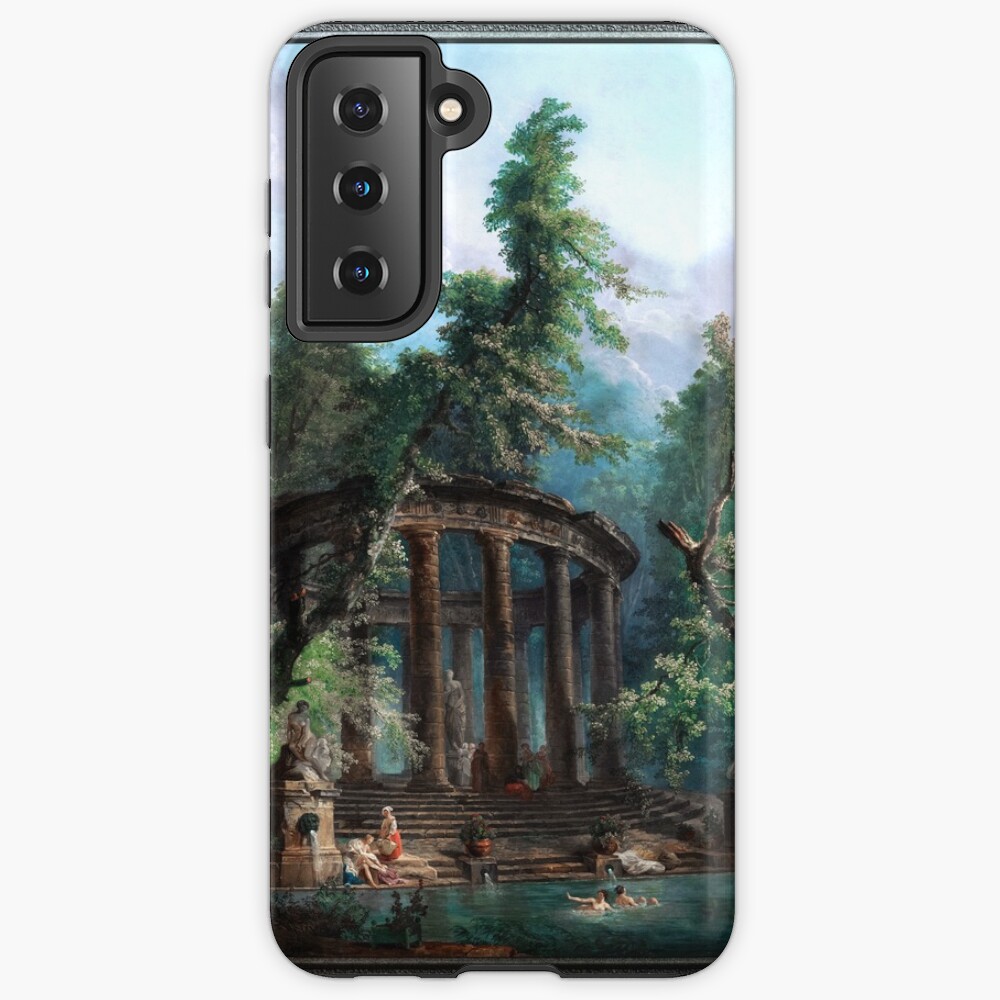
“בריכת הרחצה,” נוצר ב 1753 by the renowned French painter הוברט רוברט (1733 – 1808), showcases the artist’s mastery of architectural ruins and the romanticized nature of Classical antiquity. Robert, an esteemed artist of the Rococo and Neoclassical periods, has painted a tranquil yet vibrant scene that captivates the viewer with its harmonious blend of natural beauty and classical structures. The painting features a classical Roman bathhouse partially overtaken by nature, surrounded by lush greenery, and populated with figures engaged in leisurely activities. The scene evokes an atmosphere of serenity, nostalgia, ואלגנטיות נצחית, a hallmark of Robert’s style, which often celebrated the contrast between human achievement and the inevitable encroachment of nature.

תוכן העניינים
ההגדרה: Classical Ruins and Lush Greenery
ההגדרה של “בריכת הרחצה” is an idyllic and somewhat melancholic portrayal of a Roman ruin. בחזית, a circular colonnade, composed of imposing stone pillars, frames the scene. העמודות האלה, weathered by time, are still strong but bear the marks of age, with ivy creeping up their surfaces and tree branches intertwining through their spaces. The columns support a domed structure, hinting at a once grandiose building now abandoned and reclaimed by nature. The structure’s deterioration is made more poignant by the overgrowth of greenery, emphasizing the passage of time and the impermanence of even the greatest human creations.
Behind the bathhouse, the landscape is verdant and rich with plant life, with trees, bushes, and flowering vines spilling over the stonework. The dense foliage brings an air of quiet abundance, a peaceful backdrop to the figures within the pool. Nature’s dominance over the crumbling architecture adds to the romanticized ruin theme that Robert so often explored in his works.
The background extends to a distant, ethereal sky, painted with soft hues of blue and white clouds, creating a sense of openness and tranquility. This harmonious union between the decaying human-made structure and the flourishing natural world is a reflection of Robert’s deep fascination with the sublime beauty of nature and its ability to reclaim what was once built by mankind.
הדמויות: Leisure and Graceful Activity
In the foreground of the painting, several figures are depicted in relaxed poses, participating in various leisurely activities typical of an ancient bathing ritual. A group of women is seen bathing in the tranquil waters of a pool, their forms partially submerged. דמויות אלה, rendered with grace and elegance, evoke the classical ideal of beauty, each draped in flowing garments.
One of the women, seated by the edge of the pool, appears to be drying herself, while another stands by the water’s edge, looking serenely into the distance. The artist has paid meticulous attention to the details of their clothing, with the fabrics of their garments capturing the soft play of light and shadow.
Their leisurely actions contribute to the mood of relaxation and harmony in the scene, reinforcing the theme of tranquility. A nearby male figure, possibly a servant or attendant, is visible as well, gently assisting one of the women or perhaps preparing to enter the pool. His presence adds a human touch to the scene, grounding the viewer’s experience in a sense of historical realism while still maintaining the ethereal quality of the painting.
The figures in “בריכת הרחצה” embody the Rococo style’s emphasis on grace, תְנוּעָה, ויופי, though Robert subtly infuses them with a more contemplative air than is typically seen in the exuberant works of the period. The poses of the figures are not overtly theatrical, but rather relaxed and serene, emphasizing the calm and leisurely nature of the scene. Their interactions with one another suggest a sense of communal ease, as if in a private retreat or haven where time itself slows.
חומרים וטכניקה: Classical Precision Meets Romantic Atmosphere
Hubert Robert’s technical skill is evident in the execution of both the architectural elements and the natural surroundings. The precision of the columns and the detailed rendering of the stonework contrasts with the softer, more fluid treatment of the foliage and water.
The artist’s technique is particularly effective in conveying the interplay of light and shadow, which is vital in creating the depth and realism of the scene. הרך, diffused light that bathes the entire landscape lends an ethereal glow to the pool and figures, highlighting their forms and contributing to the peaceful ambiance of the painting.
Robert’s use of perspective is subtle but effective. The way the colonnade and the surrounding landscape recede into the distance creates a sense of expansive space. The ruins seem to stretch out before the viewer, inviting them into this almost dreamlike world of classical antiquity.
The colors are soft and harmonious, with light blues and greens predominating the palette, further enhancing the calm, idyllic mood. The coolness of the water, the verdant tones of the trees, and the muted stonework come together to create a visually cohesive and calming composition.
מצב רוח ונושא: טֶבַע, Time, and Transience
מצב הרוח של “בריכת הרחצה” הוא אחד של הרהורים שקטים. It evokes a sense of nostalgia for a past age while also suggesting the inevitability of time’s passage. ההריסות, once a symbol of human achievement, now stand in quiet ruin, overtaken by nature. This sense of impermanence is tempered, למרות זאת, by the serenity of the figures and the landscape, which suggests that, while human endeavors may fade, nature continues in its timeless cycle.
The theme of the painting revolves around the relationship between humanity, טֶבַע, וחלוף הזמן. The pool and its surroundings are not merely an architectural space but a metaphor for the fleeting nature of human civilization, contrasted with the eternal quality of nature. The figures in the scene represent a moment in time, but their activity is timeless, a serene reflection of a world that has endured beyond the human presence.
בריכת הרחצה היא רפרודוקציה של אמנות דיגיטלית משוחזרת של תמונה ברשות הרבים הזמינה לרכישה מקוונת בתור הדפס קנבס מגולגל.
ביו אמן
להלן מידע נגזר מ ויקיפדיה
הוברט רוברט נולד בפריז ב 1733. אביו, ניקולס רוברט, היה בשירותו של פרנסואה-ג'וזף דה צ'ויסול, מרקיז דה סטיינוויל דיפלומט מוביל מלוריין. רוברט הצעיר סיים את לימודיו אצל הישועים בקולג 'דה נוואר ב 1751 ונכנס לאטלייה של הפסל מישל-אנגה סלודץ שלימד אותו עיצוב ופרספקטיבה אך עודד אותו לפנות לציור. ב 1754 הוא יצא לרומא ברכבת של אטיין-פרנסואה דה צ'ויסול, בנו של המעסיק של אביו, שנקרא שגריר צרפת ויהיה מזכיר המדינה לענייני חוץ ללואי ה -15 1758.
הוא בילה אחת עשרה שנים ברומא, לאורך זמן מדהים; לאחר שנגמר מגוריו הרשמיים של האמן הצעיר באקדמיה הצרפתית ברומא, הוא תמך בעצמו ביצירות שהפיק לאניני טעם מבקרים כמו אבבה דה סן-נון, שלקח את רוברט לנאפולי באפריל 1760 לבקר בהריסות פומפיי. המרקיז דה מריני, מנהל Bâtiments du Roi התעדכן בהתפתחותו בהתכתבות עם נטואר, מנהל האקדמיה הצרפתית, אשר הפציר בכרטיסי הפנסיה לשרטט בחוץ, מהטבע: רוברט לא היה צריך שום דחיפות; רישומים מספרי הרישומים שלו מתעדים את מסעותיו: וילה ד'אסטה, קפרולה.
מבט על נמל ריפטה ברומא, ג. 1766, מראה את הפנתיאון הרומי העתיק ליד נמל דמיוני
הניגוד בין הריסות רומא העתיקה לחיי תקופתו עורר את התעניינותו העזה ביותר. הוא עבד זמן מה בסטודיו של פאניני, שאת ההשפעה שלו אפשר לראות בתצוגה הדמיונית של גלריית הלובר ההרוסה (אִיוּר). רוברט בילה את זמנו בחברת אמנים צעירים בחוג פיראנסי, אשר גבעותיו של חורבות שגדלו באופן רומנטי השפיעו עליו עד כדי כך שזכה לכינוי רוברט דה חורבות.[2] אלבומי הרישומים והרישומים שאסף ברומא סיפקו לו מוטיבים שעיבד לציורים לאורך הקריירה שלו.