

階段とオベリスクのある風景
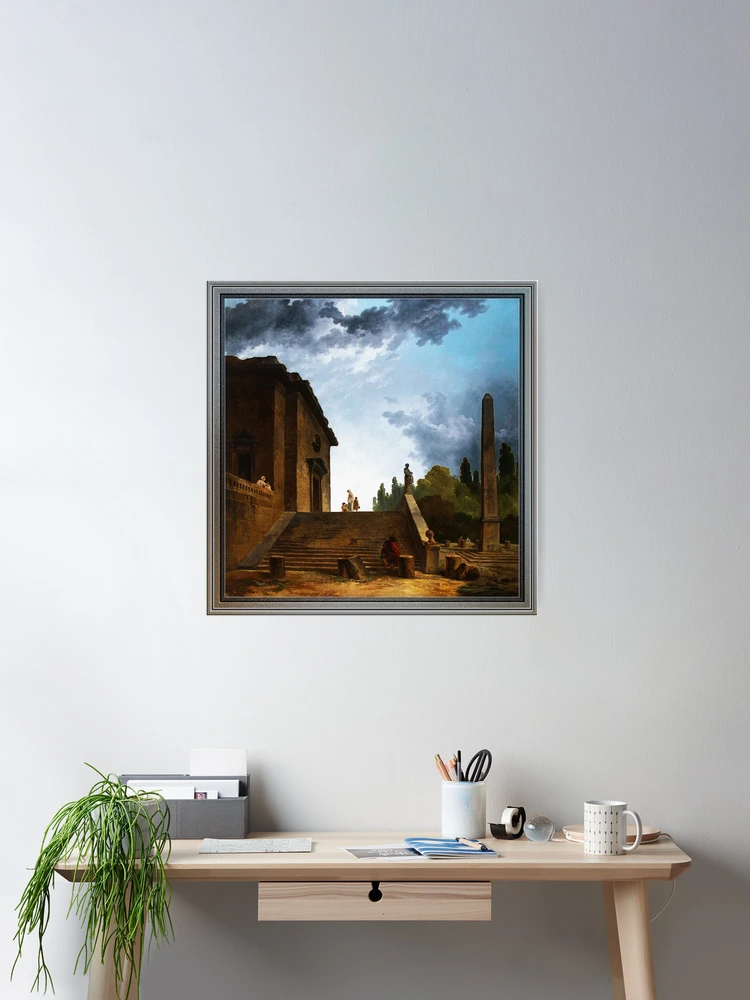
“階段とオベリスクのある風景” is a striking example of 18th-century French landscape painting, によって作成されました ユベール・ロバート その周り 1770-1780. Known for his fascination with classical ruins and grand architectural settings, Robert (1733 – 1808) captures a scene that exemplifies the romanticized aesthetic of the period. His work blends natural and man-made elements, illustrating a harmonious coexistence between the human-crafted structures and the vast, timeless landscape. This piece invites viewers to immerse themselves in a world where history, 自然, and architecture converge.
目次
主な主題と構成
The central focus of this artwork is the majestic set of stairs leading to a grand building or temple, complemented by the towering obelisk in the background. The stairs themselves are weathered and appear to be made of stone, their steps leading upward toward a stone structure. The presence of these stairs suggests an ancient or noble setting, possibly linked to historical or mythological references, characteristic of Robert’s romanticized depictions of classical ruins.
手前で, two individuals are depicted—one seated and another standing on the stairs. They are seemingly inconsequential to the grandeur of the setting but still play a vital role in adding a human presence that contrasts with the monumental architecture. Their placement helps balance the scale of the composition, providing a sense of human proportion amid the towering structures.
The obelisk, an ancient Egyptian monument re-imagined within a classical European setting, stands as another focal point to the right side of the composition. This object symbolizes the ancient world, evoking the sense of a lost civilization while anchoring the piece in the romantic classical themes Robert was known for. The use of the obelisk reinforces the notion of timelessness, a central theme in much of Robert’s work, where classical ruins are idealized to evoke both nostalgia and contemplation of past civilizations.
オブジェクトと地形
The terrain surrounding the stairs and obelisk is lush and expansive. The ground appears to be cultivated or at least managed, with well-kept paths leading through the terrain. 右側に, we see a few figures in the distance, seated or walking, giving the landscape a dynamic feel while reinforcing the setting’s tranquility. The backdrop of trees, with their expansive reach toward the sky, provides a striking contrast against the harsh lines of the stone architecture. The viewer’s eye is naturally drawn toward the horizon, where the trees begin to thin out, leading to a space dominated by clouds and a slightly darker sky.
The juxtaposition of human-made elements—such as the staircase, the obelisk, and the figures—and nature highlights the tension between civilization and the natural world. Robert’s careful rendering of the foliage, combined with the crisp outlines of the architectural elements, underscores the precision of his technique. This harmony between nature and architecture is a key characteristic of the Rococo and Neoclassical periods, where the human desire for understanding and order is reflected through such meticulously designed structures amid nature’s free-flowing form.
スタイルとテクニック
Robert’s style in this work is distinctly Rococo with elements of Neoclassicism, blending the ornate with the classical. 彼の光の使用, 影, and texture creates a sense of depth and dimension, inviting the viewer to step into the landscape. The clouds in the sky seem to swirl in dramatic motion, contrasting with the stillness of the stone objects below. This use of light and dark not only adds to the mood but also enhances the sense of timelessness that pervades the entire scene.
The application of light is masterful, with shadows creeping along the stone steps, highlighting the weathered texture of the structure. The obelisk, それも, is illuminated with soft, diffuse light, giving it an almost ethereal quality. 数字, small in comparison to the surrounding objects, are subtly shaded, further emphasizing their secondary role within the larger composition.
Robert’s technique, while focused on naturalistic detail, maintains an idealized interpretation of the ruins. The rocks and stone are not simply representations of decay but are infused with a sense of romantic nostalgia for an era gone by. The stones seem to have a timeless quality, making them not just relics of the past, but symbols of enduring beauty.
気分とテーマ
The mood of the painting is one of quiet contemplation. 設定, with its peaceful yet awe-inspiring structures, invites viewers to reflect on the past, the passage of time, and the impermanence of human creations. The natural landscape, in its lushness and vividness, contrasts with the stone architecture, suggesting the ephemeral nature of human achievement against the vast, enduring power of nature.
The classical ruins, while not overtly ancient in this depiction, invoke the grandeur of civilizations long past, evoking a sense of nostalgia and reverence for the lost civilizations of Rome and Egypt. The obelisk, with its Egyptian origins, stands as a reminder of these ancient powers. By choosing to depict such ruins, Robert not only preserves the legacy of these ancient structures but also elevates them, presenting them as objects of beauty rather than mere remnants of past civilizations.
The inclusion of figures adds a human touch to the scene, but their small scale and passive actions suggest that humanity, while significant, is but a fleeting moment in the timeline of history. The vast sky, dotted with dark clouds and illuminated by bursts of light, further amplifies the theme of nature’s dominance over time and human endeavors.
結論
“階段とオベリスクのある風景” is a masterful example of Hubert Robert’s ability to merge the beauty of nature with the elegance of classical architecture. The scene captures a moment where the monumental and the natural coexist, creating a serene yet thought-provoking atmosphere. Robert’s meticulous attention to detail, his skillful use of light and shadow, and his celebration of classical ruins all serve to reinforce the timeless theme of nature’s dominance and the fleeting nature of human achievement. This work invites the viewer not only to admire its technical brilliance but to reflect on the deeper themes of history, 時間, and memory.
階段とオベリスクのある風景は、パブリック ドメインの画像を修正したデジタル アートの古いマスターの複製であり、 ロールドキャンバスプリントオンライン.
アーティスト略歴
以下の情報から派生 Wikipedia.org
ユベール・ロバートはパリで生まれました 1733. 彼の父, ニコラス・ロバート, フランソワ・ジョセフ・ド・ショワズールに仕えていました, ロレーヌ出身の主要な外交官、マーキス・ド・ステインビル. 若いロバートは、のナバラ大学でイエズス会で勉強を終えました。 1751 そして彫刻家ミシェル・アンジュ・スロッツのアトリエに入り、彼は彼にデザインと展望を教えましたが、彼に絵画に目を向けるように勧めました. に 1754 彼はエティエンヌ・フランソワ・ド・ショワズールの列車でローマに向けて出発しました, 父親の雇用主の息子, フランス大使に任命され、ルイ15世の外務大臣になる予定だった 1758.
彼は完全に11年間ローマで過ごしました, 驚くべき時間の長さ; ローマのフランスアカデミーでの若い芸術家の公邸がなくなった後, 彼はサンノン修道院のような愛好家を訪問するために彼が制作した作品によって彼自身を支えました, 4月にロバートをナポリに連れて行った人 1760 ポンペイの遺跡を訪問する. マリニー侯爵, BâtimentsduRoiのディレクターは、ナトワールに対応して彼の発展に遅れをとっていませんでした, フランスアカデミーのディレクター, 年金受給者に屋外でスケッチするように促した人, 自然から: ロバートは促す必要はありませんでした; 彼のスケッチブックからの図面は彼の旅行を記録しています: ヴィラデステ, カプラローラ.
ローマのリペタ港の眺め, NS. 1766, 架空の港の隣に古代ローマのパンテオンを示しています
古代ローマの遺跡と彼の時代の生活との対比は、彼の鋭い関心を刺激しました. 彼はしばらくの間、パニーニのスタジオで働いていました, その影響は、ルーヴル美術館の廃墟の想像上の眺めで見ることができます (図). ロバートはピラネージのサークルの若いアーティストの会社で彼の時間を過ごしました, ロマンチックに生い茂った廃墟のカプリッチが彼に大きな影響を与えたため、彼はロバート・デ・ルインズというニックネームを獲得しました. 彼がローマで集めたスケッチやドローイングのアルバムは、彼が彼のキャリアを通して絵画に取り組んだモチーフを彼に提供しました.