

목욕탕 c1753
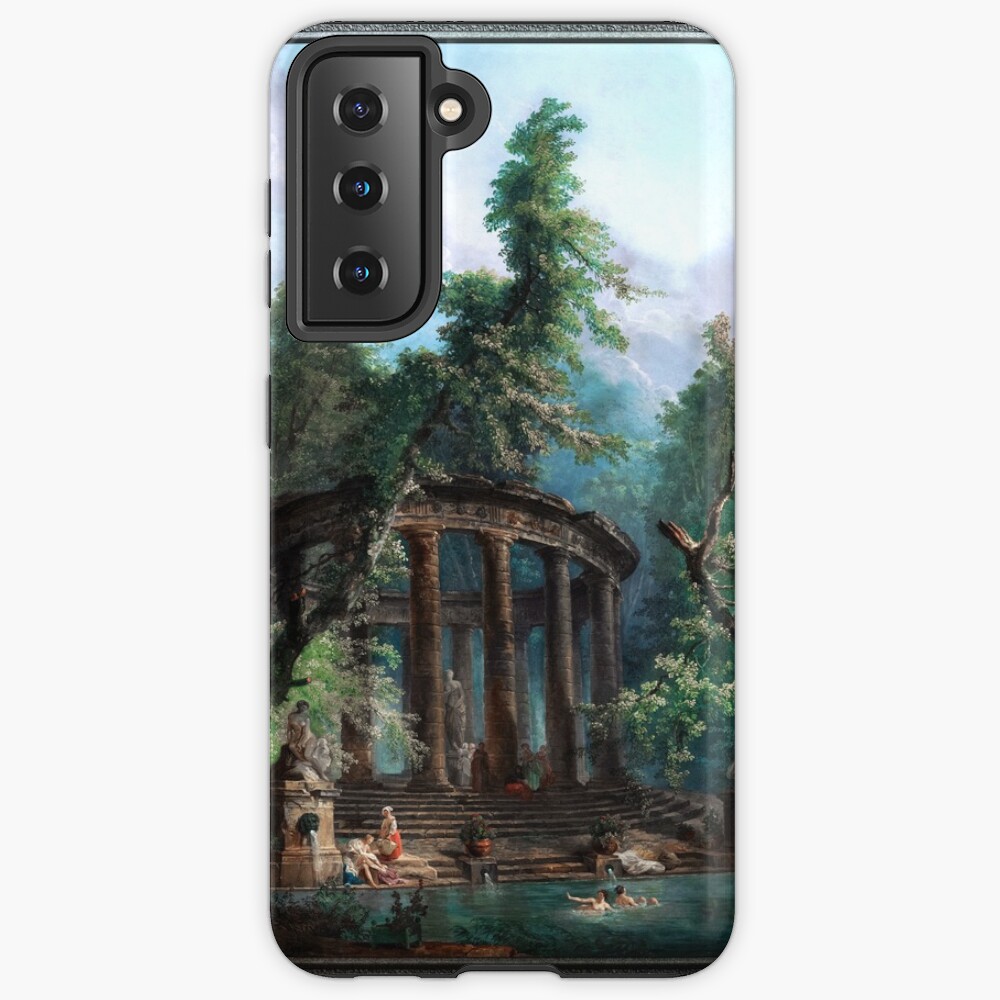
“해수욕장,” 다음에서 생성됨 1753 프랑스의 유명 화가의 작품 휴버트 로버트 (1733 – 1808), 건축 유적에 대한 예술가의 숙달과 고전 고대의 낭만적인 성격을 보여줍니다.. 로버트, 로코코와 신고전주의 시대의 존경받는 예술가, 자연의 아름다움과 고전적인 건축물이 조화롭게 어우러져 보는 사람을 사로잡는 고요하면서도 생동감 넘치는 풍경을 그려냈습니다.. 그림에는 자연이 부분적으로 뒤덮인 고전적인 로마식 목욕탕이 그려져 있습니다., 무성한 녹지로 둘러싸인, 여유로운 활동을 하고 있는 인물들로 채워져 있습니다. 고요한 분위기를 자아내는 장면, 노스탤지어, 그리고 시대를 초월한 우아함, 로버트 스타일의 특징, 인간의 성취와 피할 수 없는 자연의 침해 사이의 대조를 종종 찬양했습니다..

목차
설정: 고전 유적과 무성한 녹지
설정 “해수욕장” 로마 폐허를 목가적이고 다소 우울하게 묘사한 작품입니다.. 전경에서, 원형 열주, 인상적인 돌기둥으로 이루어진, 장면의 틀을 잡다. 이 열, 시간의 풍화, 여전히 강하지만 세월의 흔적이 남아있습니다, 담쟁이덩굴이 표면을 기어오르고 나뭇가지가 공간을 통해 얽혀 있습니다.. 기둥은 돔형 구조를 지원합니다., 한때 거대했던 건물이 이제는 자연에 의해 버려지고 매립되었음을 암시합니다. 녹지의 무성함으로 인해 구조의 노후화가 더욱 심해졌습니다., 시간의 흐름과 가장 위대한 인간 창조물의 무상함을 강조함.
목욕탕 뒤에, 풍경은 푸르르고 식물이 풍부합니다, 나무와 함께, 덤불, 그리고 돌담 위로 쏟아지는 꽃 덩굴. 울창한 나뭇잎이 조용하고 풍요로운 분위기를 선사합니다., 수영장 안의 인물들에 대한 평화로운 배경. Nature’s dominance over the crumbling architecture adds to the romanticized ruin theme that Robert so often explored in his works.
The background extends to a distant, ethereal sky, painted with soft hues of blue and white clouds, creating a sense of openness and tranquility. This harmonious union between the decaying human-made structure and the flourishing natural world is a reflection of Robert’s deep fascination with the sublime beauty of nature and its ability to reclaim what was once built by mankind.
그림: 여가와 품위 있는 활동
In the foreground of the painting, several figures are depicted in relaxed poses, participating in various leisurely activities typical of an ancient bathing ritual. A group of women is seen bathing in the tranquil waters of a pool, their forms partially submerged. 이 수치, rendered with grace and elegance, evoke the classical ideal of beauty, each draped in flowing garments.
여자 중 한 명, seated by the edge of the pool, appears to be drying herself, while another stands by the water’s edge, looking serenely into the distance. The artist has paid meticulous attention to the details of their clothing, with the fabrics of their garments capturing the soft play of light and shadow.
Their leisurely actions contribute to the mood of relaxation and harmony in the scene, reinforcing the theme of tranquility. A nearby male figure, possibly a servant or attendant, is visible as well, gently assisting one of the women or perhaps preparing to enter the pool. His presence adds a human touch to the scene, grounding the viewer’s experience in a sense of historical realism while still maintaining the ethereal quality of the painting.
The figures in “해수욕장” embody the Rococo style’s emphasis on grace, 움직임, 그리고 아름다움, though Robert subtly infuses them with a more contemplative air than is typically seen in the exuberant works of the period. The poses of the figures are not overtly theatrical, but rather relaxed and serene, emphasizing the calm and leisurely nature of the scene. Their interactions with one another suggest a sense of communal ease, as if in a private retreat or haven where time itself slows.
재료 및 기술: 클래식한 정확성과 로맨틱한 분위기의 만남
Hubert Robert’s technical skill is evident in the execution of both the architectural elements and the natural surroundings. The precision of the columns and the detailed rendering of the stonework contrasts with the softer, more fluid treatment of the foliage and water.
The artist’s technique is particularly effective in conveying the interplay of light and shadow, which is vital in creating the depth and realism of the scene. 부드러운, diffused light that bathes the entire landscape lends an ethereal glow to the pool and figures, highlighting their forms and contributing to the peaceful ambiance of the painting.
Robert’s use of perspective is subtle but effective. The way the colonnade and the surrounding landscape recede into the distance creates a sense of expansive space. The ruins seem to stretch out before the viewer, inviting them into this almost dreamlike world of classical antiquity.
색상이 부드럽고 조화로워요, 밝은 파란색과 녹색이 팔레트를 지배합니다., 안정감을 더욱 강화, 목가적인 분위기. 물의 시원함, 나무의 푸르른 음색, 차분한 석조물이 함께 모여 시각적으로 응집력 있고 차분한 구성을 만들어냅니다..
분위기와 테마: 자연, 시간, 그리고 일시적인 것
분위기 “해수욕장” 조용한 명상 중 하나입니다. 지나간 시대에 대한 향수를 불러일으키는 동시에 시간의 흐름의 필연성을 암시하기도 합니다.. 폐허, 한때 인간 성취의 상징이었던, 이제 조용한 폐허 속에 서 있다, 자연에 압도된. 이 무상함이 완화되었습니다., 하나, 인물과 풍경의 평온함으로 인해, 이는 다음을 암시합니다., 인간의 노력이 사라질 수 있는 동안, 자연은 시간을 초월한 순환을 계속합니다.
그림의 주제는 인류 간의 관계를 중심으로 전개됩니다., 자연, 그리고 시간의 흐름. 수영장과 그 주변은 단순한 건축적 공간이 아닌 인류 문명의 덧없음을 은유한다., 자연의 영원한 특성과 대조. 장면의 인물은 시간의 순간을 나타냅니다., 하지만 그들의 활동은 시대를 초월합니다, 인간의 존재를 넘어 지속된 세계에 대한 고요한 반영.
The Bathing Pool은 온라인으로 구매할 수 있는 공개 도메인 이미지를 수정한 디지털 아트 옛 거장의 복제품입니다. 압연 캔버스 인쇄.
아티스트 약력
아래에서 파생된 정보 위키피디아
Hubert Robert는 파리에서 태어났습니다. 1733. 그의 아버지, 니콜라스 로버트, François-Joseph de Choiseul의 서비스에 있었다, 후작 드 스테인빌(Marquis de Stainville)은 로렌(Lorraine)의 주요 외교관. Young Robert는 Collège de Navarre에서 예수회와 함께 공부를 마쳤습니다. 1751 그리고 그에게 디자인과 원근법을 가르쳤지만 그림으로 전향하도록 격려한 조각가 Michel-Ange Slodtz의 아틀리에에 들어갔습니다.. 에 1754 그는 Étienne-François de Choiseul의 기차를 타고 로마로 떠났다., 아버지 고용주의 아들, 그는 프랑스 대사로 임명되었고 루이 15세의 외무장관이 되었다. 1758.
그는 로마에서 완전히 11년을 보냈다, 놀라운 시간; 로마에 있는 프랑스 아카데미에서 젊은 예술가의 공식 거주지가 끝난 후, 그는 abbe de Saint-Non과 같은 방문 감정가를 위해 제작한 작품으로 생계를 유지했습니다., 4월에 로버트를 나폴리로 데려간 사람 1760 폼페이 유적지를 방문하기 위해. 후작 드 마리니, Bâtiments du Roi의 감독은 Natoire와 통신하면서 그의 발전을 따라갔습니다., 프랑스 아카데미 원장, 연금 수급자들에게 야외에서 스케치를 하라고 촉구한 사람, 자연에서: 로버트는 재촉할 필요가 없었다; 그의 스케치북에 있는 그림은 그의 여행을 기록합니다.: 빌라 데스테, 카프라롤라.
로마의 리페타 항구 전경, 씨. 1766, 상상의 항구 옆에 고대 로마 판테온을 보여주는
고대 로마의 폐허와 당대의 삶의 대조는 그의 가장 뜨거운 관심을 불러일으켰습니다.. 그는 Pannini의 스튜디오에서 한동안 일했습니다., 폐허가 된 루브르 박물관의 상상 속의 모습에서 그 영향력을 볼 수 있습니다. (삽화). Robert는 Piranesi 서클의 젊은 예술가 회사에서 시간을 보냈습니다., 낭만적으로 자란 폐허의 변덕이 그에게 큰 영향을 주어 그는 Robert des 폐허라는 별명을 얻었습니다.[2] 그가 로마에서 수집한 스케치와 그림의 앨범은 그가 평생 동안 그림으로 작업한 모티브를 제공했습니다..