

The Bathing Pool c1753
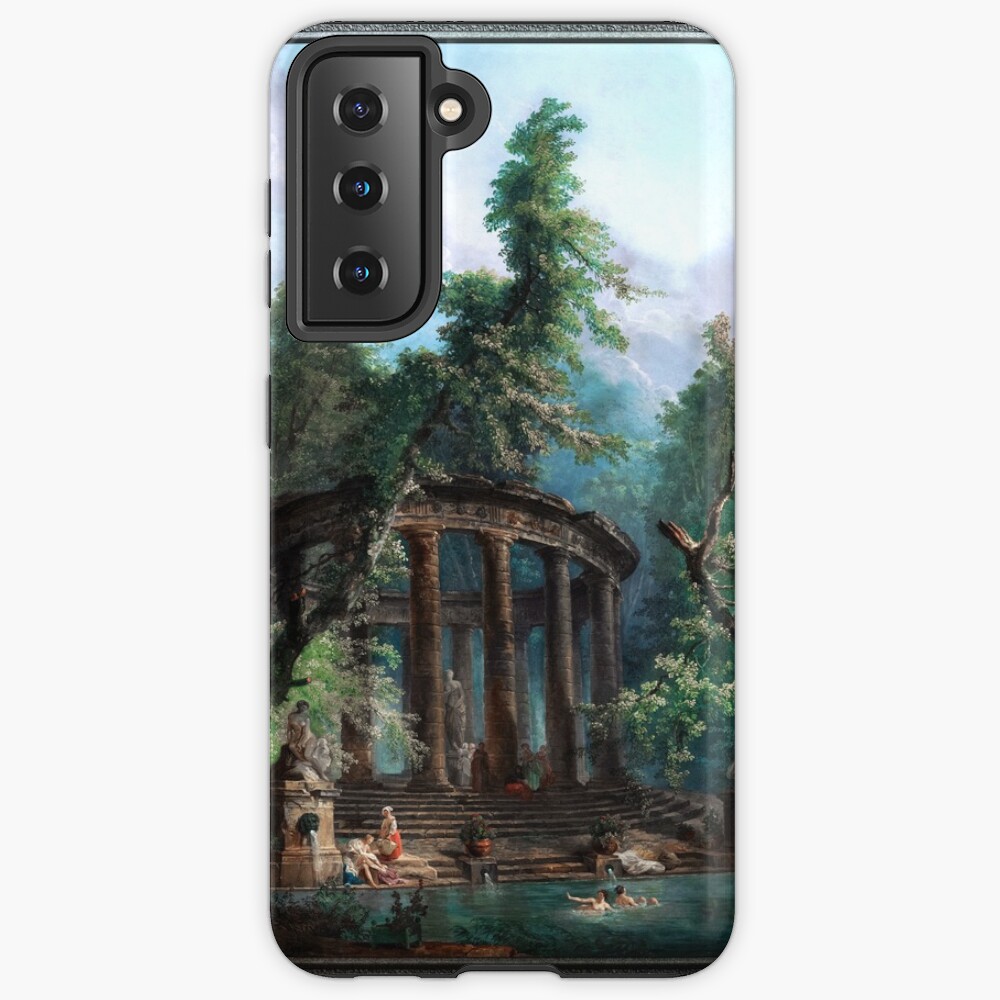
“Basen kąpielowy,” stworzony w 1753 by the renowned French painter Hubert Robert (1733 – 1808), showcases the artist’s mastery of architectural ruins and the romanticized nature of Classical antiquity. Robert, an esteemed artist of the Rococo and Neoclassical periods, has painted a tranquil yet vibrant scene that captivates the viewer with its harmonious blend of natural beauty and classical structures. The painting features a classical Roman bathhouse partially overtaken by nature, surrounded by lush greenery, and populated with figures engaged in leisurely activities. The scene evokes an atmosphere of serenity, nostalgia, i ponadczasowa elegancja, a hallmark of Robert’s style, which often celebrated the contrast between human achievement and the inevitable encroachment of nature.

Spis treści
Ustawienie: Classical Ruins and Lush Greenery
The setting of “Basen kąpielowy” is an idyllic and somewhat melancholic portrayal of a Roman ruin. Na pierwszym planie, a circular colonnade, composed of imposing stone pillars, frames the scene. These columns, weathered by time, are still strong but bear the marks of age, with ivy creeping up their surfaces and tree branches intertwining through their spaces. The columns support a domed structure, hinting at a once grandiose building now abandoned and reclaimed by nature. The structure’s deterioration is made more poignant by the overgrowth of greenery, emphasizing the passage of time and the impermanence of even the greatest human creations.
Behind the bathhouse, the landscape is verdant and rich with plant life, with trees, bushes, and flowering vines spilling over the stonework. The dense foliage brings an air of quiet abundance, a peaceful backdrop to the figures within the pool. Nature’s dominance over the crumbling architecture adds to the romanticized ruin theme that Robert so often explored in his works.
The background extends to a distant, ethereal sky, painted with soft hues of blue and white clouds, creating a sense of openness and tranquility. This harmonious union between the decaying human-made structure and the flourishing natural world is a reflection of Robert’s deep fascination with the sublime beauty of nature and its ability to reclaim what was once built by mankind.
Liczby: Leisure and Graceful Activity
In the foreground of the painting, several figures are depicted in relaxed poses, participating in various leisurely activities typical of an ancient bathing ritual. A group of women is seen bathing in the tranquil waters of a pool, their forms partially submerged. Te liczby, rendered with grace and elegance, evoke the classical ideal of beauty, each draped in flowing garments.
One of the women, seated by the edge of the pool, appears to be drying herself, while another stands by the water’s edge, looking serenely into the distance. The artist has paid meticulous attention to the details of their clothing, with the fabrics of their garments capturing the soft play of light and shadow.
Their leisurely actions contribute to the mood of relaxation and harmony in the scene, reinforcing the theme of tranquility. A nearby male figure, possibly a servant or attendant, is visible as well, gently assisting one of the women or perhaps preparing to enter the pool. His presence adds a human touch to the scene, grounding the viewer’s experience in a sense of historical realism while still maintaining the ethereal quality of the painting.
The figures in “Basen kąpielowy” embody the Rococo style’s emphasis on grace, ruch, i piękno, though Robert subtly infuses them with a more contemplative air than is typically seen in the exuberant works of the period. The poses of the figures are not overtly theatrical, but rather relaxed and serene, emphasizing the calm and leisurely nature of the scene. Their interactions with one another suggest a sense of communal ease, as if in a private retreat or haven where time itself slows.
Materiały i technika: Classical Precision Meets Romantic Atmosphere
Hubert Robert’s technical skill is evident in the execution of both the architectural elements and the natural surroundings. The precision of the columns and the detailed rendering of the stonework contrasts with the softer, more fluid treatment of the foliage and water.
The artist’s technique is particularly effective in conveying the interplay of light and shadow, which is vital in creating the depth and realism of the scene. Miękkie, diffused light that bathes the entire landscape lends an ethereal glow to the pool and figures, highlighting their forms and contributing to the peaceful ambiance of the painting.
Robert’s use of perspective is subtle but effective. The way the colonnade and the surrounding landscape recede into the distance creates a sense of expansive space. The ruins seem to stretch out before the viewer, inviting them into this almost dreamlike world of classical antiquity.
The colors are soft and harmonious, with light blues and greens predominating the palette, further enhancing the calm, idyllic mood. The coolness of the water, the verdant tones of the trees, and the muted stonework come together to create a visually cohesive and calming composition.
Nastrój i motyw: Natura, Time, and Transience
Nastrój “Basen kąpielowy” is one of quiet contemplation. It evokes a sense of nostalgia for a past age while also suggesting the inevitability of time’s passage. The ruins, once a symbol of human achievement, now stand in quiet ruin, overtaken by nature. This sense of impermanence is tempered, jednak, by the serenity of the figures and the landscape, which suggests that, while human endeavors may fade, nature continues in its timeless cycle.
The theme of the painting revolves around the relationship between humanity, Natura, i upływ czasu. The pool and its surroundings are not merely an architectural space but a metaphor for the fleeting nature of human civilization, contrasted with the eternal quality of nature. The figures in the scene represent a moment in time, but their activity is timeless, a serene reflection of a world that has endured beyond the human presence.
The Bathing Pool to wyretuszowana reprodukcja starych mistrzów sztuki cyfrowej obrazu należącego do domeny publicznej, którą można kupić online jako zrolowany obraz na płótnie.
Biografia artysty
Poniżej informacje pochodzące z Wikipedia
Hubert Robert urodził się w Paryżu w 1733. Jego ojciec, Nicolas Robert, był w służbie François-Josepha de Choiseul, markiz de Stainville czołowy dyplomata z Lotaryngii. Młody Robert ukończył studia u jezuitów w Collège de Navarre in 1751 i wszedł do atelier rzeźbiarza Michel-Ange Slodtz, który nauczył go projektowania i perspektywy, ale zachęcił go do zwrócenia się do malarstwa. W 1754 wyjechał do Rzymu pociągiem Étienne-François de Choiseul, syn pracodawcy ojca, który został mianowany ambasadorem Francji i został sekretarzem stanu do spraw zagranicznych Ludwika XV w 1758.
W Rzymie spędził całe jedenaście lat, niezwykła długość czasu; po wygaśnięciu oficjalnej rezydencji młodego artysty w Akademii Francuskiej w Rzymie, utrzymywał się z dzieł, które produkował dla odwiedzających go koneserów, takich jak księdza Saint-Non, który zabrał Roberta do Neapolu w kwietniu? 1760 odwiedzić ruiny Pompei. markiz de Marigny, dyrektor Bâtiments du Roi w korespondencji z Natoire . na bieżąco śledził swój rozwój, dyrektor Akademii Francuskiej, który namawiał emerytów do szkicowania w plenerze, z natury: Robert nie potrzebował zachęty; rysunki z jego szkicowników dokumentują jego podróże: Willa d'Este, Caprarola.
Widok na port Rippeta w Rzymie, C. 1766, przedstawiający starożytny rzymski Panteon obok wyimaginowanego portu
Kontrast między ruinami starożytnego Rzymu a życiem w jego czasach wzbudził jego największe zainteresowanie. Pracował przez pewien czas w pracowni Pannini, którego wpływ można zobaczyć w Wyimaginowanym Widoku Galerii Zrujnowanego Luwru (ilustracja). Robert spędzał czas w towarzystwie młodych artystów z kręgu Piranesi, którego kaprysy romantycznie zarośniętych ruin wpłynęły na niego tak bardzo, że zyskał przydomek Robert des ruines.[2] Albumy ze szkicami i rysunkami, które zgromadził w Rzymie, dostarczyły mu motywów, które tworzył w malarstwie przez całą swoją karierę.