

Die Schlacht von Quiberon Bay
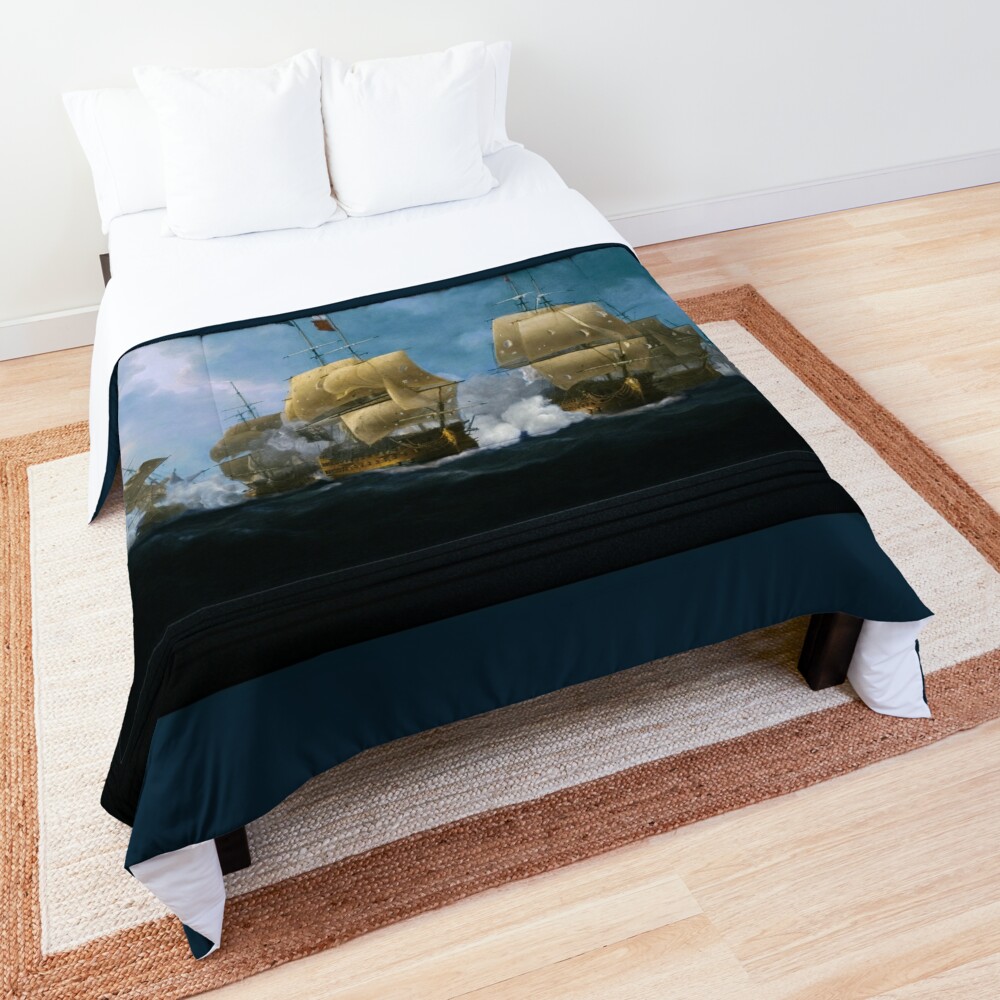
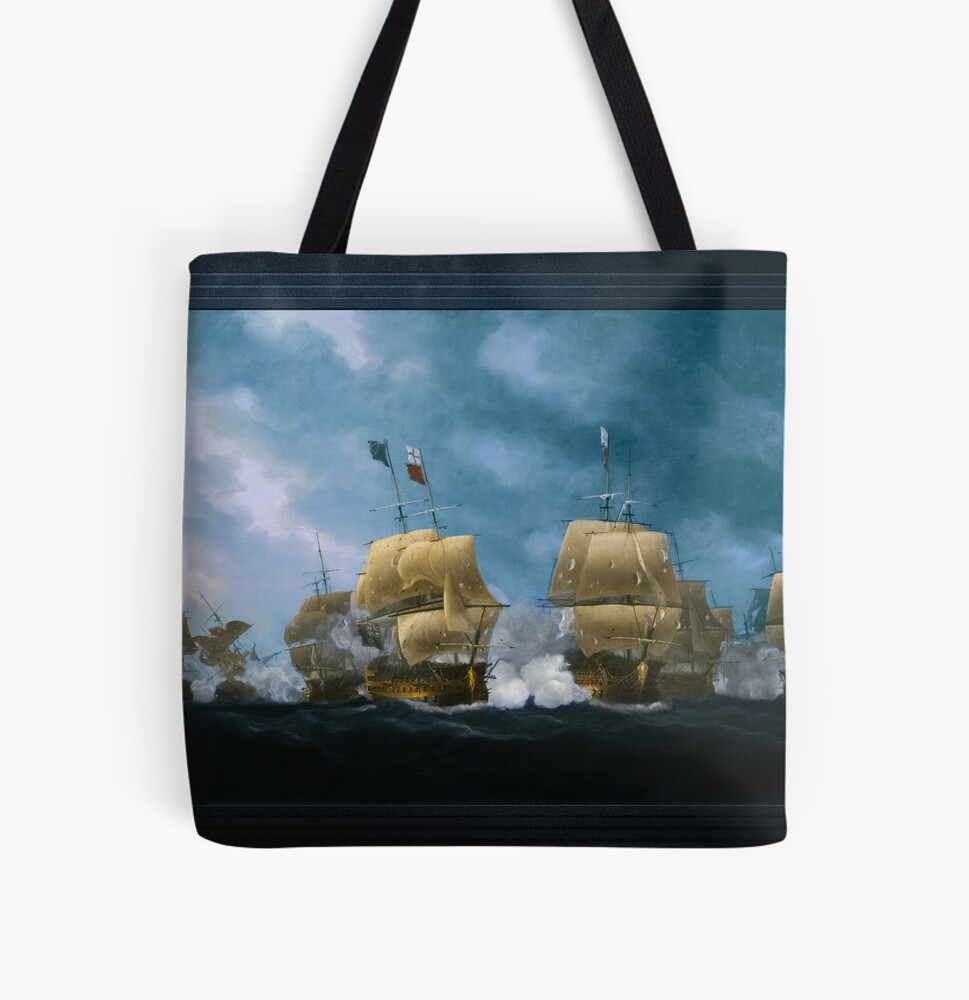
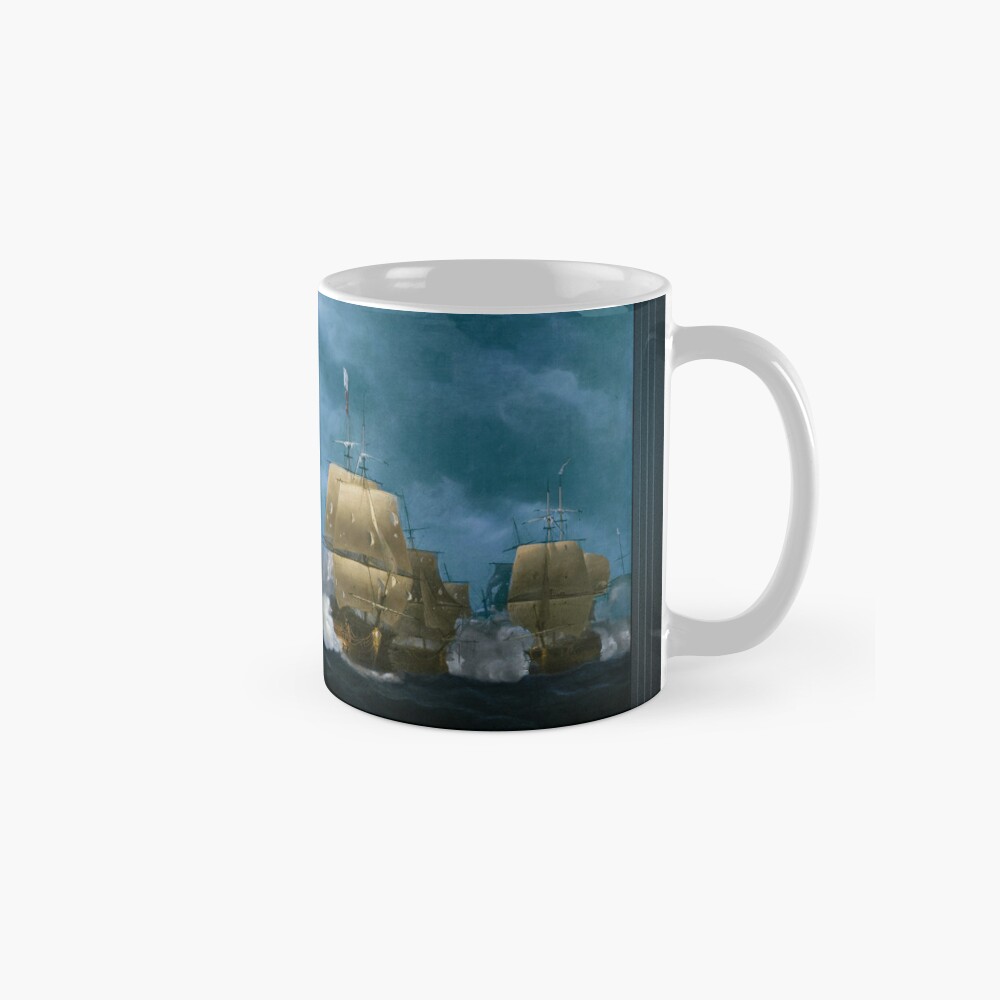
Die Schlacht von Quiberon Bay, an 20 November 1759 vom britischen Maler Nicholas Pocock (1740 – 1821); is known for the numerous naval battle scenes he created during the age of the sailing ships
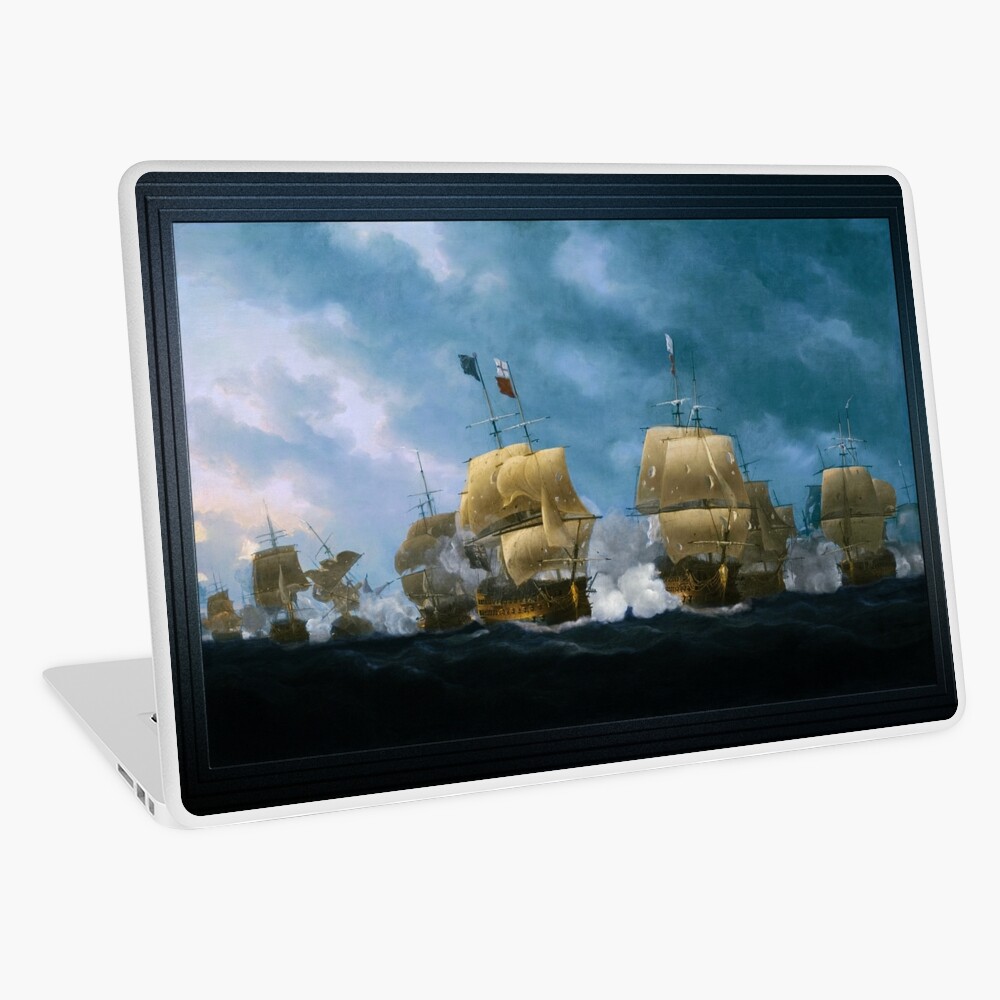
Die Seeschlacht von Quiberon Bay wird in diesem Gemälde des britischen Malers Nicholas Pocock eindrucksvoll dargestellt, habe einen Flotte der Kriegsschiffe, die einen Seekrieg führen, auf engem Raum aufeinander einwirken, feuern ihre Kanonen in die Eingeweide der anderen Kriegsschiffe auf der rauen hohen See, unter Gewitterwolken an einem stark bewölkten Tag.
The Battle of Quiberon Bay is a retouched digital art old masters reproduction of a public domain image that is available for purchase online in a variety of material formats including canvas prints, Acryldrucke, Metalldrucke, Holzdrucke, gerahmte Drucke, Plakate, und wie gerollte Leinwanddrucke in verschiedenen Größen von 12 Zoll zu 72 Zoll, abhängig von der Größe des tatsächlichen Kunstwerks und dem Print-on-Demand-Shop, in dem Sie das Kunstwerk kaufen möchten.
Informationen unten abgeleitet von Royal Museums Greenwich
The Battle of Quiberon Bay was a major naval engagement that took place on November 20, 1759, during the Seven Years War. The conflict involved the major European colonial powers and was fought around the globe. The French had been at war with Britain since 1756, and their position in Canada, Indien, and the West Indies was on the verge of collapse. In Europa, they faced stalemate against Prussia, which received British support.
The French planned to land an army of 20,000 men in Ireland, which was assembled in the gulf of Morbihan in southern Brittany under the Duc d’Aiguillon. The force was to be escorted by the Brest fleet under Admiral Hubert de Conflans. Admiral Sir Edward Hawke’s Channel Fleet blockaded Brest to prevent the French from leaving to collect the troop transports. jedoch, during a gale in the first week of November, Hawke’s ships were forced to run for shelter in Torbay, giving de Conflans the chance to escape.
On hearing that the French had escaped, Hawke pursued them and sighted them 20 miles out to sea on November 20. De Conflans, relying on local knowledge, ordered his fleet to take refuge in Quiberon Bay, south of Morbihan, assuming Hawke would not follow due to the ill-charted rocks, reefs, and wild seas. This was a miscalculation, and Hawke relentlessly pursued him into the bay, losing two of his own ships on the outer reefs but sinking the French ‘Thesee’ and ‘Superbe’ by a combination of gunfire and the weather, and otherwise decimating de Conflans’ force in what became an action practically in the dark.
The French flagship ‘Soleil Royal’ went aground in the bay, near Le Croisic, and was burned to prevent capture the following day. Others were captured, including the ‘Heros,’ which was burned. A few French ships escaped to Rochefort, and some others managed to find refuge in the mouth of the River Vilaine, where they were trapped for months, and one more lost by grounding.
The battle was a decisive victory for the British, and it stopped any French plans to invade Britain during the Seven Years War. The famous naval song ‘Hearts of Oak’ was composed to commemorate the battle. The battle was fought so close inshore that contemporary accounts reported that ten thousand persons watched it from the coast.
This rather later painting by Pocock is partly based on an earlier one by Dominic Serres and shows Hawke’s ‘Royal George’ in the left center, with his blue admiral’s color at the main, in action with de Conflans’ ‘Soleil Royal’ to the right, though the latter is wrongly shown as a three-decker. A French ship astern of the ‘Royal George’ is firing broadsides on both sides, her starboard battery probably directed at Augustus Keppel’s ‘Torbay,’ while between them, the French ‘Thesee’ sinks by the bows.
This was largely due to water swamping through her lower and forward leeward gunports in the heavy seas, since this battle was an example of the disadvantage of fighting with the ‘weather gauge’ (the generally assumed benefit of being to windward).
Info unten abgeleitet von Wikipedia.org
Pocock wurde in Bristol geboren 1740; der Sohn eines Seemanns, er folgte dem Beruf seines Vaters und war im Alter von 10 Jahren Kapitän eines Handelsschiffes 26.
Während seiner Zeit auf See, er wurde ein geschickter Künstler, indem er Tusche- und Waschskizzen von Schiffen und Küstenszenen für seine Logbücher anfertigte.
Im 1778, Pococks Arbeitgeber, Richard Champion, wurde aufgrund der Auswirkungen des Amerikanischen Unabhängigkeitskrieges auf den transatlantischen Handel finanziell zahlungsunfähig.
Als Ergebnis, Pocock gab das Meer auf und widmete sich der Malerei; das erste seiner Werke wird von der British Royal Academy of Arts in ausgestellt 1782.
Später im Jahr, Pocock erhielt den Auftrag, eine Reihe von Gemälden zu erstellen, die George Rodneys Sieg in der Schlacht von Saintes . illustrieren; und als Liebling von Samuel Hood wurde er zum Marinemaler von König George ernannt.
Pococks Marinebilder beinhalteten umfangreiche Recherchen, inklusive Befragung von Augenzeugen zu Wetter- und Windverhältnissen sowie den Positionen, Zustand, und Aussehen ihrer Schiffe; und Zeichnen detaillierter Schlachtpläne und vorläufiger Skizzen einzelner Schiffe.
Er war auch selbst beim Glorious First of June in 1794, an Bord der Fregatte HMS Pegasus. Neben seinen großformatigen Ölgemälden, die Seeschlachten darstellen, Pocock produzierte auch viele Aquarelle von Küsten- und Schiffsszenen.