

La batalla de Terheide
Jan Abrahamsz Beerstraaten’s (1622 – 1666) cuadro “La batalla de Terheide”, captures an intense and dramatic scene from one of the naval conflicts of the mid-17th century. Painted between 1653 y 1666, during a period of Dutch maritime power, Beerstraaten’s work portrays the powerful naval engagement between the Dutch fleet and its adversaries. This artwork offers a compelling window into the military conflicts of the time, particularly focusing on the naval warfare between the Dutch Republic and its enemies. Known for his skill in depicting dramatic sea battles, Beerstraaten’s composition serves not only as a historical document but also as a dynamic exploration of the chaos and intensity of war at sea.
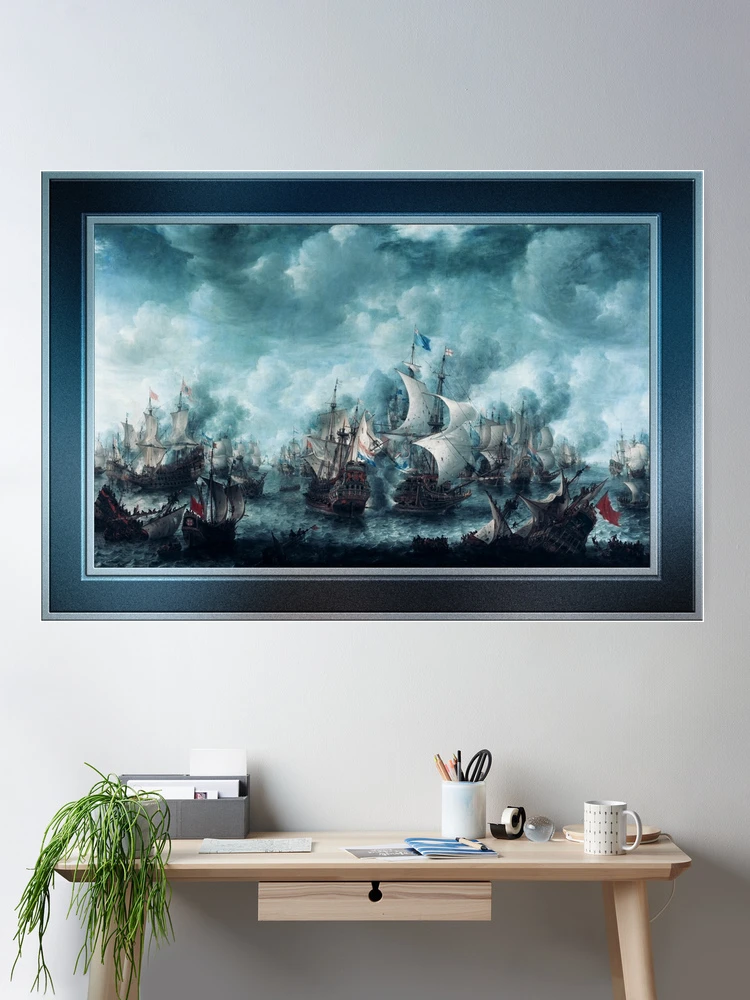
Tabla de contenido
Estilo y técnica
Beerstraaten’s painting is rendered in the Baroque style, characterized by its dramatic contrasts, intense movement, and a highly emotive atmosphere. Baroque art frequently emphasizes action, tensión, y emoción, and this piece encapsulates all of those elements. The stormy sky and tumultuous sea exemplify the Baroque interest in dramatic, sweeping visuals.
The composition is crowded with numerous ships battling in the foreground, while the background is enveloped in dark clouds, suggesting both the physical and symbolic chaos of war. The vibrant colors of the flags and sails are contrasted against the dark sky and turbulent sea, giving the painting a sense of urgency and intensity. This contrast not only highlights the main subjects—the ships and their naval engagement—but also adds to the overall sense of tension and danger.
The intricate details of the ships, their masts, and the sails are executed with precision, showcasing Beerstraaten’s technical mastery. The artist used oil paint, as was common in the Baroque period, which allowed for rich colors and smooth blending, giving depth to the figures of the ships, sailors, and the sea itself.
His brushwork conveys the roughness of the sea, with foamy waves and turbulent water splashing around the vessels, as if the elements themselves were in violent opposition to the human endeavor of battle. The motion in the waves and the sails of the ships is depicted with a fluidity that gives a sense of constant movement, further heightening the dramatic effect of the piece.
Tema y estado de ánimo
“La batalla de Terheide” is not just a historical depiction; it carries a deep narrative. The stormy sky, the chaotic clash of ships, and the swarming of men on board convey the violence, confusion, and uncertainty of battle. The portrayal of naval warfare emphasizes both the brutality and the strategy involved in such engagements, with sailors seemingly locked in a desperate struggle for survival amidst the treacherous sea.
The tension between the opposing forces, reflected in the chaotic swirling of ships and the smoke from the guns, conveys a sense of hopelessness and determination. The tumultuous sky, with its dark clouds and flashes of light, intensifies the emotional impact, as if nature itself is participating in the struggle between the fleets.
The mood of the painting is tense and somber, tinged with a sense of impending danger. It suggests the toll that such naval conflicts took on those involved—both on the sailors aboard the ships and on the surrounding world. Despite the overwhelming scale of the battle, there are no clear victors in the scene, which suggests the destructive and cyclical nature of war. Calles de cerveza, sin emabargo, subtly evokes a sense of national pride through the depiction of the Dutch flags waving above some of the ships, a nod to the naval supremacy that the Dutch Republic sought to maintain during the 17th century.
Tema principal y objetos
The focal point of the painting is, naturalmente, the naval battle. The composition is dominated by several large ships engaged in combat. Estos buques, towering above the sea and surrounded by smoke and splashing water, are rendered in sharp detail, showcasing their intricate rigging and imposing sails.
los barcos, with their tall masts and billowing sails, appear to be caught in a violent storm, which amplifies the chaos of the battle. The way the ships are painted suggests a struggle for control, with sailors seen as small figures on deck, battling with their surroundings, the wind, and each other.
Adicionalmente, the depiction of the sea plays an integral role in the painting. The waves seem to grow more violent as they crash against the hulls of the ships, further symbolizing the chaotic forces at play in the battle. The colors of the water range from dark, almost black shades near the ships to lighter tones as the waves churn, creating a sense of movement and unrest.
The sky is another important element in Beerstraaten’s composition. Está lleno de nubes arremolinadas y manchas de luz., posiblemente aludiendo a la naturaleza impredecible de la batalla y las fuerzas de la naturaleza con las que tuvieron que enfrentarse los marineros. las nubes, pesado con lluvia inminente, Contribuir a la atmósfera sombría y premonitoria de la pintura..
Terreno y materiales
El artista capta la naturaleza tumultuosa del mar., Lo cual es crucial para comprender el terreno de esta batalla.. El agua no esta en calma., extensión pacífica, pero un violento, Masa agitada que parece reflejar la agresión y el tumulto de la batalla que tiene lugar encima.. Las olas están representadas de una manera que las hace parecer casi criaturas., cobrando vida con furia e intención. el mar, por lo tanto, se convierte no sólo en un telón de fondo sino en un participante activo en la lucha.
Beerstraaten también representa hábilmente el humo y los disparos que salen de los barcos., aumentando la sensación de acción y peligro en la escena.. Este humo difumina partes de la composición., hacer que el espectador sienta la desorientación y el caos de la batalla, mientras que los destellos de los disparos y los disparos de cañón brindan énfasis visual al momento del conflicto..
Conclusión
Jan Abrahamsz Beerstraaten’s “La batalla de Terheide c1653 – 1666” es un retrato sorprendente de la guerra naval durante el siglo XVII.. A través de su uso del estilo barroco., el artista enfatiza el caos, intensidad, y emociones de batalla en el mar. La dramática representación del mar tormentoso., cielos violentos, y barcos intrincados hacen de esta pintura no solo un documento histórico sino también una narrativa cautivadora del conflicto., naturaleza, y determinación humana. La obra ejemplifica la destreza técnica de Beerstraaten y su capacidad para capturar la esencia de un período turbulento de la historia holandesa..
Esta es una reproducción de viejos maestros de arte digital retocada de una imagen de dominio público.
Esta creación de arte digital, al igual que todas las obras de arte que se pueden encontrar en el sitio web de Xzendor7, están disponibles para su compra en línea en una variedad de formatos de materiales, incluidas impresiones en lienzo, impresiones acrílicas, impresiones de metal, impresiones de madera, láminas enmarcadas, carteles, y como lienzos enrollados en una variedad de tamaños, desde 12 pulgadas a 72 pulgadas según el tamaño de la obra de arte real y la tienda de impresión bajo demanda en la que elija comprar la obra de arte.
La obra de arte también está disponible en una amplia gama de prendas de vestir para hombres y mujeres., tazas, totalizadores, bufandas, cuadernos y diarios y muchos productos de decoración del hogar..
Sobre el artista
Debajo de la información cortesía Wikipedia.org
Existe cierta confusión sobre la identidad de cuatro paisajistas llamados Beerstraaten; Johannes, este Jan Abrahamsz, Abrahán, y Anthonie. Jan Abrahamsz, pintor, casado en Amsterdam el 30 agosto 1642.
De este matrimonio nacieron once hijos, y cuando se casó por segunda vez en 1665, nació una hija. Actualmente, El RKD registra a Johannes como la misma persona, y Abraham Beerstraaten es considerado su hijo mayor..
Anthonie Beerstraaten estaba relacionada con este pintor. El RKD ha registrado dos cuadros firmados por Anthonie van Beerstraten: una es una vista de un puerto marítimo del sur desde 1664 (actualmente ubicación Enkhuizen) y el otro una vista de una iglesia en Aarlanderveen en el antiguo ayuntamiento de Alphen aan den Rijn. Basado en estas dos pinturas C.
Hofstede de Groot, uno de los primeros historiadores del arte holandés, cuadros clasificados firmados A. Beerstraaten como por Anthonie si fueran una calificación más pobre que las ya atribuidas a Abraham.