

Venuksen syntymä: A Celebration of Classical Beauty
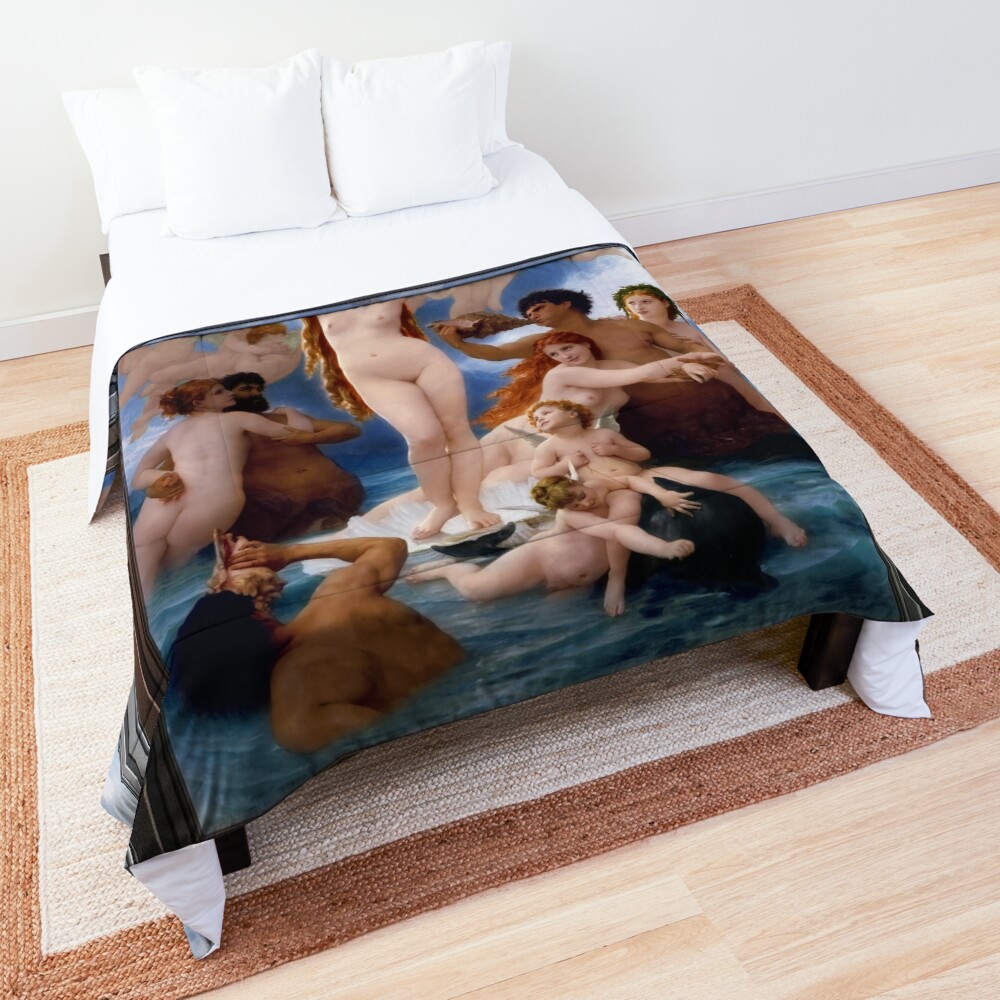
Venuksen syntymä c1879 by French Painter William-Adolphe Bouguereau (1825 – 1905), stands as a quintessential example of Academic art, embodying the principles of idealized beauty and technical mastery prevalent in mid-19th century France. This large-scale oil painting draws heavily from classical mythology, depicting the arrival of the goddess Venus (Aphrodite to the Greeks) upon the shores of Cyprus. kuitenkin, Bouguereau’s interpretation is far removed from earlier depictions; instead of a dramatic or tempestuous emergence, he presents a scene of serene grace and gentle unfolding.
Sisällysluettelo
Koostumusrakenne & Kertomusvirta
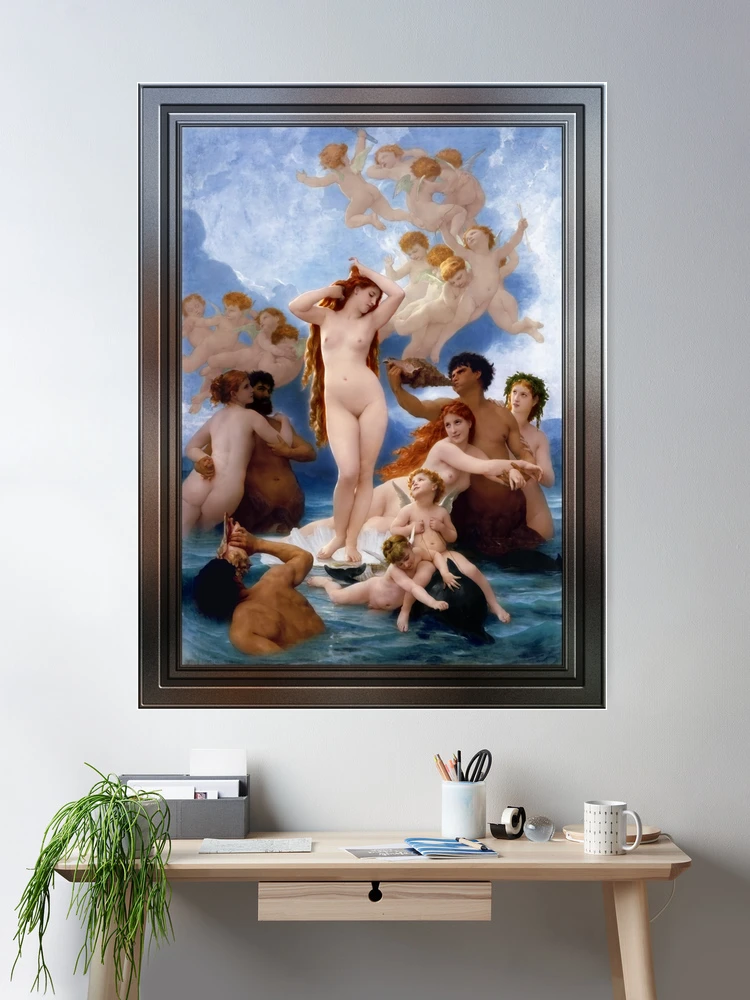
The composition is meticulously structured around Venus herself, positioned centrally within the canvas. She stands upon a massive scallop shell, which serves as her floating pedestal, gently approaching the shoreline. The arrangement isn’t haphazard; it’s carefully orchestrated to guide the viewer’s eye. To her left, a figure representing Zephyr, the west wind, and his consort Chloris, blow Venus towards the shore, their bodies intertwined in a dynamic pose that conveys movement and gentle force. On the right, a nymph, likely Hora, awaits with a floral garland, ready to welcome the goddess. The figures surrounding Venus are not merely decorative; they contribute to the narrative flow, illustrating the forces that brought her into being and the welcoming reception she receives.
Anatomical Precision & Idealized Form
Bouguereau’s reputation rested on his exceptional skill in depicting the human form with anatomical accuracy. Sisään “Venuksen syntymä,” this is evident in every curve and contour of the figures. The bodies are rendered with a smooth, melkein posliinimainen laatu, showcasing an idealized beauty that adheres to classical standards. There’s no attempt at realism in the sense of portraying imperfections; sen sijaan, Bouguereau elevates the human form to a state of perfect harmony and proportion. Venus’s pose is particularly striking – she stands with one foot slightly raised, creating a sense of poised elegance and effortless grace. The subtle modeling of her flesh, achieved through delicate gradations of light and shadow, further enhances the illusion of three-dimensionality and tactile realism.
Värivalikoima & Atmospheric Effects
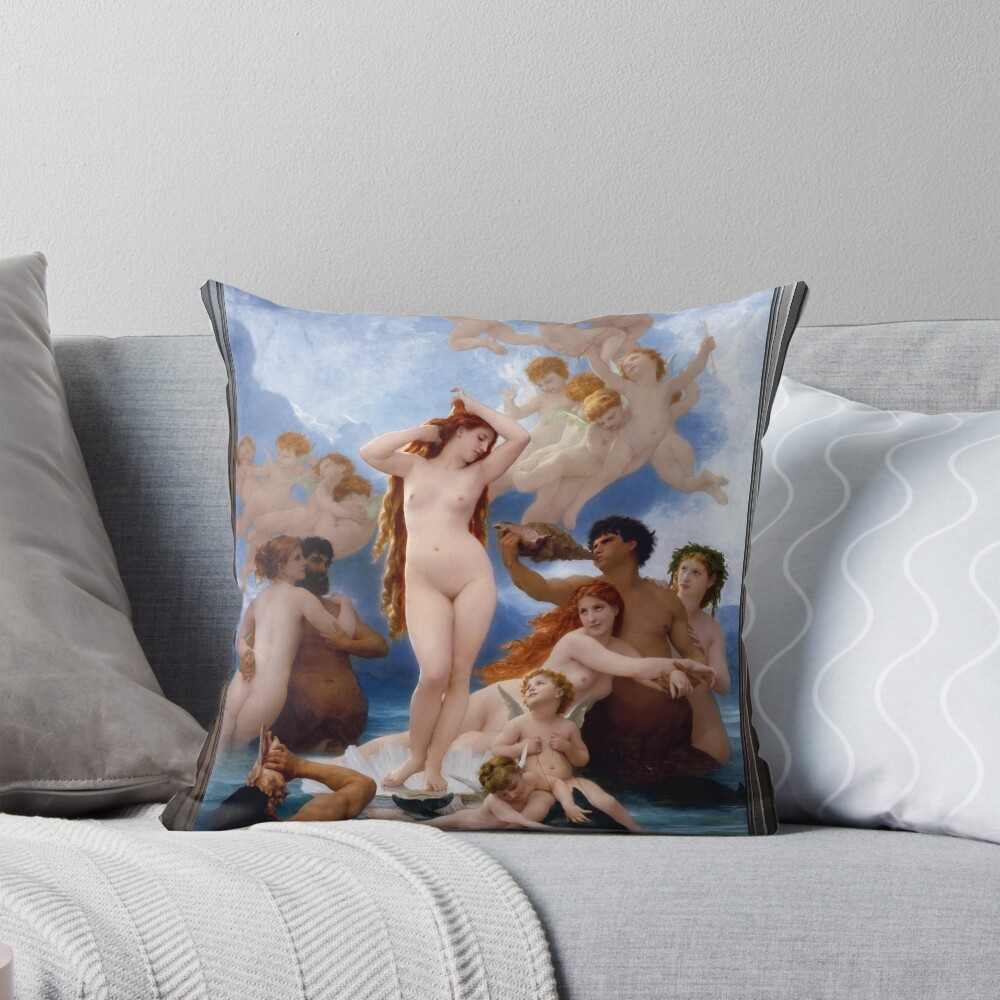
The color palette employed in “Venuksen syntymä” is predominantly soft and harmonious. Pale blues and greens dominate the seascape, creating a sense of tranquility and ethereal beauty. The sky is rendered with swirling clouds, suggesting a gentle breeze and an atmosphere of otherworldly calm. Venus’s skin tones are luminous, contrasting beautifully with her flowing auburn hair, which cascades down her shoulders in loose waves. The warm hues of the flesh tones are balanced by the cooler colors of the surrounding environment, creating a visually pleasing contrast that draws attention to the central figure. Bouguereau masterfully uses light and shadow to create depth and volume, enhancing the overall sense of realism and beauty.
Symboliikka & Classical Allusions
Beyond its aesthetic appeal, “Venuksen syntymä” is rich in symbolism and classical allusions. The scallop shell upon which Venus stands is a recurring motif associated with her birth in mythology – born from sea foam (Greek: aphros), hence her name Aphrodite. Zephyr and Chloris represent the gentle forces of nature that guide Venus’s arrival, while Hora symbolizes welcome and celebration. The floral garland offered by the nymph signifies beauty and fertility. These symbolic elements contribute to the painting’s overall meaning, reinforcing its connection to classical mythology and celebrating the goddess as a symbol of love, kauneus, ja uusiminen.
Bouguereau’s Artistic Legacy & Academic Tradition
Bouguereau was a leading figure in the Academic art movement, which emphasized technical skill, idealized forms, and adherence to established artistic conventions. “Venuksen syntymä” exemplifies these principles perfectly. The painting’s popularity during its time reflects the public’s appreciation for classical themes and the mastery of traditional techniques. While later generations would critique Academic art for its perceived lack of originality and emotional depth, Bouguereau’s work remains admired for its technical brilliance and enduring beauty. “Venuksen syntymä” continues to captivate viewers with its serene atmosphere, idealized forms, and celebration of classical mythology. It stands as a testament to the power of artistic skill and the enduring appeal of timeless themes.
Artist Bio Courtesy Wikipedia.org
William-Adolphe Bouguereau syntyi La Rochellessa, Ranska, päällä 30 marraskuu 1825, viini- ja oliiviöljykauppiaiden perheeseen.[4] Théodore Bouguereaun poika (syntynyt 1800) ja Marie Bonnin (1804), tunnetaan nimellä Adeline, William kasvatettiin katoliseksi. Hänellä oli vanhempi veli, Alfred, ja nuorempi sisko, Marie (tunnetaan nimellä Hanna), joka kuoli kun hän oli seitsemän.
Perhe muutti Saint-Martin-de-Réen vuonna 1832. Toinen sisar syntyi vuonna 1834, Kisu. Iässä 12, Bouguereau meni Mortagneen asumaan setänsä Eugènen luo, pappi ja kehitti rakkautta luontoon, uskontoa ja kirjallisuutta.
Sisään 1839, hänet lähetettiin opiskelemaan pappeutta Ponsin katoliseen korkeakouluun. Täällä Louis Sage opetti hänet piirtämään ja maalaamaan, joka opiskeli Ingresin johdolla. Bouguereau jätti vastahakoisesti opintonsa palatakseen perheelleen, asuu nyt Bordeaux'ssa.
Siellä hän tapasi paikallisen taiteilijan, Charles Marionneau, ja aloitti kaupungin piirustus- ja maalauskoulussa marraskuussa 1841. Bouguereau työskenteli myös kauppa -avustajana, litografioiden värjääminen käsin ja pienten maalausten tekeminen kromolitografialla.
Hän oli pian luokkansa paras oppilas, ja päätti tulla taiteilijaksi Pariisissa. Muuton rahoittamiseksi, hän myi muotokuvia - 33 öljyä kolmessa kuukaudessa. Kaikki olivat allekirjoittamattomia ja vain yksi on jäljitetty. Hän saapui Pariisiin ikääntyneenä 20 maaliskuussa 1846.
Tasa -arvoa ennen kuolemaa (Tasa -arvo ennen kuolemaa), 1848, öljy kankaalle, 141 × 269 cm (55.5 × 105.9 sisään), Orsay -museo, Pariisi. Tasa -arvo on Bouguereaun ensimmäinen suuri maalaus, tuotettu kahden vuoden kuluttua École des Beaux-Arts de Parisissa vuoden iässä 23.
Bouguereausta tuli École des Beaux-Artsin opiskelija.[4] Täydentääkseen muodollista piirustuskoulutustaan, hän osallistui anatomisiin leikkauksiin ja opiskeli historiallisia pukuja ja arkeologiaa.
Hänet otettiin François-Édouard Picotin studioon, jossa hän opiskeli maalausta akateemiseen tyyliin. Dante ja Virgil helvetissä (1850) oli varhainen esimerkki hänen uusklassisista teoksistaan.
Akateeminen maalaus asetti korkeimman aseman historiallisille ja mytologisille aiheille, ja Bouguereau päätti voittaa Prix de Rooman, joka saisi hänelle kolmen vuoden asunnon Villa Medicissä Roomassa, Italia, jossa hän voi muodollisten oppituntien lisäksi opiskella omakohtaisesti renessanssin taiteilijoita ja heidän mestariteoksiaan, samoin kuin kreikka, Etruski, ja Rooman antiikkia.
The Birth Of Venus on retusoitu digitaalisen taiteen vanhojen mestareiden kopio julkisessa käytössä olevasta kuvasta, joka on saatavilla verkossa rullattu kangasprintti.