

Entzulea
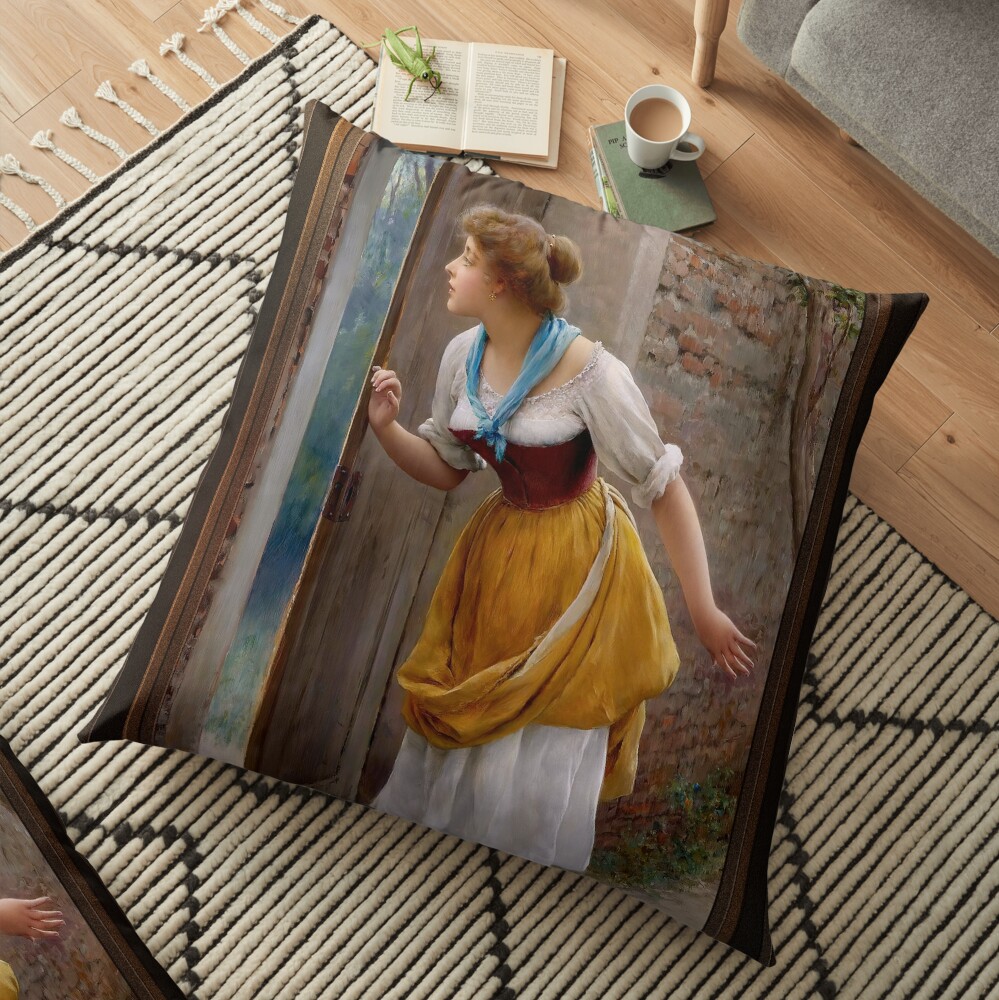
“Entzulea,” sortua 1906 margolari italiarraren eskutik Eugen von Blaas (1843–1931), jakin-min eta intriga momentu batean harrapatutako emakume gazte baten irudikapen deigarria da. Obrak artistaren trebetasuna erakusten du bere gaien xalotasuna eta konplexutasun emozional sotila erretratatzeko..
Lur-tonu isildutako landa-hondo baten gainean kokatuta, margolana errealismoaren eta narrazio intimoaren nahasketa dotorea da. Emakume gaztea, burua partzialki irekitako aterantz biratuta, arreta arretaz begiratzen ditu, beste aldean zerbait entzuten ari balitz bezala. Konposizioak momentu lasaia baina suspensetsua jasotzen du, ezin hobeto egokitzen zaio von Blaas-ek ospe handia duen genero-pinturaren generoari.
Edukien taula
Gai nagusia
At the heart of this work is the young woman, her delicate form framed by the weathered doorway. She is dressed in a traditional European peasant outfit, a combination of earthy tones that contrasts sharply with the vibrancy of her striking blue scarf and soft white blouse. Emakumearen jantzia, her bodice tight and crimson, skirt flowing with a yellow hue, imbues her with both humility and grace.
The soft folds of her skirt and apron suggest that she is likely a domestic worker or a figure of modest social standing. Her posture is one of anticipation, her body angled towards the door, a slight tilt of the head giving the impression of listening intently to something she is not meant to hear.
Her hand is poised delicately on the door, as if she’s about to pull it open wider, but remains suspended in a moment of indecision. The figure is set in motion by her movement and the life-like quality that von Blaas has captured. The gaze of the woman is directed just beyond the edge of the door, her expression caught between curiosity and hesitation, her eyes seemingly searching for clues, seeking the source of whatever caught her attention. The focus on her facial expression adds to the intrigue, leaving the viewer wondering what she has overheard or glimpsed.
Objektuak eta xehetasunak
The woman’s presence in the scene is made even more striking by the surrounding environment. The setting is a narrow, rustic alleyway or courtyard, evident from the rough-hewn stonework and the rich texture of the brick wall behind her. The architecture and terrain of this backdrop reveal much about the time period and social setting. The wall is aged and weathered, lending the scene a sense of history, as though this moment of eavesdropping is taking place within a space that has witnessed many such private encounters before.
The door itself is also a key element in the composition, its wood dark and aged, showing visible signs of wear. A rusty metal handle contrasts with the rich textures of the bricks, bringing a level of realism to the artwork. The woman’s hand is almost in direct contact with this handle, emphasizing the fragility of the moment, she stands on the cusp of something unknown, a boundary between what is public and private.
Natura, ere bai, plays an essential role in the painting. Goiko ezkerreko izkinan, a small tree or shrub grows beside the stone wall, a gentle hint of greenery that adds a touch of life to an otherwise neutral-toned environment. Landareak, though sparse, help to temper the rigid, industrial feel of the brickwork, bringing warmth and organic balance to the composition.
Estiloa eta Teknika
Eugen von Blaas was known for his meticulous attention to detail and his ability to create paintings that seemed to almost breathe with life. “Entzulea” is a prime example of this. The artist’s technique is deeply rooted in the realist tradition, with an emphasis on natural light, ehundura, and the precise rendering of human figures. The folds of the woman’s skirt and the fine fabric of her blouse are painted with great care, capturing every nuance of material and texture. The soft play of light across her face and the shadows around the door give depth and dimension, creating a believable three-dimensional space.
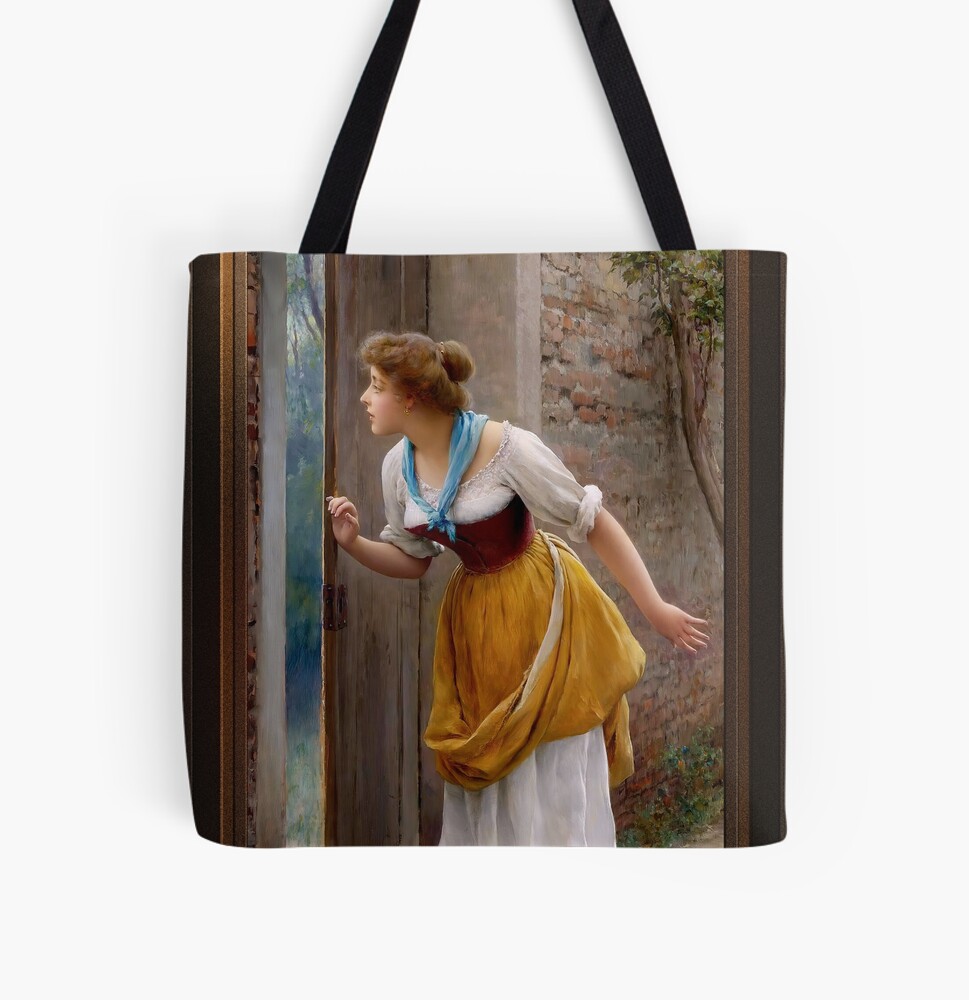
The colors in this piece are warm yet restrained, with the earthy tones of the bricks and the woman’s clothing forming a harmonious palette. The soft yellows and whites in her attire contrast with the more muted colors of the background, creating a focal point in the figure of the woman.
The blue scarf, tied around her neck, serves as a striking visual accent, drawing attention to her face and adding a sense of softness and tranquility. This color contrast enhances the overall emotional tone of the work, contributing to the mood of quiet suspense.
The brushwork in “Entzulea” is both precise and fluid. The artist’s handling of textures, from the rustic bricks to the delicate folds of fabric, is incredibly detailed. The face of the woman is rendered with a softness that invites the viewer to connect emotionally with her, emphasizing the realism that von Blaas sought to achieve. The painting has a photographic quality, capturing a fleeting moment with such clarity that it almost seems as though it could have been a real scene witnessed by the artist.
Gaia eta Aldartea
Gaia “Entzulea” is one of curiosity, suspense, and perhaps even secrecy. The woman’s actions imply a sense of eavesdropping—something forbidden or private that she is trying to uncover. This sense of voyeurism adds an element of psychological depth to the piece, drawing the viewer into a narrative of hidden knowledge and the consequences of discovering something that was never meant to be heard.
The mood of the painting is one of quiet tension. While there is no overt action, the woman’s body language and her gaze create a sense of suspense. There is an implicit suggestion of something unfolding just beyond the door, something that the woman cannot see fully, but is nonetheless drawn to. The muted background and the stillness of the moment heighten the suspense, allowing the viewer to project their own interpretation onto the scene.
Bukaera
Eugen von Blaas’s “Entzulea” is a masterful depiction of a fleeting moment in time, skillfully capturing the emotional nuances of curiosity and the tension between public and private spaces. The realism and attention to detail invite the viewer to contemplate not only the physical setting but also the internal world of the subject. In its quiet suspense, the painting speaks to universal themes of human nature—our desire to know what lies beyond the threshold, and the complex emotions that come with uncovering secrets not meant for our ears.
Domeinu publikoko irudi baten erreprodukzioa da mihise inprimatu sarean.
Arte digitalaren sorkuntza hau, Xzendor7 webgunean aurki daitezkeen artelan guztiak bezala sarean erosteko eskuragarri dago hainbat material formatutan, mihise inprimatuak barne., estanpatu akrilikoak, metal estanpatuak, egur estanpatuak, marko estanpatuak, kartelak, eta ijetzitako mihise estanpatu gisa hainbat tamainatan 12 zentimetroetara 72 hazbeteko artelanaren eta artea erosteko aukeratzen duzun eskaeraren arabera inprimatzeko dendaren tamainaren arabera.
Artelana gizonezkoen eta emakumezkoen arropa sorta zabal batean ere eskuragarri dago, katiluak, totes, zapiak, koadernoak eta aldizkariak eta etxeko dekorazio produktu ugari.
Artistaren biografia
Informazioa Behean Deribatua Wikipedia.org
He was born at Albano, Erromatik gertu, Tirol aita eta ama italiarrari. Bere aita Karl, margolaria ere bai, bere irakaslea zen. Bere ama, Agnesina Auda, emakume erromatar aberatsa zen. Familia Veneziara joan zen bizitzera Karl Veneziako Akademiako irakasle izan zenean. Eszenak askotan margotu zituen Venezian, baina baita erretratuak eta koadro erlijiosoak ere.
Bere lanen artean, sakristian ezkontza-forma; Veneziako Campieloko tonbola; Txotxongilo eszena bat eskola batean; eta La Ninetta. Luigi Chirtani arte kritikaria, margolana Mostra Nazionale di Venezian erakutsi zutenean, Ederra bezala deskribatu zuen, lausengarri, polita, laztandu, garbitu, leunduta, garbitzailea jaunaren margolan batean. Maskuria, Veneziako aristokrata handien erretratugile gogokoena, gala satinaz jantzita, bitxi distiratsuak, aberatsen orrazkera.
Veneziako gizartearen garaiko irudi koloretsu eta nahiko teatralizatuak, adib. Balkoian (1877; Bilduma pribatua), nahiko desberdinak ziren patioetako pastel eta akuaforte delikatuen aldean, Venezia modernoko balkoia eta kanalak.
Eugene de Blaas’ margolanak Errege Akademian erakutsi zituzten, Arte Ederren Elkartea, New Gallery eta Arthur Tooth and Sons Gallery Londresen, eta Liverpooleko Walker Art Gallery-n ere bai