

Abaniko gorridun andereño bat
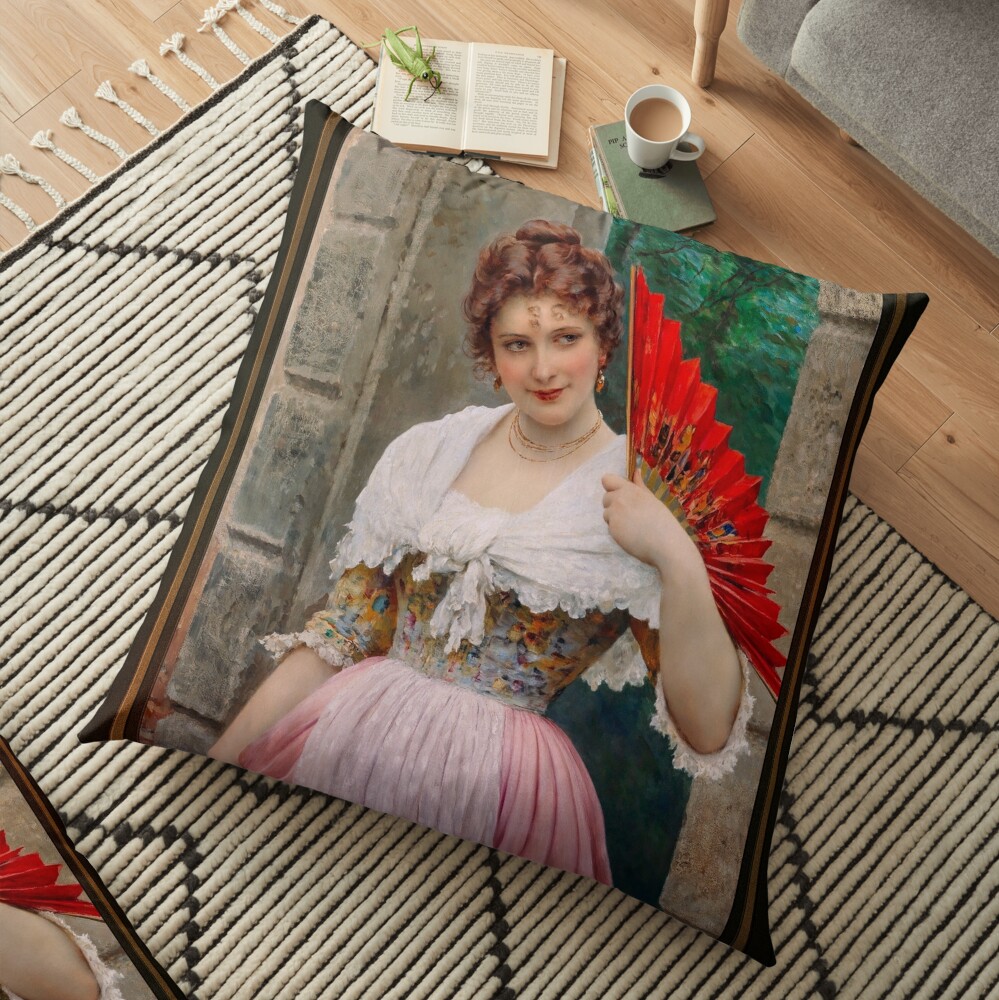
“Abaniko gorridun andereño bat,” sortua 1897 by Italian painter Eugen von Blaas (1843–1931), is an exquisite example of the artist’s talent for capturing elegant scenes from daily life, steeped in the opulence of late 19th-century Europe. Margolan zehatz honetan, Blaas conveys the sophisticated world of aristocratic women, emphasizing grace, edertasuna, eta fintasuna. The painting is not only a portrait of a young woman but also an embodiment of the fashion, attitudes, and natural beauty of its time.
Edukien taula
Gaia eta osaera
At the center of the composition is a young woman, her delicate features framed by a soft cascade of light brown curls that hint at the youthful energy and warmth of the scene. She wears a gown that speaks to the fashionable styles of the late 19th century, with its high waistline, billowing skirt, and the intricate textile work that blends pastel hues of pink, izpilikua, eta zuria.
The woman’s posture is relaxed yet refined, holding a vibrant red fan that contrasts sharply with the muted tones of her attire and background. The fan serves as both an accessory and an integral visual element, drawing the viewer’s eye immediately. The vibrant red of the fan, with its delicate painted designs, contrasts beautifully with her attire, and its boldness contrasts with the soft elegance of her gown.
The artist captures the woman’s gaze with a sense of intimacy and intrigue. Bere begiak, framed by soft curls, look to the side with a knowing expression, as if caught in a moment of daydreaming or perhaps conversing with someone off to the left of the frame. This subtle connection between the viewer and the subject draws the audience into the narrative of the scene, inviting them to imagine the woman’s thoughts or the circumstances of her moment in time.
Atzeko planoa eta ezarpena
-ren atzealdea “Abaniko gorridun andereño bat” is a garden scene, visible through a stone archway. The earthy tones of the stonework and the lush green foliage beyond create a serene, almost idyllic atmosphere. The setting suggests an aristocratic outdoor space, perhaps a private garden or a terrace of a noble estate, offering a perfect setting for a leisurely afternoon. Harriaren eta berdetasun naturalaren arteko kontrastea gizakiaren sofistikazioaren eta naturaren edertasun kutsatuen arteko nahasketaren metafora gisa balio du..
Ezarpenak dotorezia sentsazioa areagotzen du, arkuaren inguruko harlandu klasikoak tradizioa eta iraunkortasuna sinbolizatzen dituena. Inguruko berdea, hala ere, freskotasun eta lasaitasun sentsazioa eskaintzen du, gaiaren eta bere inguruaren betiko izaera indartuz.
Materialak, Techniques, and Style
Lana olio-pintura erabiliz margotzen da, testura aberatsak ahalbidetzen dituen euskarria, sakonera, eta joko arina. Blaasek teknika maisu bat erabiltzen du emakumearen arroparen xehetasunak jasotzeko, ia ukigarria den kalitate bizia sortuz. Ehunaren ehundura, batez ere bataren toles leunak, argiari eta itzalei arreta zorrotza ematen die, bringing a sense of volume and movement to the fabric.
The use of color in this painting is particularly striking. The soft pastels of the woman’s gown evoke a feeling of calm and softness, while the red of the fan is a bold statement, adding vibrancy and intensity to the composition. Blaas’s attention to detail, from the soft blush of the woman’s cheeks to the intricate design of the fan, showcases his ability to transform the mundane into something beautiful and worthy of admiration.

The Mood and Theme of the Artwork
Margolanaren aldartea lasaia da, dotore, and contemplative. The young lady’s posture and expression convey a sense of calm and quiet confidence. Ezarpena, with its lush greenery and classical stonework, reinforces the notion of timeless beauty and aristocratic leisure. The fan, objektu gisa, carries with it connotations of femininity, xarma, and social grace, as well as the more intimate aspect of personal comfort.
The theme of the painting revolves around the idealized representation of femininity during the late 19th century, a time when women were often seen as symbols of grace and decorum. Blaas captures the gentle beauty and poise of the woman, elevating her to an almost ethereal status. This type of portrayal was common in the art of the time, which sought to celebrate and idealize the lives of the upper classes, particularly women. The presence of nature in the background subtly reinforces the connection between the subject and her surroundings, suggesting that the young woman, while of aristocratic status, is still part of the natural world.
Bukaera
Eugen von Blaas’s “Abaniko gorridun andereño bat” encapsulates the charm and elegance of the late 19th century through both its subject and the artist’s technique. Argiaren elkarreragina, kolorea, and texture transforms an everyday moment into a celebration of beauty, moda, eta feminitatea. Pieza honen bitartez, Blaas invites the viewer into a world of aristocratic leisure, where elegance is embodied in both the subject and her surroundings. The painting’s combination of soft, delicate details and the vibrant contrast of the fan captures the essence of an era defined by sophistication and artistic refinement.
Domeinu publikoko irudi baten erreprodukzioa da mihise inprimatu sarean.
Arte digitalaren sorkuntza hau, Xzendor7 webgunean aurki daitezkeen artelan guztiak bezala sarean erosteko eskuragarri dago hainbat material formatutan, mihise inprimatuak barne., estanpatu akrilikoak, metal estanpatuak, egur estanpatuak, marko estanpatuak, kartelak, eta ijetzitako mihise estanpatu gisa hainbat tamainatan 12 zentimetroetara 72 hazbeteko artelanaren eta artea erosteko aukeratzen duzun eskaeraren arabera inprimatzeko dendaren tamainaren arabera.
Artelana gizonezkoen eta emakumezkoen arropa sorta zabal batean ere eskuragarri dago, katiluak, totes, zapiak, koadernoak eta aldizkariak eta etxeko dekorazio produktu ugari.
Artistaren biografia
Informazioa Behean Deribatua Wikipedia.org
He was born at Albano, Erromatik gertu, Tirol aita eta ama italiarrari. Bere aita Karl, margolaria ere bai, bere irakaslea zen. Bere ama, Agnesina Auda, emakume erromatar aberatsa zen. Familia Veneziara joan zen bizitzera Karl Veneziako Akademiako irakasle izan zenean. Eszenak askotan margotu zituen Venezian, baina baita erretratuak eta koadro erlijiosoak ere.
Bere lanen artean, sakristian ezkontza-forma; Veneziako Campieloko tonbola; Txotxongilo eszena bat eskola batean; eta La Ninetta. Luigi Chirtani arte kritikaria, margolana Mostra Nazionale di Venezian erakutsi zutenean, Ederra bezala deskribatu zuen, lausengarri, polita, laztandu, garbitu, leunduta, garbitzailea jaunaren margolan batean. Maskuria, Veneziako aristokrata handien erretratugile gogokoena, gala satinaz jantzita, bitxi distiratsuak, aberatsen orrazkera.
Veneziako gizartearen garaiko irudi koloretsu eta nahiko teatralizatuak, adib. Balkoian (1877; Bilduma pribatua), nahiko desberdinak ziren patioetako pastel eta akuaforte delikatuen aldean, Venezia modernoko balkoia eta kanalak.
Eugene de Blaas’ margolanak Errege Akademian erakutsi zituzten, Arte Ederren Elkartea, New Gallery eta Arthur Tooth and Sons Gallery Londresen, eta Liverpooleko Walker Art Gallery-n ere bai