

The Flower Seller
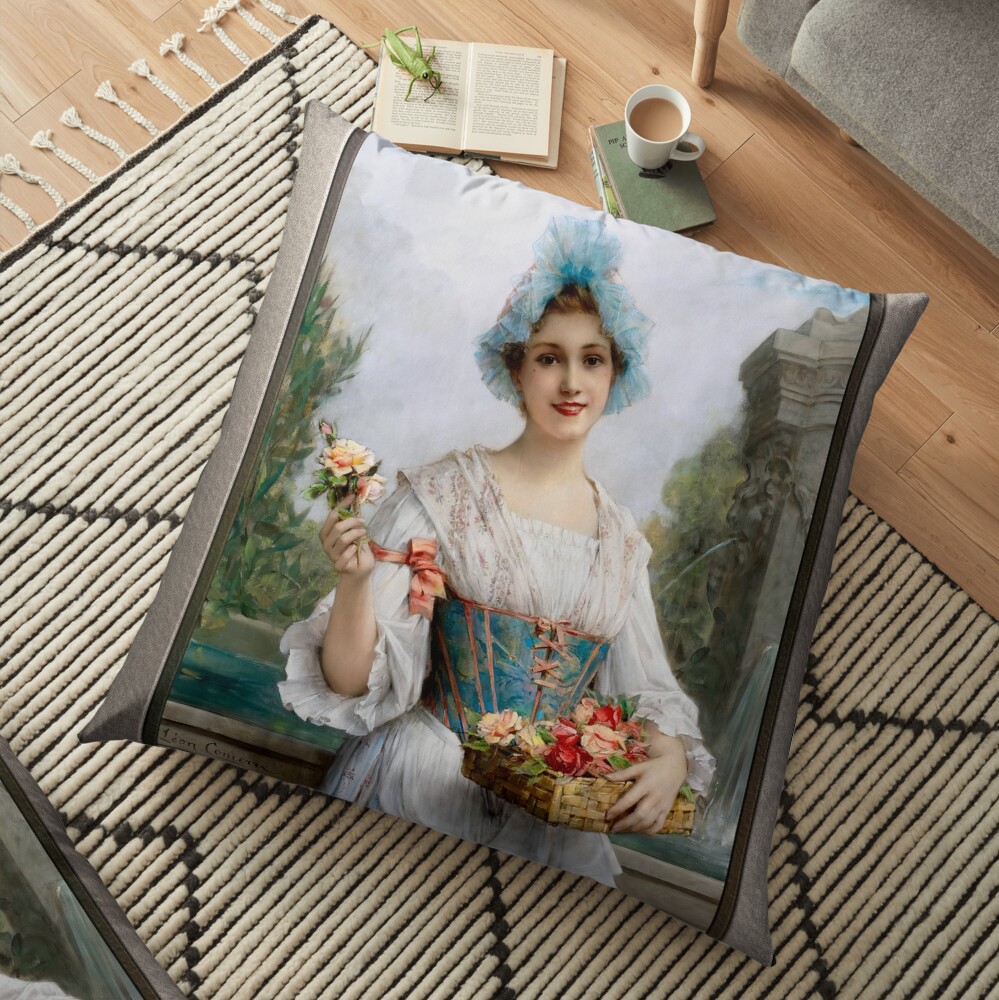
Léon François Comerre’s artwork titled The Flower Seller, created between the late 19th and early 20th century, stands as a magnificent example of academic realism and the fascination with delicate femininity in art. Léon François Comerre, jaiotako 1850 eta bertan hiltzea 1916, was an acclaimed French artist who skillfully captured the essence of everyday life with an elevated sense of grace and charm. This work is a perfect representation of his style, with its depiction of a serene young woman engaged in the simple yet poignant act of flower selling.
Edukien taula
Gai nagusia: The Young Flower Seller
At the heart of the painting is a young woman, who stands poised and gentle, her youthful expression radiating an air of innocence and joy. Her posture is relaxed yet elegant, a classic representation of feminine grace. The woman is dressed in an ensemble that is suggestive of a simple, rural or village life, though the details of her attire also speak to the painter’s attention to fashionable femininity of the time.
The woman wears a light, flowing white dress with soft pastel floral designs on the fabric, a piece that allows her natural beauty to shine through. A turquoise corset cinches her waist, adding a touch of color and highlighting her figure. Her attire is completed by a light blue bonnet that gently frames her face and adds a touch of softness to her overall appearance.
Esku batean, she delicately holds a bouquet of roses, an important element within the narrative of the painting, symbolizing the freshness of life, edertasuna, and the tender emotions associated with the selling of flowers. In her other hand, she carries a basket brimming with more roses, adding depth to the scene and suggesting her livelihood as a flower seller.
These roses, captured with vibrant detail and subtle shading, are rendered almost as lifelike as the young woman herself, a testament to the artist’s attention to detail and reverence for the natural world. Arrosen koloreak, a mix of soft pinks, gorriak, and whites, further evoke the feeling of purity and delicate beauty.
Aurrekariak eta lurrak: A Gentle Garden Setting
-ren atzealdea The Flower Seller is equally as serene and harmonious as the subject. The setting is a lush garden or park, a peaceful environment that underscores the softness and tranquility of the moment. Urrutian, we see the suggestion of stone walls and fountains, elements of classical architecture that provide an elegant backdrop.
These elements suggest that the young woman is not in a rural countryside, but rather in a more cultivated, upper-class environment. The gentle curve of the garden’s green foliage frames the subject, drawing the viewer’s eye to her, while also enhancing the idyllic nature of the scene.
A fountain, barely visible to the right of the composition, adds a sense of movement to the otherwise calm and still atmosphere. The water in the fountain is captured as a gentle stream, falling in delicate, feathery arcs into the stone basin below. The presence of water, often symbolic of life and purity, reinforces the peaceful and refreshing tone of the piece. The soft sky above, painted in light, cloudy tones, further contributes to the serene and peaceful atmosphere, evoking a sense of stillness and quiet contemplation.
Style and Artistic Technique
Léon François Comerre’s work is deeply rooted in academic realism, where meticulous attention is paid to detail and composition, while also embracing romantic ideals. The artist’s use of fine brushstrokes to depict the textures of the woman’s clothing, the delicate petals of the roses, and the subtle nuances of the background, showcases his mastery of the technique. The use of light is also particularly noteworthy; it bathes the figure in a soft glow, emphasizing the beauty of the subject and the flowers she holds. This lighting, combined with the pale colors of the woman’s attire, creates a harmonious blend of tones that are soothing to the eye.
Lanak Belle Époque garaiko estetika bereizgarria adierazten du, naturaren edertasuna eta giza forma ospatzen zituena. Artistak tonu biziak baina leunak erabiltzeak —batez ere emakume gaztearen azal-tonuetan eta eusten dituen arrosetan— koadroari xalotasuna eta fintasuna igortzen dituen berotasuna ematen dio.. Loreak objektu ia ukigarri gisa irudikatzeak errealismo geruza bat gehitzen du, ikuslea margolanaren mundura erakartzen duena.. Petalo bakoitza, hosto bakoitza, arretaz zedarrituta dago, hurbilagoko ikuskapena gonbidatzen du, konposizio orokorra harmonikoki orekatua eta begietarako atsegina den bitartean.
Aldartea eta Gaia
ren aldartea The Flower Seller edertasun lasaia eta dotorezia sotilekoa da. Emakume gaztea, bere irribarre leunarekin eta begirada leunarekin, lasaitasun eta lasaitasun sentsazioa sortzen du, while the act of selling flowers suggests a connection to the natural world and to simple, everyday life. There is no indication of hardship or drama in the scene; baizik, the viewer is invited to enjoy the peaceful moment alongside the subject. The bouquet of roses, the natural setting, and the young woman’s graceful demeanor combine to create a theme of timeless beauty, untouched by the complexities of the world beyond the garden walls.
The theme of femininity and beauty is central to this work. The flower seller is not just a simple vendor but a symbol of youthful beauty and purity, as represented by the flowers she holds. Flowers themselves have long been symbols of beauty, maite izan, eta xalotasuna, and by placing them in the hands of the young woman, Comerre elevates the subject, giving her an almost ethereal quality. There is an implied connection between the woman and the flowers she sells, as if she too, like the blooms, is part of nature’s cycle of growth and renewal.
Bukaera
The Flower Seller by Léon François Comerre is a quintessential work of late 19th-century French academic realism, Edertasuna non dagoen, liraintasun, and nature are intertwined in a visual harmony that speaks to the viewer’s emotions. Through meticulous detail, the artist captures a moment of timeless femininity, portraying a young woman in the act of selling flowers in a tranquil garden setting. The painting’s soft colors, pintzel delikatua, and serene mood invite the viewer into a world of grace and elegance, making it a masterpiece of its genre and an enduring example of the artist’s skill and vision.
Hau sarean eskuragarri dagoen domeinu publikoko irudi baten erreprodukzioa da arte digitaleko maisu zaharren erreprodukzioa mihise inprimatua.
Artistaren biografia
Beheko informazioa Wikipedia.org
Léon was born in Trélon, in the Département du Nord, the son of a schoolteacher. He moved to Lille with his family in 1853. From an early age he showed an interest in art and became a student of Alphonse Colas at the École des Beaux-Arts in Lille, winning a gold medal in 1867.
Bertatik 1868 a grant from the Département du Nord allowed him to continue his studies in Paris at the famous École nationale supérieure des Beaux-Arts in the studio of Alexandre Cabanel. There he came under the influence of orientalism.
Léon first exhibited at the Paris Salon in 1871 and went on to win prizes there in 1875 eta 1881. In 1875, he won the Grand Prix de Rome for his painting “L’Ange annonçant aux bergers la naissance du Christ” (The Angel announcing the birth of Christ to the shepherds).
This led to a scholarship at the French Academy in Rome from January 1876 to December 1879. In 1885 sari bat irabazi zuen “Erakusketa Unibertsala” Anberesen. Arte sari ospetsuak ere irabazi zituen AEBetan (1876) eta Australia (1881 eta 1897). urtean Ohorezko Legioko Zaldun bihurtu zen 1903.
Londresen erakusketa egin zuen Royal Academy-n eta Royal Society of Portrait Painters-en, eta Glasgown, Glasgow Institute of Fine Arts-en.