

Musua

Musua (Musua) c1859 Francesco Hayez margolari italiarrak (1791 – 1882); mendearen erdialdean erromantizismo garaiko margolari nagusitzat hartu zuten Milanen, Italian. Oso ezaguna zen bere margo historiko handiengatik, alegoria politikoak eta aparteko erretratu finak.
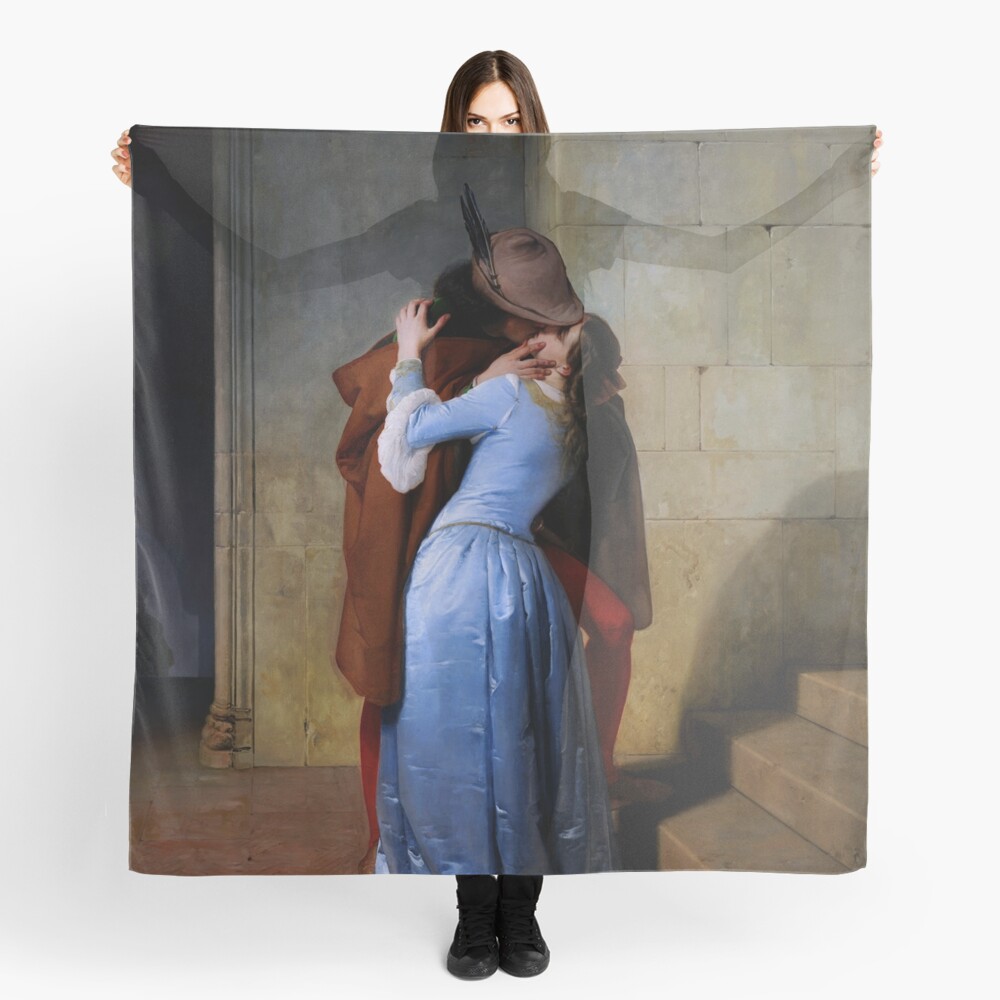
“The Musu” is a powerful and evocative painting by the renowned Italian artist Francesco Hayez, sortua 1859. The artwork is a stunning example of Romanticism, a movement that was characterized by an emphasis on intense emotion, indoskokularitza, eta sublimea. Hayez’s portrayal of an intimate and passionate kiss between two figures is not just a romantic gesture but a deep, symbolic act reflecting the political and social turmoil of 19th-century Italy.
Pieza honetan, the central focus is the kiss shared between a man and a woman, each dressed in period-specific attire, their bodies entwined in a tender yet fervent embrace. The lovers’ aurpegiak, captured at the moment of their kiss, convey an overwhelming sense of passion and longing. Gizona, dressed in a reddish-brown cloak, holds the woman with one hand, while his other hand grips a green object, possibly symbolizing life or hope. His face is partially obscured by his hat, but the tension in his posture reveals both his deep affection for the woman and the sense of urgency that seems to pervade the scene.
Emakumea, clothed in a flowing blue gown, stands close to him, her body pressed against his in a stance that signifies emotional and physical closeness. Bere luzea, flowing hair is partially visible, her face bathed in the soft light that seems to emanate from the left, highlighting her delicate features. The deep emotional intensity in her expression, coupled with the almost sacred nature of the kiss, suggests that this moment is one of profound importance for both characters. The sensuality of the kiss is palpable, yet it is underscored by a sense of melancholy, as if this act of love must be performed in secrecy, or perhaps as a final farewell.
The setting of the artwork is crucial to understanding the deeper layers of its meaning. The scene takes place in an open, stone-walled interior, with towering, almost monolithic walls that loom over the lovers. These walls are not merely a backdrop but symbolize the oppression and constraints of the era, particularly in the context of Italy’s political situation. Zakarra, unfinished stone surfaces hint at a time of transition and struggle.
The archway in the background frames the lovers, emphasizing their isolation in the moment and their vulnerability to the outside world. The positioning of the couple in front of the stone walls may also allude to the notion of love as a fortress in a time of uncertainty or political strife, where their embrace provides a form of protection from the harsh reality beyond.
The colors in the painting are rich and symbolic. The warm tones of the man’s cloak contrast with the cooler blues and whites of the woman’s gown, signifying a balance between opposing forces—passion and purity, action and passivity. The use of light is also notable; the couple is illuminated from one side, casting shadows on their bodies and the environment around them. This creates a sense of intimacy and draws the viewer’s attention solely to the couple, ensuring that the emotional intensity of their embrace remains the focal point of the composition.
Materialei dagokienez, the painting is executed with oil on canvas, a traditional medium that allows Hayez to achieve a remarkable level of detail and depth in his figures and surroundings. The texture of the canvas is almost palpable, with the brushstrokes contributing to the tactile nature of the painting. The artist’s skillful manipulation of light and shadow gives the piece a three-dimensional quality, making it feel as though the viewer could step into the scene and experience the emotional weight of the kiss firsthand.
The overall theme of “Musua” is one of passion, desafioa, eta irrika. The moment captured is not simply a tender exchange between two lovers; it is an act of rebellion and a declaration of love against the backdrop of an oppressive society. At the time Hayez painted this work, Italy was undergoing significant political upheaval, as various regions were striving for unification and freedom from foreign domination.

The kiss, gero, can be seen as a metaphor for the struggle for independence, with the lovers representing the spirit of resistance and the hope for a brighter, freer future. The kiss is not just an emotional act but a political statement, an expression of the deep desire for change that resonated with the people of Italy during the Romantic period.
The mood of the painting is complex and multi-layered. While it captures the intense passion of the lovers, it also evokes a sense of sorrow and longing. The lovers are caught in a moment of transcendence, but there is a sense that this moment is fleeting.
The raw emotion conveyed through their embrace suggests that their love is either forbidden or destined to end, making the act of kissing both a sweet and painful experience. The viewer is left to ponder whether the kiss signifies the beginning of a relationship, a final farewell, or a stolen moment in a turbulent world.
Bukatzeko, Francesco Hayez’s “Musua” is not just a beautiful depiction of love and romance; it is a rich, symbolic painting that speaks to the political, sozialak, and emotional climate of its time. The work’s exquisite use of light, kolorea, eta konposizioa, combined with its deep thematic resonance, makes it a timeless masterpiece that continues to captivate viewers. It invites reflection on the nature of love, the power of passion, and the struggles that shape our world, all while celebrating the profound connection between two individuals caught in the midst of history.
The Kiss is a retouched digital art old masters reproduction of a public domain image that is available as an acrylic, metala, egurra, jaurti eta mihise inprimatu sarean.
Beheko informazioa Wikipedia.org
Francesco Hayez Veneziako familia nahiko pobre batekoa zen. Bere aita, Giovanni, frantses jatorrikoa zen bere ama berriz, Clare Torcella, Muranokoa zen. Francesco bost semeetatik gazteena zen.
Amaren arrebak hazi zuen, Giovanni Binascorekin ezkondu zena, armadore eta arte bildumagile aberatsa. Hayezek txikitatik erakutsi zuen marrazteko joera. Bere osaba, bere talentu goiztiarra nabaritu zuelarik, Veneziako arte zaharberritzaile batean ikasi zuen. Geroago Hayez Francesco Maggiotto margolariaren ikasle izanen zen eta harekin hiru urtez jarraitu zituen bere ikasketak..
urtean Veneziako Arte Ederren Akademia Berriko pintura-ikastaroan onartu zuten 1806, bertan ikasi zuen Teodoro Matteiniren eskutik. In 1809 Veneziako Akademiaren lehiaketa bat irabazi zuen Erromako Accademia di San Luca-n urtebeteko egonaldia egiteko.
Erroman egon zen arte 1814, ondoren, Napolira joan zen eta bertan Joakim Muratek enkargatu zion Ulises irudikatzen zuen lan handi bat margotzeko Alzinooren gortean.. 1830eko hamarkadaren erdialdean Milango Maffei Salonean parte hartu zuen, Clara Maffeiren eskutik. Maffeiren senarrak bere emaztearen erretratua eskatuko zion gero Hayezi. In 1850 Hayez Brera Akademiako zuzendari izendatu zuten.
Ibilbide luze batean zehar, Hayez bereziki emankorra izan zen. Bere produkzioan, bere mezenasen sentsibilitate abertzalera erakartzeko diseinatutako margolan historikoak eta estilo neoklasikoa gai handietara eramateko nahia islatzen zuten lanak., literatura biblikotik edo klasikotik.
Antzerki-aurkezpenetako eszenak ere margotu zituen. Nabarmen gabea bere obran, hala ere, erretaulak dira – beharbada Italiako iparraldeko eliza eta komentu asko deskonsakratu zituzten napoleonen inbasioengatik. Corrado Ricci arte historialariak Hayez klasizista gisa deskribatu zuen, eta, ondoren, nahasketa emozionalaren estilo batean garatu zen. Francesco Hayez, Musua (1859)
Bere erretratuek Ingresen eta Nazareno mugimenduaren intentsitatea dute. Askotan eserita, Hayezen gaiak soilez jantzi ohi dira, arropa zuri-beltza, ekipamendu gutxirekin. Hayezek nobleziarentzat erretratuak egiten zituen bitartean, beste gai batzuk ere aztertu zituen, besteak beste, artistak eta musikariak. Bere ibilbidean berandu, ezaguna da argazkiak erabiliz lan egin zuela.
Hayezen gai gogokoenetako bat ekialdeko gaiak iradokitzen zituen erdi jantzitako odaliska zen, margolari erromantikoen gai gogokoena.[3] Haremen eta haien emakumeen irudikapenei esker, artistek gizartean onargarriak ez ziren eszenak margotzeko gaitasuna izan zuten.. Hayez-en Maria Magdalenak ere sutsu erlijiosoa baino sentsualtasun handiagoa du.
Hayez-en The Kiss koadroa bere lanik onenetakotzat hartu zuten bere garaikideek, eta ziurrenik bere ahaleginik ezagunena da. Anonimoa, Bikotearen eraginik gabeko keinuak ez du mitoaren edo literaturaren ezagutzarik behar interpretatzeko, eta begirada modernora jotzen du.
Hayezen ibilbidearen balorazio zientifikoa zaildu egin da bere lanak ez sinatzeko edo datatzeko joeragatik.. Askotan bere margolanetako datek adierazten dute obra noiz erosi edo saldu zen, ez bere sorrerako garaia. Gainera, askotan konposizio berdinak margotu zituen hainbat aldiz aldakuntza minimoekin.
Brerako Akademiako ikasleen artean Carlo Belgioioso zegoen, Amanzio Cattaneo, Alessandro Focosi, Giovanni Battista Lamperti, Livo Ardia, Angelo Pietrasanta, Antonio Shiloh, Carlo Antonio Tavella, Ismaele Teglio Milla eta Francesco Valaperta.
Hayez Milanen hil zen, adina 91. Brera Akademian duen estudioa plaka batekin markatuta dago.