

La Damo kun la Vualo
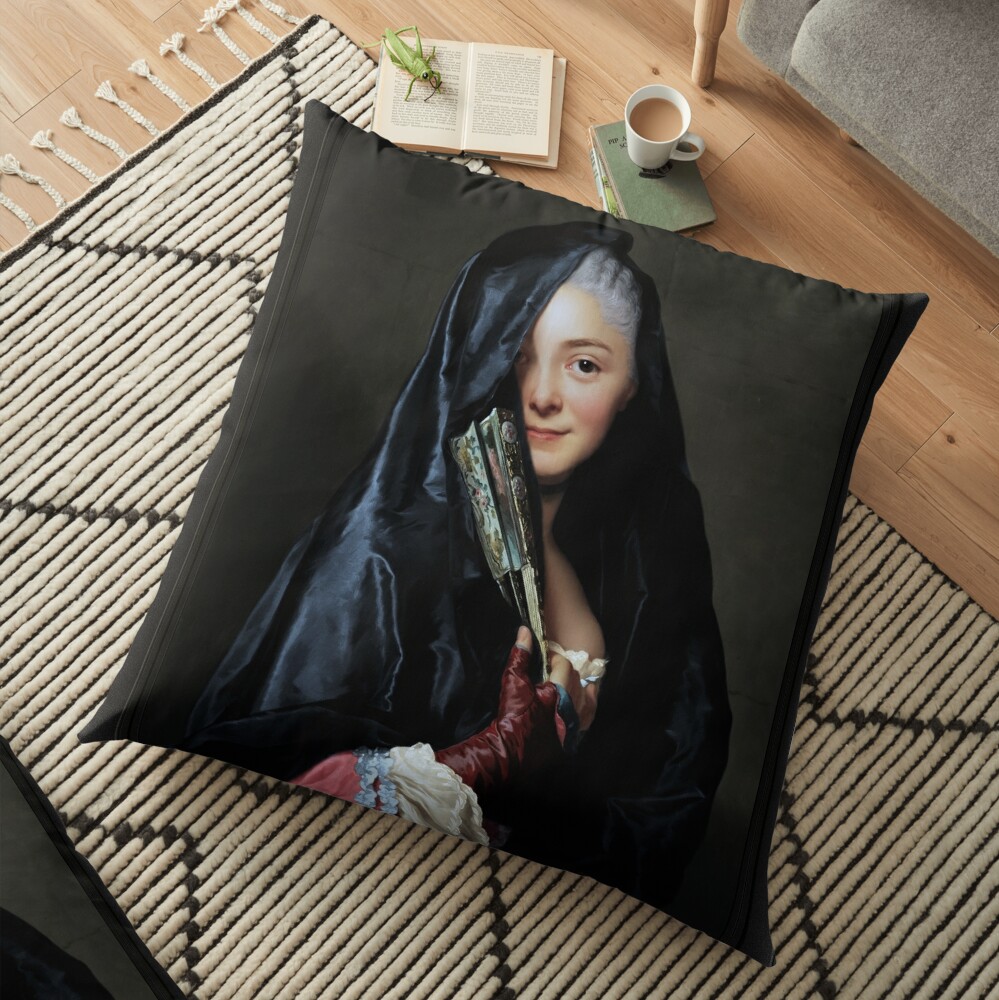
“La Damo kun la Vualo (la Edzino de la Artisto)” is a captivating portrait created by Swedish painter Alexander Roslin en 1768. Roslin, kiu naskiĝis en 1718 and died in 1793, was renowned for his skill in portraiture, and this work stands as a testament to his mastery. The subject of the painting is none other than the artist’s own wife, Marie Suzanne, who was often depicted by Roslin in several of his works. In this particular portrait, the artist captures his wife with an alluring and serene expression, her face partially veiled, adding an air of mystery and grace to the composition.
The painting’s subtle yet sophisticated tone is enhanced by Roslin’s delicate brushwork and the soft, almost ethereal quality he imparts to his subjects. The mood is one of quiet elegance and restrained sensuality, drawing the viewer into an intimate moment with the woman behind the veil. The composition is meticulously planned, with a focus on the textures of fabric, la ludo de lumo kaj ombro, and the precise rendering of the subject’s features. It is a classic example of the Rococo style, which was prominent in Europe during the 18th century. Roslin’s use of color, lumo, and shadow exemplifies the Rococo’s emphasis on elegance, romance, and decorative detail.
Enhavtabelo
La Ĉefa Temo: The Artist’s Wife
At the heart of the painting stands the artist’s wife, who exudes an aura of calm and sophistication. Ŝia rigardo estas rekta kaj alloga, yet there is a soft mystery to her expression, partly due to the veil that covers her head. The veil is a significant element in the composition, as it creates an element of intrigue and lends an air of modesty and delicacy to the subject, while still allowing for a glimpse of her refined beauty. The artist has chosen to depict her not in an overtly dramatic pose, but rather in a natural, serene manner that suggests a quiet moment of reflection or contemplation.
Her attire is another striking aspect of the painting. She wears a luxurious gown, typical of the Rococo period, in which delicate fabrics such as silk and lace are used to create a sense of refinement and aristocratic elegance. The gown is adorned with rich folds and intricate details that showcase Roslin’s attention to fabric texture. The contrast between the flowing silk of the gown and the more rigid, structured nature of the veil enhances the visual depth of the painting, adding layers of texture and dimension to the composition.
Objektoj: The Fan and Accessories
One of the most notable objects in the painting is the fan held by the subject. The fan is not only a fashionable accessory, but it also serves as a symbolic gesture of grace and refinement. Its position in the composition, near the subject’s face, subtly directs the viewer’s attention toward her face and adds to the overall sense of elegance. The fan’s intricate design, with its delicate patterns and textures, contrasts beautifully with the smooth sheen of the veil and the soft folds of the gown.
Another important detail is the gloved hand of the subject, which adds a touch of formal propriety and underscores the aristocratic nature of the painting. The gloves are richly textured, their deep red hue contrasting with the white lace trim of the gown. This attention to detail in both the clothing and accessories speaks to Roslin’s technical skill and his ability to render the material world with accuracy and beauty.
Tereno kaj fono
The background of the painting is kept simple and unobtrusive, with a muted, almost abstract color palette that ensures the viewer’s focus remains on the subject. The use of shadow and light in the backdrop is masterful, enhancing the depth of the portrait while keeping the overall composition elegant and restrained. The subtle darkness of the background also serves to highlight the subject’s face, creating a striking contrast between her illuminated features and the shadowy surroundings.
The lack of any overtly defined setting contributes to the intimacy of the portrait. By omitting detailed backgrounds or landscapes, Roslin places the emphasis solely on the figure and her attire, allowing her persona to take center stage. This approach was characteristic of many portrait artists of the time, as it emphasized the dignity and elegance of the sitter over their surroundings.
Stilo kaj Tekniko
As with many of Roslin’s works, “La Damo kun la Vualo” exemplifies the Rococo style, which is known for its lightness, Eleganteco, and elaborate detail. The use of soft, pastel colors and the fluid, graceful rendering of fabrics and textures is a hallmark of this style. The painting is filled with refined, delicate details, from the intricate lace trim of the gown to the subtle shading on the subject’s face, which conveys a sense of realism and three-dimensionality. Roslin’s mastery of light is evident in the way the soft light falls on the subject’s face, accentuating the softness of her features while also adding depth to the folds of her gown.
The artist’s brushwork is delicate yet assured, capturing both the textures of the materials and the inner calm of the subject. The veil itself is rendered with remarkable skill, the fabric appearing almost weightless, yet conveying a sense of richness and texture. This level of technical proficiency is one of the reasons why Roslin is considered one of the preeminent portrait painters of the 18th century.
Temo kaj Humoro
The overall theme of the portrait revolves around aristocratic grace and refinement, as well as the intimate relationship between the artist and his wife. The mood is one of quiet elegance, with an undercurrent of mystery. La vualo, combined with the soft lighting and the elegant pose, suggests a hidden depth to the subject’s character, inviting the viewer to reflect on the identity and personality of the woman behind the portrait. This air of mystery is complemented by the subdued, almost introspective expression on her face, which draws the viewer into a private moment with the subject.
The portrait also speaks to the Rococo fascination with beauty, lukso, and the refinement of the aristocracy. By focusing on the details of the subject’s attire and accessories, Roslin not only portrays his wife but also captures the essence of the high-society world in which she moved.
Konkludo
“La Damo kun la Vualo” is a masterpiece of 18th-century portraiture that encapsulates the elegance, Graco, and technical precision of the Rococo period. Through his portrayal of his wife, Alexander Roslin creates a work that is both intimate and refined, drawing the viewer into a world of aristocratic beauty and quiet sophistication. La atento al detaloj, la ludo de lumo kaj ombro, and the careful rendering of fabric and texture all contribute to the timeless quality of this work. It is a portrait that invites contemplation and appreciation of both the subject and the artist’s exceptional skill.
La Damo kun la Vualo estas readaptita cifereca arta reproduktaĵo de malnovaj majstroj de publika domajno bildo kiu estas havebla kiel tolo presaĵo rete.
Artisto Bio
Aleksandro naskiĝis al la maramea kuracisto Hans Roslin kaj lia edzino Catherine Wertmüller en julio. 15, 1718; kaj montrante fruan talenton por desegnado kaj pentrado li estis sendita al Karlskrona, Svedio por esti trejnita en tirado sub la Admiraleca Kapitano Lars Ehrenbill (1697–1747), por ke li povu fariĝi mara desegnisto.
Estis dum tiu tempo ke li ankaŭ komencis pentri miniaturojn kaj poste moviĝus al Stokholmo, Svedio; kiu tiutempe fariĝis intelekta kaj arta centro [pro la klopodoj de reĝino Kristina (1626 – 1689 regis de 1644 – 1654), kiu establis ligojn kun Parizo, Francio], kaj en la aĝo de dek ses iĝis metilernanto ĉe la sveda kortega pentristo Georg Engelhard Schröder (1684 – 1750); restante tie studante pentrarton ĝis 1941, translokiĝi al Göteborg, kaj poste Skanio la sekvan jaron, kie li restis dum la venontaj kvar jaroj.
Maldika en 1745 Aleksandro forlasis Svedion al Bayreuth, Germanio sur ricevado de invito labori por Frederick, Margrafo de Brandenburg-Kulmbach (1711 – 1763) de la Domo Hohenzollern kaj majoratulo de Georg Frederick Karl (1688 – 1735).
Du jarojn poste li translokiĝis al Italio por studi la verkojn de la grandaj majstroj; tiam poste tiun jaron moviĝis al Parizo, Francio kie estas li ekloĝus kaj restus por la resto de sia vivo.
En 1759 en la aĝo de 41 li geedziĝis kun la paŝtelfarbisto Marie-Suzanne Giroust (1734 – 1772) kun kiu havis ses infanojn (tri filoj kaj tri filinoj); kaj pentrus portreton de sia edzino enen 1768 kun ŝi vestita laŭ Bolonja modo en peco nomita Sinjorino kun Vualo; li ankaŭ pentris duoblan portreton de li kaj lia edzino, ŝi estas prezentita laborante en paŝteloj pri portreto de Henrik Wilhelm Peill (1730 – 1797), dum li montras oran skatolon kiun li ricevis de Peill kiel donacon.
Vivante en Parizo, Aleksandro iĝis protektito de franca farbisto François Boucher (1703 – 1770), kiu rapide faris liajn artaĵojn moda en Francio, kaj helpo konduki al li esti elektita kiel membro de la Franca Artakademio, al kiu apartenis ankaŭ lia edzino; baldaŭ iĝante unu el la plej elstaraj portretistoj de sia tempo, taksita plejparte por praktikata bildigo de luksaj ŝtofoj kaj mildaj vizaĝkoloroj.
Kvankam Aleksandro estis eksterlandano li estis premio enen 1765, ŝtata pensio kaj senpaga apartamento en la Luvro; kaj en la sekva jaro estis aljuĝita la Reĝa Ordo de Vasa fare de Svedio, post kio li estis nomita Roslin le Chevalier aŭ Roslin la kavaliro.