

Female Portrait Of A Young Woman
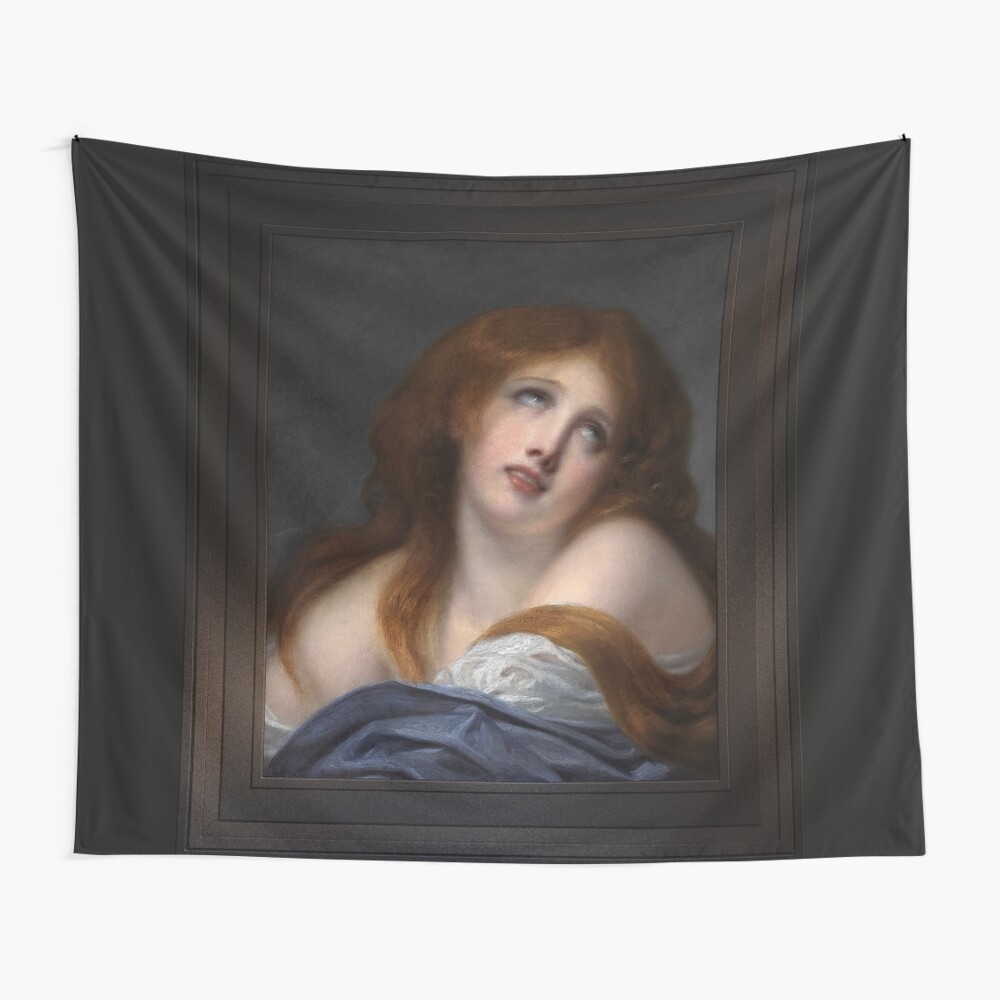
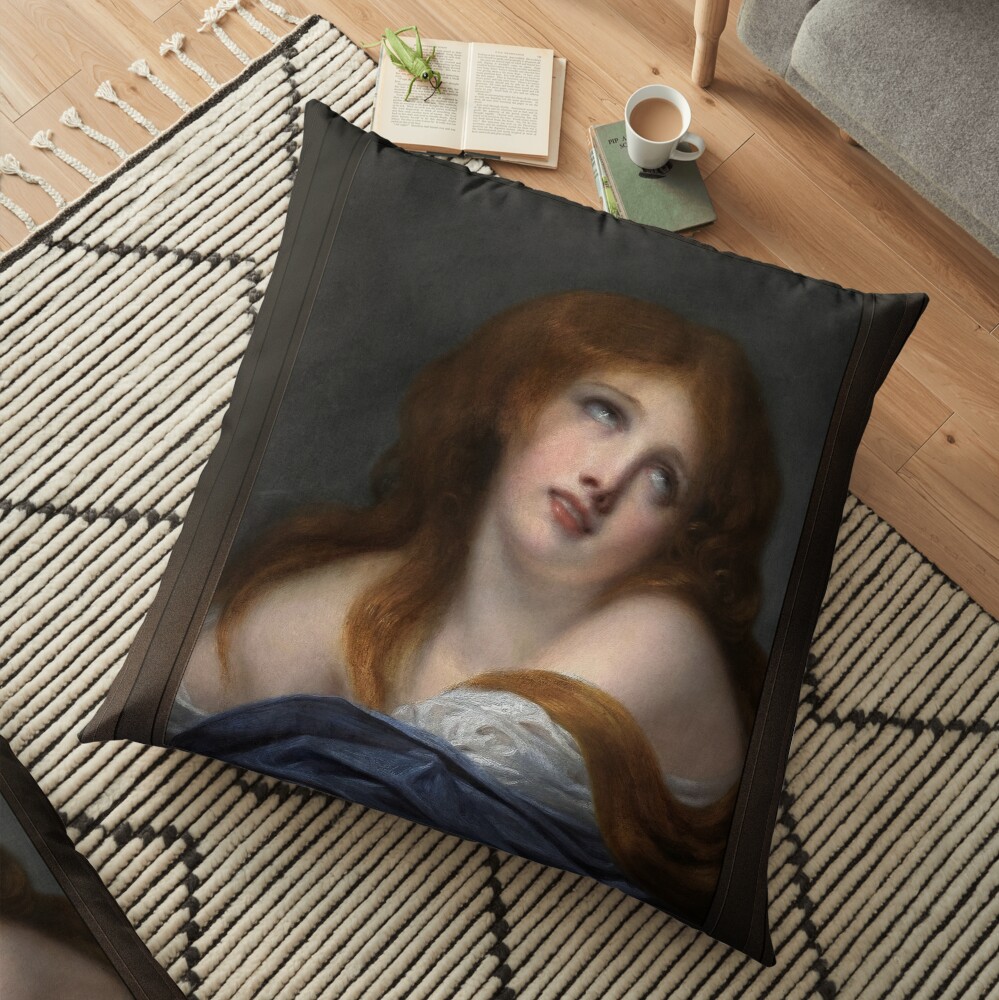
This exquisite portrait, titolita Female Portrait Of A Young Woman, was painted by Jean-Baptiste Greuze, a renowned French painter active during the 18th century. Naskita en 1725 kaj forpasante en 1805, Greuze was known for his tender and emotive portrayals of the human condition. His work often captured moments of profound emotional depth, kaj Female Portrait Of A Young Woman is a stunning example of this. The subject of the portrait, a young woman, appears with her head slightly tilted, gazing upward with a melancholic expression that seems to embody a complex emotional state.
Enhavtabelo
Stilo kaj Tekniko
Greuze’s style is a blend of Rococo elegance and the emerging Neoclassical trends of his time. The delicate brushwork in this painting, along with the subtle use of light and shadow, highlights his mastery of chiaroscuro, a technique that plays with contrasts between light and dark to create a sense of depth and volume. La mola, almost ethereal rendering of the woman’s skin and the luxurious folds of fabric surrounding her shoulders are characteristic of Greuze’s refined approach to portraiture. His choice of a muted, dark background further enhances the luminous quality of the figure, focusing all attention on the delicate features and graceful posture of the woman.
The artist’s use of light serves not only to model the figure, but also to emphasize the emotional intensity of the subject. The way the light gently caresses the skin of the subject, especially her face and shoulder, adds a layer of tenderness and vulnerability to the portrait. This technique is often seen in Greuze’s work, where light symbolizes emotional clarity, Senkulpeco, or purity.
The Subject and Mood
The young woman depicted in the painting appears to be lost in thought, her expression caught in a moment of contemplation or introspection. Ŝiaj okuloj, slightly upturned, are soft and gazing into the distance, which could suggest a longing, a moment of pensive reflection, or even a quiet sorrow. The soft curves of her face, illuminated by the light, evoke a sense of fragility and grace, enhancing the feeling of emotional vulnerability. The woman’s slightly parted lips further add to her contemplative expression, as if she is on the verge of speaking but chooses instead to remain silent.
The mood of the painting can be interpreted as both serene and wistful. There is a subtle melancholy to the woman’s gaze, a suggestion of something unspoken. The portrait’s emotional depth is characteristic of Greuze’s work, which often explored themes of virtue, emotional turmoil, and human connection. Unlike more formal portraits of the time that focused on the outward grandeur and nobility of the subject, this portrait delves into the interior world of the figure, inviting the viewer to imagine the thoughts and emotions that lie behind the soft gaze.
Objektoj kaj Materialoj
The primary focus of the painting is, of course, the young woman herself, but the objects surrounding her also play a significant role in conveying the mood and context of the portrait. The fabric draped around her shoulders, possibly satin or silk, suggests a sense of aristocratic elegance. The fabric’s folds are meticulously rendered, each curve and crease captured with great precision, adding texture and depth to the image. The soft interplay of light on the fabric contrasts with the smoothness of her skin, further enhancing the contrast between her delicate figure and the luxurious materials she is draped in.
While the background is dark and unadorned, serving to accentuate the figure, the overall effect of the composition feels balanced. The simplicity of the background and the focus on the woman’s features suggest that she is the subject of utmost importance, both in terms of emotional significance and personal identity.
Kolora Paletro
The color palette employed by Greuze is restrained but harmonious, kun mola, muted tones that emphasize the delicate nature of the portrait. The colors of the fabric, a deep blue or grey, provide a subtle contrast to the pale complexion of the subject. The combination of blue and white gives the portrait an air of calm and tranquility, while the faint touches of warmth in the woman’s hair and skin tone create a sense of life and vitality. The careful application of these colors allows the subject to appear as if she is gently illuminated by a soft, Natura lumo, giving the painting an almost lifelike presence.
Konkludo
Jean-Baptiste Greuze’s Female Portrait is a testament to his ability to capture the emotional subtleties of his subjects, conveying not just their physical likeness but also the deeper currents of their inner worlds. The delicate rendering of the subject, the serene but melancholic expression, kaj la mola, evocative use of light and shadow all work together to create a timeless piece of art that transcends the moment of its creation. La humoro de la pentraĵo, suffused with a quiet sadness and introspection, invites the viewer to pause and reflect on the emotional complexities of the human experience. Greuze’s ability to infuse his portraits with such emotional depth makes this work a stunning example of 18th-century French portraiture.
Ĉi tio estas readaptita cifereca arto malnova majstra reproduktaĵo de publika domajna bildo, kiu estas havebla kiel tola presaĵo interrete..
Ĉi tiu cifereca arta kreaĵo, kiel kun ĉiuj artaĵoj, kiuj troveblas en la retejo de Xzendor7, estas aĉetebla interrete en diversaj materialaj formatoj inkluzive de kanvasaj presaĵoj., akrilaj presaĵoj, metalaj presaĵoj, lignaj presaĵoj, enkadrigitaj presaĵoj, afiŝoj, kaj kiel rulitaj kanvasaj presaĵoj en diversaj grandecoj de 12 colojn al 72 coloj depende de la grandeco de la reala artaĵo kaj la presaĵo laŭpeta butiko, de kiu vi elektas aĉeti la arton.
La artaĵo ankaŭ haveblas sur larĝa gamo de vestaĵoj de viroj kaj virinoj, tasoj, totoj, koltukoj, kajeroj kaj ĵurnaloj kaj multaj hejmornamaj produktoj.
Pri La Artisto
La Subaj Informoj Devenas NGA.gov
Jean estis naskita en Tournus, Francio en 1725 kiel la sesa filo de majstro kahelisto kiu rekonis sian talenton en tre frua aĝo; sendante lin al Liono, Francio por studi kun la franca portretisto Charles Grandon (1691 – 1762).
Ĉirkaŭ la aĝo de 30 li forlasis Lionon, kaj vojaĝis al Parizo, Francio por studi ĉe la Académie Royale de peinture et de sculpture aŭ la Reĝa Akademio de Pentraĵo kaj Skulptaĵo; kiu tiutempe estis la ĉefranga artinstitucio de Francio dum ĉi-lasta parto de la Ancien Régime (Malnova Regimo ~1500 al 1789), ĝis ĝi estis abolita en 1793 dum la Franca Revolucio.
Kvankam tre talenta kaj tre sukcesa dum la 1760-aj jaroj kaj 1770-aj jaroj, havante patronojn de similaĵoj de la markizino de Pompadour (1721 – 1764), Imperiestrino Katarina la 2-a de Rusio (r. 1762 – 1796), kaj Ange Laurent de La Live de Jully (1725 – 1779); lia ribelema naturo kaj konfliktoj kun Akademio- kaj Salon-oficialuloj pruvus esti lia misfortuno; precipe post lia geedziĝo kun Anne Marie Babuty en 1759; kio montriĝus por li katastrofo, ĉar ŝi estis konata ke ŝi havis diversajn amaferojn kun liaj studentoj kaj sidantoj, kiu kaŭzis al li perdon de enspezo kaj publikan humiligon.
Kiam la geedziĝo finiĝis 34 jarojn poste lia edzino ricevis grandan kompromison, kiu lasis lin en teruraj financaj rektaĵoj kaj antaŭ la tempo de lia morto en 1805 en la aĝo de 80 li estis preskaŭ rompita.