

La pèrdua de l'Indiaman Kent
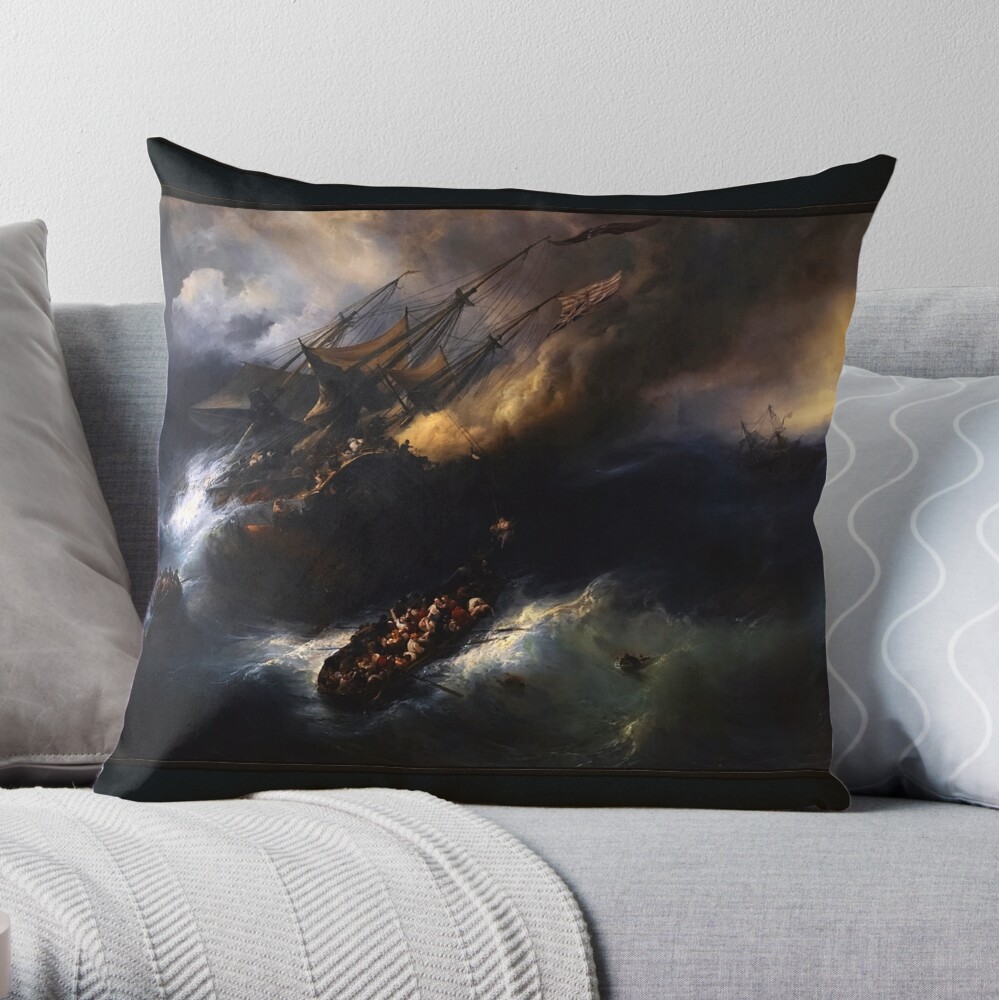
“La pèrdua de l'indià Kent,” pintat a 1857 de l'artista francès Jean Antoine Théodore Gudin (1802–1880), és una representació magistral del desastre marítim, capturant el moment dramàtic de la lluita final d'un vaixell contra la ferocitat de la natura. La pintura és un exemple excepcional de la capacitat de Gudin per evocar les dures realitats de la vida naval, encapsulant tant la grandesa com la tragèdia del mar. Conegut per la seva obres marítimes, Les pintures de Gudin sovint representaven el poder aclaparador de l'oceà i l'intens drama humà que s'hi desenvolupava., I aquesta peça no és una excepció. “La pèrdua de l'indià Kent” és un testimoni del pes emocional i del realisme viu que va ser característic de les seves obres posteriors.
Taula de continguts
Tema principal i tema
At the center of the painting is the doomed Indiaman Kent, a British East India Company ship that met its fate during a tempestuous voyage in the mid-19th century. The ship’s large hull, adorned with billowing sails, is struggling against the violent waves, teetering dangerously as if on the brink of sinking. The turbulence of the ocean and the stormy sky above create a sense of imminent catastrophe.
The Indiaman Kent is depicted with its sails unfurled, leaning perilously as it faces the overwhelming forces of nature. The ship’s precarious state is emphasized by the waves crashing against its side and the ship’s tilted posture, as if it might break apart at any moment. The struggle is palpable, creating an atmosphere of tension, uncertainty, and impending doom.
The surrounding scene conveys a sense of futility as human efforts to survive are contrasted with the immutable, unstoppable power of the natural world. Les ones, fosc i presentiment, appear to be closing in, and the sky above is painted with tumultuous clouds, suggesting that the storm is far from over. The raging sea and chaotic skies reflect the hopelessness and desperation of the sailors aboard the ship as they battle the elements.
Objectes i terreny
The painting’s foreground is dominated by the tumultuous ocean, its waves captured in various shades of blue, verd, i blanc. The waves are churning and crashing, creating a dynamic texture that amplifies the sense of motion. The sheer size and power of the waves dwarf the ship, emphasizing the fragile relationship between man-made structures and the vast, uncontrollable natural world. The white foam of the waves contrasts sharply against the darker hues of the sea, illustrating the violent turbulence of the water.
Off to the side of the painting, the viewer can see a smaller boat that is perhaps trying to escape or rescue those aboard the stricken Indiaman Kent. This boat, manned by several sailors, faces its own struggle against the waves. It is a poignant symbol of human perseverance and hope, though in the context of the larger storm, it appears hopelessly small and vulnerable. The crew members aboard the boat are rendered with detailed expressions of concentration and fear, embodying the desperation of those trying to survive the disaster.
El cel a dalt, filled with dark, núvols remolins, adds to the overwhelming sense of chaos. The use of light and shadow in the sky suggests the presence of a fierce storm, with the occasional streak of sunlight breaking through the clouds, offering little comfort to the figures below. The landscape beyond the ship is obscured by the storm, suggesting that the vastness of the ocean extends infinitely in all directions, leaving the survivors isolated in a world defined only by the elements.
Materials and Artistic Techniques
Gudin’s technique is evident in the vivid textures and dramatic contrasts that dominate the scene. The artist uses thick, expressive brushstrokes to convey the fury of the sea and the wind, with the turbulent water rendered in bold, sweeping motions that create a sense of fluidity and movement. The billowing sails of the ship are painted with intricate detail, their edges curling as the wind fights to tear them apart. The texture of the water contrasts with the smooth, controlled rendering of the ship, emphasizing its vulnerability in the face of nature’s power.
The sky is painted with a deep, almost otherworldly intensity, with the dark clouds swirling in a way that suggests both the violence of the storm and the inevitability of the ship’s destruction. The light that occasionally pierces the sky serves as a dramatic contrast to the overall darkness of the scene, adding to the emotional tension of the composition. Gudin’s use of color — from the dark, moody blues and greens of the sea to the warm golden hues of the sun breaking through the clouds — contributes to the painting’s emotional weight. This stark contrast highlights the despair and hope that coexist within the scene.
Estil, Humor, i Atmosfera
“La pèrdua de l'indià Kent” is a prime example of the Romantic style, which was characterized by an emphasis on the sublime and the dramatic aspects of nature. En aquesta pintura, the theme of human struggle against the forces of nature is central, as the ship’s fate lies at the mercy of the storm. Gudin captures the emotional intensity of the scene, focusing on the terror and helplessness of the crew aboard the ship. The chaotic movement of the waves and the dark, stormy sky create a mood of tension and anxiety, drawing the viewer into the tragic moment.
The mood of the painting is one of impending doom, as the ship’s desperate struggle to stay afloat seems futile against the relentless onslaught of the storm. There is a sense of helplessness in the faces of the sailors, whose attempts to control the ship seem futile in the face of nature’s wrath. No obstant això, the painting also conveys a sense of awe and respect for the power of the sea, as the forces of nature are portrayed with overwhelming intensity.
Conclusió
Jean Antoine Théodore Gudin’s “La pèrdua de l'indià Kent” is a compelling portrayal of maritime tragedy, rendered with remarkable attention to detail and a deep understanding of the natural world. The dramatic composition, intense emotional weight, and vivid rendering of the stormy sea make this painting a powerful testament to the power of nature and the vulnerability of mankind in the face of it. Gudin’s ability to capture both the majesty and the terror of the sea, along with the human experience of battling against it, is what makes this piece so evocative and enduring.
Story Behind The Event
Information derived from Royal Museums Greenwhich
The East Indiaman Kent was owned by Stewart Marjoribanks and entered service with the East India Company in 1820. The Indiaman Kent was carrying about 700 gent, mainly solders from the 31st regiment and their families, and it was commanded by Henry Cobb; and was on a voyage to Bengal, Bombay and China.
The Loss Of The Indiaman Kent starts off in 1825, on February 19, the ship sailed from the Downs on a third voyage to Bengal and then China; during the 27th and 28th of February it encountered a storm, and on March 1, in the Bay of Biscay the ship accidentally caught fire.
It was reported that there were individuals trying to steal liquor in her hold using a naked light (match, candle…) to see in the darkness that was responsible for the fire.
Efforts were made to put out the fire by scuttling the lower ports to flood the hold, but due to the fear of the ship sinking the ports had to be shut.
A sailor was sent aloft, presumably to the crows-nest; and reported another vessel in the vicinity. Thus a complex rescue effort was undertaken to ferry passengers and crew through the mountainous seas to the brig ‘Cambrian’, captained by Captain Cooke which was bound for Vera Cruz with its passengers of Cornish miners.
Though the majority of the passengers made it off the ship; some though did not survive the two day / three night journey to Falmouth; most of the dead being children.
The Loss Of The Indiaman Kent is a remastered digital art old masters reproduction of a public domain image that is available for purchase online as a impressió de tela.
Aquesta creació d'art digital, com amb totes les obres d'art que es poden trobar al lloc web de Xzendor7, es poden comprar en línia en una varietat de formats de material, incloses impressions de llenç, impressions acríliques, estampes de metall, estampes de fusta, impressions emmarcades, cartells, i com impressions de llenços enrotllats en una varietat de mides de 12 polzades a 72 polzades depenent de la mida de l'obra d'art real i de la botiga d'impressió sota demanda on trieu comprar l'art.
L'obra d'art també està disponible en una àmplia gamma de roba d'home i dona, tasses, bosses, mocadors, quaderns i revistes i molts productes de decoració de la llar.
Artista Bio
Informació a continuació derivada de Wikipedia.org
Théodore va néixer a París, França i ell i el seu germà gran Jean-Louis (1799 – 1823), van ser criats per la seva mare que era vídua.
Tot i que estava matriculat en una escola naval a França, va abandonar els estudis i es va embarcar en un viatge a la ciutat de Nova York als Estats Units on es va barrejar amb els bonapartistes. (persona que va participar activament o va defensar el conservador, monàrquic) a l'exili.
En 1819 Gudin va decidir unir-se a la Marina dels Estats Units i va passar a formar part de la tripulació del Manchester Packet, a 250 ton bergantí (un vaixell de vela amb dos pals d'aparell quadrat).
Després a dins 1822 va tornar a París i inspirat pel seu germà que s'havia convertit en alumne del pintor francès Horace Vernet (1789 – 1863); va decidir fer una carrera artística, i va poder ocupar un lloc als estudis de la pintora francesa Anne-Louis Girodet (1767 – 1824).
Aquell mateix any va debutar al Saló; però l'any següent 1823 les coses prendrien un gir tràgic, ja que ell i el seu germà van estar implicats en un naufragi al riu Sena a França, on el seu germà es va ofegar. Aquest esdeveniment tindria un profund impacte en ell durant la resta de la seva vida.
En 1824 va exposar un quadre de vaixells que l'havien portat de visita als Estats Units al Saló i va guanyar el suport del futur rei Lluís Felip I. (1773 – 1850).
En 1828 va ser encarregat pel rei Carles X (1754 – 1836) per pintar una representació de l'alférez Hippolyte Bisson (1796 – 1827) OMS, l'any anterior, havia volat el seu vaixell en lloc de lliurar-lo als pirates.
Poc després de completar la seva comissió, Gudin va anar amb el seu amic oficial de la Marina francesa Abel Aubert du Petit-Thouars, per participar en l'expedició algeriana (1830 – 1903), on va fer nombrosos esbossos de la seva aventura.
Després de tornar de l'expedició algeriana, se li va concedir el títol de “Pintor de la Marina” a la cort de Lluís Felip; i durant els anys següents va fer viatges de pintura a Itàlia, Suïssa i Rússia.
Aleshores va ser nomenat baró pel rei, i va rebre l'encàrrec de produir noranta pintures sobre la història naval francesa per al Palau de Versalles; una tasca monumental que aparentment va soscavar la seva salut.
En 1841 va ser nomenat oficial de la Legió d'Honor i després d'una exposició a Berlín a 1845 va rebre la Cross Pour le Mérite.