

The Neapolitan Girl
The Neapolitan Girl c1876 by French Painter Hugues Merle (1823 – 1881); die sich auf Szenen mütterlicher Zuneigung spezialisiert haben, kindliche Unschuld und moralische Konsequenz.
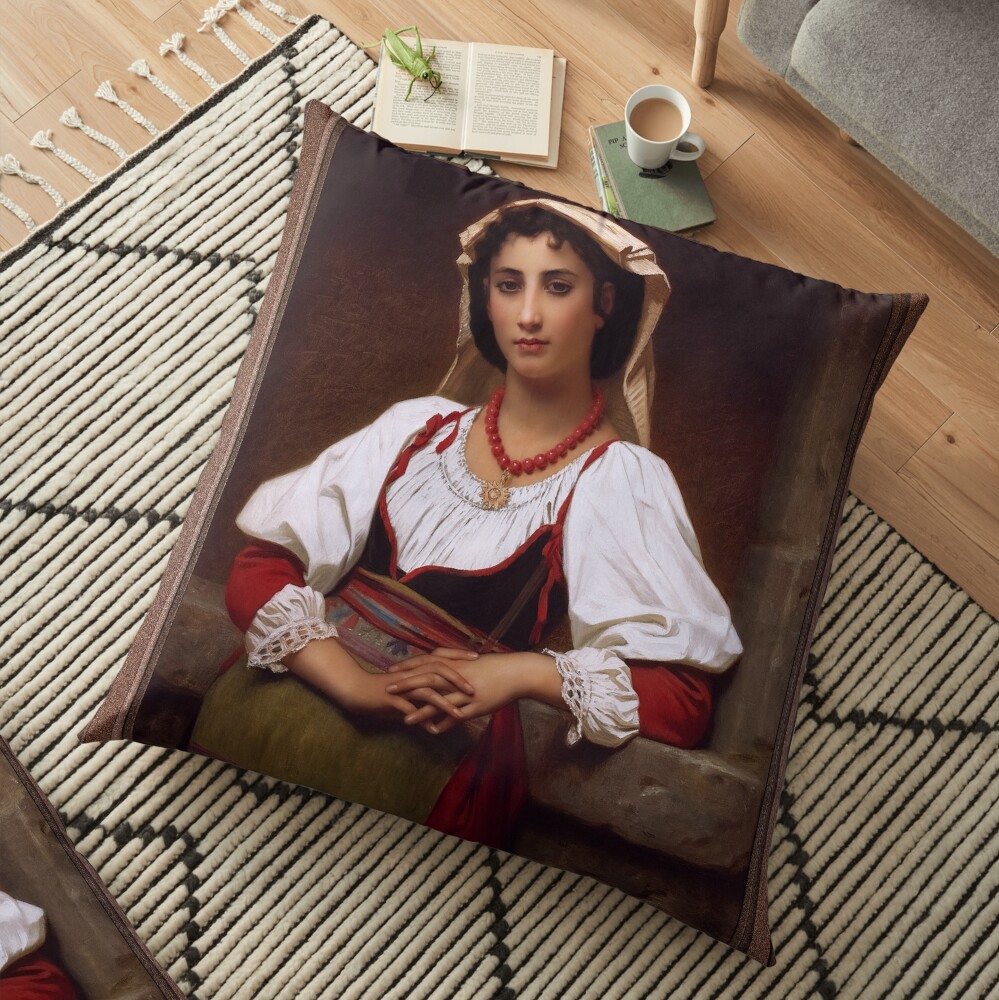
By an alcove on the side of a building stands an alluring brunette maiden of the late 19th century basking in the suns warm glow.
She is wearing a tan ruffled kerchief on the top of her head that nicely contrast the reddish-brown color of the alcove wall.
Along with the kerchief she is wearing a white long baggy sleeve blouse with partial red material from her forearm, up to her upper arm.
The blouse is complimented with the strap on dress she is wearing that is comprised of a black vest with red trim and a red long length bottom that matches the sleeves.
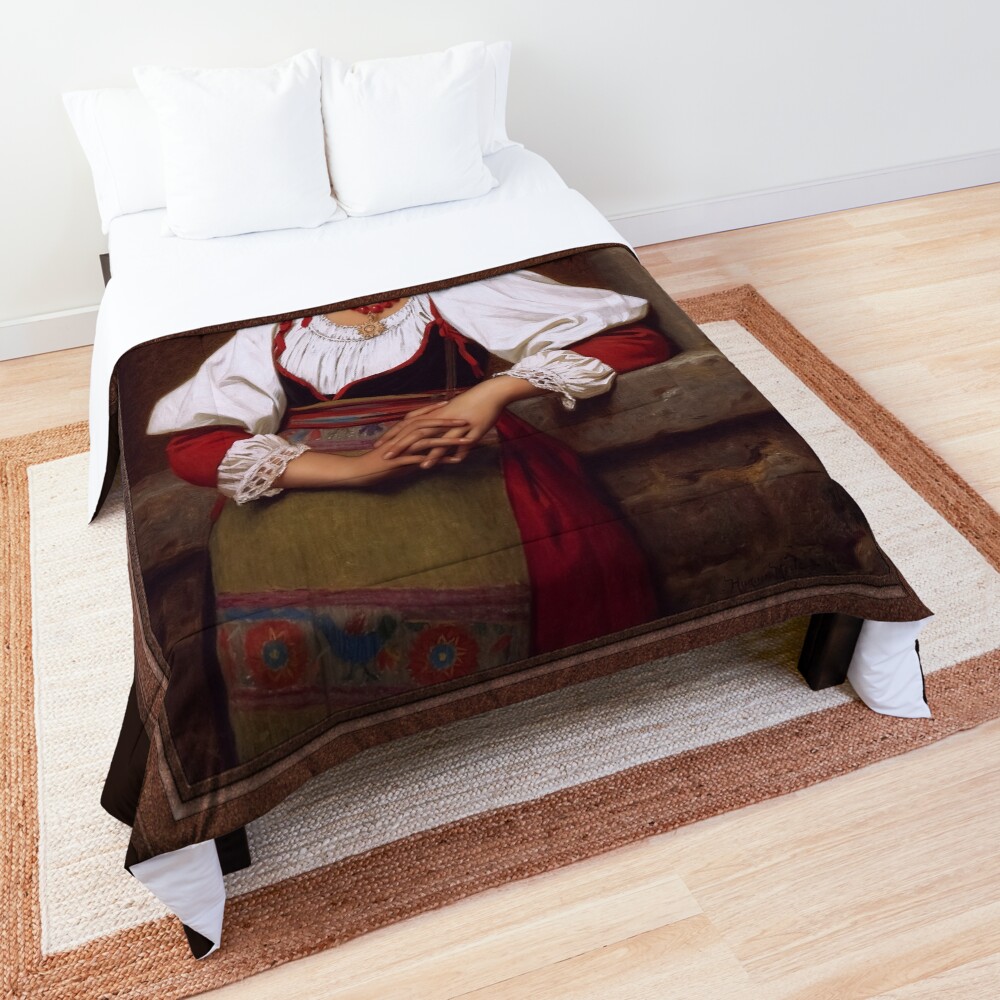
Then she has on the front a lime green apron with floral patterns on the top and a floral pattern on the bottom with a blue chicken; she is also wearing a large red beaded necklace with a gold star emblem hanging from the end.
This portrait of a young lady has her leaning on the stone ledge of the alcove that sits on a large brick wall of tan and light brown cut bricks.
Dies ist eine remasterte digitale Kunst-Reproduktion alter Meister eines gemeinfreien Bildes, das als verfügbar ist Leinwanddruck online.
Die folgenden Informationen stammen von Wikipedia.org und Rehs. com
Hugues Merle wurde geboren in 1822 in La Sône, Frankreich und ungefähr im Alter von 21 in Paris angekommen, Frankreich, wo er Malerei bei dem französischen Historien- und Porträtmaler Léon Cogniet studierte (1794 – 1880).
Obwohl wenig über Hugues frühes Leben bekannt ist, wird angenommen, dass er vor seiner Ankunft in Paris einen gewissen Grad an Kunstausbildung erhielt 1843; weil er begann, im Pariser Salon auszustellen 1847 mit seinem Stück Portrait de L’auteur und in 1848 er stellte das Stück Légende des Willis aus.
Im Laufe der Zeit wuchs Hugues Ruf als Porträtmaler in den 1850er Jahren erheblich; und als erfolgreicher und prominenter Maler konnte er ernsthafte Kunstliebhaber anziehen, die ihre Kunstsammlungen aufbauen wollten.
Einer dieser frühen Kunstsammler war der 4. Marquess of Hertford, Richard Seymour-Conway (1800-1870); der seine Salon-Einreichung Reading the Bible in gekauft hat 1859.
In den 1860er Jahren, Die riesige Kundenliste von Sammlern umfasste nicht nur Einzelpersonen aus dem europäischen Kontinent, aber auch amerikanische Sammler, wie William Walters aus Baltimore, der The Scarlet Letter in Auftrag gab.