

Eine seltene Schönheit
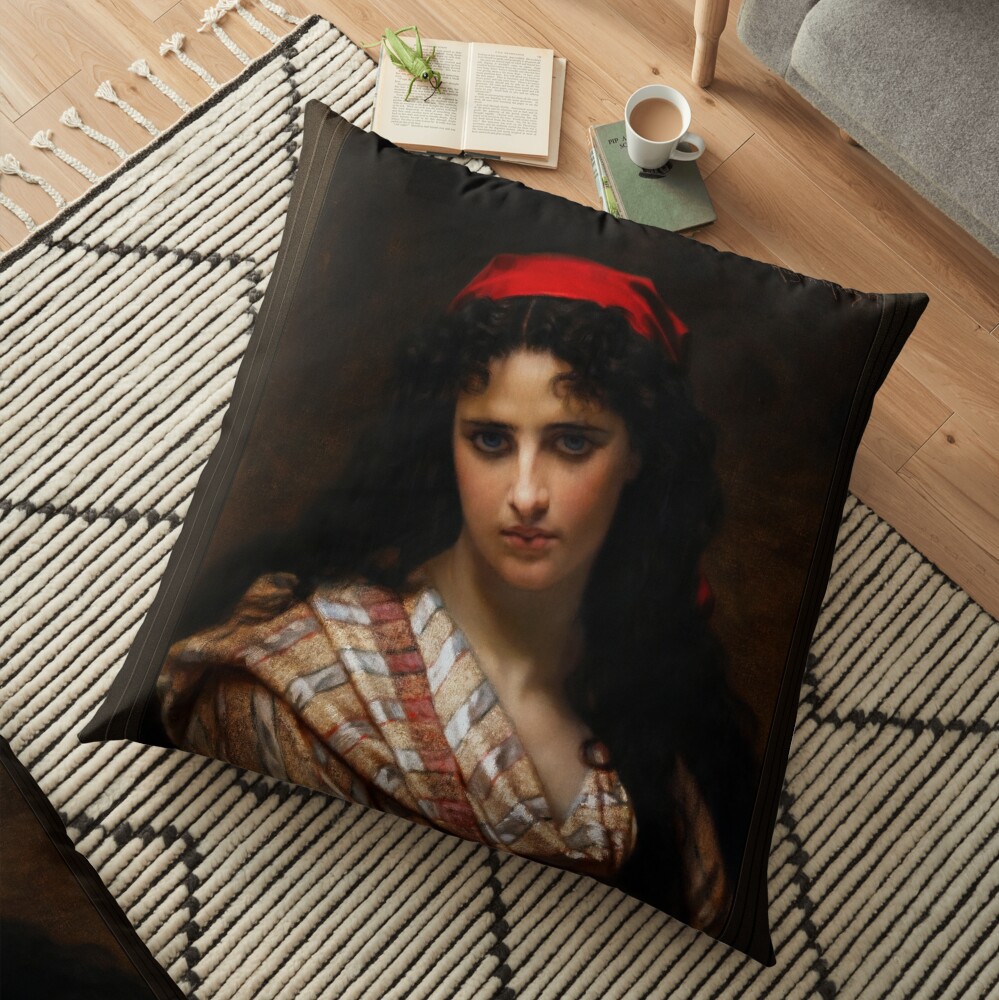
Hugues Merles (1823 – 1881), 1871 Meisterwerk, Eine seltene Schönheit, is a profound and evocative Porträt representation of feminine allure and introspection. This oil painting encapsulates Merle’s skill in portraying psychological depth and his attention to detail, evident in the somber yet mesmerizing depiction of the young woman who serves as the focal point of the piece. Merle, a noted French academic painter, often aligned his work with themes of beauty, sentiment, und emotionale Resonanz, und dieses Gemälde ist keine Ausnahme.
Inhaltsverzeichnis
Das Hauptthema: A Portrait of Introspection
Im Zentrum von Eine seltene Schönheit is a young woman of striking appearance, her expression conveying a quiet melancholy mingled with an air of mystery. Her pale, delicate complexion is offset by her rich, dark curls, which cascade in soft waves around her shoulders. Die Tiefe, penetrating gaze of her azure eyes draws the viewer in, suggesting a narrative untold but deeply felt. Her pose is one of solemnity; her head tilts slightly forward, and her downcast eyes evoke an introspective mood, as though lost in thought or grappling with unspoken emotions.
The subject wears a vibrant red headscarf tied loosely around her head, a striking element that adds warmth to the otherwise subdued palette and contrasts with her dark hair. The bold crimson hue may symbolize passion or strength, but its simplicity also suggests her humble or modest origins. Ihre Kleidung, a striped shawl of muted earthy tones, drapes across her shoulders, softening her figure and providing a textural balance to the painting. The choice of fabric, with its subtle folds and delicate stripes, reflects Merle’s meticulous attention to texture and material.
Objekte, Materialien, und Technik
Das Gemälde enthält keine offensichtlich störenden Objekte oder Hintergrunddetails, Sicherstellen, dass der Fokus des Betrachters auf dem Motiv bleibt. Dieser minimalistische Ansatz verstärkt die Intimität des Porträts, Dadurch kann jeder Aspekt der jungen Frau ungehindert untersucht werden. Die Einfachheit der Komposition unterstreicht auch die Universalität des Themas, ihren Ausdruck und ihre Form zeitlos machen.
Merles Verwendung von Öl als Medium ist meisterhaft. Die sanfte Mischung der Farben, vor allem in den Farbverläufen ihres Hauttons, demonstriert seine Beherrschung des Helldunkels, Eine Technik, die starke Licht- und Schattenkontraste einsetzt, um Tiefe und Dimension zu verleihen. Der Hintergrund, dunkel gerendert, erdige Töne, Bietet einen gedämpften Kontrast zur Leuchtkraft des Gesichts des Motivs, Sie wird dadurch noch mehr als Mittelpunkt des Gemäldes hervorgehoben. The restrained palette allows Merle to achieve a harmonious balance, evoking a naturalistic yet elevated depiction of the human form.
The textures of the shawl and the scarf are painted with delicate precision, the stripes rendered in soft, uneven lines that mimic the organic imperfections of woven fabric. Each brushstroke captures the interplay of light and shadow on the folds of the fabric, imbuing it with a tactile quality that enhances the realism of the work.
Thematic Elements and Symbolism
The painting embodies themes of beauty, Selbstbeobachtung, und Emotion, hallmark traits of Hugues Merle’s oeuvre. Der Titel, Eine seltene Schönheit, reflects the artist’s reverence for the subject’s individuality and the timeless allure she represents. Her understated elegance and the somber tone of her expression suggest a deeper narrative, possibly hinting at themes of longing, Verlust, or contemplation.
Während Merles Werk oft mit dem von William-Adolphe Bouguereau verglichen wird, Dieses Stück zeichnet sich durch seine nuancierte emotionale Tiefe aus. Das Fehlen eines Idealisierten, Der offenkundig dekorative Hintergrund legt den Fokus ausschließlich auf die Menschlichkeit des Motivs. Die gedämpften Töne und das Spiel von Licht und Schatten erzeugen eine Stimmung, die sowohl nachdenklich als auch melancholisch ist, Sie lädt den Betrachter ein, seine eigene Interpretation auf ihren rätselhaften Gesichtsausdruck zu projizieren.
Der rote Schal, beim Schlagen, ist nicht übermäßig verziert, was auf ein Element der Einfachheit und Bescheidenheit hindeutet. Seine Kühnheit steht im Kontrast zu ihrer dezenten Kleidung und ihrem düsteren Auftreten, vielleicht ein Hinweis auf die Komplexität ihres Charakters, ein Nebeneinander von äußerer Lebendigkeit und innerem Aufruhr.
Style and Artistic Context
Hugues Merle wurde mit dem akademischen Stil in Verbindung gebracht, der Mitte des 19. Jahrhunderts in Frankreich vorherrschte, which emphasized technical precision, idealisierte Schönheit, and a focus on classical themes. Eine seltene Schönheit reflects this academic tradition while also delving into a more personal and emotive realm, demonstrating Merle’s ability to convey psychological nuance alongside technical mastery.
The painting’s intimate scale and restrained composition align it with portraiture traditions that aim to reveal the essence of the individual. Merle’s contemporaries often celebrated similar themes of feminine beauty and emotional introspection, but his works, including this piece, stand out for their subtlety and sensitivity. The lack of theatricality in Eine seltene Schönheit underscores its quiet power, drawing the viewer into a meditative engagement with the subject.
Die Stimmung und Atmosphäre
Die Stimmung von Eine seltene Schönheit is introspective and somber, Dennoch besitzt es eine unterschwellige Wärme, die verhindert, dass es sich kalt oder distanziert anfühlt. Das Zusammenspiel von Licht auf dem Gesicht des Motivs und den gedämpften Tönen des Hintergrunds schafft eine Atmosphäre sanfter Intimität, als ob der Betrachter über einen privaten Moment der Besinnung gestolpert wäre.
Diese emotionale Resonanz wird durch die Weichzeichnung des Gemäldes verstärkt, was ihm eine traumhafte Qualität verleiht. Beim Betrachter entsteht ein Gefühl stiller Bewunderung für die Schönheit des Motivs und die Emotionen, die es zu tragen scheint. Ihr rätselhafter Gesichtsausdruck, weder völlig freudig noch traurig, spiegelt die Komplexität der menschlichen Erfahrung wider, Dadurch wird das Gemälde zutiefst nachvollziehbar und zeitlos.
Abschluss
Hugues Merles Eine seltene Schönheit ist eine meisterhafte Erkundung der weiblichen Anmut, emotionale Tiefe, und technische Präzision. Durch seinen Einsatz von Licht, Textur, und Komposition, Mit fast ehrfurchtsvoller Sensibilität fängt Merle die Essenz seines Themas ein. Die Einfachheit des Gemäldes täuscht über seine emotionale Komplexität hinweg, lädt den Betrachter ein, über die innere Welt der porträtierten jungen Frau nachzudenken. Dieses Werk ist ein Beweis für Merles Fähigkeiten als Porträtist und seine Fähigkeit, durch seine Kunst tiefe Emotionen hervorzurufen.
Dies ist eine remasterte digitale Kunst-Reproduktion alter Meister eines gemeinfreien Bildes, das als verfügbar ist Leinwanddruck online.
Künstler Bio abgeleitet von Wikipedia.org und Rehs. com
Hugues Merle wurde geboren in 1822 in La Sône, Frankreich und ungefähr im Alter von 21 in Paris angekommen, Frankreich, wo er Malerei bei dem französischen Historien- und Porträtmaler Léon Cogniet studierte (1794 – 1880).
Obwohl wenig über Hugues frühes Leben bekannt ist, wird angenommen, dass er vor seiner Ankunft in Paris einen gewissen Grad an Kunstausbildung erhielt 1843; weil er begann, im Pariser Salon auszustellen 1847 mit seinem Stück Portrait de L’auteur und in 1848 er stellte das Stück Légende des Willis aus.
Im Laufe der Zeit wuchs Hugues Ruf als Porträtmaler in den 1850er Jahren erheblich; und als erfolgreicher und prominenter Maler konnte er ernsthafte Kunstliebhaber anziehen, die ihre Kunstsammlungen aufbauen wollten.
Einer dieser frühen Kunstsammler war der 4. Marquess of Hertford, Richard Seymour-Conway (1800-1870); der seine Salon-Einreichung Reading the Bible in gekauft hat 1859.
In den 1860er Jahren, Die riesige Kundenliste von Sammlern umfasste nicht nur Einzelpersonen aus dem europäischen Kontinent, aber auch amerikanische Sammler, wie William Walters aus Baltimore, der The Scarlet Letter in Auftrag gab.