

The Nightmare c1781
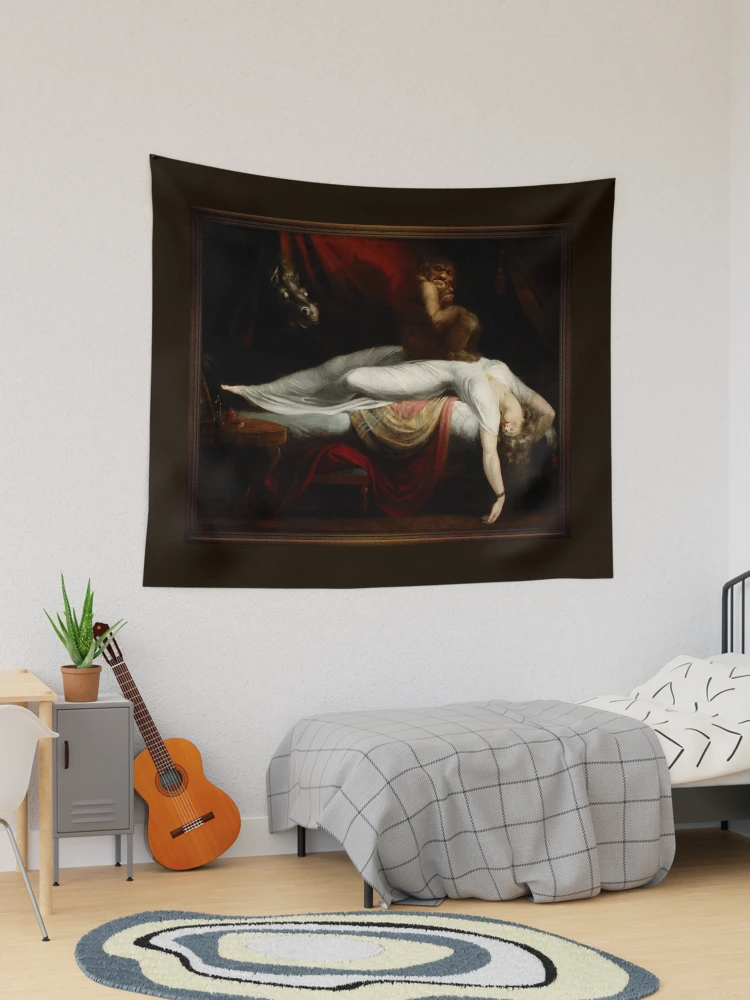
“Painajainen,” maalattu sisään 1781 by Swiss artist Henry Fuseli (1741-1825), is one of the most iconic and unnerving works of the late 18th century, melding themes of the supernatural and psychological unease. This dramatic and haunting piece explores the realm of nightmares and the grotesque. Known for its bold use of contrast, its striking depiction of a woman in a state of deep sleep, and its symbolic elements, “Painajainen” stands as a testament to Fuseli’s unique approach to Romanticism, blending elements of the gothic with intense emotion and surrealism. Fuseli’s art often questioned the boundaries between reality and dreams, and this piece exemplifies his mastery in portraying the darkness of the human subconscious.
Sisällysluettelo
Pääaihe ja kokoonpano
At the center of the mythological composition lies a woman, draped in a white gown, her head tilted back, her eyes shut, and her mouth slightly agape. She lies sprawled across a bed, her posture one of apparent vulnerability. Hänen ruumiinsa sijainti, her limp arms, and her slouched form suggest that she is not merely asleep, but entrapped in the grip of a terrible nightmare.
Her face is pale, accentuating the fear or distress she may be experiencing in her dream. The body language of the figure reveals both a sense of helplessness and submission, as though the woman is at the mercy of forces beyond her control. On top of her, partially crouched on her chest, is a grotesque, monstrous figure that resembles a demonic creature. This being, with its exaggerated features and intense expression, conveys a sense of malevolent power.
The creature’s posture, its crouched, almost primal stance, suggests a symbolic representation of a nightmare or night terror, which many during the period believed to be the work of supernatural forces. The sinister character appears to be pressing down on the woman, as if suffocating her, yet it exudes an aura of satisfaction and dominance, as if it derives pleasure from her torment.
In the background of the composition, a darkened, blurred silhouette of a horse’s head looms, eyes wide with a fearful expression. This spectral horse adds an additional layer of psychological intensity to the piece, as if the creature’s vision is skewed and tortured, suggesting the nightmare is shared between both the woman and the horse. Its presence only heightens the viewer’s sense of unease, as it represents the creeping nature of irrational fear, constantly lurking in the shadows of the dreamer’s mind.
Objektit ja yksityiskohdat
The room surrounding the central figure is rich in dark tones, which evoke a sense of unease and confinement. To the left, a small table holds objects like a candle and an overturned vase, adding to the atmosphere of disarray and disturbance.
The faint illumination from the candle casts dark shadows on the walls, heightening the sense of isolation and the unknown. The dimness of the interior suggests that the nightmare takes place in the dead of night, further emphasizing the vulnerability and helplessness of the woman in her vulnerable state.
The bed itself, draped with a deep red velvet curtain, plays a significant role in amplifying the atmosphere. Syvä, rich color of the bedding suggests both luxury and danger, implying that even in a space of comfort, horror can strike. This lavishness, often associated with the opulence of a safe and peaceful domestic life, is sharply contrasted by the horrific apparition that dominates the scene.
The interplay of light and shadow in this piece is significant. Fuseli’s use of chiaroscuro, the technique of using strong contrasts between light and dark, amplifies the drama of the composition. The light falling on the woman’s form illuminates her body in stark contrast to the surrounding darkness, focusing the viewer’s attention on her helpless state while casting her surroundings into an oppressive shadow. This creates a powerful sense of depth and dimensionality, evoking a tension between the reality of her physical form and the nightmare that haunts her.
Tunnelma, Tyyli, and Theme
“Painajainen” evokes a mood of horror, anxiety, and suffocation. It is a powerful visual representation of the psychological terror associated with nightmares, the kind of fear that seems tangible yet is completely irrational. The artist blends elements of gothic horror with a romanticized exploration of the unknown. In the 18th century, people were particularly fascinated by the supernatural and the unknown realms of the mind, making the depiction of these elements a natural focus for Fuseli’s work.
Fuseli’s approach to painting often emphasized intense emotional experiences, Ja tämä pala ei ole poikkeus. The tension in the scene is palpable, not just through the central figures but in the stark contrast between light and dark.
The theme of suppressed terror is explored through the supernatural, as both the woman and the viewer are drawn into a world that is both unsettling and bizarre. This dark exploration of the human psyche invites questions about the limits of consciousness, the fear of the unseen, and the potential for terror that resides within dreams.
The style of Fuseli’s work was influenced by his exposure to Neoclassicism, but he departed from its rationality and balance by incorporating exaggerated forms and dramatic, fantastical elements. The surreal nature of the creature that straddles the woman’s chest reflects his interest in psychological subjectivity and his rejection of realism in favor of emotional intensity.
Johtopäätös
Henry Fuseli’s “Painajainen” is a provocative, chilling exploration of human fear, both real and imagined. The surreal quality of the painting, the disturbing imagery, and the unsettling use of light and shadow all contribute to the timeless power of this piece. Fuseli captured a universal experience, the sensation of being vulnerable and at the mercy of forces beyond understanding, in a way that continues to resonate with viewers today. The painting is a masterclass in both technique and emotional depth, exploring themes of vulnerability, terror, and the haunting nature of dreams.
The Nightmare on retusoitu digitaalisen taiteen vanhojen mestareiden kopio julkisessa käytössä olevasta kuvasta.
Taiteilija bio Wikipedia.org
Fuseli syntyi Zürichissä, Sveitsi, toinen 18 lapset. Hänen isänsä oli Johann Caspar Füssli, muotokuvien ja maisemien maalari, ja kirjailija Lifes of the Helvetic Painters. Hän tarkoitti Henrikin kirkolle, ja lähetti hänet Zürichin Caroline-opistoon, jossa hän sai erinomaisen klassisen koulutuksen. Yksi hänen koulutovereistaan siellä oli Johann Kaspar Lavater, jonka kanssa hänestä tuli läheisiä ystäviä.
Tilausten vastaanottamisen jälkeen 1761, Fuseli joutui lähtemään maasta, koska oli auttanut Lavateria paljastamaan epäoikeudenmukaisen tuomarin, jonka voimakas perhe halusi kostaa. Hän matkusti Saksan halki, ja sitten, sisään 1765, vieraili Englannissa, jossa hän elätti itsensä jonkin aikaa erilaisilla kirjoituksilla.
Lopulta, hän tutustui Sir Joshua Reynolds, joille hän näytti piirustuksiaan. Reynoldsin perässä’ neuvoja, hän päätti omistautua kokonaan taiteelle. Sisään 1770 hän teki taiteen pyhiinvaelluksen Italiaan, missä hän pysyi siihen asti 1778, muutti nimensä Füsslistä italialaisemmaksi kuulostavaksi Fuseliksi.
Aikaisin sisään 1779 hän palasi Britanniaan, ottaa matkallaan Zürichiin. Lontoossa hän löysi toimeksiannon Alderman Boydellilta, joka silloin perusti Shakespeare-galleriaan.
Fuseli maalasi useita teoksia Boydellille, ja julkaisi englanninkielisen painoksen Lavaterin fysiognomiatyöstä. Hän antoi myös William Cowperille arvokasta apua Homeroksen käännöksen valmistelussa.
Sisään 1788 Fuseli meni naimisiin Sophia Rawlinsin kanssa (alun perin yksi hänen malleistaan), ja pian sen jälkeen hänestä tuli kuninkaallisen akatemian liittolainen. Varhainen feministi Mary Wollstonecraft, jonka muotokuvan hän oli maalannut, suunnitteli hänen kanssaan matkaa Pariisiin, ja ajoi häntä päättäväisesti takaa, mutta Sophian väliintulon jälkeen Fuselit’ ovi suljettiin häneltä ikuisesti.
Fuseli sanoi myöhemmin “Vihaan älykkäitä naisia. Ne ovat vain hankalia”. Sisään 1790 hänestä tuli täysivaltainen akateemikko, esittää Thor Battering the Midgard Serpentin diplomityökseen. Sisään 1799 Fuseli nimitettiin Akatemiaan maalauksen professoriksi. Neljä vuotta myöhemmin hänet valittiin vartijaksi, ja erosi professorin virastaan, mutta jatkoi sitä sisään 1810, jatkaa molemmissa viroissa kuolemaansa asti.[4] Vartijana, hänen seuraajakseen tuli Henry Thomson.
Sisään 1799 Fuseli esitteli sarjan maalauksia John Miltonin teosten sisustamista aiheista, Boydellin Shakespeare-galleriaan verrattavan Milton-gallerian muodostamiseksi.
Siellä oli 47 Miltonin maalauksia, monet niistä erittäin suuria, valmistuu yhdeksän vuoden välein. Näyttely osoittautui kaupalliseksi epäonnistumiseksi ja sulkeutui 1800. Sisään 1805 hän julkaisi painoksen Pilkington's Lifes of the Painters -teoksesta, mikä ei juurikaan vaikuttanut hänen maineeseensa.
Antonio Canova, ollessaan Englannissa, otettiin paljon mukaan Fuselin teoksiin, ja palattuaan Roomaan 1817 sai hänet valituksi Pyhän Luukkaan akatemian ensimmäisen luokan jäseneksi.