

Bederatzigarren olatua c1850
Hovhannes Aivazovskyrenak (1817 – 1900) pintura Bederatzigarren Olatua (Bederatzigarren Olatua), sortua 1850, ozeanoaren indar etezina den erretratu paregabea da. urtean jaioa 1817, Aivazovsky Errusiako margolari erromantiko ospetsuenetako bat izan zen, eta bere itsas paisaien irudikapenek artearen historian ikonikoak izaten jarraitzen dute. Maisulan hau ez da salbuespena, izua bizi-bizi harrapatzen, edertasuna, eta naturaren indar ikaragarria.
Aivazovskyk duen lilura sakona itsasoa eta bere berezko misterioak presente dago nahastezina, batez ere, ozeanoaren olatuak eta argiarekin duten elkarrekintza erretratatzen dituen moduan. Bere teknika nabarmenaren bidez, eszena intentsitate dramatiko batera igotzen du, gizakiaren eta naturaren arteko borroka fisikoa ez ezik islatzen duena., baina baita erronka filosofiko eta existentzialak ere gizakiak bere esku ez dauden indarrei aurre egiten dionean.
Edukien taula
Gai nagusia eta osaera
In Bederatzigarren Olatua, Aivazovskyk itsasoko arrisku une bat erakusten du. Lanaren gai nagusia olatu itzelan biltzen da, lehen planoan nagusi dena. Olatua, bere edertasun mehatxagarrian dotorea, txikiaren gainera erortzeko zorian dagoela dirudi, almadia hauskorra azpian harrapatuta. Artelanaren gaia naufragioen talde bat da, ekaitz bortitz baten ostean inprobisaziozko baltsa batean lehorreratuta.
Naturaren indar izugarriaren aurka bizirauteko borrokak giza hauskortasunaren gai zabalagoari buruz hitz egiten du.. Gizonak baltsa gainean, etsi baina erabakita, beren ontzitik geratzen denari atxikitzea. Their expressions are a mixture of exhaustion and hopelessness, yet there is a trace of defiance as they face what seems an inevitable fate.
The image conveys a sense of dramatic tension, with the survivors framed against the backdrop of the mighty ocean and sky. Aivazovsky’s brilliant use of color and light emphasizes the wave’s enormity and the emotional weight of the scene. The individuals are dwarfed by the size and power of the natural elements, highlighting their vulnerability and humanity in the face of a world beyond their control.
Lurrak eta materialak
Lurra barne Bederatzigarren Olatua is defined primarily by the vast ocean, begiak ikusten duen neurrian luzatuz. The water is tumultuous, characterized by swirling, churning waves that seem to roll with the fury of a tempest. Aivazovsky’s mastery of seascapes is evident in the way he captures the movement of the water. Each wave is painted with such precision that the viewer can almost feel the rush of water, the tumultuous spray, and the undercurrent that threatens to pull the raft into the abyss. The waves seem to glow with an eerie energy, with each crest highlighted by the soft light that permeates the canvas, revealing the delicate texture of foam and water.
The colors used in this seascape further elevate the tension. The warm golden light, which spills from the horizon, contrasts dramatically with the deep blues and greens of the sea. The sunlight, muted yet powerful, offers a glimmer of hope, a small contrast to the otherwise overpowering forces of nature. Argiaren eta ilunaren arteko elkarreragin honek drama bisuala hobetzeaz gain, baltsa gainean bizirik atera direnek bizi duten etsipenaren eta itxaropenaren arteko oreka delikatua sinbolizatzen du..
Olatuen haratago, goiko zerua berdin nahasia da. Hodei bortitzak, urre zurbileko tonuetan margotuta, arrosa, eta bioleta, ia beste munduko giroa transmititzen du, margolanaren aldarte dramatikoa areagotuz. Zeruertza lausoa eta urruna da, segurtasunerako bide argirik ez eskainiz, zeruaren eta itsasoaren hedadura infinitua besterik ez. Zabal hau, eten gabeko hedadurak ezezaguna iradokitzen du, bizirik atera direnen ezintasuna indartuz, eta naturaren boterearen aurrean gizakiaren hutsaltasunaren gaia azpimarratuz.
Estilo, Gai, eta umorea
Aivazovskyren koadroa erromantizismoaren pieza eredugarria da, sarritan sublimean zentratzen zen mugimendua, naturaren botere izugarria, and the emotional responses evoked by such forces. Bederatzigarren Olatua evokes a strong sense of awe and terror, as well as an underlying hope. The storm’s ferocity speaks to nature’s absolute authority, while the survivors’ fight for survival represents the resilience of the human spirit, a theme that resonates deeply with the Romantic ideals of struggle against the vast unknown.
The painting’s mood is both tense and contemplative. It exudes a sense of dramatic impending doom, the survivors on the raft caught in the middle of a fight they cannot fully win. Hala ere, the radiant light that bathes the horizon suggests a hope for rescue, a faint possibility of survival against overwhelming odds. This contrast between light and darkness imbues the painting with a complex emotional layer, one where both despair and optimism coexist, forcing the viewer to reflect on the fragility of life and the strength of the human will.
Aivazovsky’s technique contributes greatly to the mood. The swirling forms of the waves, the soft glow of the light, and the highly detailed figures all work together to heighten the dramatic tension. The motion in the water is fluid and dynamic, and the sheer scale of the ocean and sky creates an immersive experience. The survivors, though small in comparison to the wave, are imbued with life, their posture and expressions showing the wear of their struggle but also the undeniable will to continue.
Bukaera
Hovhannes Aivazovskyrenak Bederatzigarren Olatua is a timeless masterpiece that encapsulates the awe-inspiring power of the sea and the vulnerability of humankind. Argiaren elkarreragina, water, and the figures trapped in the storm creates a dynamic narrative that speaks to the Romantic ideals of the sublime—nature’s capacity to evoke both wonder and terror. With its meticulous attention to detail, its dramatic use of light, and its profound emotional depth, the painting continues to resonate with viewers, offering a poignant reminder of both the fragility and resilience of life.
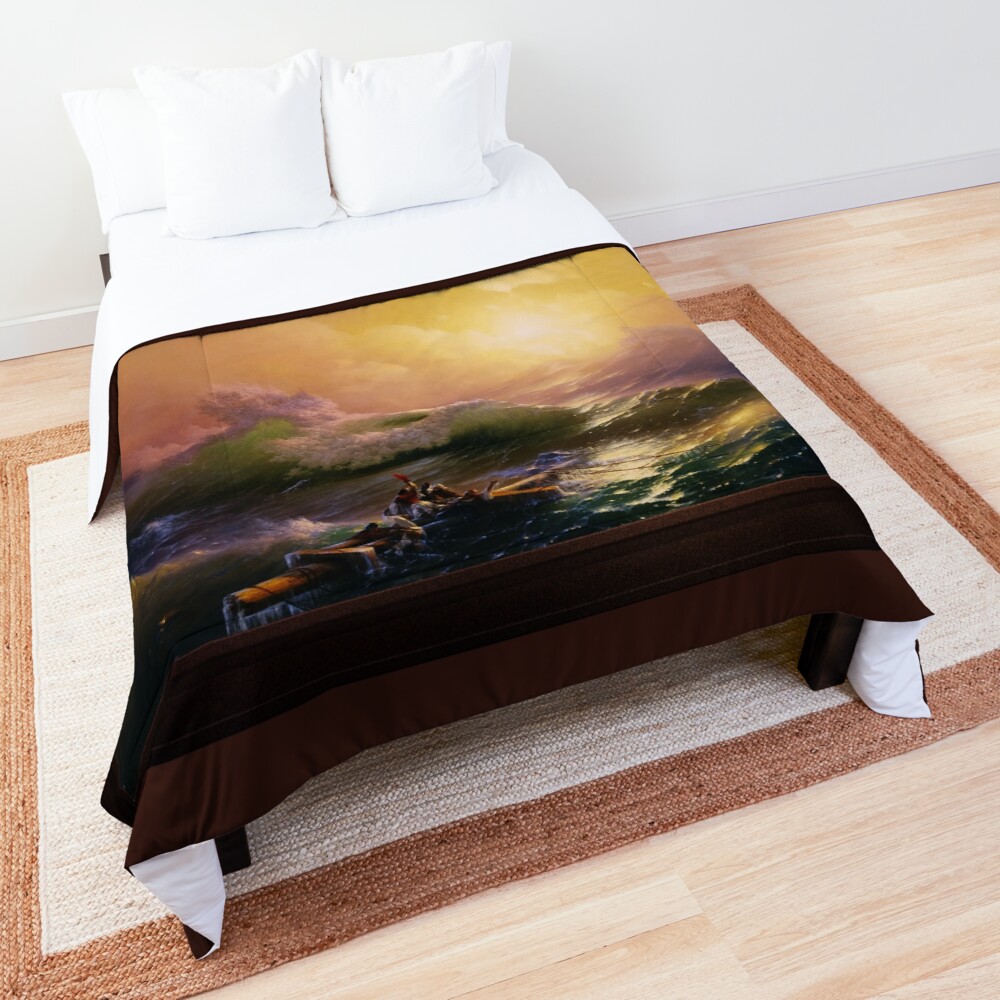
Domeinu publikoko irudi baten erreprodukzioa da arte digitaleko maisu zaharren erreprodukzioa mihise inprimatu sarean.
Arte digitalaren sorkuntza hau, Xzendor7 webgunean aurki daitezkeen artelan guztiak bezala sarean erosteko eskuragarri dago hainbat material formatutan, mihise inprimatuak barne., estanpatu akrilikoak, metal estanpatuak, egur estanpatuak, marko estanpatuak, kartelak, eta ijetzitako mihise estanpatu gisa hainbat tamainatan 12 zentimetroetara 72 hazbeteko artelanaren eta artea erosteko aukeratzen duzun eskaeraren arabera inprimatzeko dendaren tamainaren arabera.
Artelana gizonezkoen eta emakumezkoen arropa sorta zabal batean ere eskuragarri dago, katiluak, totes, zapiak, koadernoak eta aldizkariak eta etxeko dekorazio produktu ugari.
Artistaren biografia
Beheko informazioa Wikipedia.org
Ivan Konstantinovich Aivazovsky (Russian: Иван Константинович Айвазовский; Armenian: Հովհաննես Այվազյան; 29 uztaila 1817 – 2 Maiatza 1900) was a Russian Romantic painter who is considered one of the greatest masters of marine art. Baptized as Hovhannes Aivazian, he was born into an Armenian family in the Black Sea port of Feodosia in Crimea and was mostly based there.
Following his education at the Imperial Academy of Arts in Saint Petersburg, Aivazovsky traveled to Europe and lived briefly in Italy in the early 1840s. He then returned to Russia and was appointed the main painter of the Russian Navy.
Aivazovsky had close ties with the military and political elite of the Russian Empire and often attended military maneuvers.
He was sponsored by the state and was well-regarded during his lifetime. The saying “worthy of Aivazovsky’s brush”, popularized by Anton Chekhov, was used in Russia for describing something lovely. He remains highly popular in Russia in the 21st century.
One of the most prominent Russian artists of his time, Aivazovsky was also popular outside Russian Empire.
He held numerous solo exhibitions in Europe and the United States. During his almost 60-year career, he created around 6,000 margolanak, making him one of the most prolific artists of his time.
The vast majority of his works are seascapes, but he often depicted battle scenes, Armenian themes, and portraiture.
Most of Aivazovsky’s works are kept in Russian, Ukrainian and Armenian museums as well as private collections.