

An Muince Péarla
An Muince Péarla le péintéir Francach Charles Joshua Chaplin (1825 – 1891); chomh maith le déantóir priontaí a bhfuil aithne air as a chuid portráidí agus a thírdhreacha ag obair le hola, pastail, liteagrafaíocht, dath uisce agus cailc.
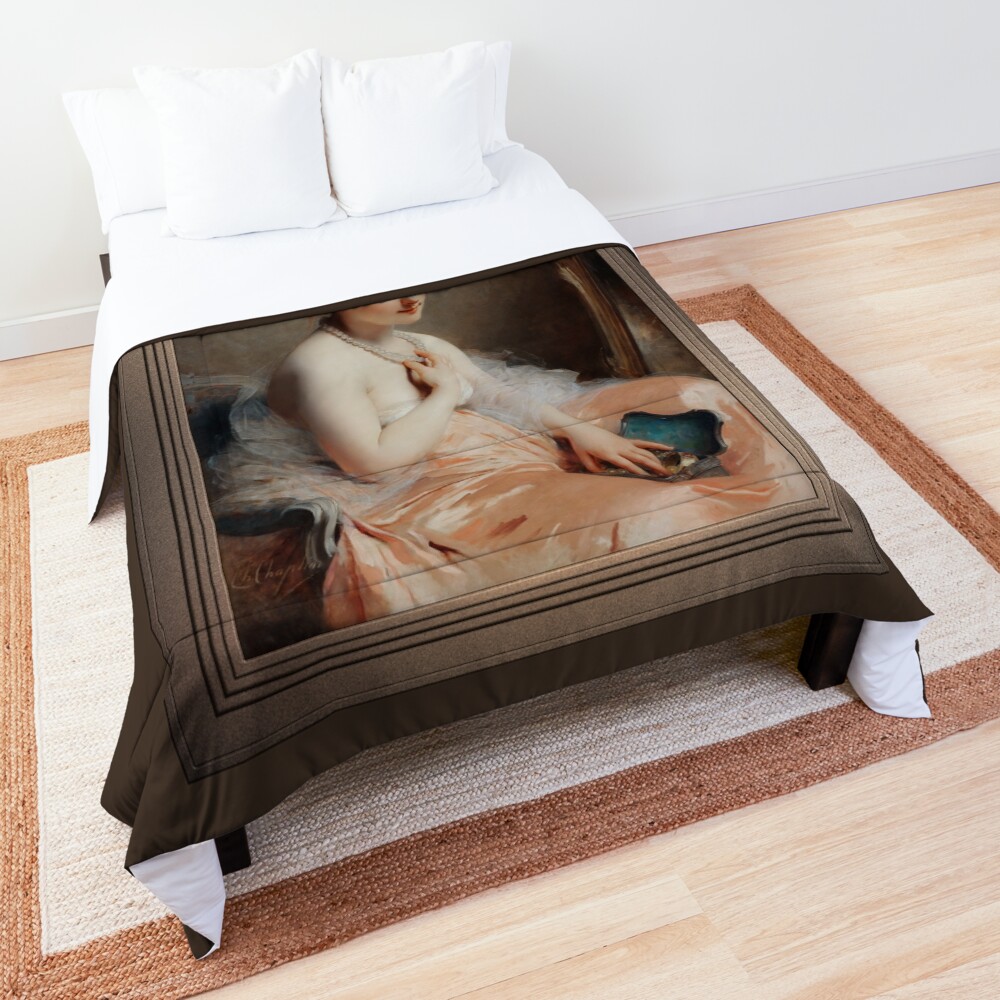
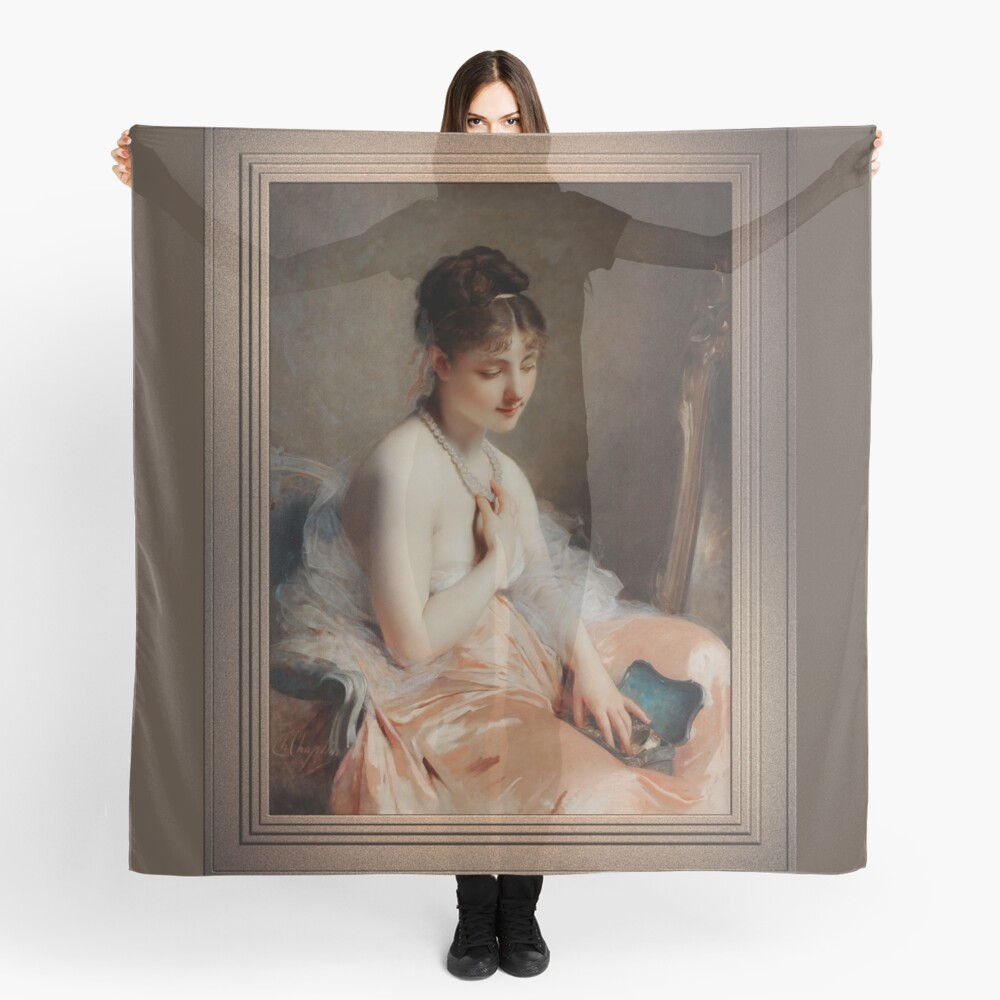
Bean óg ina suí i gcathaoir uilleach padded le clúdach maisiúil agus pillow ag tacú léi, atá cóirithe le gúna síoda oráiste-bándearg ón gcoim síos agus línéadach lom bán ó bharr a ghualainn.
Tá a cuid gruaige donn ceangailte ar bharr a cinn le ribín bándearg, agus tá muince péarla bán á chaitheamh timpeall uirthi ag féachaint isteach i scáthán urláir frámaithe lánmhéide atá amach ar chlé.
Tá sí ag teagmháil leis an gcuid crochta den muince péarla agus í ag féachaint isteach sa scáthán lena lámh dheas, agus í ag dul trí bhosca jewelry miotail oscailte le líneáil turquoise ar a chlúdach, atá líonta le jewelry péarla eile agus bráisléad mór óir le rubies suite timpeall ar a imlíne.
Seo atáirgeadh seanmháistrí ealaíne digiteach athmháistrithe d’íomhá fearainn phoiblí atá ar fáil mar a priontáil chanbhás ar líne.
Faisnéis Thíos Díorthaithe ó Wikipedia.org
Péintéir Francach agus déantóir priontaí a bhí i Charles Joshua Chaplin a phéinteáil tírdhreacha agus portráidí araon. D'oibrigh sé i dteicnící mar pastail, liteagrafaíocht, uiscedhath, cailc, phéintéireacht ola agus eitseáil. Bhí aithne air mar gheall ar a chuid portráidí galánta de mhná óga.

Rugadh Charles Joshua Chaplin ar 8 Meitheamh 1825 i Les Andelys, Do, An Fhrainc. A mháthair, Olympia Adelle Moisy, Francach a bhí ann, ach a athair, Eoin Chaplin, bróicéir ealaíne ó Shasana a bhí ann. Chaith Charles Chaplin a shaol ar fad sa Fhrainc, ag éirí ina shaoránach eadóirsithe i 1886.
Rinne sé staidéar ag an École des Beaux-Arts i bPáras ó 1840, agus thug sé ceachtanna príobháideacha i stiúideo Michel Martin Drolling, i measc a phrintísigh bhí Paul Baudry, Jules Breton agus Jean-Jacques Henner. Níos déanaí bhí sé ag múineadh freisin ag an École des Beaux-Arts.
I 1845, chuaigh sé isteach i Salon Pháras, taispeántas oifigiúil ealaíne an Académie des Beaux-Arts, mar phéintéir portráide agus tírdhreacha leis an bpictiúr Portrait of the Artist’s Mother. Rinne Chaplin ranganna ealaíne go sonrach do mhná ina stiúideo, lena n-áirítear Marie Joséphine Nicolas.
An t-ealaíontóir Meiriceánach Mary Cassatt, bhí an t-ealaíontóir Francach Louise Abbéma agus an t-ealaíontóir Sasanach Louise Jopling i measc scoláirí Chaplin. Bhí a mhac Arthur Chaplin ina phéintéir freisin. Fuair Chaplin bás ar 30 Eanáir 1891 in, d'aois 65, Páras mar fhear saibhir agus tá sé curtha i Reilig Père Lachaise.
Rinne Chaplin a chéad uair ag an Salon le portráidí, ach phéinteáil sé tírdhreacha freisin, go háirithe tuath Auvergne. A saothair luatha, ó 1848 chun 1851, péinteáilte ar bhealach arb iad is sainairíonna iad spéis sa réalachas, stíl a bunaíodh sa Dara Poblacht na Fraince, go raibh an mana Liberté, comhionannas, bráithreachas, agus bhí sé á rialú ar feadh trí bliana ag rialtas poblachtach na Fraince ó na 1848 Réabhlóid go dtí an 1851 lámhaigh ag Louis-Napoléon Bonaparte.
Gluaiseacht ealaíne a bhí sa réalachas a thosaigh sa Fhrainc sna 1850idí, tar éis an 1848 Réabhlóid.[5] Ó dheireadh an 18ú haois bhí an Rómánsachas i gceannas ar ealaín agus litríocht na Fraince ach ba iad na Réalaitheoirí a chuir an ruaig air, a rinne éirí amach i gcoinne mhothúcháin na gluaiseachta Rómánsaí a thaispeáint, ag iarraidh daoine aonair agus cásanna comhaimseartha fíor agus sainiúla a léiriú le fírinne agus le cruinneas.
Phéinteáil Chaplin go leor saothar ina laethanta tosaigh, lena n-áirítear staidéir bláthanna a bhí ar taispeáint ag an Salon de las Flores. Níos déanaí, sna 1850idí déanacha, thréig sé nádúrachas, a stíl níos luaithe, é a mhalartú le haghaidh níos galánta, teicníc galánta agus supple a thug clú áirithe air sa Fhrainc le linn a thréimhse mar phéintéir portráidí; mar sin ghlac sé le stíl ildánach agus luaineach agus faiseanta an phéintéir Fhrancaigh iomráiteach, Francois Boucher (1703–1770).
Ghlac sé freisin le traidisiún na mór-portráidí Sasanacha. D’fhorbair sé a stíl phéintéireachta féin ach ba iad na péintéirí Briotanacha Joshua Reynolds agus Thomas Gainsborough a spreag é. Ba ghnách leis saothair an ealaíontóra Ollannaigh Pieter Paul Rubens a ghreanadh agus fuair sé tuilleadh tionchair óna shaothar.