

The Penitent Magdalene c1635
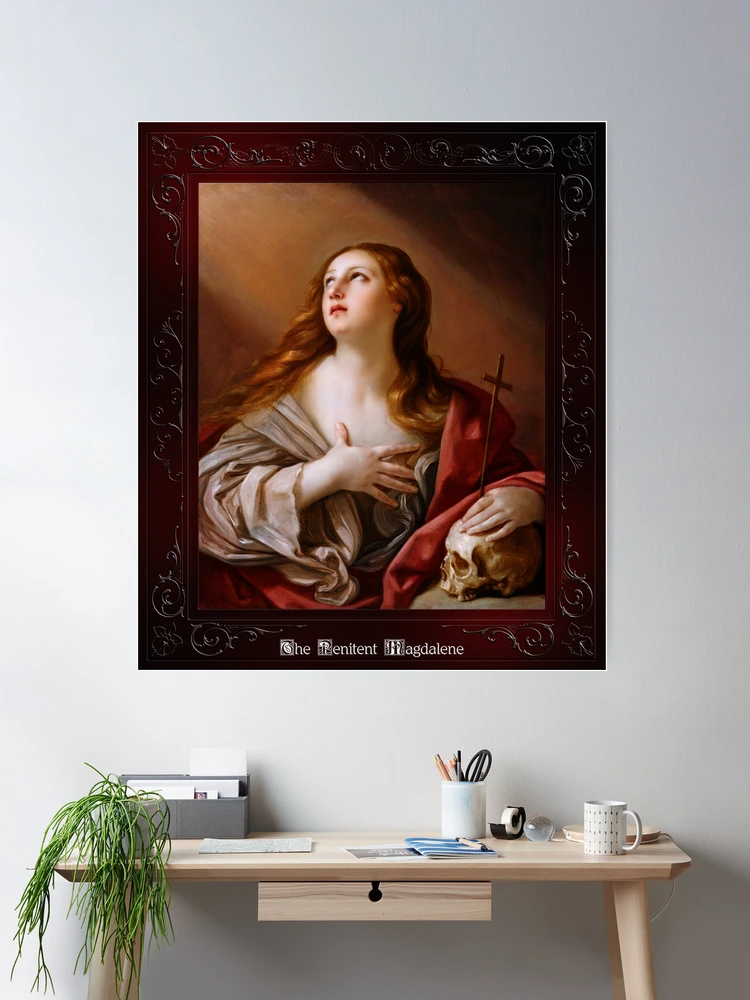
“The Penitent Magdalene” is a masterpiece created in 1635 by the renowned Italian Baroque painter Guido Reni (1575 – 1642). This iconic painting depicts the biblical figure of Mary Magdalene, who is traditionally recognized as a sinner seeking redemption. Reni’s depiction captures the intense inner turmoil and spiritual transformation of the subject through a careful balance of grace, pathos, and dramatic light, typical of Baroque art. The painting not only conveys religious themes of penitence and remorse but also showcases Reni’s mastery in portraiture, the handling of light and shadow, and his ability to imbue emotion into his figures.
Ynhâldsopjefte
Haad ûnderwerp: Maria Magdalena
Yn “The Penitent Magdalene,” the central figure is Maria Magdalena, whose contemplative expression and gentle posture evoke a deep sense of sorrow and remorse. She is shown with a pale, luminous face, her gaze directed upward, seemingly contemplating divine grace or reflecting upon her past sins. The pose of her hand on her breast, just above her heart, suggests an emotional plea for redemption or a profound internal conflict. Her other hand rests gently on a small skull, an emblem of mortality and the transient nature of earthly life. The skull, often a symbol of death, reinforces the theme of spiritual redemption, signaling the inevitability of death and the need for repentance in the face of human frailty.
The soft flow of her long, flowing hair and her opulent robes contrast with the somberness of the subject matter, de klam op har kwetsberens as in frou dy't fongen is tusken it ierdske en it godlike. De sêfte kromme fan har nekke, it subtile spultsje fan ljocht oer har hûd, en de delikate werjefte fan har gesichtsfunksjes suggerearje allegear Reni's prachtige oandacht foar detail en syn fermogen om in emosjoneel beladen byld te meitsjen troch delicate borstelwurk.
Foarwerpen: Skull and Cross
Twa wichtige objekten yn 'e komposysje ferdjipje it ferhaal: de skedel en it krús. De skedel leit njonken it figuer, har skerpe kontrast mei de oars serene en freedsume hâlding fan 'e figuer dy't de oandacht lûkt op syn symboalyske betsjutting. In barokkunst, soksoarte objekten herinnerje de sjogger faaks oan 'e oergeande aard fan it libben en it belang fan geastlike refleksje. De oanwêzigens fan 'e skedel slút direkt oan by it kristlike begryp fan 'e mortaliteit, encouraging the contemplation of death and the need for penance.
In contrast to the skull, a wooden cross is held upright in the background, subtly reinforcing the Christian theme of salvation. The cross, while not the focal point of the painting, serves as a silent testament to the religious undertones of the work. It is an object of immense spiritual significance, representing both suffering and redemption, which is central to the narrative of Mary Magdalene’s transformation.
Terrein en eftergrûn: Soft and Ethereal
The terrain and background in “The Penitent Magdalene” are minimalistic and ethereal, contributing to the overall mood of spiritual contemplation. The background is bathed in soft, warm tones of gold, rôze, en brún, creating a celestial atmosphere that separates the figure from any earthly concerns. There are no specific or detailed elements of the landscape, wêrtroch de oandacht fan de sjogger rjochte kin bliuwe op de emosjonele djipte fan it ûnderwerp. It brûken fan ljocht, benammen de sêfte gloed om Magdalena har gesicht, foeget in hast godlik aura ta oan har figuer, suggerearret har suvering en geastlike ferheging.
Dizze minimalistyske behanneling fan 'e eftergrûn en de sêfte gradaasje fan ljocht binne karakteristyk foar Reni's styl en foar barokke keunst yn it algemien. De ferljochting rjochtet de fokus fan de sjogger hielendal op it figuer, it fersterkjen fan it sintrale tema fan ynterne refleksje en boete.
Styl en technyk: Baroque Mastery
It wurk fan Reni is in foarbyld fan it bêste fan 'e barokke styl, in perioade bekend om syn emosjonele yntinsiteit, dramatyske kontrasten fan ljocht en skaad, en de gearfoeging fan realisme mei geastlike symbolyk. Yn dit skilderij, the artist employs chiaroscuro—the technique of strong contrasts between light and dark—to create a heightened sense of drama and emotion. The light that bathes Mary Magdalene’s face and hands lends an ethereal, almost otherworldly quality to the image, enhancing the sense of divine presence.
Reni’s precise brushwork and attention to detail are evident in the rendering of fabrics, skin tones, and facial expressions. His deft ability to capture the texture of the fabrics, especially the luxurious softness of Magdalene’s robe, further emphasizes the figure’s nobility and grace. The contrast between the delicately painted skin and the dark, almost mysterious shadows around the figure also showcases Reni’s technical skill in handling the human form.
Tema en stimming: Redemption and Spirituality
De stimming fan “The Penitent Magdalene” is one of profound introspection and sorrow, yet it also conveys a sense of hope and redemption. Reni has captured Magdalene in a moment of penitence—her gaze upward suggests a yearning for divine forgiveness, while the skull at her side serves as a reminder of the frailty of human life and the need for salvation. There is a deep spiritual tension in the figure’s posture, which combines vulnerability with a sense of inner strength. It is a moment of grace, where the figure is on the verge of spiritual redemption through her penitence.
The overall theme is one of Christian redemption, a recurrent motif in Baroque religious art. Magdalene, traditionally portrayed as a fallen woman, is shown here as a figure of deep contemplation, expressing both the pain of her past and the hope of her eventual salvation. This combination of emotional vulnerability with the promise of spiritual renewal invites the viewer to engage with the painting on a deeply personal level.
Konklúzje
Guido Reni’s “The Penitent Magdalene” is a poignant and powerful portrayal of the themes of sin, penitence, and redemption. The work exemplifies the Baroque tradition, blending technical virtuosity with deep emotional and spiritual insight. Through his careful use of light, skaad, en symbolyk, Reni invites viewers into the intimate world of Mary Magdalene, where the tensions of sorrow and hope are vividly brought to life.
Dit is in retouchearre digitale keunst âlde masters reproduksje fan in byld yn it iepenbier domein dat is beskikber as in metaal, doek, acrylic and wood print online.
Brûk dizze keppeling te keapjen de Ornament Assets used in the frame of this piece; de bondel befettet 400 eleminten fan prachtich ûntwurpen ornaments.
Artist Bio ôflaat fan Wikipedia.org
Guido was born in Bologna, Italy to musicians Daniele Reni and Ginevra Pozzi; and at the age of nine was apprenticed to the Bolognese studio of Flemish Painter Denis Calvaert (1540 – 1619), who lived in Italy and who was also known as Dionisio Fiammingo or Il Fiammingo (The Fleming).
When Guido was about 20, he and his fellow artist at the Bolognese studio, Italian Baroque Painters Francesco Albani (1578 – 1660) and Domenico Zampieri (1581 – 1641), moved to the rival studio, Accademia degli Incamminati (Academy of the “newly embarked”, or progressives), which was led by Italian, early-Baroque painter, etser, and printmaker Ludovico Carracci (1555 – 1619).
The trio then went on to form the core of a successful and prolific school of Bolognese painters who followed the cousin of Lodovico; Italian painter Annibale Carracci (1560 – 1609).