

Cuairt Banrigh Sheba gu Rìgh Solamh
Cuairt Banrigh Sheba air Rìgh Solomon c1890 leis a’ Pheantair Breatannach Eideard Iain Poynter (1836 – 1919); Peantair dhealbhan ro-Raphaelite agus follaiseach agus prìomh sgrìobhadair na linn.
Is e obair ealain iongantach agus opulent a tha seo a tha a’ nochdadh beairteas agus cumhachd mòr Rìgh Solomon (990 – 931 BCE) ri linn a rìoghachd air a mheas a bhith timcheall 970 – 931 BCE.
Tha an sealladh a’ sealltainn cùirt lùchairt Rìgh Solamh le colbhan mòra dà-fhillte air an sgeadachadh le òr bhon bhonn letheach slighe suas, an uairsin dearg teine agus barrachd òir air a 'chuid as àirde de sgeadachadh a' cholbh.
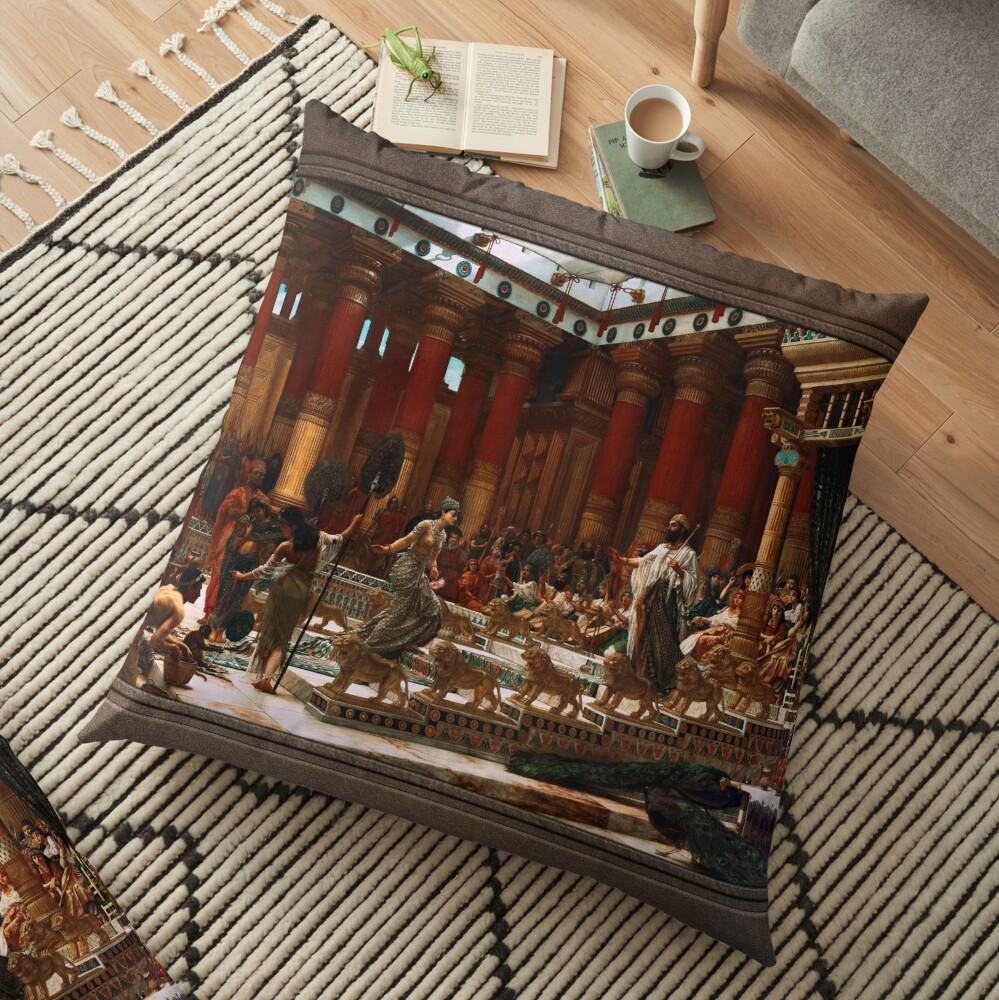
Air iomall na cùirte tha àireamh mhòr de dh’ uaislean a bharrachd air saighdearan às na tìrean a tha a’ dol thairis air a rìoghachd..
Tha a rìgh-chathair air a sgeadachadh le òr agus tha sia ceumannan marmoir air a bheil ìomhaighean leòmhann òir air gach laighe air gach taobh; leis na seallaidhean cuideachd air an sgeadachadh le òr agus ealain sgeadachaidh breagha.
Air taobh deas a rìgh-chathair chì sinn cuid de mhnathan Sholaimh agus gu h-ìosal tha luchd-ciùil air an dèanamh suas de cheathrar bhoireannach agus aon fhear a’ cluich clàrsaich de sheòrsa air choreigin.; agus air taobh clì na rìgh-chathair chì sinn peucagan mòra gorm-uaine ri taobh bòrd air a bheil fìon-dhearcan agus measan eile air am bi boireannach a’ coimhead..
Air a’ chòigeamh laighe tha Rìgh Solamh ann an èideadh geal, caip òir air fàs, slat-rìoghail na làimh chli, agus aodach maiseach an crochadh ri a thaobh chlì; le a làmh dheas air a sìneadh air adhart, làimh ri Banrigh Sheba a tha air an dara tìr.
Tha i air a sgeadachadh le caip de sheudan agus tha seudan oirre mar sheudan bodhaig air a broilleach agus a sliasaid fosgailte, a bharrachd air aodach sìoda uaine a bhios ag obair mar sgiort fhada.
Air a cùlaibh tha dà bhan-sheirbheiseach a' cumail pòlaichean luchd-leantainn peucaig àrd le sanasair air cùlaibh tè dhiubh air an làimh dheis agus air a cùlaibh air beulaibh an staidhre tha searbhantan no tràillean le biadh is deoch; cho math ri muncaidh a tha a’ cumail fanaid bheag pheucaig na làimh dheis.
Tha Tadhal Banrigh Sheba gu Rìgh Solomon na ath-riochdachadh seann mhaighstirean ealain dhidseatach de ìomhaigh fearann poblach a tha ri fhaighinn mar mheatailt., acrylic, fiodh agus clò-bhualadh canabhas air-loidhne.
Fiosrachadh gu h-ìosal a thàinig bho Wikipedia.org
Rugadh Eideard ann am Paris, An Fhraing gu Ailtire Bhreatainn agus stèidheadair Institiud Ailtirean Bhreatainn (c1834) Ambrose Poynter (1796 – 1886) agus Emma Forster (? – 1848); agus goirid an dèidh a bhreith thill a phàrantan a Bhreatainn.
Chaidh Eideard gu Colaiste Brighton agus gu sgoil Ipswich, ach b' fheudar dha falbh tràth air sgàth droch shlàinte; a thug air a gheamhraidhean a chur seachad ann am Madeira, Portagal agus anns an Ròimh, An Eadailt.
Nuair a bha e 17 Aois bhliadhnaichean, fhad 'sa bha e anns an Ròimh choinnich e ris a' pheantair Breatannach Frederick Leighton, agus thug a’ choinneamh sin buaidh mhòr air; Mar sin nuair a thill e a Lunnainn chaidh e an sàs ann an Acadamaidh Leigh, a chaidh a stèidheachadh le Seumas Mathews Leigh (1808 – 1860) agus mu dheireadh bhiodh i na Sgoil Ealain Fine Heatherley an-diugh; agus bhiodh e cuideachd ag ionnsachadh aig Sgoiltean na h-Acadamaidh Rìoghail.
Às an sin chaidh e gu Paris gus sgrùdadh a dhèanamh aig stiùidio an neach-ealain clasaigeach às an Eilbheis Marc Gabriel Charles Gleyre (1806 – 1874).
Rè a dhreuchd bha grunn dhreuchdan oifigeil aig Eideard a bha a' gabhail a-steach Àrd-ollamh Slade aig Colaiste Oilthigh Lunnainn (1871 – 1875), ceannard Sgoil Nàiseanta Trèanaidh Ealain (1875 – 1881) agus stiùiriche an Gailearaidh Nàiseanta (1894 – 1904); a’ cumail sùil air fosgladh Gailearaidh Tate.
Bha Eideard ainmeil mar pheantair de dhealbhan mòra eachdraidheil fad a bheatha, le leithid de oibribh 's a tha Israel anns an Eiphit c1867, air a leantainn le St George for England c1869, a' sealltainn an Naoimh Sheòrais agus an Dragon agus 's dòcha a' tighinn gu crìch le turas Banrigh Sheba gu Rìgh Solomon c1884-90.