

The Russian Brides Attire
The Russian Brides Attire c1889 by Russian Painter Konstantin Makovskij (1839 – 1915); specialiĝanta pri rusaj Historiaj pentraĵoj montrantaj idealigitan vidon de rusa vivo en pasintaj jarcentoj.
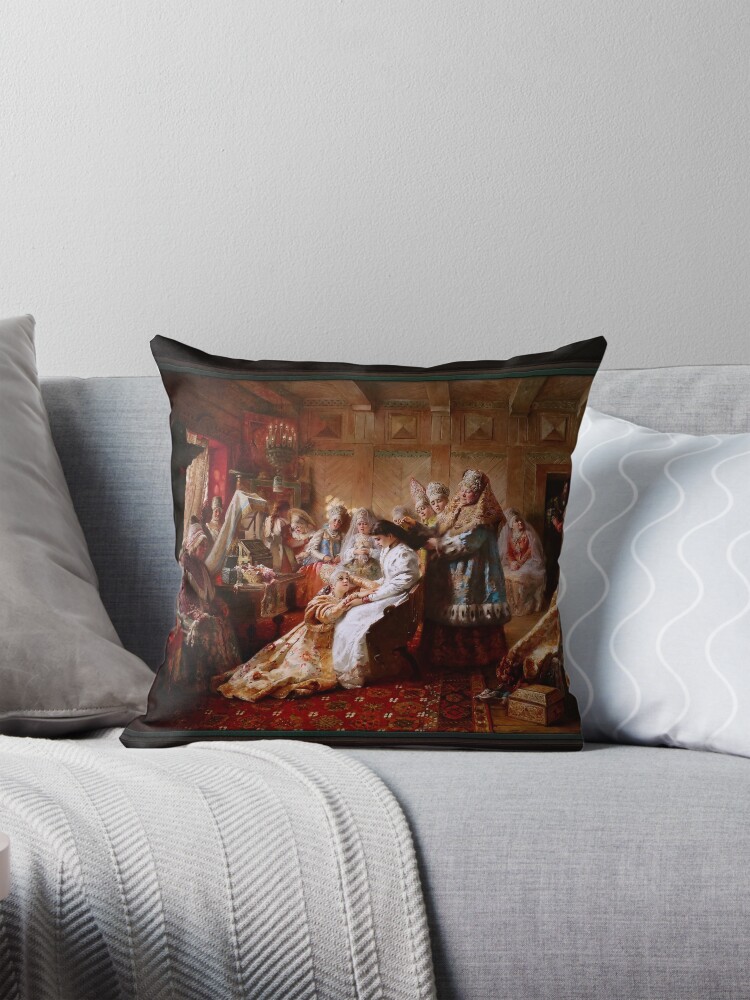
Konstantin Makovsky’s The Russian Brides Attire (1889) presents a captivating glimpse into the ceremonial preparations of a Russian bride in a traditional 19th-century setting. The scene is set within an intimate, richly adorned room where the bride-to-be, poised in anticipation, is surrounded by her closest family and friends. This historical genre painting, rooted deeply in Russian culture, reflects both the bride’s personal moment and the social customs of the time.
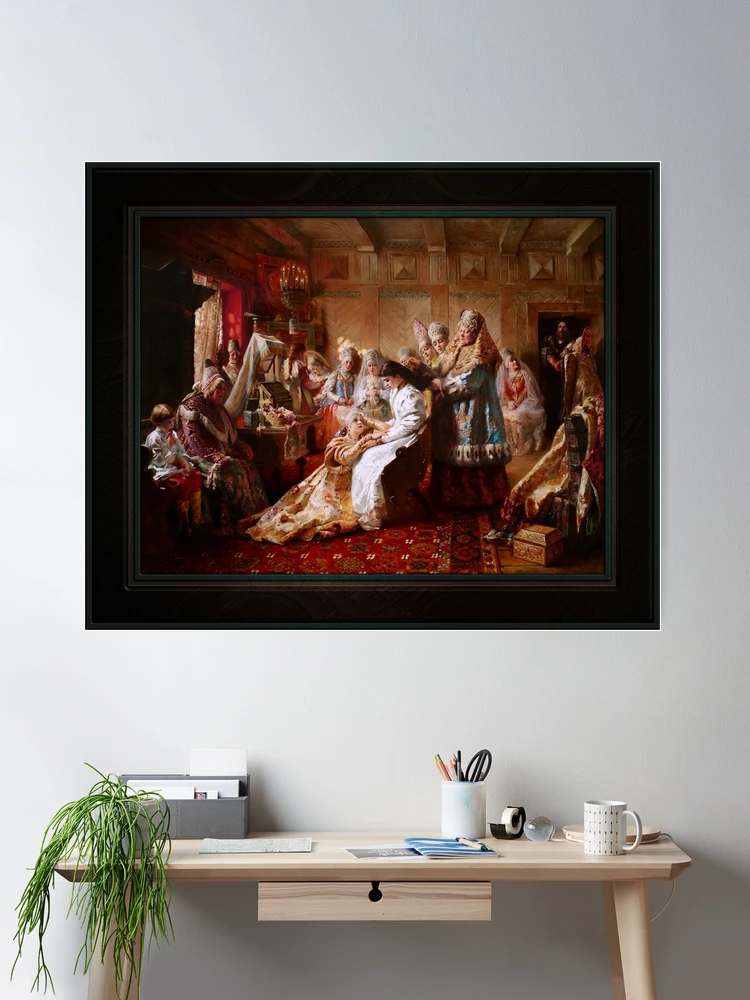
At the heart of the painting sits the young bride, dressed in an opulent, meticulously detailed gown of traditional Russian wedding attire. The intricacies of her attire are striking; every fold and embellishment in her richly embroidered dress echoes the skill and craftsmanship of the period. The gown’s texture, enhanced by the gentle play of light, emphasizes its luxurious fabric, hinting at the bride’s high social standing.
La robo, with its intricate patterns and vibrant colors, combines tradition with beauty, setting her apart as the central figure in the composition. Ŝia esprimo, serene yet tinged with the anticipation of the upcoming union, contributes to the painting’s overall sense of reverence for this momentous life event.
The surrounding figures enhance the emotional depth of the scene. Bridesmaids, family members, and an attentive mother are present, each contributing to the bride’s preparations. The bridal party’s clothing is also detailed, showcasing the opulence typical of the Russian aristocracy during the era.
These individuals are all engaged in the intimate tasks of finalizing the bride’s appearance, with one figure seated at the bride’s feet, holding her hands tenderly—a subtle gesture of familial connection and support. Kontraste, a young man, possibly the groom, appears at the threshold of the room, holding a gift box. His presence is restrained, his access to the bride’s space halted by a gentle but firm barrier, as custom would dictate.
The setting further complements the mood of the painting. The room is lavishly decorated, with dark, rich tones contrasting against the soft glow of candlelight and the bride’s radiant attire. This use of light symbolizes both the bride’s purity and the solemnity of the occasion.
The opulent, antique furniture and the delicate furnishings suggest an upper-class household, indicative of the wealth and status of the bride’s family. These elements come together to transport the viewer to the Russian nobility’s private spaces, where tradition and social rituals were deeply ingrained.
Makovsky’s approach to the painting reflects his expertise in academic art and historical realism, grounded in his training and experience with the Peredvizhniki (Vagantoj) movado. Known for portraying the everyday lives of Russians, Makovsky’s work in The Russian Bride’s Attire transcends mere documentation, offering an emotional portrait of a pivotal moment in a young woman’s life. His mastery of detail, koloro, and light conveys a sense of reverence for the traditions of Russian weddings, while the gentle interactions between the figures in the scene imbue the work with a sense of warmth and familial love.
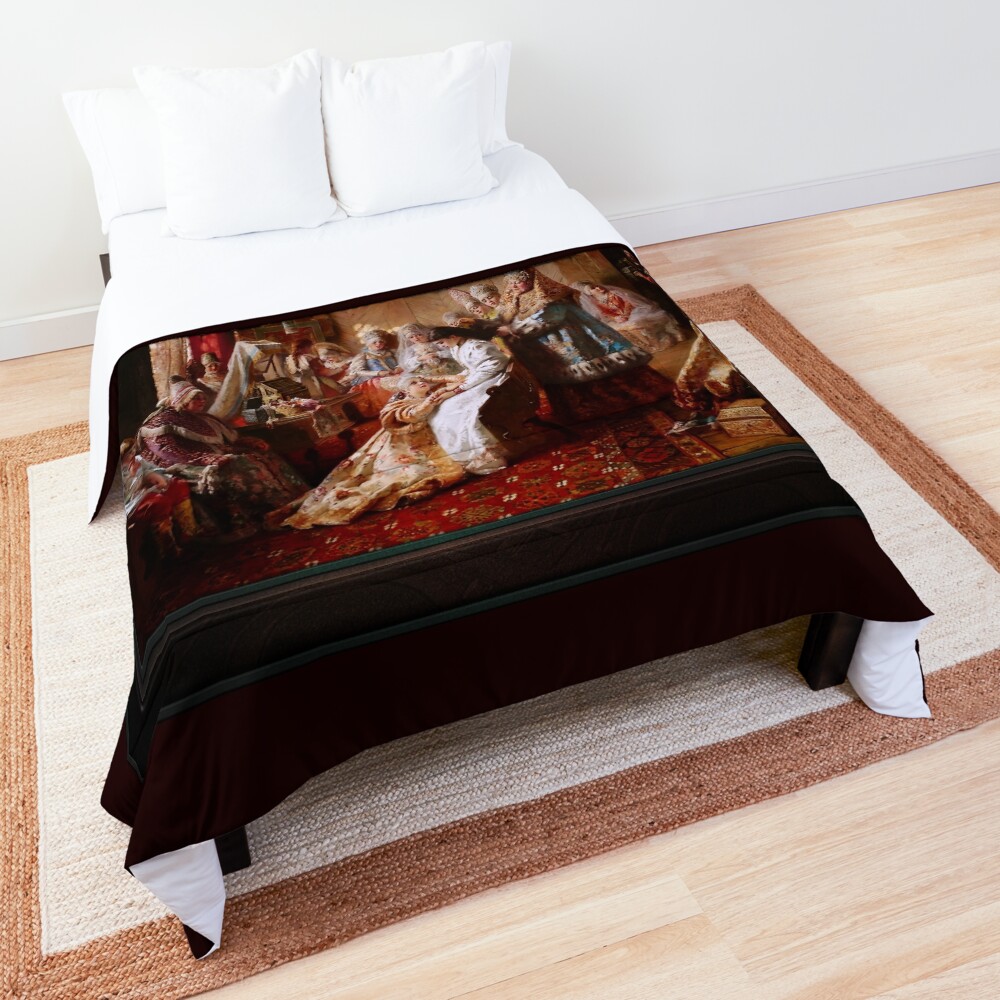
The mood of the painting is one of quiet anticipation, ceremonial dignity, and a deep respect for cultural traditions. The bride is presented not just as the central figure in a social ritual, but as a symbol of purity, kontinueco, and heritage.
The work conveys a mixture of joy and solemnity, emphasizing the gravity of the wedding ceremony while celebrating the familial bonds that are integral to it. The groom, awaiting his bride’s arrival, is a figure of patience and longing, and the space between the bride and groom symbolizes the sacredness and exclusivity of the pre-wedding ritual.
Koncerne stilon, The Russian Bride’s Attire is a quintessential example of Russian academic realism. Makovsky’s technique, with its sharp focus on the textures of fabrics, the naturalism of facial expressions, and the subtle play of light, creates a vivid, almost tangible atmosphere.
The figures are carefully posed to convey a sense of unity and purpose, while the careful rendering of the bride’s dress and the surrounding details showcases the artist’s skill in depicting texture and material.
Thematically, the work explores the cultural importance of the Russian wedding, which was more than just a personal event—it was a public and familial milestone. Through the artist’s portrayal of the bride’s attire, the familial interaction, and the ceremonial anticipation, the viewer is invited to witness an intimate, yet highly structured moment in Russian society. The painting also highlights the role of tradition in Russian culture, where customs surrounding marriage were highly ritualized and carefully observed.
The Russian Bride’s Attire is not only a visual narrative of a traditional wedding but also an insightful reflection of the values and customs of 19th-century Russian aristocracy. It stands as a testament to Konstantin Makovsky’s ability to blend historical accuracy with emotional depth, offering the viewer a vivid portrayal of Russian cultural heritage at its most beautiful and ceremonial.
Ĉi tio estas retuŝita cifereca arto malnova majstra reproduktaĵo de publika domajno bildo.
Informoj Malsupre Derivita De Vikipedio.org
Konstantin Makovsky estis influa rusa farbisto, aligita kun la “Peredvizhniki (Vagantoj)”. Multaj el liaj historiaj pentraĵoj, kiel ekzemple Sub la Krono (1889) ankaŭ konata kiel La Rusa Novedzino Vesto kaj Antaŭ la Geedziĝo, montris idealigitan vidon de rusa vivo de antaŭaj jarcentoj. Li ofte estas konsiderita reprezentanto de Akademia arto.
Konstantin Makovsky naskiĝis en Moskvo. Lia patro estis la rusa artfiguro kaj amatora farbisto, Jegor Ivanoviĉ Makovskij. Lia patrino estis komponisto, kaj ŝi esperis, ke ŝia filo iam sekvos ŝiajn paŝojn. Liaj pli junaj fratoj Vladimir kaj Nikolay kaj lia fratino Alexandra ankaŭ daŭriĝis por iĝi farbistoj.
En 1851 Makovsky eniris la Moskvan Lernejon de Pentraĵo, Skulptaĵo kaj Arkitekturo kie li iĝis la ĉefa studento, facile ricevi ĉiujn disponeblajn premiojn. Liaj instruistoj estis Karl Bryullov kaj Vasilij Tropinin. La inklinoj de Makovsky al Romantikismo kaj dekoraciaj efikoj povas esti klarigitaj per la influo de Bryullov.
Kvankam arto estis lia pasio, li ankaŭ pripensis kion lia patrino volis ke li faru. Li ekiris serĉi komponistojn, kiujn li povus rilati, kaj unue iris al Francio. Antaŭe, li ĉiam estis klasika muzikamanto, kaj aŭskultis multajn pecojn. Li ofte deziris ke li povu ŝanĝi la melodion, aŭ stilo de kelkaj el ili por igi ilin pli ĝuaj. Poste en lia vivo ĝi realiĝis.
En 1858 Makovsky membrigis la Imperian Akademion de Arto en Sankt-Peterburgo. De 1860 li partoprenis la ekspoziciojn de la Akademio kun pentraĵoj kiel Curing of the Blind (1860) kaj Agentoj de la Falsa Dmitry mortigas la filon de Boris Godunov (1862). En 1863 Makovsky kaj dek tri aliaj studentoj okazigis proteston kontraŭ la fikso de la Akademio de temoj de skandinava mitologio en la konkurso por la Granda Ora Medalo de Akademio.; ĉiuj forlasis la akademion sen formala diplomo.
Makovskij iĝis membro de kooperativo (artel) de artistoj gvidataj de Ivan Kramskoi, tipe produktante Wanderers-pentraĵojn pri ĉiutageco (Vidvino 1865, Haringo-vendisto 1867, ktp.). De 1870 li estis fondmembro de la Society for Traveling Art Exhibitions kaj daŭre laboris pri pentraĵoj dediĉitaj al ĉiutaga vivo.. Li ekspoziciis siajn verkojn ĉe kaj la Academia-ekspozicioj kaj la Vojaĝantaj Artekspozicioj de la Vagantoj.
Signifa ŝanĝo en lia stilo okazis post vojaĝado al Egiptujo kaj Serbio en la mez-1870-aj jaroj. Liaj interesoj ŝanĝiĝis de sociaj kaj psikologiaj problemoj al la artaj problemoj de koloroj kaj formo.
En la 1880-aj jaroj li iĝis moda aŭtoro de portretoj kaj historiaj pentraĵoj. En la Monda Ekspozicio de 1889 en Parizo li ricevis la Grandan Oran Medalon pro siaj pentraĵoj Morto de Ivano la Terura, La Juĝo de Parizo, kaj Demono kaj Tamara. Li estis unu el la plej alte aprezitaj kaj tre pagitaj rusaj artistoj de la tempo. Multaj demokrataj kritikistoj konsideris lin renegato de la Vagantoj’ idealoj, produktante (kiel Henryk Siemiradzki) frapantaj sed malprofundaj verkoj,[2] dum aliaj vidas lin kiel antaŭulo de rusa impresionismo.
Makovskij estis mortigita en 1915 kiam lia kaleŝo estis trafita per elektra tramo en Sankt-Peterburgo.